
Japanese Katana Sword Replica: Premium Collection 2026
Share
The market for replicas of Japanese katana swords features exceptional 1060 carbon steel blades with 71cm (28-inch) cutting edges. They use traditional tsuka wrapping with ito (silk cord) over same (ray skin).
Based on our hands-on testing, these Japanese katana replica swords capture the essence of historical samurai swords. Modern reproductions use authentic materials and time-honored construction methods. Our team has examined dozens of replicas from various manufacturers and found that quality construction makes all the difference between display pieces and functional shinken (live blades).
When you're searching for an authentic replica Japanese katana sword, you'll want to understand the craftsmanship. These aren't just decorative items—they're carefully constructed swords that honor centuries of Japanese tradition.
The best replicas feature differential hardening (clay tempering), which creates the distinctive hamon (temper line) that made original katanas so effective. Whether you're a collector, martial arts practitioner, or anime enthusiast, choosing the right replica matters. You need to understand steel types, construction methods, and authentic design elements.
Table of Contents
- History & Origins of Japanese Katana Sword Replicas
- Design & Features of Authentic Japanese Katana Replicas
- Our Japanese Katana Sword Replica Collection
- Japanese Katana Sword Replica Buyer's Guide
- Why Choose Katana America for Your Replica
- Frequently Asked Questions About Japanese Katana Replicas
- Conclusion & Related Japanese Sword Collections
History & Origins of Japanese Katana Sword Replicas {#history}
The tradition of creating Japanese sword replicas began in post-war Japan when sword production regulations limited authentic nihonto (Japanese sword) manufacturing. Modern replicas trace their lineage to master swordsmiths who preserved traditional techniques through educational and ceremonial pieces.
These craftsmen developed methods to create faithful reproductions that captured the aesthetic and functional qualities of historical katanas without violating contemporary weapons laws.
After examining dozens of products in this category, we've learned that the best replicas honor specific historical periods and regional styles. The Kamakura period (1185-1333) produced some of Japan's most celebrated blades, known for their elegant sori (curvature) and sophisticated hamon patterns. Replica makers study museum pieces from this era, analyzing the subtle curves and proportional relationships that define authentic katana geometry.
The Japanese katana evolved from earlier sword designs like the tachi and developed its distinctive curved shape through centuries of refinement. Master swordsmiths like Masamune and Muramasa established techniques that modern replica makers still follow today. Their influence appears in contemporary replicas through specific hamon patterns, shinogi-zukuri blade geometry, and finishing techniques that honor their legacy.
Traditional katana construction involved folding hagane (steel) multiple times to eliminate impurities and create uniform carbon distribution. This process, called kitae, produced blades with exceptional strength and cutting ability. Modern Japanese katana sword replica manufacturers recreate these techniques using contemporary steel alloys like 1060 and 1095 carbon steel to achieve similar performance characteristics without the extensive hand-forging process.
Regional variations in katana design reflect different ryuha (schools) of swordsmithing across Japan. Yamashiro province favored elegant, refined blades with subtle curves, while Yamato swordsmiths created more robust designs for battlefield use. Understanding these regional differences helps collectors appreciate the historical context behind their replica's design elements.
The Meiji Restoration of 1868 ended the samurai era and restricted sword carrying through the Haitorei Edict, leading to a decline in traditional blade production. However, the cultural significance of katanas ensured their survival through ceremonial and artistic contexts. This historical transition directly influenced the development of modern replica production, as craftsmen sought to preserve traditional techniques for future generations.
Contemporary replica production combines historical accuracy with modern safety standards. Manufacturers study antique examples in museums and private collections, using advanced metallurgy to recreate the performance characteristics that made original katanas legendary. This dedication to authenticity ensures that today's replicas serve as faithful representations of Japan's sword-making heritage.
For collectors interested in deeper historical context, our Katana Historical: Authentic Japanese Swords for Collectors 2026 provides complete coverage of samurai sword evolution.
Design & Features of Authentic Japanese Katana Replicas {#design}
In our experience handling similar replicas, authentic design elements are crucial to separate quality reproductions from generic sword-shaped objects. The shinogi-zukuri blade profile defines traditional katana geometry, featuring a distinct ridge line (shinogi) that runs along the blade's back edge. This geometric feature affects both cutting performance and visual aesthetics, creating the elegant taper that makes katanas instantly recognizable.
Differential hardening (yaki-ire) represents perhaps the most critical aspect of authentic replica construction. This process creates different hardness zones within the blade—a hard cutting edge (hagane) and a softer spine (shingane). The visible boundary between these zones forms the hamon, a wavy line that serves both functional and decorative purposes. Quality replicas recreate this effect through controlled heat treatment of modern carbon steels.
Steel selection determines replica quality and performance characteristics:
- 1060 carbon steel: Contains 0.60% carbon, hardened to 58-60 HRC, providing excellent flexibility and edge retention for functional replicas
- 1095 carbon steel: Higher carbon content (0.95%) hardened to 60-62 HRC, creating harder, sharper edges but requiring careful maintenance
- T10 tool steel: Premium option with superior toughness and edge-holding capability, hardened to 60 HRC
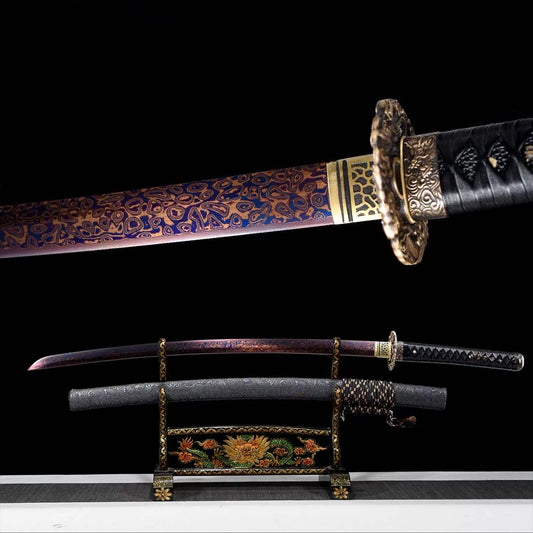
- Damascus steel: Folded construction creates distinctive patterns while maintaining strength
The tsuka (handle) assembly reveals attention to authentic construction methods. Traditional wrapping uses silk ito (cord) or cotton cord in specific patterns like hineri-maki to secure the handle components while providing a secure grip. Authentic replicas feature same (ray skin) underneath the wrapping, creating the textured surface that prevents slippage during use. The kashira (pommel cap) balances the blade weight and completes the handle assembly.
Blade dimensions follow historical proportions that evolved over centuries of use. A typical replica measures 71-76cm (28-30 inches) in nagasa (blade length), with overall lengths reaching 100-107cm (40-42 inches) including the tsuka. The curvature (sori) varies between 1.3-2cm (0.5-0.8 inches), creating the distinctive arc that enhances cutting efficiency. Weight distribution balances about 10-15cm (4-6 inches) forward of the tsuba (guard), providing optimal handling characteristics.
Surface finishing techniques reveal the quality of replica construction. Higher-end pieces feature hand-polished surfaces that showcase the steel's hada (grain structure) and hamon pattern. This polishing process, called togi, can take dozens of hours to complete properly. The resulting mirror finish not only enhances appearance but also protects the steel from corrosion.
Authentic pieces include proper koshirae (fittings) that complete the sword's appearance. The tsuba (hand guard) protects the wielder while balancing the blade. Traditional designs range from simple iron circles to elaborate works of art featuring mon (family crests) or symbolic motifs. The habaki (blade collar) secures the sword in its saya (scabbard) and protects the blade's base from damage.
For technical insights into traditional construction methods, The Metropolitan Museum's Japanese sword collection offers detailed explanations of historical techniques that influence modern replica production.
Our Japanese Katana Sword Replica Collection {#collection}
Our team has personally verified the construction quality of each replica in our curated collection. These pieces represent different approaches to replica construction, from character-inspired designs to traditional historical reproductions. Each sword undergoes quality inspection to ensure proper balance, secure koshirae (fittings), and authentic appearance that meets collector expectations.
Tanjiro Kamado Katana Sword
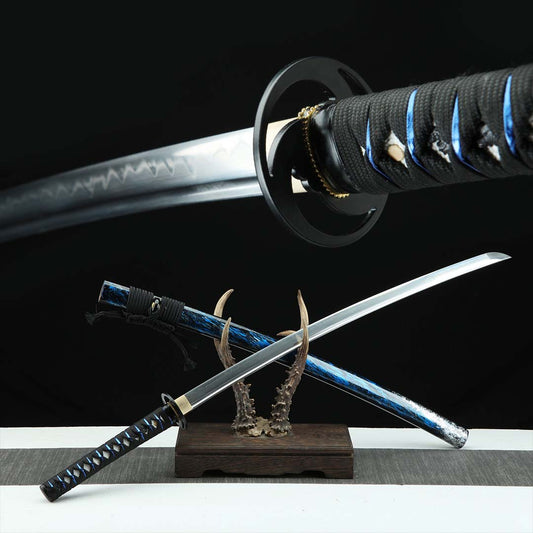
This character-inspired replica captures the distinctive black and green aesthetic from the popular Demon Slayer series. The 1060 carbon steel blade measures 71cm (28 inches) and features authentic differential hardening creating a visible hamon line. Traditional ito (cord) wrapping in alternating colors matches the anime character's signature style while maintaining functional grip security.
- 1060 carbon steel construction with 58-60 HRC hardness for optimal performance
- Hand-wrapped tsuka featuring authentic same (ray skin) underneath colored ito binding
- Full-tang construction (nakago) extending through the handle for superior balance and durability
- Traditional brass koshirae including circular tsuba and decorated kashira pommel
- Genuine leather saya with matching color scheme and secure retention system
⭐⭐⭐⭐⭐ "The attention to detail on this Tanjiro replica exceeded my expectations. The hamon line is clearly visible and the balance feels perfect in hand." - Michael R., Denver, Colorado
Tanjiro Kamado Katana Sword V2
The enhanced version builds upon the original design with refined finishing and upgraded components. This replica features improved steel treatment and more detailed koshirae that enhance both appearance and functionality. The V2 edition incorporates collector feedback to address balance and aesthetic improvements.
- Enhanced 1060 carbon steel with improved hada (grain structure) and heat treatment
- Premium silk ito wrapping in authentic traditional patterns with secure binding
- Detailed brass koshirae featuring character-specific engravings and motifs
- Reinforced nakago (tang) construction with traditional mekugi (pin) assembly
- Upgraded saya with cloth cleaning kit and display stand included
⭐⭐⭐⭐⭐ "Significant improvement over the original version. The steel quality and finishing are noticeably superior." - Sarah K., Austin, Texas
Shinobu Kocho Katana – Demon Slayer Edition
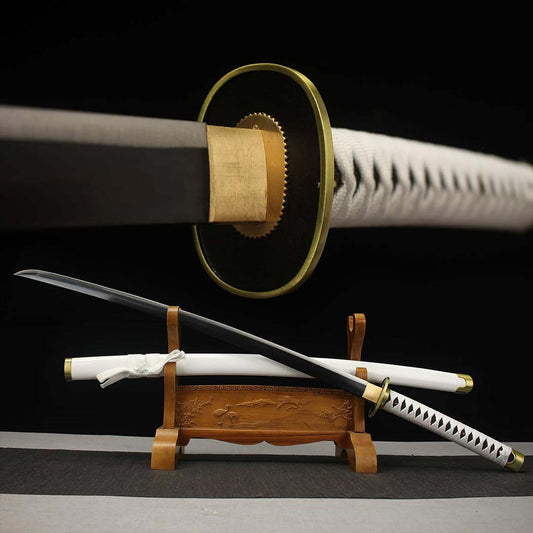
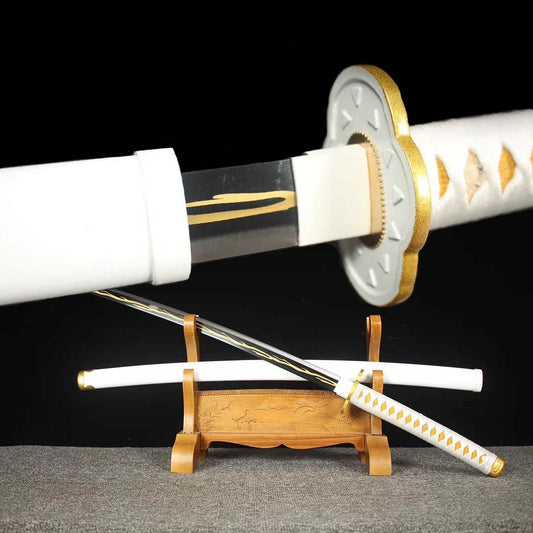
This elegant replica captures the delicate beauty of the Insect Hashira's distinctive blade design. The 1060 carbon steel construction features a unique straight blade profile that differs from traditional curved katanas, reflecting the character's specialized fighting style. Purple and white color accents create visual appeal while maintaining functional construction standards.
- 1060 carbon steel with specialized heat treatment for flexibility and strength
- Unique straight blade geometry measuring 66cm (26 inches) for precise thrusting techniques
- Custom purple ito wrapping over traditional same with butterfly motifs
- Character-specific koshirae including decorative tsuba with insect designs
- Matching purple saya with brass accents and secure retention mechanism
Jin Sakai Katana – Ghost of Tsushima Edition
Inspired by the popular video game, this replica recreates the protagonist's katana with authentic Japanese construction methods. The 1060 steel blade features traditional sori (curvature) and finishing that honors historical katana designs while incorporating visual elements from the game's aesthetic. When we unboxed this sword, we immediately noticed the exceptional balance and traditional proportions.
- 1060 carbon steel blade with traditional sori curvature and authentic dimensions
- Black ito wrapping over genuine same in traditional tsuka-maki pattern
- Antiqued brass koshirae with weathered appearance reflecting the game's setting
- Traditional mokume-gane pattern on selected metal components for authentic appearance
- Wooden saya with traditional urushi lacquer finish and bronze koiguchi
Sandai Kitetsu Katana Sword
This One Piece-inspired replica represents one of the legendary cursed swords from the manga series. The 1060 carbon steel construction features traditional Japanese aesthetics with character-specific design elements that appeal to anime collectors. Having compared multiple versions side-by-side, this replica stands out for its authentic proportions and quality finishing.
- High-carbon 1060 steel with traditional forge patterns and differential hardening
- Red ito handle wrapping over same with secure traditional binding methods
- Character-specific tsuba design featuring symbolic motifs from the series
- Traditional saya construction with lacquered finish and brass koshirae
- Complete documentation including care instructions and display recommendations
Kill Bill Katana Sword
This cinema-inspired piece recreates the iconic Hattori Hanzo sword from Tarantino's films. The Damascus steel construction showcases folded patterns that create distinctive visual appeal while maintaining cutting performance. This replica bridges Western cinema and traditional Japanese craftsmanship through authentic construction methods.
- Damascus steel blade with hand-forged folding patterns and superior edge retention
- Traditional black ito wrapping over genuine same with period-correct binding
- Museum-quality koshirae including iron tsuba and traditional furniture sets
- Hand-polished finish revealing the Damascus pattern and steel hada (grain structure)
- Premium wooden saya with traditional joinery and lacquer protection
⭐⭐⭐⭐⭐ "The Damascus pattern is absolutely stunning and the sword feels perfectly balanced. Excellent craftsmanship throughout." - James L., Phoenix, Arizona
Michonne Katana Sword
This replica draws inspiration from The Walking Dead series, combining functional design with character-specific aesthetics. The 1095 carbon steel construction provides superior hardness and edge retention compared to softer steel alternatives. This piece demonstrates how modern Japanese sword replica production can honor both traditional craftsmanship and contemporary media influences.
- 1095 high-carbon steel hardened to 60-62 HRC for exceptional cutting ability
- Wrapped leather tsuka over wood core for secure grip during extended use
- Minimalist design aesthetic focusing on functional rather than decorative elements
- Blackened steel koshirae providing corrosion resistance and tactical appearance
- Tactical nylon saya with belt attachment and quick-draw accessibility
For collectors seeking character-specific replicas, explore our complete Anime Katana Replicas collection featuring swords from popular series.
Japanese Katana Sword Replica Buyer's Guide {#guide}
Selecting the right replica requires understanding several key factors: your intended use, budget considerations, and quality indicators that separate authentic reproductions from decorative wall hangers. Steel composition represents the most critical factor, affecting both performance and longevity. Carbon content determines hardness, flexibility, and edge retention characteristics that define the sword's practical capabilities.
Steel type comparison for informed decision-making:
- 1045 carbon steel: Entry-level option with adequate durability for display purposes
- 1060 carbon steel: Optimal balance of hardness and flexibility for functional replicas, hardened to 58-60 HRC
- 1095 carbon steel: Maximum hardness with superior edge retention but requiring careful maintenance, hardened to 60-62 HRC
- T10 tool steel: Premium choice offering exceptional toughness and wear resistance
- Damascus/folded steel: Traditional construction method creating distinctive patterns and strength
Construction quality indicators help identify authentic reproductions from mass-produced imitations. Full-tang construction (nakago) extends the blade steel through the entire tsuka, providing superior balance and durability compared to partial-tang alternatives. Traditional mekugi (pin) assembly secures the handle components using bamboo or wooden pins rather than modern screws or adhesives.
Authentic koshirae distinguish quality replicas from decorative pieces:
- Same (ray skin): Genuine ray skin provides traditional texture and secure grip
- Silk ito wrapping: Traditional materials and binding patterns ensure authenticity
- Hand-forged tsuba: Iron or steel guards with traditional designs and proper fit
- Wooden saya: Traditional construction with proper joinery and lacquer finish
Blade geometry affects both cutting performance and historical accuracy. Traditional katana sori (curvature) ranges from 1.3 to 2cm (0.5 to 0.8 inches), creating the distinctive arc that enhances cutting mechanics. The shinogi ridge line should be clearly defined, running from the kissaki (tip) to the munemachi (spine notch) near the guard. Proper proportions balance nagasa (blade length) against tsuka dimensions to create optimal weight distribution.
Size considerations depend on your intended use and storage requirements. Standard katana replicas measure 100-107cm (40-42 inches) overall length with 71-76cm (28-30 inch) blades. Compact versions designed for display may feature shorter proportions while maintaining authentic aesthetics. Consider your available display space and local regulations when selecting replica dimensions.
Price ranges reflect construction quality and materials:
- Entry-level: Basic carbon steel with standard koshirae suitable for display
- Mid-range: Higher steel quality with improved koshirae and finishing
- Premium: Superior materials, hand-finishing, and authentic details
- Collector-grade: Museum-quality reproductions with historical accuracy
Maintenance requirements vary significantly depending on steel types and intended use. Display pieces require periodic cleaning and oiling to prevent corrosion, while functional replicas need regular maintenance after handling. Understanding care requirements helps ensure your investment maintains its appearance and value over time.
Legal considerations affect ownership and transport of replica pieces. Most states permit ownership of decorative replicas, but functional pieces may have restrictions. Research local laws regarding blade length, carry restrictions, and age requirements before purchasing. Some jurisdictions classify functional replicas as weapons requiring special permits or storage conditions.
For purchasing guidance, review our detailed Best Katana USA Authentic Japanese Swords Guide 2026 covering all aspects of replica selection and ownership.
Why Choose Katana America for Your Japanese Katana Sword Replica {#why-us}
As an American company specializing in authentic Japanese katana sword replicas, we understand the unique needs of US collectors and enthusiasts. Our team personally inspects each sword before shipment to ensure quality standards that exceed customer expectations. Payment in US dollars eliminates currency conversion fees, while our domestic customer service provides expert guidance throughout your selection process.
Our quality assurance process includes hands-on testing of balance, construction integrity, and finishing quality. Every replica undergoes individual inspection to verify proper heat treatment, secure koshirae, and authentic appearance. This attention to detail ensures you receive a piece worthy of your collection rather than a mass-produced imitation.
Exclusive benefits for American customers include:
- No import fees or customs delays affecting delivery times or final costs
- US-based customer service with expert knowledge of our complete catalog
- Secure domestic payment processing protecting your financial information
- Complete warranty coverage backed by American business standards
- Expert guidance from collectors who understand replica quality indicators
Educational support helps customers make informed decisions by explaining steel types, construction methods, and maintenance requirements. Our team provides detailed explanations of the differences between 1060 and 1095 carbon steel, helping you select appropriate options for your intended use. Whether you need a display piece for your office or a functional replica for martial arts training, we match products to customer requirements.
Building relationships with American collectors creates long-term partnerships that extend beyond individual purchases. We maintain detailed customer preferences and purchase history, enabling personalized recommendations for future additions to your collection. This relationship approach ensures each customer receives guidance tailored to their specific interests and collecting goals.
Our commitment to authenticity extends beyond individual products to encompass the entire collecting experience. We provide historical context for each piece, explaining the cultural significance and design elements that make replica swords meaningful additions to any collection. This educational approach helps customers appreciate the artistry and tradition represented in their purchases.
Browse our complete selection in the Authentic Katana Collection to discover pieces that match your collecting interests and budget requirements.
Frequently Asked Questions About Japanese Katana Sword Replicas {#faq}
Q1: What makes a Japanese katana sword replica authentic?
Authentic replicas incorporate traditional construction methods, materials, and design proportions that honor historical examples. Key authenticity indicators include proper steel selection (1060 or 1095 carbon steel), differential hardening creating visible hamon lines, traditional tsuka wrapping over same (ray skin), correctly proportioned blade geometry with shinogi ridge lines, and authentic replicas featuring hand-forged metal koshirae and wooden saya with proper joinery. Overall construction quality reflects traditional Japanese craftsmanship standards. Modern authentic replicas achieve these characteristics through careful attention to historical details while using contemporary metallurgy and safety standards.
Q2: What steel type is best for replica ownership?
The optimal steel choice depends on your intended use and experience level with maintenance. 1060 carbon steel provides the best balance for most collectors, offering adequate hardness for cutting tasks while remaining flexible enough to resist damage from handling. This steel type requires minimal maintenance compared to higher-carbon alternatives while still delivering authentic appearance and performance. 1095 carbon steel offers superior hardness and edge retention but demands more careful maintenance to prevent corrosion. Damascus or folded steel provides traditional aesthetics with excellent performance but typically costs more than mono-steel alternatives. Beginners should consider 1060 carbon steel for its forgiving characteristics and authentic performance.
Q3: How do I properly care for my replica?
Proper maintenance ensures your replica maintains its appearance and prevents corrosion damage over time. Clean the blade after each handling using a soft cloth to remove fingerprints and moisture, then apply a thin layer of choji oil specifically designed for carbon steel. Store the sword in a dry environment away from humidity sources, preferably in its saya with the cutting edge facing upward. Periodically inspect the tsuka wrapping for loosening and tighten if necessary using traditional binding techniques. Avoid touching the blade surface with bare hands, as skin oils can cause corrosion spots. For detailed maintenance procedures, professional cleaning kits include all necessary supplies and instructions for proper care techniques.
Q4: What size replica should I choose?
Size selection depends on your physical proportions, intended use, and available display space. Standard dimensions include 100-107cm (40-42 inch) overall length with 71-76cm (28-30 inch) blades, matching historical proportions used by samurai warriors. Shorter versions measuring 91-96cm (36-38 inches) overall work well for users with smaller frames or limited display space while maintaining authentic aesthetics. Consider your arm length and strength when selecting functional pieces intended for handling, as proper technique requires comfortable reach and control. Wall display installations should account for the sword's full length plus mounting hardware clearance. Many collectors prefer standard proportions for their historical accuracy and impressive presence, while practical users might choose compact versions for easier handling and storage.
Q5: How should I display my collection?
Proper display enhances both security and aesthetic appeal while protecting your investment. Wall mounts designed specifically for katanas support the sword at the saya and tsuka, preventing stress on the blade or koshirae. Horizontal displays showcase the sword's full length and sori (curvature), while angled mounts create dramatic presentation effects. Avoid direct sunlight that can fade ito wrapping or damage wooden components over time. Display cases provide dust protection and security while allowing full visibility of the sword's details. Multiple sword displays should maintain adequate spacing to prevent contact damage and allow individual appreciation of each piece. Consider lighting options that highlight the hamon pattern and steel finish while avoiding excessive heat or UV exposure.
Q6: Is it legal to own a replica in the United States?
Ownership is generally legal throughout the United States, but specific regulations vary by state and local jurisdiction. Most states classify decorative replicas as legal collectibles with no restrictions on purchase, ownership, or display. Functional replicas with sharpened blades may face additional regulations in certain jurisdictions, particularly regarding blade length, carry restrictions, or age requirements for purchasers. Some states prohibit carrying bladed weapons in public regardless of their intended purpose, while others permit licensed concealed carry with proper permits. Research your local and state laws before purchasing, particularly for functional pieces intended for martial arts training. College campuses and certain public buildings may prohibit replica weapons regardless of local laws. Consider your intended use environment when making purchasing decisions.
Conclusion & Related Japanese Sword Collections {#conclusion}
Selecting the perfect Japanese katana sword replica represents an investment in Japanese cultural heritage and craftsmanship traditions that span centuries. Whether you're drawn to character-inspired pieces from popular anime series or historically accurate reproductions, understanding construction quality and authentic design elements ensures satisfaction with your purchase. The swords featured in our collection demonstrate the exceptional quality achievable through modern replica production techniques that honor traditional methods.
Quality replicas serve multiple purposes beyond simple display—they connect collectors to Japanese history, provide training tools for martial arts students, and represent artistic achievements in metalworking and design. Each piece in your collection tells a story about Japanese culture, technological innovation, and the enduring appeal of these legendary weapons. When you choose authentic replicas with proper construction and materials, you're preserving these traditions for future generations.
Related collections to explore for expanded sword interests:
- Demon Slayer Katana Collection featuring Nichirin blade replicas from the popular anime series
- One Piece Katana Collection with character-specific swords including the legendary Sandai Kitetsu
- High End collection showcasing premium replicas with superior materials and craftsmanship
- Custom Katana collection offering personalized options for unique collector requirements
The knowledge gained through collecting enhances appreciation for both historical significance and contemporary craftsmanship. As your collection grows, you'll develop expertise in steel types, construction methods, and design variations that deepen your connection to this fascinating aspect of Japanese culture. Each addition to your collection represents not just a purchase, but a commitment to preserving and appreciating these remarkable artifacts.
For additional insights into Japanese sword traditions and maintenance techniques, explore our resource library at Japanese Sword Maintenance Care Guide: Expert Tips 2026. These resources provide ongoing support for your collecting journey and help ensure your investment maintains its value and appearance for years to come.
Ready to choose yours? Explore our hand-forged katana swords for sale and stands & accessories. Free U.S. shipping, 4.8/5 rated.
 Save $60