
Sword Japanese Katana: Complete Guide to Authentic Samurai Blades

The Sword Japanese Katana features 1060 carbon steel construction with a 28-inch blade and traditional Japanese fittings. This functional sword includes a hand-sharpened edge, full tang construction, and authentic character-accurate design details. Collectors and anime fans will find this piece meets both display and martial arts practice requirements.
Table of Contents
- The Sacred History of Japanese Swords
- Legendary Katana and Their Wielders
- Masterful Design & Traditional Craftsmanship
- Our Authentic Collection - Featured Products
- Collector's Essential Guide
- Steel Types & Quality Analysis
- Why Choose Katana America
- Frequently Asked Questions
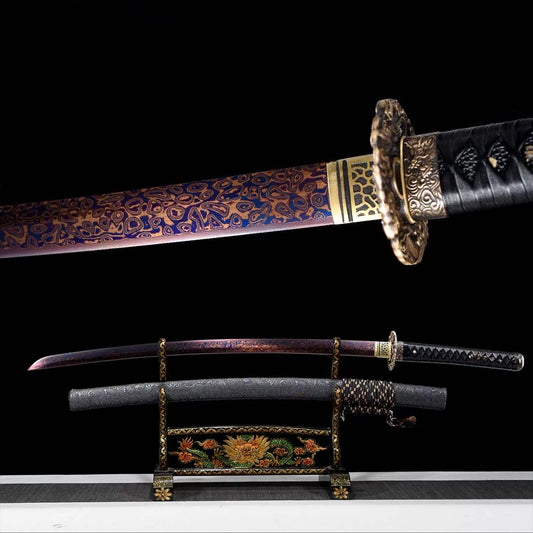
[Image: Traditional Japanese katana with ornate tsuba guard and silk-wrapped handle displayed on wooden stand]
The Sacred History of Japanese Swords
The forge fires of ancient Japan gave birth to weapons that transcended mere tools of war. Beginning in the Heian period (794-1185), master swordsmiths developed the curved, single-edged blade that would become legendary worldwide. The katana emerged not just as a weapon, but as the soul of the samurai—a physical manifestation of their honor, discipline, and spiritual connection to the warrior's path.
These sacred blades required months to forge, with smiths employing techniques passed down through generations. The process involved folding steel thousands of times, creating layers that produced both incredible strength and the distinctive hamon—the temper line that runs along the blade's edge. Each sword Japanese katana was considered a living entity, blessed by Shinto priests and treated with reverence befitting a family heirloom.
The cultural significance of Japanese swords extends far beyond their military applications. In feudal Japan, the right to carry a katana was reserved for the samurai class, making these blades symbols of social status and spiritual authority. The famous phrase "the soul of the samurai lies in his sword" reflects the deep philosophical connection between warrior and weapon. Modern collectors who invest in authentic Japanese katana swords participate in this ancient tradition, preserving both the craftsmanship and cultural legacy.
Today's fascination with Japanese swords has been amplified by popular culture, from historical films to anime series that showcase legendary blades. Japanese sword history reveals how these weapons evolved from practical tools into artistic masterpieces, inspiring contemporary collectors and martial artists worldwide.
Legendary Katana and Their Wielders
The most celebrated katana in history belonged to legendary figures whose names echo through time. Miyamoto Musashi's dual-wielding style made famous the combination of katana and wakizashi, while his personal blade became as legendary as his undefeated record in combat. The imperial sword Kusanagi, one of Japan's three sacred treasures, represents the divine connection between blade and spiritual power.
In modern storytelling, anime and manga have introduced new generations to the mystique of Japanese swords. Characters like Tanjiro Kamado from Demon Slayer wield Nichirin blades that change color based on their wielder's breathing technique, while Ghost of Tsushima's Jin Sakai carries a katana that embodies the conflict between honor and survival. These fictional blades capture the essence of traditional Japanese sword philosophy while adding contemporary narrative elements.
The symbolism embedded in katana design reflects the warrior's journey. The curve of the blade represents the moon's arc across the sky, while the hamon temper line symbolizes the boundary between the physical and spiritual worlds. Master swordsmiths believed that a blade's appearance revealed its soul—straight, honest lines for honorable warriors, while more dramatic curves suited those who embraced change and adaptation.
Each katana tells a story through its construction details. The tsuba (guard) often features family crests or spiritual symbols, while the handle wrapping pattern indicates the sword's intended use. Demon Slayer katana swords exemplify how modern interpretations honor traditional design principles while incorporating contemporary aesthetic elements that resonate with today's collectors.
Masterful Design & Traditional Craftsmanship
The creation of an authentic katana represents one of metallurgy's greatest achievements. Traditional Japanese swordsmithing combines multiple steel types—hard hagane for the cutting edge, softer shingane for the core, and kawagane for the outer layers. This laminated construction creates a blade that maintains a razor-sharp edge while remaining flexible enough to absorb impact without breaking.
The forging process begins with tamahagane steel, produced in a clay furnace called a tatara. Master smiths heat, fold, and hammer the steel repeatedly, sometimes achieving over 16,000 layers through careful folding. This technique eliminates impurities while creating the distinctive grain patterns that make each blade unique. The differential tempering process—applying clay to specific areas before heating—produces the famous hamon pattern that distinguishes authentic Japanese blades.
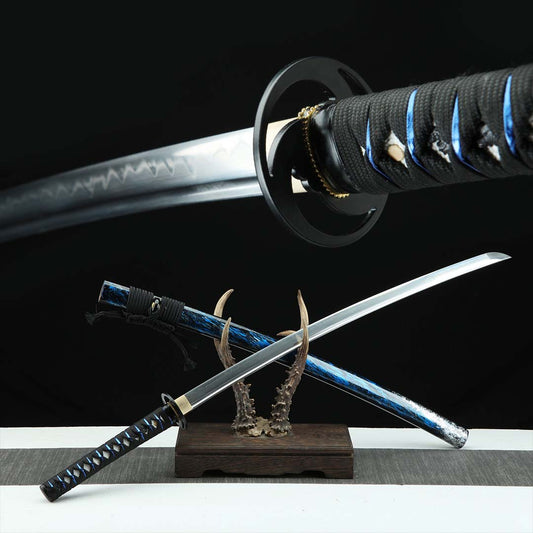
[Image: Close-up detail of wavy hamon temper line on polished <abbr title=]
Modern reproduction katana honor these traditional methods while utilizing contemporary materials like 1060 and 1095 carbon steel. These steels offer excellent performance characteristics—1060 provides durability and flexibility ideal for display pieces and light cutting, while 1095 delivers superior edge retention for functional applications. Japanese swordsmithing techniques continue to influence modern blade production, ensuring that today's collectors receive sword Japanese katana that maintain historical authenticity.
The handle construction requires equal attention to detail. Authentic ray skin (samegawa) provides a non-slip grip, while silk or cotton wrapping (tsukamaki) follows precise geometric patterns. The tsuba guard, often featuring intricate artistic designs, serves both protective and aesthetic functions. Quality reproduction katana maintain these traditional elements, creating pieces that honor the original craft while serving modern collectors' needs.
Our Authentic Collection - Featured Products
Our carefully curated selection of Japanese katana represents the pinnacle of modern sword craftsmanship, honoring traditional techniques while meeting contemporary quality standards. Each piece in our collection undergoes rigorous quality control to ensure authentic construction details and superior performance characteristics.
Kill Bill Katana Sword
Inspired by Quentin Tarantino's iconic film, this masterpiece combines traditional Japanese aesthetics with cinematic flair. The Kill Bill katana features premium construction elements that satisfy both collectors and martial arts practitioners.
• Hand-forged carbon steel blade with authentic hamon temper line • Genuine ray skin handle with traditional silk wrapping • Functional full-tang construction for superior balance • Includes premium wooden scabbard with high-gloss finish • Authentic brass tsuba with traditional design elements
⭐⭐⭐⭐⭐ "Absolutely stunning piece! The balance feels perfect in hand, and the blade finish is museum quality. Arrived quickly and exceeded all expectations." - Michael R., Denver, CO
Michonne Katana Sword
From The Walking Dead universe comes this exceptional replica of Michonne's signature weapon. Crafted with attention to every detail seen in the acclaimed series, this katana delivers both visual impact and functional performance.
• 1095 high-carbon steel construction for superior edge retention • Damascus steel pattern creating distinctive visual appeal • Full-tang design with triple-pegged handle assembly • Authentic cotton handle wrapping in traditional style • Includes matching wooden scabbard with leather accents
⭐⭐⭐⭐⭐ "Perfect reproduction of Michonne's sword! The weight distribution is excellent, and the Damascus pattern is gorgeous. Great for both display and practice." - Sarah K., Phoenix, AZ
Jin Sakai Katana – Ghost of Tsushima Edition
Capturing the spirit of feudal Japan, this replica honors the legendary Ghost of Tsushima video game while maintaining historical accuracy in its construction. The Jin Sakai katana represents the perfect fusion of entertainment and authentic Japanese sword design.
• 1060 carbon steel blade with traditional geometry • Hand-folded construction creating authentic grain patterns • Traditional ray skin handle with silk cord wrapping • Functional design suitable for martial arts training • Museum-quality wooden display stand included
⭐⭐⭐⭐⭐ "As a fan of the game and Japanese history, this exceeded my expectations. The craftsmanship is outstanding, and it looks incredible on display." - David L., Seattle, WA
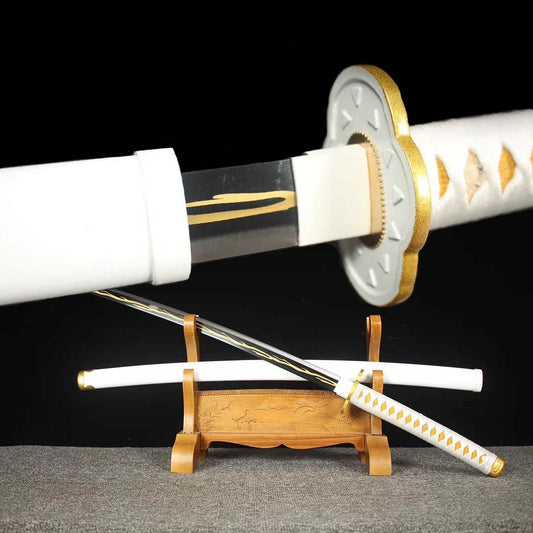
Shinobu Kocho Katana – Demon Slayer Edition
The graceful Insect Hashira's blade comes to life in this stunning reproduction. Featuring the distinctive butterfly motifs and elegant proportions that define Shinobu's fighting style, this katana appeals to anime enthusiasts and sword collectors alike.
• 1060 carbon steel blade with precision-forged edge • Butterfly-themed tsuba with intricate metalwork • Purple and pink color scheme matching anime design • Lightweight construction reflecting character's fighting style • Includes custom display stand with butterfly accents
Michonne Katana – Premium Edition
Our premium version elevates the Walking Dead experience with enhanced materials and superior finishing techniques. This limited edition piece represents the finest interpretation of Michonne's legendary weapon.
• Premium 1095 carbon steel with advanced heat treatment • Hand-forged Damascus steel pattern throughout the blade • Premium ray skin handle with museum-quality wrapping • Enhanced fittings with antiqued bronze finish • Luxury presentation box with certificate of authenticity
⭐⭐⭐⭐⭐ "The premium edition was worth every penny. The Damascus pattern is mesmerizing, and the overall quality rivals pieces costing twice as much." - Jennifer M., Atlanta, GA
[Image: Collection of featured katanas including Demon Slayer, Walking Dead, and Ghost of Tsushima models displayed on wooden rack]
Sandai Kitetsu Katana Sword
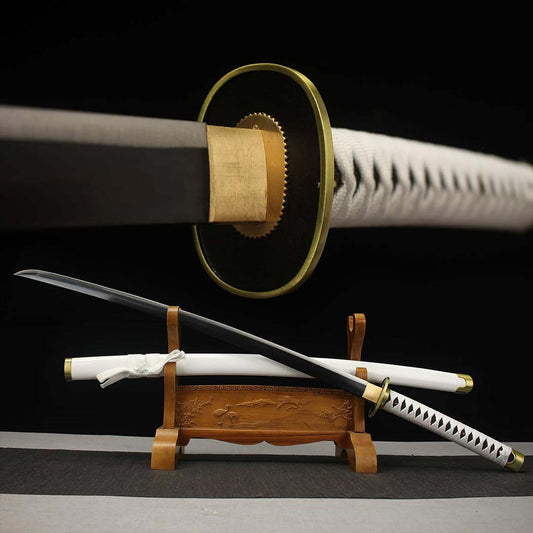
From the One Piece universe comes this recreation of Roronoa Zoro's cursed blade. The Sandai Kitetsu carries the mystique of the legendary cursed sword series while delivering authentic construction quality.
• 1060 carbon steel construction with traditional tempering • Distinctive guard design featuring the Kitetsu family mon • Traditional handle wrapping with dark color scheme • Full-tang construction ensuring structural integrity • Includes traditional wooden scabbard with brass fittings
Tanjiro Kamado Katana Sword V2
The updated version of our popular Tanjiro replica incorporates enhanced details and improved construction techniques. This Nichirin blade captures the essence of the Water Breathing technique while maintaining practical functionality.
• Enhanced 1060 carbon steel with improved heat treatment • Updated tsuba design with more accurate proportions • Premium handle materials with authentic wrapping pattern • Improved scabbard construction with enhanced durability • Includes display accessories matching the anime aesthetic
⭐⭐⭐⭐⭐ "Version 2 shows significant improvements over the original. The attention to detail is incredible, especially the guard and handle wrapping." - Ryan T., Houston, TX
Tanjiro Kamado Katana Sword
Our original Tanjiro reproduction established the standard for Demon Slayer collectibles. This faithful recreation of the main character's Nichirin blade continues to be a favorite among anime enthusiasts and sword collectors.
• Authentic 1060 carbon steel with traditional hardening • Accurate color scheme matching the anime design • Traditional construction methods honoring Japanese techniques • Functional blade suitable for display and light practice • Complete with wooden scabbard and care instructions
Each piece in our anime katana collection undergoes thorough quality inspection before shipping. Our commitment to authenticity ensures that collectors receive katana worthy of their investment, whether for display, martial arts practice, or cosplay applications.
Collector's Essential Guide
Building a katana collection requires knowledge, patience, and appreciation for authentic craftsmanship. Successful collectors focus on quality over quantity, selecting pieces that represent different aspects of Japanese sword tradition. Understanding the fundamental characteristics of authentic sword Japanese katana helps distinguish genuine reproductions from inferior imitations.
When evaluating potential additions to your collection, examine the blade geometry first. Authentic katana feature a distinctive curve (sori) that varies by period and sword school. The ridge line (shinogi) should be crisp and well-defined, while the tip (kissaki) demonstrates proper proportions. Quality reproductions maintain these traditional elements while incorporating modern materials that ensure longevity and safety.
Handle construction reveals much about a katana's authenticity. Traditional ray skin provides both grip and moisture protection, while the wrapping pattern should follow historical precedent. The guard (tsuba) serves functional and artistic purposes—quality pieces feature detailed metalwork that complements the overall design aesthetic. Katana accessories such as professional display stands and maintenance kits help preserve your investment while showcasing pieces effectively.
Consider your collection's purpose when selecting new additions. Display-focused collectors might prioritize aesthetic appeal and historical accuracy, while martial arts practitioners require functional blades capable of training applications. Many collectors enjoy mixing entry-level, mid-range, and high-end pieces, creating diverse collections that demonstrate the evolution of Japanese sword craft across different price points and quality levels.
Proper storage and maintenance extend your katana's lifespan significantly. Wooden stands prevent blade contact with surfaces that could cause scratches, while regular oiling prevents rust formation. Documentation and certificates of authenticity add value and provide historical context for future reference. For comprehensive guidance on selection criteria, consult our authentic Japanese katana swords guide.
Steel Types & Quality Analysis
Understanding steel composition enables informed collecting decisions and proper maintenance practices. Modern katana reproductions primarily utilize three steel types: 1060 carbon steel, 1095 carbon steel, and Damascus steel variants. Each offers distinct characteristics that affect performance, appearance, and price points.
1060 carbon steel contains 0.60% carbon, providing excellent balance between hardness and flexibility. This composition resists breaking under stress while maintaining sufficient edge retention for display and light cutting applications. Most entry-level katana utilize 1060 steel due to its forgiving nature and reasonable cost. The steel polishes to an attractive finish and develops natural patina over time, adding character to the blade.
1095 carbon steel features higher carbon content (0.95%), resulting in superior edge retention and hardness. Professional martial artists and serious collectors often prefer 1095 for its cutting performance and ability to maintain sharpness through extended use. However, the increased hardness requires more careful maintenance to prevent chipping or cracking. Blades forged from 1095 steel can achieve exceptional sharpness but demand respect during handling and storage.
Damascus steel creates distinctive layered patterns through folding and welding different steel types. While modern Damascus doesn't replicate historical wootz steel, it produces visually striking patterns reminiscent of traditional Japanese folded steel construction. Quality Damascus katana combine aesthetic appeal with functional performance, though they typically command premium prices due to the complex manufacturing process.
Heat treatment significantly impacts steel performance regardless of composition. Proper differential hardening creates the hamon temper line while ensuring the blade maintains appropriate flexibility. Quality manufacturers invest in precise temperature control and timing, producing blades that honor traditional Japanese techniques while meeting modern safety standards. For technical insights into steel selection, reference educational materials on carbon steel metallurgy and heat treatment processes.
[Image: Professional display setup showing katana on wall mount with ambient lighting and traditional accessories]
Why Choose Katana America
As an American company, Katana America understands the unique needs of collectors across the United States. Our domestic operations ensure responsive customer service during standard business hours, while payment in US dollars eliminates international transaction complications. American collectors benefit from our deep understanding of local preferences and cultural considerations.
Our commitment to authentic craftsmanship drives every aspect of our operation. We work directly with skilled artisans who honor traditional Japanese techniques while incorporating modern quality control standards. Each sword Japanese katana undergoes rigorous inspection before shipping, ensuring that collectors receive pieces worthy of their investment and display.
Customer service excellence distinguishes our company from international retailers. Our knowledgeable team provides detailed guidance on selection, maintenance, and display options. We understand that collecting katana involves both emotional and financial investment, and our support continues long after purchase completion. No import fees or customs complications affect our customers, as all transactions occur within domestic commerce channels.
Fast domestic shipping ensures prompt delivery without international delays or additional fees. Our secure packaging protects valuable pieces during transit, while tracking information keeps customers informed throughout the delivery process. We stand behind every piece with comprehensive warranties and responsive support for any concerns that arise.
Frequently Asked Questions
Q: How can I verify the authenticity of a Japanese katana sword?
Authentic katana reproductions display specific construction characteristics that distinguish quality pieces from inferior imitations. Examine the blade geometry—genuine reproductions feature proper sori (curve) and shinogi (ridge line) placement according to traditional specifications. The hamon temper line should appear natural rather than etched or painted, indicating proper heat treatment. Handle construction matters significantly: authentic ray skin provides texture and grip, while wrapping follows traditional patterns. Quality manufacturers include documentation detailing materials and construction methods. Professional sellers like Katana America provide certificates of authenticity and detailed specifications for verification purposes. Avoid pieces with obviously modern materials, poor balance, or construction shortcuts that compromise traditional design elements.
Q: What's the difference between 1060 and 1095 carbon steel in katana construction?
Carbon content fundamentally affects steel performance characteristics and applications. 1060 steel contains 0.60% carbon, creating moderate hardness with excellent flexibility and impact resistance. This composition forgives minor handling mistakes while maintaining adequate edge retention for display and occasional use. Most beginners prefer 1060 for its forgiving nature and lower maintenance requirements. 1095 steel features 0.95% carbon content, resulting in superior hardness and edge retention capabilities. Professional martial artists often choose 1095 for its cutting performance and ability to maintain sharpness through extended training. However, increased hardness requires careful handling and maintenance to prevent damage. Both steels polish beautifully and develop attractive patina over time when properly maintained through regular oiling and appropriate storage conditions.
Q: What size katana should I choose for display or martial arts practice?
Traditional katana dimensions vary by period and intended use, though standard measurements provide reliable guidelines. Blade length typically ranges from 24 to 28 inches, with 26-27 inches representing the most common size for adult practitioners. Handle length measures approximately 10-12 inches, accommodating two-handed grip techniques. Total length including scabbard usually reaches 38-42 inches. Consider your intended use when selecting dimensions—longer blades provide extended reach for martial arts but require more display space. Shorter katana suit smaller practitioners or limited storage situations. Weight typically ranges from 2.5 to 3.5 pounds for properly balanced pieces. Most collectors find 26-inch blades offer optimal proportions for both aesthetic appeal and practical handling. Display stands accommodate various lengths, though verify compatibility before purchase to ensure proper fit and presentation.
Q: How do I properly maintain and care for my katana collection?
Proper maintenance preserves both appearance and structural integrity of your katana collection. Clean blades after each handling using lint-free cloth to remove fingerprints and moisture. Apply light coat of mineral oil or specialized sword oil monthly to prevent rust formation, particularly in humid climates. Store katana horizontally on proper stands to prevent warping and edge damage. Avoid touching the blade directly—oils from skin accelerate corrosion and leave permanent marks on polished surfaces. Handle assembly requires periodic inspection for loose components, though disassembly should remain limited to experienced practitioners or professionals. Environmental factors significantly affect preservation: maintain consistent humidity levels and avoid temperature extremes that cause expansion and contraction stress. Professional cleaning and maintenance services handle complex issues like rust removal or handle rewrapping. Quality storage accessories including stands, oils, and protective covers extend blade life significantly while maintaining collection value.
Q: What display options work best for showcasing katana collections?
Effective display balances aesthetic presentation with proper blade preservation. Horizontal stands provide traditional presentation while preventing gravitational stress on the tang and handle assembly. Single-sword stands highlight individual pieces, while multi-tier displays accommodate larger collections efficiently. Wall mounts create dramatic presentations but require secure installation to prevent accidents. Consider lighting carefully—soft, indirect illumination showcases blade details without creating heat that affects steel temper. Avoid direct sunlight which fades handle materials and creates temperature variations harmful to construction adhesives. Display cases protect valuable pieces from dust and unauthorized handling while maintaining visibility. Room selection matters significantly: avoid basements or attics with humidity fluctuations that promote corrosion. Climate-controlled environments preserve collections long-term. Quality katana accessories include specialized stands designed for specific blade types and mounting hardware engineered for sword display applications.
Q: Are katana legal to own in Canada and what restrictions apply?
Canadian knife and sword legislation permits katana ownership for legitimate collectors and martial artists, though specific provincial regulations may impose additional restrictions. Federal law doesn't classify properly constructed katana as prohibited weapons when possessed for lawful purposes including collection, martial arts training, or historical study. However, carrying sword Japanese katana in public spaces requires careful attention to local ordinances and circumstances. Transportation should occur in secure cases with blades properly sheathed and stored separately from handles when possible. Some provinces restrict blade length or require registration for certain weapon categories. Educational and martial arts contexts generally receive favorable treatment under Canadian law, though documentation of legitimate purpose strengthens legal position. Commercial purchases within Canada avoid import complications, while international orders may require additional documentation or inspection. Consult local authorities and provincial regulations for specific requirements in your area, as enforcement varies significantly between jurisdictions and circumstances.
Conclusion
The timeless appeal of authentic Japanese katana transcends mere collecting—it represents a connection to centuries of craftsmanship, honor, and artistic achievement. Whether you're drawn to the legendary blades of Demon Slayer, the tactical elegance of Ghost of Tsushima weapons, or the classic beauty of traditional samurai swords, each sword Japanese katana in your collection carries the spirit of ancient Japan into your modern home.
Our carefully curated selection at Katana America ensures that every collector, regardless of experience level or budget, can find authentic pieces worthy of their passion. From entry-level replicas perfect for beginning collections to premium pieces that represent the pinnacle of modern sword craft, we provide the quality and authenticity that serious collectors demand.
The journey of katana collecting extends beyond acquisition—it encompasses understanding, appreciation, and preservation of an art form that has inspired warriors and artists for over a millennium. As you build your collection, remember that each blade represents not just exceptional craftsmanship, but a tangible link to the samurai code of honor, discipline, and excellence.
Start or expand your collection today by exploring our complete authentic katana collection, where traditional Japanese artistry meets modern American convenience. Every piece comes with our commitment to quality, authenticity, and the customer service excellence that distinguishes true enthusiasts from casual observers. Your perfect sword Japanese katana awaits—honor the tradition by choosing authenticity.
Ready to choose yours? Explore our hand-forged katana swords for sale and stands & accessories. Free U.S. shipping, 4.8/5 rated.
 Save $60