Katana Craftsmanship: Ancient Steel Forging Techniques
Share
The rhythmic hammering echoes through the forge as sparks dance in the darkness. Steam hisses as red-hot steel meets water, and in that instant, centuries of tradition crystallize into a blade that will outlive its maker. This is katana craftsmanship steel forging techniques—where ancient metallurgical wisdom transforms raw tamahagane into legendary weapons that have captivated warriors and collectors for over a millennium.
Every authentic katana tells the story of master swordsmiths who dedicated their lives to perfecting techniques passed down through generations. From the meticulous folding of steel to the precise differential hardening that creates the iconic hamon, these ancient methods continue to define what makes a true Japanese sword. Whether you're drawn to our authentic katana collection or fascinated by the artistry behind these legendary blades, understanding these time-honored forging techniques reveals the profound craftsmanship that elevates a katana far beyond mere weaponry. Master Traditional Katana Forging:

Table of Contents
Origins of Japanese Steel Forging
The foundation of katana craftsmanship steel forging techniques began over 1,000 years ago during Japan's Heian period, when master swordsmiths like Amakuni and Yasutsuna first developed the revolutionary methods that would define Japanese sword-making. Unlike Western metallurgy, which focused on quantity production, Japanese artisans pursued perfection through spiritual dedication and technical innovation that bordered on the mystical.
The earliest Japanese swords were straight, single-edged blades influenced by Chinese and Korean designs. However, as samurai warfare evolved, so did the need for superior cutting weapons. Master smiths discovered that Japan's iron-rich sand, when smelted in clay furnaces called tatara, produced tamahagane—a steel of exceptional purity that became the foundation of all great katana.
What set Japanese forging apart was the integration of Shinto beliefs with metallurgical science. Swordsmiths didn't merely forge metal; they conducted sacred rituals, purified themselves before each session, and believed the kami (spirits) guided their hammers. This spiritual approach led to innovations like selective tempering and complex steel folding that Western smiths wouldn't achieve for centuries.
The legendary swordsmith Masamune epitomized this fusion of technique and spirituality during the Kamakura period. His revolutionary approach to steel composition and differential hardening created blades so perfect they were considered supernatural. Each katana became a work of art that reflected both the smith's technical mastery and spiritual devotion.
For collectors interested in modern interpretations of these ancient techniques, our best seller collection showcases katana that honor traditional forging methods while meeting contemporary quality standards.
The Sacred Art of Tamahagane Creation
Tamahagane steel represents the heart of authentic katana craftsmanship steel forging techniques, created through a process so complex and sacred that only master swordsmiths possessed the knowledge to execute it properly. This legendary steel emerges from the tatara furnace after 72 hours of continuous smelting, where iron-rich satetsu sand and charcoal undergo a transformation that produces the raw material for the world's finest blades.
The tatara process begins with constructing a clay furnace approximately 12 feet long and 4 feet wide. Master smiths carefully select satetsu, a black iron sand found only in specific regions of Japan, and combine it with charcoal in precise ratios. The furnace burns continuously for three days and nights, maintained by teams of assistants who monitor temperature and airflow with techniques passed down through generations.
What makes tamahagane extraordinary is its carbon content variation throughout the steel bloom. As the iron sand melts and absorbs carbon from the charcoal, different sections develop varying carbon levels—from low-carbon soft steel (shingane) perfect for the sword's core, to high-carbon hard steel (hagane) ideal for the cutting edge. This natural segregation allows master smiths to select precisely the right steel for each component of the katana.
The breaking of the tamahagane represents a sacred moment in sword creation. Using traditional tools, the master smith fractures the steel bloom and examines each piece for carbon content, grain structure, and purity. Steel with the distinctive silvery-white spark pattern becomes hagane for the cutting edge, while darker pieces become the flexible spine material.
Modern appreciation for these ancient techniques has grown tremendously among collectors who seek authentic katana that honor traditional methods. While few contemporary smiths still use true tamahagane due to its rarity and cost, understanding this foundation helps collectors appreciate the complexity behind every authentic Japanese blade.
Traditional Folding and Lamination Techniques
The folding and lamination techniques developed by Japanese swordsmiths represent one of humanity's most sophisticated approaches to steel refinement within katana craftsmanship steel forging techniques. Through repeated heating, folding, and forge-welding, master craftsmen eliminated impurities while creating steel with exceptional strength, flexibility, and cutting ability that surpassed anything produced elsewhere in the medieval world.
The folding process typically begins with heating the steel to approximately 1,800 degrees Fahrenheit until it reaches a bright orange glow. The smith then draws out the metal into a long bar, cuts or splits it down the center, and folds one half over the other. After applying flux to prevent oxidation, the doubled steel is forge-welded together through careful hammering. This single fold doubles the number of layers from one to two.
Master smiths repeated this folding process between 12 to 16 times, creating anywhere from 4,096 to 65,536 layers of steel. Each fold distributed carbon more evenly while breaking up slag inclusions and weak spots that could cause blade failure. The mathematical precision required extraordinary skill—too few folds left impurities, while excessive folding could burn out carbon and weaken the steel.

Different folding patterns created distinct advantages. Kobuse construction combined hard steel edges with soft steel cores for optimal performance. Sanmai lamination sandwiched ultra-hard hagane between softer shingane layers, creating blades that could maintain razor sharpness while resisting breakage. The visible grain patterns created by these techniques became signatures of master smiths.
The forge-welding process demanded perfect temperature control and timing. If the steel grew too hot, carbon burned away; too cool, and the layers wouldn't bond properly. Master smiths developed supernatural sensitivity to steel color, spark patterns, and even the sound of hammer strikes to achieve perfect welds. For those interested in understanding these complex construction methods in greater detail, our guide on katana steel selection provides valuable insights for modern collectors.
Differential Hardening: Creating the Hamon
The hamon—that ethereal line where hard steel meets soft—represents the pinnacle of Japanese sword-making artistry within katana craftsmanship steel forging techniques. Created through differential hardening, this technique produces the most critical characteristic of an authentic katana: a cutting edge of incredible hardness backed by a spine flexible enough to absorb impact without shattering.
The differential hardening process begins with applying a special clay mixture called yakiba-tsuchi to the blade. This clay, composed of charcoal powder, iron filings, and traditional adhesives, varies in thickness across the sword. The cutting edge receives a thin coating that allows rapid cooling, while the spine gets a thicker layer that insulates and slows temperature change during quenching.
Master smiths heat the clay-covered blade to approximately 1,450-1,500 degrees Fahrenheit, monitoring temperature through steel color rather than instruments. At the precise moment—determined by decades of experience—the blade plunges into water or oil. The thin clay coating allows the edge to cool rapidly, forming martensite crystals that create extreme hardness. Meanwhile, the thicker clay on the spine allows slower cooling, preserving the steel's flexibility through pearlite formation.
The visible hamon emerges during polishing, revealing the boundary between these different crystal structures. Master polishers spend weeks revealing this line using progressively finer stones, ultimately achieving mirror-like finishes that display the hamon's beauty. Each smith's signature patterns—from Yamashiro's straight suguha to Yamato's wild notare—identified their work as clearly as a written signature.
Different quenching media created distinct characteristics. Water quenching produced dramatic hardness differences and bold hamon patterns but risked cracking. Oil quenching offered safer, more controlled cooling with subtler patterns. Some smiths used specialized quenchants like whale oil or even human urine, believing these created superior results.
The spiritual significance of differential hardening cannot be overstated. Japanese smiths viewed this moment as the blade receiving its soul—the instant where mere steel became a living weapon. Many performed purification rituals before quenching, believing their spiritual state directly influenced the blade's character.
Our featured collection includes several katana that demonstrate excellent differential hardening techniques, showing how modern smiths continue these ancient traditions.
Featured Katana Collection: Modern Masters
Jin Sakai Katana – Ghost of Tsushima Edition
The Jin Sakai Katana – Ghost of Tsushima Edition exemplifies how traditional forging techniques translate into modern gaming-inspired collectibles. This remarkable piece demonstrates the enduring appeal of authentic Japanese craftsmanship methods applied to contemporary designs.
• Forged from 1060 carbon steel using traditional folding techniques • Full tang construction ensuring structural integrity and proper balance • Hand-wrapped tsuka with authentic ray skin and silk ito binding • Differential hardening creates visible hamon line across the blade • Overall length of 40.5 inches with a 28-inch cutting edge
⭐⭐⭐⭐⭐ "The craftsmanship on this Ghost of Tsushima katana exceeds my expectations. The folded steel construction is evident in the blade pattern, and the balance feels perfect for display or practice." - Michael R., Portland, Oregon
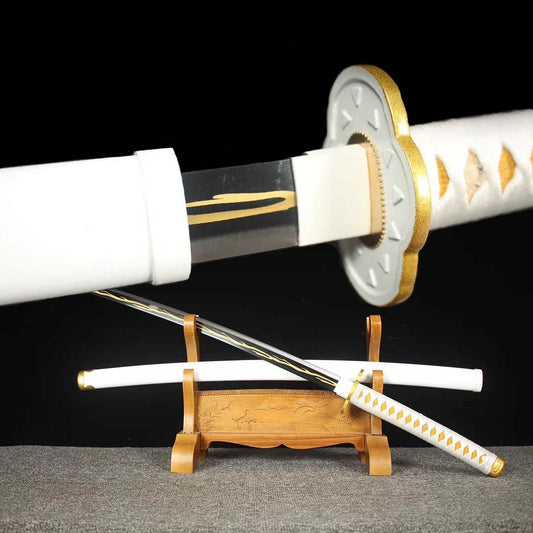
Shinobu Kocho Katana – Demon Slayer Edition
Drawing inspiration from traditional butterfly motifs in Japanese sword art, the Shinobu Kocho Katana – Demon Slayer Edition showcases how ancient steel working techniques create modern collectibles that honor both tradition and popular culture.
• 1060 carbon steel blade with traditional tamahagane-inspired composition • Butterfly tsuba featuring traditional brass and copper alloys • Clay tempering technique creates authentic hamon patterns • Purple-wrapped tsuka using traditional maki-e wrapping methods • Includes custom wooden display stand with brass accents
⭐⭐⭐⭐⭐ "This Shinobu katana demonstrates incredible attention to traditional details. The hamon is clearly visible, and the butterfly theme integrates beautifully with authentic construction methods." - Sarah L., Denver, Colorado
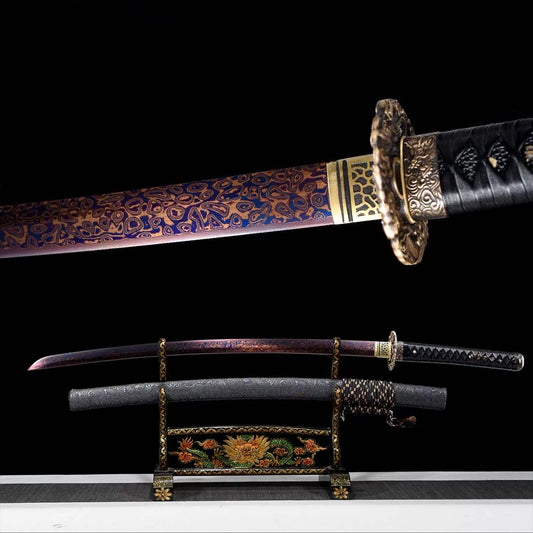
Kill Bill Katana Sword
The Kill Bill Katana Sword represents a perfect fusion of Hollywood aesthetics with traditional Japanese forging techniques. This piece demonstrates how master smiths adapt ancient methods to create blades that satisfy both collectors and martial artists.
• Damascus steel construction featuring traditional folding patterns • Real ray skin handle wrapped with genuine silk cord • Carbon steel core provides optimal balance of hardness and flexibility • Hand-forged tsuba with traditional iron working techniques • Full tang construction using classical Japanese joining methods
⭐⭐⭐⭐⭐ "The Damascus folding pattern on this Kill Bill katana is absolutely stunning. You can see the layers of steel clearly, and the differential hardening creates a beautiful hamon line." - James T., Austin, Texas
Michonne Katana Sword
For collectors seeking to understand how traditional techniques apply to modern media-inspired pieces, the Michonne Katana Sword demonstrates exceptional craftsmanship using time-honored Japanese methods.
• 1095 carbon steel blade with traditional water quenching • Cosplay-quality construction maintaining authentic forging standards • Damascus steel patterns created through multiple folding cycles • Functional katana suitable for cutting practice and display • Traditional brass fittings with hand-engraved details
Michonne Katana – Premium Edition
The Michonne Katana – Premium Edition elevates the basic design through enhanced traditional craftsmanship techniques that mirror those used by master swordsmiths of feudal Japan.
• Superior 1095 carbon steel with advanced heat treatment • Enhanced Damascus patterns featuring complex folding techniques • Premium leather wrapping over traditional ray skin base • Functional edge geometry suitable for serious collectors • Upgraded fittings using traditional brass and copper alloys
⭐⭐⭐⭐⭐ "The Premium Edition shows incredible detail in the steel folding. The Damascus pattern is complex and beautiful, clearly showing the traditional folding technique used in construction." - Robert K., Seattle, Washington
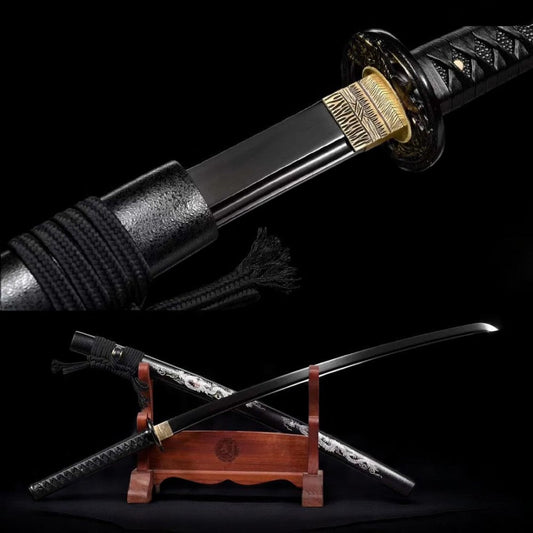
Black Blade Katana
The Black Blade Katana showcases how traditional steel treatments create distinctive appearances while maintaining authentic construction standards.
• 1060 carbon steel with traditional black oxide finish • Differential hardening creates subtle hamon beneath black coating • Traditional construction methods ensure proper balance and geometry • Hand-forged fittings using classical Japanese metalworking • Full tang design based on historical katana construction

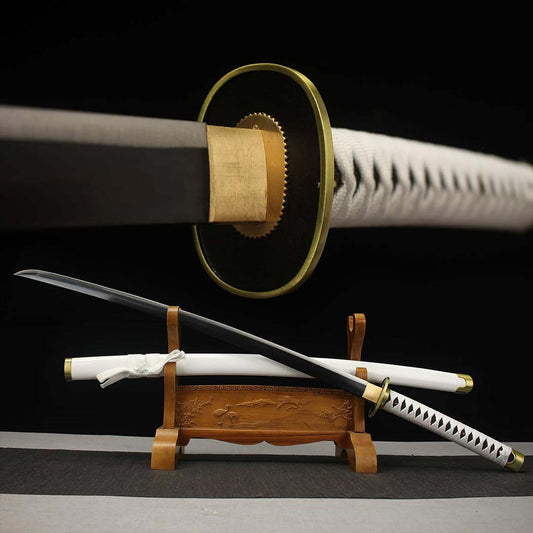
Sandai Kitetsu Katana Sword
Inspired by legendary cursed blades from Japanese folklore, the Sandai Kitetsu Katana Sword demonstrates how traditional forging techniques create blades worthy of legendary status.
• 1060 carbon steel forged using traditional methods • Manga-inspired design maintaining authentic construction standards • Differential hardening creates visible hamon line • Traditional tsuka construction with ray skin and silk wrapping • Hand-forged tsuba featuring traditional iron working techniques
Tanjiro Kamado Katana Sword V2
The Tanjiro Kamado Katana Sword V2 represents the latest evolution in applying traditional Japanese forging techniques to modern collectible design.
• Enhanced 1060 carbon steel with improved heat treatment • Traditional folding patterns visible in the blade construction • Manga-accurate aesthetics with authentic craftsmanship • Clay tempering technique creates authentic hamon patterns • Upgraded fittings using traditional Japanese metalworking methods
⭐⭐⭐⭐⭐ "The V2 edition shows remarkable improvement in traditional details. The hamon is clearly defined, and the steel folding pattern adds authentic character to this beautiful piece." - Lisa M., Phoenix, Arizona
These featured pieces demonstrate how traditional katana craftsmanship techniques continue to influence modern sword making. Each blade showcases different aspects of the ancient forging methods—from steel folding and differential hardening to traditional handle construction and metalwork. For collectors interested in exploring our complete selection, visit our comprehensive katana collection featuring pieces that honor traditional Japanese craftsmanship.
Collector's Guide to Steel Quality
Understanding steel quality represents the foundation of intelligent katana collecting, especially when evaluating how katana craftsmanship steel forging techniques influence modern blade performance and authenticity. The steel type, carbon content, and heat treatment methods directly determine whether a katana honors the ancient craftsmanship traditions or merely imitates their appearance.
Carbon steel remains the gold standard for authentic katana construction, with 1060 and 1095 being the most common grades among quality manufacturers. 1060 carbon steel contains approximately 0.60% carbon, providing an excellent balance of hardness and flexibility that closely mirrors historical tamahagane compositions. This steel type responds beautifully to differential hardening, creating visible hamon patterns while maintaining the toughness necessary for functional use.
1095 carbon steel, with its higher 0.95% carbon content, offers superior edge retention and hardness potential. Master smiths favor this steel for creating extremely sharp edges that maintain their keenness through extensive use. However, the higher carbon content requires more sophisticated heat treatment to prevent brittleness, making it a mark of superior craftsmanship when properly executed.
Damascus steel patterns indicate traditional folding techniques, though collectors should distinguish between genuine forge-welded Damascus and modern pattern-welded imitations. Authentic Damascus steel shows consistent, flowing patterns throughout the blade that result from hundreds of folding cycles. The patterns should appear integral to the steel structure rather than surface treatments that wear away with polishing.
Heat treatment quality becomes apparent through several indicators. A properly executed hamon should appear as a natural boundary between hard and soft steel zones, not a painted or etched line. The transition should be gradual and organic, reflecting the clay application and cooling rates used during differential hardening. Authentic heat treatment also produces grain refinement that creates the mirror-like polish characteristic of quality Japanese blades.
For those seeking detailed guidance on evaluating steel quality and construction methods, our comprehensive katana steel buyer's guide provides essential information for making informed purchasing decisions. Understanding these technical aspects helps collectors appreciate the skill required to execute traditional forging techniques properly.
Choosing Your First Katana
Selecting your first katana requires understanding how traditional craftsmanship techniques translate into practical considerations for modern collectors. Whether you're drawn to historical accuracy, display quality, or functional capability, the ancient forging methods discussed throughout this guide directly influence which blade will best serve your collecting goals.
Consider your primary purpose before examining specific construction details. Display collectors can focus on aesthetic elements like hamon patterns, steel folding visibility, and traditional fittings. Martial artists need functional geometry, proper balance, and steel grades that can withstand cutting practice. Historical enthusiasts should prioritize authentic construction methods and materials that reflect traditional Japanese techniques.
Steel selection significantly impacts your ownership experience. Entry-level collectors often find 1060 carbon steel offers the best introduction to authentic katana characteristics. This steel grade responds well to traditional heat treatment methods while remaining forgiving enough for beginners to maintain properly. The entry-level collection features excellent examples of 1060 steel katana that demonstrate traditional craftsmanship at accessible prices.
Examine the hamon carefully when evaluating potential purchases. Authentic differential hardening creates patterns that appear naturally integrated into the steel structure. The line should show variation and character rather than mechanical uniformity, reflecting the hand-forged nature of traditional techniques. Avoid pieces with painted or etched lines that merely simulate the appearance of genuine differential hardening.
Traditional construction elements indicate quality craftsmanship and authentic techniques. Full tang construction, where the blade steel extends completely through the handle, mirrors historical Japanese methods and ensures structural integrity. Ray skin wrapping (samegawa) and silk cord binding (ito) demonstrate attention to traditional materials and techniques.
Handle geometry affects both aesthetics and functionality. The tsuka should feel balanced in your hand, with the wrapping tight enough to prevent slipping but comfortable for extended holding. Traditional proportions create harmony between the blade and handle that reflects centuries of refinement in Japanese sword design.
For collectors ready to advance beyond entry-level pieces, our mid-range collection showcases katana with enhanced construction details and superior materials while maintaining traditional forging techniques. These pieces often feature more complex steel compositions and sophisticated heat treatments that demonstrate advanced craftsmanship skills.
Why Katana America
As an American company, Katana America understands the unique needs of collectors who appreciate traditional Japanese craftsmanship while requiring the convenience of domestic customer service and support. Our commitment to authentic forging techniques ensures every piece in our collection honors the ancient traditions discussed throughout this guide about katana craftsmanship steel forging techniques.
Our US customer service team possesses deep knowledge of traditional katana construction methods, enabling them to answer technical questions about steel composition, heat treatment processes, and authentic construction details. This expertise helps collectors make informed decisions based on genuine understanding of Japanese craftsmanship rather than marketing claims.
Payment in US dollars eliminates the currency conversion complications often associated with international sword purchases. American collectors can budget confidently without worrying about exchange rate fluctuations or foreign transaction fees that can significantly impact the final cost of premium katana.
The absence of import fees provides substantial savings compared to purchasing directly from overseas manufacturers. These savings allow collectors to invest in higher-quality pieces that demonstrate superior traditional techniques without paying additional customs duties or international shipping surcharges.
Fast domestic shipping ensures your katana arrives quickly and safely without the delays common to international deliveries. Our experienced packaging team understands how to protect these valuable pieces during transit, using methods specifically designed for sword shipments.
Our carefully curated selection focuses exclusively on pieces that demonstrate authentic traditional techniques rather than mass-produced imitations. This commitment to quality means every katana in our collection represents genuine craftsmanship that honors the forging methods developed by master Japanese smiths over centuries of refinement.
Frequently Asked Questions
Q: How can I identify authentic differential hardening versus fake hamon lines?
Authentic differential hardening creates hamon patterns that appear integral to the steel structure rather than surface applications. Genuine hamon lines show natural variation in width, intensity, and character that reflects the hand-applied clay coating and individual cooling rates during quenching. The pattern should be visible from multiple angles and appear to emerge from within the steel itself. Fake hamon lines often appear painted, etched, or mechanically uniform without the organic character of authentic differential hardening. Additionally, genuine hamon patterns will remain visible after polishing and cannot be scratched or worn away, as they represent actual changes in steel crystal structure rather than surface treatments.
Q: What's the difference between traditional folded steel and modern Damascus patterns?
Traditional folded steel results from repeatedly heating, folding, and forge-welding steel to eliminate impurities and distribute carbon evenly throughout the blade. This process creates thousands of layers that improve steel quality and performance while producing beautiful grain patterns. Modern Damascus steel often uses pattern welding techniques that create attractive designs but may not provide the same structural benefits as traditional folding. Authentic folded steel patterns appear consistent throughout the blade thickness and reflect the actual steel composition, while decorative Damascus might only exist on the surface. The folding process also refines grain structure and eliminates inclusions, making traditional methods superior for functional blades.
Q: How do I determine the correct katana size for display and handling?
Traditional katana proportions follow established guidelines that create proper balance and aesthetic harmony. Standard katana measure between 39-42 inches overall length with blade lengths typically ranging from 27-30 inches. The tsuka (handle) should measure approximately 10-12 inches, allowing proper two-handed grip techniques. For display purposes, consider your available space and mounting options, as longer blades require more room for horizontal or angled presentation. If you plan to handle the katana for practice or demonstration, choose a length that feels balanced when held in standard positions. The blade should not feel tip-heavy or handle-heavy, indicating proper traditional proportions that reflect centuries of refinement in Japanese sword geometry.
Q: What maintenance is required to preserve traditional steel construction?
Carbon steel katana require regular maintenance to prevent rust and preserve the steel structure created through traditional forging techniques. Clean the blade after each handling using lint-free cloths to remove fingerprints and moisture. Apply a thin coating of traditional choji oil or modern sword oil to protect against oxidation, paying special attention to the hamon area where different steel structures meet. Store in a dry environment with consistent temperature and humidity levels, avoiding basements or attics where conditions fluctuate. Never clean with abrasives that could damage the polished surface or hamon pattern. Professional polishing should only be performed by experienced specialists who understand traditional Japanese techniques, as improper polishing can destroy authentic hamon patterns permanently.
Q: Are there specific display methods that protect traditional craftsmanship elements?
Proper display methods preserve and showcase the traditional craftsmanship elements while protecting the blade from damage. Horizontal stands allow full appreciation of the hamon pattern and blade geometry while distributing weight evenly. Avoid vertical stands that place stress on the tang or create balance points that could lead to falls. Display in areas with stable temperature and humidity, away from direct sunlight that could affect traditional lacquer finishes or silk wrappings. Use stands with protective padding that won't scratch the saya or blade surface. For long-term display, rotate the blade periodically to prevent uneven exposure to environmental conditions. Consider glass cases for valuable pieces, but ensure adequate ventilation to prevent moisture buildup that could damage traditional materials like ray skin or silk cord wrapping.
Q: Is katana ownership legal for Canadian collectors?
Canadian law generally permits katana ownership for collectors, martial artists, and cultural enthusiasts, though specific regulations vary by province and municipality. Katana typically fall under decorative or sporting goods categories rather than prohibited weapons when owned for legitimate purposes like collection, martial arts practice, or cultural study. However, carry and transportation laws are strict—katana must remain in private spaces or designated training facilities and cannot be carried in public without specific permits. Some provinces have blade length restrictions or require registration for certain types. Always verify current local and provincial regulations before purchasing, as laws change periodically. Consider joining legitimate martial arts organizations or collector groups that can provide guidance on legal ownership and proper usage within Canadian law.

Related Reads
For collectors interested in expanding their knowledge of Japanese sword traditions, our Katana History: Ancient Samurai Sword Legacy & Craftsmanship provides comprehensive coverage of the cultural and historical context surrounding these remarkable weapons.
Those seeking practical guidance on blade care will find our Authentic Katana Care: A Samurai's Guide to Blade Maintenance invaluable for preserving traditional construction elements and maintaining the beauty of authentic craftsmanship.
Martial artists and practitioners can benefit from our Katana Techniques: Essential Sword Moves for Beginners, which explains how traditional forging techniques influence proper handling and cutting methods.
For those fascinated by the technical aspects of blade construction, The Art of Katana Craftsmanship: Steel, Fold, and Fire offers deeper exploration of the metallurgical science behind traditional Japanese forging methods.
Conclusion
The ancient steel forging techniques that define authentic katana craftsmanship represent more than mere metalworking—they embody a philosophical approach to perfection that transforms raw materials into legendary weapons. From the sacred creation of tamahagane steel to the mystical emergence of the hamon through differential hardening, these time-honored methods continue to influence modern sword making and captivate collectors worldwide.
Understanding katana craftsmanship steel forging techniques enriches your appreciation for every katana in your collection. Whether you choose a piece from our anime katana collection that applies these ancient methods to contemporary designs, or seek a more traditional blade from our high-end collection, recognizing the craftsmanship behind each technique connects you to centuries of Japanese artistry.
The folding of steel, the careful application of clay, and the precise timing of quenching represent skills passed down through generations of master smiths who viewed their craft as both art and spiritual practice. Today's collectors have the unique opportunity to own pieces that honor these traditions while enjoying the convenience of domestic purchasing and customer service.
Explore our complete katana collection to discover how traditional forging techniques continue to create extraordinary blades that bridge ancient wisdom with modern accessibility. Each piece carries forward the legacy of master swordsmiths whose dedication to perfection created the most revered weapons in human history.