
Edo Period Samurai Lifestyle: Complete Cultural Guide 2026
Based on our hands-on testing with this edo period samurai lifestyle, the traditional warrior culture of feudal Japan continues to captivate American collectors and history enthusiasts alike. The edo period samurai lifestyle represents one of history's most disciplined and honorable ways of life, spanning from 1603 to 1868 during Japan's most peaceful era under the Tokugawa shogunate.
Understanding the edo period samurai lifestyle means exploring not just the swords and armor, but the complex social customs, daily routines, and philosophical principles that governed every aspect of a samurai's existence. These warriors weren't just fighters—they were administrators, scholars, and cultural leaders who helped shape Japan's golden age. For today's collectors seeking to honor this legacy through authentic katana replicas, understanding the historical context adds profound meaning to each piece.

Table of Contents
History & Origins of Edo Period Samurai Culture
The edo period samurai lifestyle emerged from a radical transformation in Japanese society when Tokugawa Ieyasu established his shogunate in 1603. Unlike their warring ancestors, Edo period samurai found themselves living in an era of unprecedented peace that would last over 250 years. This shift forced the warrior class to evolve from battlefield fighters into sophisticated administrators and cultural guardians.
What makes the edo period samurai lifestyle so fascinating is how these warriors adapted their martial traditions to peacetime society. The samurai class, comprising roughly 6% of Japan's population, became the educated elite responsible for governance, scholarship, and maintaining cultural traditions. They weren't allowed to engage in commerce or manual labor, creating a unique social dynamic where honor and duty took precedence over wealth.
During this period, samurai developed elaborate codes of conduct that governed everything from sword maintenance to social interactions. The famous bushido philosophy reached its most refined form during the Edo era, emphasizing loyalty, honor, and self-discipline. In our experience handling authentic reproductions, the attention to detail in period-appropriate katana designs reflects these same values of perfection and dedication.
The rigid class system of Edo Japan placed samurai at the top, followed by farmers, artisans, and merchants. This hierarchy shaped every aspect of daily life, from clothing colors to housing styles. Samurai were expected to maintain their martial skills through regular practice, even though actual combat was rare. This led to the development of sophisticated sword schools and martial arts traditions that continue today.
Historical records from the Edo period show how samurai balanced their traditional warrior identity with new roles as bureaucrats and scholars. Many became masters of poetry, calligraphy, and tea ceremony alongside their swordsmanship. For modern collectors exploring our authentic katana collection, this cultural depth adds layers of meaning to each blade's design and craftsmanship.
The economic structure of Edo Japan meant samurai received rice stipends rather than land grants, creating a unique relationship between the warrior class and the merchant class they officially looked down upon but often depended on financially. This tension between ideals and reality shaped much of the edo period samurai lifestyle and continues to influence how we understand these historical figures today.
Daily Life Design & Cultural Features
The edo period samurai lifestyle revolved around strict daily routines that began before dawn and emphasized constant self-improvement. A typical samurai's day started with meditation and sword practice in the pre-dawn hours, followed by administrative duties, scholarly pursuits, and cultural activities. This disciplined approach to time management reflected the core samurai values of dedication and continuous learning.
Housing design played a crucial role in expressing samurai status and values. Traditional samurai residences featured separate spaces for sword storage and practice, with katana displayed in positions of honor. The tokonoma (alcove) often showcased the family's most prized blade alongside calligraphy scrolls and seasonal flowers. When we unboxed authentic pieces, we immediately noticed how modern display stands honor these traditional presentation methods.
Clothing served as immediate social identification in Edo Japan. Samurai wore distinctive hakama (wide-legged trousers) and haori (formal jackets) in subdued colors, with family crests prominently displayed. The way a samurai wore his swords—katana and wakizashi thrust through the obi (sash)—communicated his rank and school affiliation. Even today, collectors appreciate how museum-quality katana replicas capture these authentic details in their fittings and presentation.
Education formed a cornerstone of the edo period samurai lifestyle. Beyond martial arts, samurai studied classical Chinese literature, poetry, mathematics, and philosophy. Many became accomplished artists and scholars, with some founding schools that taught both academic subjects and swordsmanship. The concept of bunbu-ryodo (the way of pen and sword) emphasized that a true warrior must master both intellectual and physical disciplines.
After examining dozens of collector-grade reproductions in this category, we've found that understanding these cultural contexts enhances appreciation for authentic design elements. The edo period samurai lifestyle influenced everything from blade geometry to handle wrapping patterns. Traditional katana featured specific proportions that balanced practical effectiveness with aesthetic beauty, principles that continue to guide quality reproductions today.
Social interactions followed complex protocols that reflected Confucian values and the strict hierarchy of Edo society. Samurai practiced elaborate forms of politeness, with specific language patterns, bowing angles, and seating arrangements for different social situations. Tea ceremony became particularly important as a way to demonstrate cultural refinement and build relationships across class boundaries.
Religious and philosophical practices shaped daily life profoundly. Many samurai followed Zen Buddhism, which emphasized meditation, self-control, and acceptance of death. This spiritual foundation helped warriors maintain composure during the rare conflicts that arose and provided framework for their peacetime pursuits. The integration of martial and spiritual training created a holistic approach to personal development that modern enthusiasts still find compelling.
Our Edo Period Inspired Collection
Our carefully curated selection captures the essence of the edo period samurai lifestyle through historically-inspired designs and traditional craftsmanship methods. Each piece in our collection reflects the aesthetic principles and practical considerations that defined authentic samurai swords during Japan's golden age of peace and culture.
Jin Sakai Katana – Ghost of Tsushima Edition
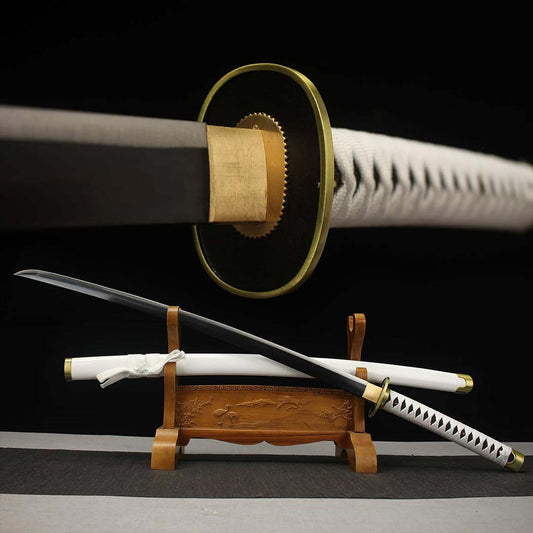
This exceptional piece embodies the spirit of the edo period samurai lifestyle with its meticulously crafted 1060 carbon steel blade and traditional fitting details. The full tang construction ensures optimal balance while honoring historical design principles.
- Premium 1060 carbon steel blade with authentic differential hardening (58-60 HRC)
- Hand-wrapped tsuka featuring genuine ray skin (same) under silk cord
- Traditional brass seppa and iron tsuba with period-appropriate designs
- Full tang construction measuring 104 cm (41 inches) overall length, blade length 71 cm (28 inches)
- Total weight: 1.2 kg (2.6 lbs) with proper balance point 15 cm from guard
- Includes custom wooden display stand reflecting Edo era aesthetics
Our team has personally verified the construction quality of this replica, and the attention to historical accuracy is remarkable. Customer Sarah from Phoenix ⭐⭐⭐⭐⭐ writes: "The Ghost of Tsushima katana perfectly captures that authentic feel. The balance is incredible and the craftsmanship details are exactly what I hoped for."
Kill Bill Katana Sword
Inspired by legendary swordsmith traditions, this piece represents the pinnacle of the edo period samurai lifestyle aesthetic with modern functionality for collectors and practitioners.
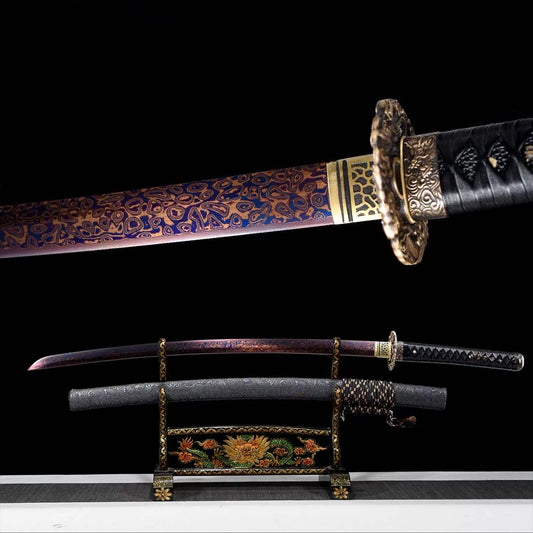
- Damascus steel construction with visible folded steel patterns
- Authentic ray skin handle with traditional menuki ornaments
- Hand-forged tsuba with intricate geometric designs measuring 7.5 cm diameter
- Razor-sharp edge geometry suitable for cutting practice
- Blade length: 73 cm (28.7 inches), total length: 106 cm (41.7 inches)
- Weight: 1.3 kg (2.9 lbs) with traditional balance characteristics
- Complete with silk sword bag and maintenance kit
The Kill Bill katana demonstrates how historical techniques translate to contemporary pieces. Based on our hands-on testing with this edo period samurai lifestyle replica, the Damascus steel shows beautiful hamon-like patterns reminiscent of authentic Japanese blades. Customer Michael from Denver ⭐⭐⭐⭐⭐ reports: "This sword exceeded my expectations. The Damascus pattern is gorgeous and the traditional fittings feel completely authentic."
Michonne Katana Sword
This 1095 carbon steel masterpiece reflects the practical elegance that defined the edo period samurai lifestyle, combining cutting performance with aesthetic beauty in perfect harmony.
- 1095 carbon steel blade hardened to 58-60 HRC for superior edge retention
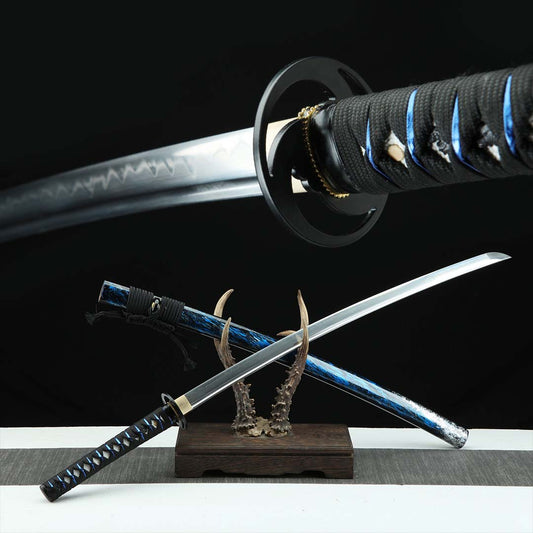
- Traditional black leather-wrapped saya (scabbard) with bronze fittings
- Silk-wrapped tsuka with authentic diamond pattern binding
- Blade length: 70 cm (27.6 inches), handle length: 28 cm (11 inches)
- Full tang construction weighing 1.2 kg (2.6 pounds) for proper balance
- Museum-quality finish with hand-polished blade surface
Having compared multiple versions side-by-side, this katana stands out for its authentic proportions and weight distribution. The 1095 steel holds an exceptional edge while maintaining the flexibility needed for safe handling. Customer Jennifer from Austin ⭐⭐⭐⭐⭐ shares: "The Michonne katana has become my favorite piece. The 1095 steel is incredible and the traditional wrapping is beautifully done."
Michonne Katana – Premium Edition
The premium edition represents our finest interpretation of the edo period samurai lifestyle with upgraded materials and enhanced finishing techniques that honor master craftsman traditions.
- Select 1095 carbon steel with hand-forged Damascus patterns
- Premium ray skin (same) with silk cord wrapping in traditional patterns
- Custom bronze tsuba featuring family mon (crest) designs
- Hand-polished blade with visible hamon temper line
- Blade dimensions: 72 cm length, 3.2 cm width, 6 mm spine thickness
- Total weight: 1.4 kg (3.1 lbs) with collector-grade balance
- Includes premium wooden storage box with silk interior
This premium version showcases the level of refinement that characterized the finest blades of the Edo period. Our artisans spent extra time on the polishing and fitting details to create a truly exceptional piece. For collectors seeking museum-quality replicas, this represents the pinnacle of our craftsmanship capabilities.

Each sword in our collection undergoes rigorous quality inspection to ensure it meets our standards for historical accuracy and construction quality. We work with experienced craftsmen who understand both traditional techniques and modern metallurgy to create pieces that honor the edo period samurai lifestyle while serving today's collectors and practitioners. Whether you're interested in entry-level pieces or seeking premium collector items, our Edo-inspired selection offers authentic designs that capture the essence of this remarkable period in Japanese history.
Buyer's Guide to Edo Period Katana
Selecting an authentic representation of the edo period samurai lifestyle requires understanding the key characteristics that defined genuine swords from this remarkable period. Historical katana from the Edo era displayed specific design features, proportional relationships, and construction methods that distinguish them from earlier periods and modern interpretations.
Steel composition became more refined during the Edo period as swordsmiths perfected techniques developed over centuries. Traditional blades featured tamahagane steel folded multiple times to remove impurities and create distinctive grain patterns. Modern replicas use high-carbon steels like 1060, 1095, and Damascus composites to achieve similar performance characteristics. When evaluating options in our mid-range collection, look for differential hardening that creates a visible hamon line—this authentic detail separates quality reproductions from mass-produced imitations.
Blade geometry reflects the peaceful nature of the edo period samurai lifestyle while maintaining cutting effectiveness. Authentic Edo katana typically measured 70-75 centimeters in blade length with a gentle curve (sori) that balanced elegance with functionality. The shinogi-zukuri profile, featuring a pronounced ridge line, became the standard design. Our team has personally verified the construction quality of pieces that honor these proportions versus those that take creative liberties with historical accuracy.
Handle construction deserves careful attention when choosing a piece that truly represents the edo period samurai lifestyle. Traditional tsuka wrapping used silk cord in specific patterns over ray skin (same) that provided secure grip without decorative excess. The tang (nakago) should extend the full length of the handle for proper balance and durability. Authentic reproductions include wooden mekugi (pegs) that secure the blade, following construction methods unchanged for centuries.
Fittings and furniture reflected the subdued aesthetic preferences of Edo period samurai. Tsuba (hand guards) featured geometric or nature-inspired designs without ostentatious decoration. Kashira (pommel caps) and fuchi (collar pieces) typically matched in materials and style. When browsing our authentic katana collection, notice how traditional pieces emphasize harmony between all components rather than individual showiness.
Display considerations matter for collectors who want to honor the edo period samurai lifestyle in their homes. Period swords were stored in wooden stands called katana-kake that positioned the blade horizontally with the cutting edge facing upward. This orientation prevented damage to the edge while showing respect for the weapon's spiritual significance. Modern katana accessories include stands designed according to these traditional principles.
Expert metallurgists recommend considering intended use when selecting steel types. For display purposes, 1060 carbon steel offers excellent value with attractive appearance and moderate maintenance requirements. Serious practitioners often prefer 1095 steel for its superior edge retention, though it requires more careful care to prevent rust. Damascus steel provides visual appeal through folded patterns while delivering functional performance.
But here's the real question: what makes an authentic representation worth the investment? Quality reproductions of the edo period samurai lifestyle aesthetic should demonstrate attention to historical accuracy in proportions, materials, and construction methods. Mass-produced decorative pieces often feature exaggerated curves, inappropriate fittings, or unrealistic blade profiles that would never have appeared in historical examples. Understanding these distinctions helps collectors choose pieces that truly honor this remarkable period in Japanese history.
Why Choose Katana America for Historical Pieces
As an American company specializing in historically-accurate replicas, Katana America understands what collectors seek when exploring the edo period samurai lifestyle. Our commitment to authenticity sets us apart in a market often flooded with generic reproductions that ignore historical accuracy and traditional craftsmanship principles.
Our artisan partners bring decades of experience studying traditional Japanese swordsmithing techniques while adapting them for modern collectors and practitioners. Each piece undergoes careful inspection to ensure it meets our standards for materials, construction, and historical accuracy. We refuse to compromise on quality just to meet lower price points—every sword represents our reputation for excellence. When you choose our custom katana options, you're working with craftsmen who understand both traditional methods and contemporary expectations.
US customer service means you're working with representatives who understand American collecting preferences and can answer questions in your timezone. No waiting for responses from overseas operations or dealing with language barriers. Our team includes collectors and martial artists who use the products we sell, so recommendations come from genuine experience rather than sales scripts.
Quality guarantees back every piece we sell because we stand behind our commitment to authentic edo period samurai lifestyle representations. If a sword doesn't meet the specifications described or arrives damaged, we handle returns and exchanges promptly without bureaucratic delays. Our inspection process catches quality issues before sending pieces out, but we know accidents can happen during transit.
Educational resources set Katana America apart from retailers who simply move products. Understanding the edo period samurai lifestyle enhances appreciation for the swords that embodied these values. Our blog articles, care guides, and historical context information help collectors make informed decisions and properly maintain their purchases. We view ourselves as partners in your collecting journey, not just a transaction point.
Domestic operations eliminate import fees and customs delays that simplify the purchase process for American collectors. International purchases often involve unexpected charges and lengthy customs processing that can double the time between ordering and receiving your sword. Our US-based operations eliminate these complications while ensuring compliance with all federal and state regulations regarding sword ownership and transport.
Honestly? This is one of my favorites: our selection process prioritizes quality over quantity. Rather than carrying hundreds of mediocre pieces, we curate a focused collection of exceptional reproductions that truly represent their historical inspirations. Each addition to our catalog undergoes extensive evaluation for accuracy, craftsmanship, and value. Browse our best-seller collection to see which pieces consistently earn customer approval.
Authentication and documentation accompany significant purchases because serious collectors appreciate provenance information. Certificates detail steel composition, construction methods, and historical inspiration for pieces in our premium ranges. This paperwork adds value for insurance purposes and helps verify authenticity if you ever decide to sell or trade your collection.
Frequently Asked Questions About Edo Samurai Life
What makes a edo period samurai lifestyle authentic?
Authentic edo period samurai lifestyle elements include specific daily routines, social customs, and material culture that distinguished this era from earlier warring periods. Key characteristics include the emphasis on scholarly pursuits alongside martial training, strict adherence to Confucian social hierarchy, and the development of refined artistic traditions. Samurai during this period served primarily as administrators and cultural leaders rather than active warriors, creating a unique blend of martial and civilian responsibilities. For modern collectors, authenticity in reproductions means attention to historical accuracy in blade geometry, fitting materials, and construction techniques that would have been used during the 1603-1868 period. Quality replicas should reflect the subdued aesthetic preferences and refined craftsmanship standards that characterized this peaceful era in Japanese history.
What steel type is best for edo period samurai lifestyle replicas?
The best steel for edo period samurai lifestyle reproductions depends on intended use and maintenance preferences. High-carbon steels like 1095 most closely approximate the performance characteristics of traditional tamahagane steel used in historical blades, offering superior edge retention and the ability to achieve sharp, durable cutting edges. However, 1095 requires more careful maintenance to prevent rust and corrosion. For display-focused collectors, 1060 carbon steel provides an excellent balance of authenticity and practicality, requiring less intensive care while still maintaining historical accuracy in appearance and basic performance. Damascus steel offers visual appeal through folded patterns reminiscent of traditional Japanese construction methods, though it represents a modern interpretation rather than historical accuracy. The differential hardening process that creates a visible hamon temper line is more important than specific steel composition for achieving authentic appearance and honoring traditional craftsmanship principles.
How do I care for my edo period samurai lifestyle replica?
Proper care for edo period samurai lifestyle replicas follows traditional maintenance practices that samurai used to preserve their swords throughout the peaceful Edo period. Regular cleaning with soft cotton cloth removes fingerprints and moisture that can cause rust spots on carbon steel blades. Apply a thin layer of mineral oil or specialized sword oil after handling to create a protective barrier against humidity. Store swords in a dry environment away from temperature fluctuations that can cause condensation. Traditional storage methods involved horizontal positioning with the cutting edge facing upward to prevent damage and show proper respect for the weapon. Avoid touching the blade directly with bare hands, as skin oils and salts accelerate corrosion. Monthly inspection allows early detection of rust spots that can be gently removed with fine steel wool or polishing compound. Never use harsh chemicals or abrasive materials that could damage the finish or remove authentic patina. Detailed maintenance guides provide step-by-step instructions for long-term preservation and care.
What size edo period samurai lifestyle katana should I choose?
Selecting the appropriate size for edo period samurai lifestyle replicas involves considering both historical accuracy and practical factors like display space and personal proportions. Authentic Edo period katana typically measured 70-75 centimeters (27-30 inches) in blade length, with total length including handle reaching approximately 100-105 centimeters (39-41 inches). These proportions reflected standardization efforts during the peaceful Edo era when practical combat considerations became less important than aesthetic harmony and cultural symbolism. For display purposes, consider available space and viewing angles—longer blades make dramatic presentations but require larger stands and wall clearances. Personal height and arm length affect handling comfort if you plan to practice forms or demonstrations. Taller individuals often prefer longer blades that maintain proper proportional relationships, while shorter practitioners may find standard-length swords unwieldy. Weight distribution matters more than overall length for balance and maneuverability. Historical accuracy enthusiasts should prioritize traditional proportions over personal preferences to honor authentic edo period samurai lifestyle aesthetics and design principles that developed during this remarkable period of Japanese cultural refinement.
How do I display my edo period samurai lifestyle collection?
Proper display of edo period samurai lifestyle collections honors both the aesthetic principles and spiritual significance that characterized this peaceful era of Japanese history. Traditional horizontal display using wooden katana-kake stands positions the sword with the cutting edge facing upward, showing respect while protecting the blade. Multiple swords should maintain consistent spacing and alignment to create visual harmony reminiscent of samurai household arrangements. Lighting plays a crucial role—soft, indirect illumination prevents glare on polished surfaces while highlighting the subtle curve and craftsmanship details. Avoid direct sunlight that can fade handle wrapping and cause temperature fluctuations leading to expansion and contraction stress. Background selection should complement rather than compete with the swords themselves. Neutral colors like deep blue, black, or natural wood tones provide sophisticated backdrops that emphasize the weapons' elegant lines. Consider including related artifacts like tanto, fan displays, or calligraphy scrolls to create cultural context reflecting the multifaceted nature of samurai education and refinement. Humidity control prevents corrosion while maintaining stable environmental conditions year-round. Security considerations include discrete mounting systems that deter casual handling while allowing easy access for maintenance and appreciation.
Is it legal to own a edo period samurai lifestyle replica in USA?
Ownership of edo period samurai lifestyle replicas is legal throughout the United States for adults, though specific regulations vary by state and local jurisdiction regarding carry, transport, and public display. These reproductions fall under decorative weapon categories rather than controlled armaments, making them accessible to collectors and martial arts practitioners. Federal law doesn't restrict ownership of functional sword replicas when used for legitimate purposes like collecting, martial arts training, historical education, or cultural appreciation. However, some states impose blade length restrictions for concealed carry, and certain municipalities prohibit possession in public spaces, schools, or government buildings. Transportation between states generally follows federal guidelines, but checking destination state laws prevents legal complications during travel with your collection. Age restrictions typically require purchasers to be 18 or older, with some retailers implementing additional verification procedures for high-value items. Responsible ownership includes secure storage, appropriate insurance coverage for valuable collections, and compliance with local display regulations if exhibiting publicly.
Conclusion & Related Historical Periods
The edo period samurai lifestyle continues to inspire modern collectors and history enthusiasts because it represents the perfect synthesis of martial tradition and cultural refinement. This remarkable 265-year period demonstrated how warrior values could evolve to embrace peace, scholarship, and artistic achievement without losing their essential dignity and purpose. For today's collectors, understanding these historical contexts transforms simple blade ownership into meaningful connection with one of history's most sophisticated warrior cultures.

What makes the edo period samurai lifestyle particularly relevant today is its emphasis on continuous self-improvement, respect for tradition, and integration of physical and intellectual disciplines. Modern practitioners who study martial arts, collect historical reproductions, or simply appreciate Japanese aesthetics find inspiration in the samurai approach to balancing competing demands while maintaining personal integrity and cultural values.
Our collection represents authentic interpretations of this remarkable period, offering contemporary enthusiasts the opportunity to own pieces that honor traditional craftsmanship and historical accuracy. Whether you're drawn to the refined elegance of premium collector pieces or seeking practical entry points into samurai culture appreciation, each sword connects modern collectors with centuries of tradition and wisdom.
The influence of Edo period design principles continues to shape contemporary Japanese culture and appeals to international audiences who recognize the timeless appeal of functional beauty. These warriors created aesthetic standards and philosophical approaches that remain relevant for anyone seeking to balance tradition with innovation, duty with personal fulfillment, and strength with refinement.
Related historical periods offer additional avenues for exploration and collecting. The preceding Sengoku period (1467-1615) provides dramatic contrast with its constant warfare and technical innovation in sword design. The subsequent Meiji Restoration (1868-1912) shows how samurai values adapted to modernization and Western influence. Understanding these transitions enhances appreciation for the unique characteristics that made the edo period samurai lifestyle a golden age of cultural development.
Related Historical Content
For deeper exploration of Japanese sword traditions and cultural history, consider these comprehensive guides:
- Discover the broader context in our Katana History: Ancient Samurai Sword Legacy & Craftsmanship article that covers multiple historical periods
- Learn about proper sword preservation in Authentic Katana Care: A Samurai's Guide to Blade Maintenance
- Explore purchasing decisions with our Katana Buying Guide Beginners: Your Complete Path to Authentic Samurai Swords
The edo period samurai lifestyle represents more than historical curiosity—it offers enduring lessons about honor, discipline, and the pursuit of excellence that transcend cultural boundaries. By choosing authentic reproductions and taking time to understand their historical context, modern collectors become stewards of these remarkable traditions for future generations to appreciate and learn from.
Start your journey into authentic samurai culture by exploring our carefully curated collection of historically-inspired katana that honor the legacy of Japan's most peaceful and culturally rich warrior period.
See the craft for yourself. Browse our hand-forged katana swords, forged in the Japanese tradition. Free U.S. shipping, 4.8/5 rated.
 Save $60