Master Traditional Katana Forging: Ancient Japanese Blade Craft
Share
The hammer strikes echo through the mountain forge as sparks dance in the darkness. Steam rises from the glowing steel as the master swordsmith plunges the blade into water, the hiss marking another step in a thousand-year-old ritual. This is not merely metalwork—this is the sacred art of traditional katana forging, where fire, steel, and spirit unite to create Japan's most legendary weapon.
For over a millennium, Japanese swordsmiths have perfected techniques that transform raw tamahagane steel into blades of legendary sharpness and beauty. Understanding how katana is made traditional forging reveals a process where each blade represents hundreds of hours of meticulous craftsmanship, passed down through generations of masters who understood that forging a true katana demands not just skill, but reverence for the ancient ways. Katana Craftsmanship: Ancient Steel
At Katana America, we honor this legacy by offering authentic katanas crafted using these time-honored methods, bringing the artistry of traditional Japanese swordsmithing to collectors across America.

Table of Contents
The Sacred Origins of Katana Forging
The art of katana forging emerged during Japan's Heian period (794-1185), born from the union of metallurgical innovation and spiritual philosophy. Understanding how katana is made traditional forging requires appreciating that unlike European sword-making traditions focused purely on warfare efficiency, Japanese swordsmithing evolved as a sacred craft where the blade's spiritual essence was considered as important as its cutting ability.
Ancient Japanese swordsmiths believed that each katana possessed a soul, shaped by the smith's intention and the purity of his technique. This spiritual dimension elevated sword-making from mere craft to religious practice, with many legendary smiths serving as Buddhist monks or Shinto priests.
The evolution of traditional forging reached its pinnacle during the Kamakura period (1185-1333), when master smiths like Masamune and Muramasa established schools that defined authentic Japanese blade-making for centuries. These masters developed sophisticated techniques like differential hardening, complex steel folding patterns, and the creation of the mesmerizing hamon—the temper line that became the signature of true Japanese craftsmanship.
Today's authentic katanas, including those in our handcrafted collection, continue this legacy by employing the same fundamental techniques that made Japanese blades legendary worldwide. The connection between modern collectors and ancient warriors remains unbroken through these traditional forging methods.
Each region of Japan developed distinct forging styles: the elegant curves of Yamashiro blades, the robust construction of Yamato swords, and the refined beauty of Bizen steel. These regional variations reflect local materials, cultural preferences, and the individual genius of master smiths who spent decades perfecting their craft.
The spiritual aspect of forging remains central to authentic katana creation. Traditional smiths still begin each project with purification rituals, work in sacred spaces, and approach their craft with the reverence their ancestors brought to this noble art. This spiritual foundation distinguishes authentic Japanese blades from mere reproductions.
Understanding Traditional Materials
Traditional katana forging begins with tamahagane, a steel produced exclusively in Japan using ancient smelting methods. This legendary material emerges from a clay furnace called a tatara, where iron-bearing sand and charcoal burn continuously for 72 hours under constant supervision by master smelters.
The tatara process produces a raw steel bloom containing varying carbon levels—from pure iron to high-carbon hagane steel. Master smiths must recognize these different grades by sight, sound, and feel, selecting appropriate pieces for specific blade components. This intimate knowledge of steel represents generations of accumulated wisdom impossible to replicate through modern industrial methods.
Tamahagane's unique properties stem from its irregular carbon distribution and trace elements present in Japanese iron sands. Unlike homogeneous modern steels, tamahagane contains microscopic variations that contribute to the blade's legendary performance characteristics—the ability to hold an incredibly sharp edge while maintaining flexibility that prevents breaking under stress.
For collectors seeking authentic tamahagane craftsmanship, understanding these traditional materials becomes crucial. Modern katanas crafted with respect for tradition use carefully selected carbon steels like 1095 and 1060 that approximate tamahagane's performance characteristics while remaining accessible to contemporary smiths.
The selection process involves separating the tamahagane bloom into distinct grades: shingane (low-carbon core steel), hagane (high-carbon edge steel), and kawagane (medium-carbon jacket steel). Each serves specific structural purposes in the final blade construction, requiring different heat treatments and forging approaches.
Modern traditional smiths working outside Japan often substitute carefully sourced carbon steels that honor the original principles while adapting to available materials. The key lies not in the specific steel source but in the traditional techniques applied to transform raw material into finished blade.
The Ancient Forging Process
Traditional katana forging follows a precise sequence developed over centuries, beginning with the careful preparation of steel components. When examining how katana is made traditional forging, the master smith starts by breaking down the tamahagane or selected steel into manageable pieces, sorting them by carbon content and intended function within the blade structure.
The construction method determines the katana's performance characteristics. Kobuse construction places hard hagane steel along the cutting edge, supported by softer shingane core steel that provides flexibility. Sanmai construction adds kawagane jacket steel on the sides, creating a sophisticated laminated structure that optimizes both hardness and resilience.
Heat management represents the most critical aspect of traditional forging. Ancient smiths developed an intimate understanding of temperature through color recognition—the specific shades of orange and red that indicate optimal working heat for different operations. This knowledge, passed down through apprenticeships lasting decades, remains essential for authentic katana creation.
The forging process itself involves repeated heating, hammering, and folding to homogenize the steel and create the grain structure that gives Japanese blades their legendary toughness. Each hammer blow must be precise, gradually shaping the blade profile while maintaining proper steel distribution throughout the structure.
Clay application before the final heat treatment represents one of the most sophisticated aspects of how katana is made traditional forging. The smith mixes special clay containing charcoal powder and iron filings, applying it in precise patterns that will control the cooling rate during quenching. This clay coat determines where the blade hardens and where it remains flexible.
Modern smiths crafting traditional-style katanas continue these ancient methods, adapting the fundamental principles to contemporary materials and tools while preserving the essential character that makes Japanese blades unique. The patience and skill required remain unchanged from the days of legendary masters.

Clay Tempering and Hamon Creation
The creation of the hamon—the visible temper line that distinguishes authentic Japanese blades—represents the pinnacle of traditional forging artistry. This ethereal pattern results from differential hardening, a technique that hardens the cutting edge while leaving the spine flexible, creating a blade that can cut steel yet bend without breaking.
Clay tempering begins with the careful application of a special mixture containing clay, charcoal powder, and iron filings to the heated blade. The master smith applies this coat in precise patterns, thick along the spine and thin near the edge, controlling exactly how different sections of the blade will cool during the quenching process.
The quenching moment demands absolute precision. The blade, heated to approximately 750°C (1380°F), glows orange-red in the forge light. The smith must read the color perfectly—too hot and the blade becomes brittle, too cool and it won't harden properly. The quench happens in a single fluid motion, plunging the clay-coated blade into water or oil.
As the blade cools, the thin clay coating near the edge allows rapid cooling and creates hard martensite steel, while the thick coating along the spine slows cooling and produces softer pearlite steel. This differential creates internal stress patterns that become visible after polishing, forming the distinctive hamon line that has captivated sword enthusiasts for centuries.
Different hamon patterns reflect individual smith styles and technical approaches. Notare creates a gently undulating line, choji resembles clove flowers, and gunome forms a series of interconnected arcs. Each pattern requires specific clay application techniques and cooling control that master smiths guard as closely held secrets.
Modern katanas in our premium collection often feature authentic hamon created through these traditional methods. The presence of a genuine hamon indicates serious craftsmanship and attention to historical accuracy, distinguishing handcrafted blades from machine-made reproductions.
Our Traditional Katana Collection
Jin Sakai Katana – Ghost of Tsushima Edition
Inspired by the legendary samurai who defended Tsushima Island, this katana embodies the spirit of traditional Japanese swordsmithing with modern functionality. The Jin Sakai katana represents the perfect fusion of historical accuracy and contemporary craftsmanship that defined the golden age of samurai warfare.
- Hand-forged 1060 carbon steel blade with authentic geometry and balance
- Traditional ray skin (same) handle wrapping with cotton ito cord binding
- Full tang construction ensuring structural integrity and authentic feel
- Custom wooden scabbard (saya) with traditional lacquered finish
- Authentic brass fittings including tsuba, fuchi, and kashira components
⭐⭐⭐⭐⭐ "The balance and feel are exactly what I expected from an authentic katana. The craftsmanship rivals pieces I've seen in museums." - Michael K., Denver, Colorado
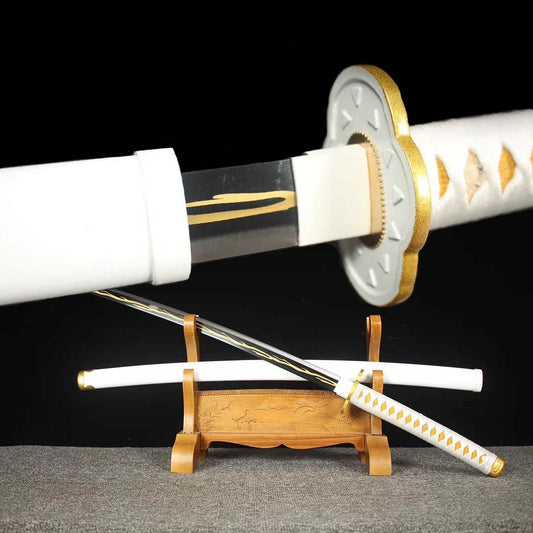
Shinobu Kocho Katana – Demon Slayer Edition
This exquisite blade captures the delicate yet deadly essence of the Insect Hashira's weapon, featuring traditional construction methods with unique aesthetic elements that honor both Japanese sword-making heritage and modern anime artistry.
- 1060 carbon steel blade with differential hardening and visible hamon
- Butterfly-inspired tsuba designed using traditional metalworking techniques
- Premium ray skin handle with silk wrapping in authentic patterns
- Custom scabbard featuring hand-painted butterfly motifs
- Full tang construction with traditional pegged assembly (mekugi)
⭐⭐⭐⭐⭐ "The attention to detail is incredible. You can see the individual forging marks and the hamon is absolutely beautiful." - Sarah L., Phoenix, Arizona
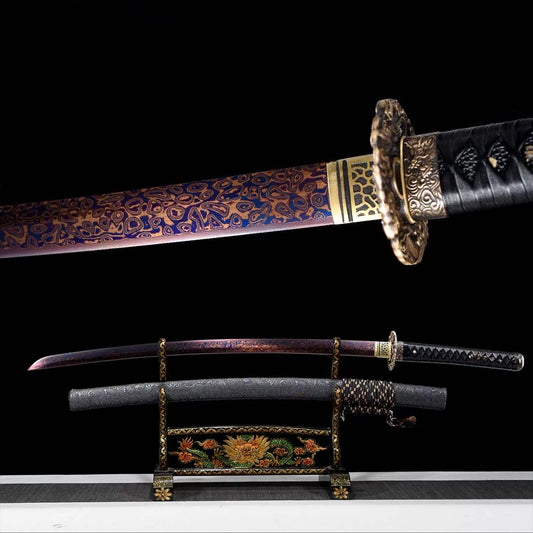
Kill Bill Katana Sword
Drawing inspiration from cinematic sword artistry, this katana combines traditional Japanese forging methods with the dramatic aesthetics that made this blade legendary in popular culture. Each element reflects authentic construction while honoring the film's iconic weapon design.
- Damascus steel blade showcasing traditional folding patterns
- Real ray skin handle (same) with traditional cotton cord wrapping
- Functional balance designed for both display and martial arts practice
- Hand-forged carbon steel construction using time-honored techniques
- Traditional wooden scabbard with authentic lacquered finish
Michonne Katana Sword
This post-apocalyptic warrior's weapon demonstrates how traditional Japanese sword-making principles create blades capable of extraordinary durability. The design balances historical accuracy with the practical demands of a survivor's primary tool.
- 1095 carbon steel blade heat-treated using traditional methods
- Full tang construction with traditional handle assembly techniques
- Damascus steel folding patterns visible throughout the blade
- Authentic ray skin handle with traditional cotton wrapping
- Functional design suitable for both collection and practical use
⭐⭐⭐⭐⭐ "This sword has become the centerpiece of my collection. The Damascus patterns are mesmerizing and the balance is perfect." - Robert T., Austin, Texas
Michonne Katana – Premium Edition
The premium edition elevates traditional craftsmanship to new heights, featuring enhanced materials and additional hand-finishing that showcase the finest aspects of Japanese sword-making artistry. Every detail reflects master-level attention to traditional construction methods.
- Premium 1095 carbon steel with extensive Damascus folding patterns
- Hand-selected ray skin handle materials with premium silk wrapping
- Enhanced carbon steel heat treatment for superior performance
- Premium-grade brass fittings with traditional patina finish
- Master-crafted wooden scabbard with museum-quality lacquer work
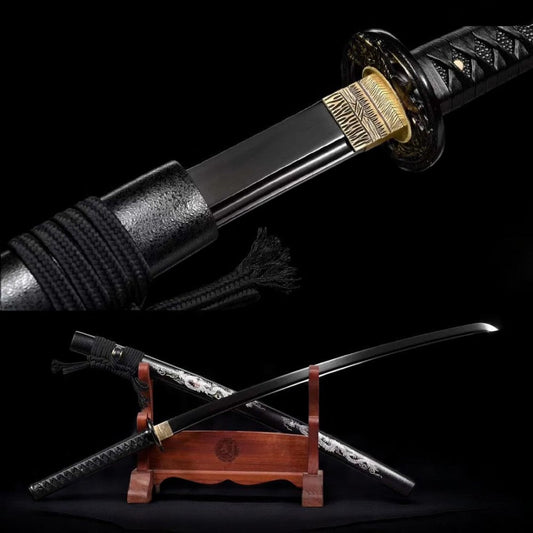
Black Blade Katana
This striking weapon demonstrates how traditional forging techniques can create unique aesthetic effects while maintaining authentic structural integrity. The distinctive black finish results from specialized heat treatment methods rooted in historical Japanese metallurgy.
- 1060 carbon steel blade with traditional geometry and profile
- Specialized heat treatment creating distinctive black oxide finish
- Traditional full tang construction with authentic assembly methods
- Premium handle materials including genuine ray skin and silk wrapping
- Custom scabbard designed to complement the blade's unique aesthetics
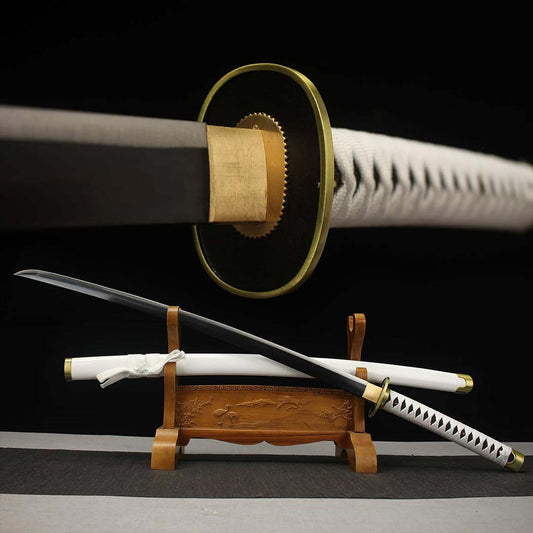
Sandai Kitetsu Katana Sword
Named after the legendary cursed blade from Japanese folklore, this katana embodies the mysterious power attributed to supernatural swords while maintaining complete authenticity to traditional forging methods. The design honors both historical precedent and legendary storytelling.
- 1060 carbon steel blade forged using traditional Japanese techniques
- Distinctive tsuba design inspired by historical Kitetsu school aesthetics
- Traditional handle construction with authentic materials and methods
- Hand-forged carbon steel demonstrating visible grain structure
- Premium wooden scabbard with traditional fittings and finish
⭐⭐⭐⭐⭐ "The folklore behind this blade makes it special, but the craftsmanship makes it extraordinary. You can feel the tradition in every detail." - James M., Seattle, Washington
Tanjiro Kamado Katana Sword V2
This refined version of the beloved demon slayer's weapon showcases how traditional Japanese sword-making adapts to honor both historical accuracy and contemporary storytelling. Every element reflects careful attention to authentic construction methods.
- Enhanced 1060 carbon steel blade with improved heat treatment
- Traditional black and red color scheme honoring both history and anime
- Premium ray skin handle with silk cord wrapping in traditional patterns
- Upgraded brass fittings featuring traditional Japanese metalworking techniques
- Custom scabbard with improved lacquer finish and authentic hardware

Reading the Blade: Quality Indicators
Understanding quality indicators in traditional katanas requires knowledge of both visible characteristics and subtle details that distinguish authentic craftsmanship from mass production. The trained eye can recognize superior work through specific markers that reflect traditional forging methods and attention to historical accuracy.
The hamon represents the most obvious quality indicator in authentic Japanese blades. Genuine differential hardening creates a complex crystalline structure visible as a flowing line between the hard edge and softer spine. Machine-etched imitations lack the depth and natural irregularity of authentic clay tempering, appearing as shallow surface decorations rather than structural features.
Grain structure visibility indicates hand-forged construction versus machine manufacturing. Traditional folding techniques create distinctive patterns throughout the steel that become apparent after proper polishing. These forging marks, called kitae-hada, should appear as natural flow lines following the blade's geometry rather than artificial surface textures.
For guidance in recognizing these quality markers, our Choose Your Katana Steel: A Buyer's Guide provides detailed explanations of different steel types and their characteristic appearances.
Handle construction reveals commitment to traditional methods through material selection and assembly techniques. Authentic ray skin (same) shows natural patterns impossible to replicate artificially. The wrap (ito) should follow historical patterns with proper tension and diamond-shaped gaps (hineri) that indicate hand-wrapping rather than machine application.
Tang construction provides crucial structural information about blade quality. Full tang katanas feature steel extending completely through the handle, secured with traditional bamboo pegs (mekugi). The tang should show forge marks and possibly the smith's signature (mei), indicating individual craftsmanship rather than industrial production.
Balance and geometry reflect the maker's understanding of traditional proportions developed over centuries of refinement. Authentic katanas exhibit specific curvature (sori) and mass distribution that creates effortless handling characteristics. Poor reproductions often feel blade-heavy or exhibit awkward balance points that betray their lack of historical accuracy.
Choosing Your Authentic Katana
Selecting an authentic katana requires careful consideration of your specific needs, experience level, and appreciation for traditional craftsmanship. Whether seeking your first blade or adding to an established collection, understanding key selection criteria ensures satisfaction with your investment in Japanese sword artistry.
Budget considerations should account for the direct relationship between price and authenticity level. Entry-level katanas can provide excellent introduction to traditional design principles while high-end pieces offer museum-quality craftsmanship with extensive hand-finishing and premium materials.
Steel type significantly impacts performance characteristics and authenticity level. 1060 carbon steel offers excellent balance between hardness and flexibility, making it ideal for collectors seeking functional blades with traditional properties. 1095 carbon steel provides higher hardness potential but requires more careful maintenance to prevent corrosion.
For those interested in understanding different steel options and their traditional applications, explore our detailed analysis in How Katana Is Made – Traditional Forging Process Explained.
Length preferences should consider both display requirements and intended use. Traditional katana lengths range from 24 to 28 inches, with longer blades offering greater reach and presence while shorter ones provide easier handling and display options. Consider your available space and aesthetic preferences when making this decision.
Handle size and wrapping style affect comfort and authenticity. Traditional proportions work well for most users, but individual hand sizes may benefit from slight variations in grip circumference. Authentic ray skin and silk wrapping provide superior grip and historical accuracy compared to synthetic alternatives.
Aesthetic preferences between different regional styles and historical periods allow personal expression while maintaining authenticity. Yamashiro blades feature elegant curves and refined proportions, while Yamato construction emphasizes robust functionality. Consider which historical tradition resonates most strongly with your interests.
Caring for Your Traditional Blade
Proper maintenance of traditional katanas requires understanding both the materials involved and the techniques developed specifically for Japanese blade preservation. Carbon steel's superior performance characteristics demand regular attention to prevent corrosion while preserving the blade's structural integrity and aesthetic appeal.
Daily care begins with proper storage in a clean, dry environment with stable temperature and humidity levels. Traditional wooden scabbards (saya) provide excellent protection when properly maintained, but modern storage solutions can supplement traditional methods for enhanced preservation in challenging climates.
Cleaning procedures follow specific protocols designed to protect both the blade surface and its underlying structure. Use only recommended oils and cleaning materials that won't damage the steel or interfere with traditional lacquer finishes. Avoid modern solvents or abrasive materials that can permanently damage authentic surfaces.
For comprehensive maintenance guidance covering everything from daily care to long-term preservation strategies, consult our Traditional Katana Care: Master Your Blade's Legacy guide.
Handling practices protect both the collector and the blade from damage. Always handle katanas with clean, dry hands, supporting the blade properly to prevent stress on the tang or handle assembly. Never touch the cutting edge directly, as skin oils can cause localized corrosion that's difficult to remove without professional polishing.
Professional maintenance should be considered for valuable pieces requiring specialized attention. Some procedures, like reshaping the blade geometry or repairing structural damage, demand expertise that only trained professionals possess. Regular professional inspection can identify potential problems before they become serious issues.
Display considerations balance preservation requirements with aesthetic presentation. Avoid direct sunlight, excessive humidity, and temperature fluctuations that can damage both blade steel and handle materials. Traditional display stands position the katana safely while showcasing its beauty and craftsmanship to best advantage.

Frequently Asked Questions
Q: How can I verify that a katana uses authentic traditional forging methods rather than machine manufacturing?
Authentic traditional forging creates several distinctive characteristics impossible to replicate through machine manufacturing. Look for visible grain structure (kitae-hada) throughout the blade surface, which appears as natural flow lines following the steel's forged pattern. Machine-made blades exhibit uniform, sterile surfaces without these organic patterns. Genuine hamon temper lines show natural irregularities and depth that machine etching cannot duplicate—authentic differential hardening creates actual structural changes visible through the steel's thickness, while fake hamon appears only as surface decoration. Hand-forged tangs display tool marks from individual hammer strikes and may feature the smith's signature (mei), unlike machine-stamped tangs with uniform surfaces and mass-production markings.
Q: What's the difference between 1060 and 1095 carbon steel in traditional katana construction, and which should I choose?
The numbers indicate carbon content percentages—1060 contains 0.60% carbon while 1095 contains 0.95% carbon. This difference significantly affects blade performance and maintenance requirements. 1060 steel offers excellent balance between hardness and flexibility, making it ideal for beginners and collectors seeking low-maintenance authenticity. It achieves good sharpness while remaining more forgiving during use and easier to maintain. 1095 steel provides higher potential hardness and superior edge retention but requires more careful heat treatment and maintenance to prevent brittleness or corrosion. Traditional Japanese smiths often used steels in this higher carbon range, making 1095 more historically accurate for collectors prioritizing absolute authenticity. Choose 1060 for practical collecting and occasional use, or 1095 for maximum authenticity and superior performance with proper care.
Q: Are there standard sizing guidelines for traditional katanas, and how do I determine the correct length for my needs?
Traditional katana sizing follows historical standards developed during Japan's feudal period, typically ranging from 24 to 28 inches for the blade length. Historical sizing was often proportional to the warrior's height and arm length—the blade should extend from your armpit to your fingertips when held naturally at your side. For display purposes, consider your available space and aesthetic preferences. Longer blades (27-28 inches) create dramatic presence and follow classical proportions favored by many collectors, while shorter blades (24-26 inches) offer easier handling and display flexibility. Modern collectors often prefer mid-range lengths (25-27 inches) that balance historical accuracy with practical considerations. Your intended use also matters—pure display pieces can prioritize aesthetics, while functional katanas benefit from lengths that match your physical proportions for proper balance and handling.
Q: How should I maintain the carbon steel blade to preserve both its functionality and traditional appearance?
Carbon steel maintenance requires consistent attention to prevent corrosion while preserving the blade's performance characteristics and aesthetic integrity. Clean the blade after every handling using a soft cloth and appropriate oil—traditional choji (clove oil) provides excellent protection while honoring historical methods, though modern alternatives like mineral oil work effectively. Store the katana in a dry environment with stable temperature and humidity levels, ideally in its scabbard with a light oil coating. Inspect regularly for early signs of corrosion, which appears as small dark spots that can spread rapidly if not addressed. Never use abrasive materials or modern solvents that can damage the blade surface or remove the natural patina that develops over time. For display pieces, rotate them periodically to ensure even aging and prevent stress concentration in mounting points. Professional polishing should only be undertaken by experienced practitioners, as improper technique can permanently alter the blade geometry and destroy authentic surface characteristics.
Q: What display options best showcase traditional katanas while ensuring proper preservation and security?
Traditional katana display balances aesthetic presentation with preservation requirements and security considerations. Horizontal stands (katana-kake) position the sword naturally while supporting its weight properly—look for stands with silk or felt padding that won't scratch the scabbard finish. Avoid vertical displays that stress the blade's tang connection over time. Wall mounts work well for permanent displays but ensure they provide adequate support at multiple points rather than hanging the katana by its guard alone. Consider environmental factors carefully—direct sunlight fades handle wrapping and can cause uneven heating that stresses the blade, while excessive humidity promotes corrosion. Display cases offer superior protection from dust, handling, and environmental fluctuations while maintaining visibility. For valuable pieces, incorporate security measures like locked cases or alarm systems. Rotate displayed katanas periodically to prevent constant stress in mounting points and ensure even aging of handle materials. Lighting should be indirect and LED-based to minimize heat generation while showcasing the blade's hamon and surface characteristics effectively.
Q: Is it legal to own authentic katanas in Canada, and are there specific regulations I should be aware of?
Canadian law permits katana ownership for legitimate purposes including collecting, martial arts practice, and cultural appreciation, but regulations vary by province and intended use. Katanas qualify as prohibited weapons under the Criminal Code if carried for self-defense or other illegal purposes, but collecting and martial arts use remain legal with proper intent and storage. Transport requires careful attention to regulations—katanas must be properly secured and not readily accessible during transport, with legitimate purpose clearly demonstrable. Some provinces have additional restrictions on blade length or carry permits for martial arts practitioners. Educational institutions and martial arts schools often have specific policies regarding traditional weapon possession on their premises. International shipping to Canada requires proper customs declaration and may involve inspection delays, but legitimate katana imports for collecting purposes generally proceed smoothly. Consult local authorities about specific regulations in your area, particularly regarding transport and storage requirements. Membership in recognized martial arts organizations or collector societies can help demonstrate legitimate purpose if questioned by authorities.
Related Reads
Deepen your understanding of traditional katana craftsmanship with these carefully selected resources that explore different aspects of Japanese sword making and collecting:
Essential Reading for Traditional Sword Enthusiasts
Explore the spiritual and cultural dimensions of Japanese sword making in Forging the Katana: Art, Spirit, & Samurai Culture, which delves into the philosophical foundations that elevated sword making from craft to sacred art.
Martial arts practitioners will find valuable guidance in Katana Techniques: Essential Sword Moves for Beginners, covering fundamental movements that honor traditional training methods.
Advanced Topics for Serious Collectors
For collectors seeking to understand how katana is made traditional forging and the materials that make authentic katanas exceptional, our comprehensive analysis in Choose Your Katana Steel: A Buyer's Guide provides detailed information about different steel types and their traditional applications.
Long-term preservation of your collection requires specialized knowledge covered thoroughly in Traditional Katana Care: Master Your Blade's Legacy, essential reading for maintaining both functionality and value.
Conclusion
The ancient art of traditional katana forging continues to captivate collectors and martial arts enthusiasts who recognize the profound connection between authentic craftsmanship and cultural heritage. Understanding how katana is made traditional forging reveals that each blade crafted using these time-honored methods represents not just a weapon, but a tangible link to the master smiths whose innovations shaped Japanese sword making for over a millennium.
Understanding how katana is made traditional forging enhances appreciation for the katanas in your collection while guiding future acquisitions toward pieces that honor authentic Japanese craftsmanship. Whether drawn to the dramatic hamon patterns created through clay tempering or fascinated by the complex steel structures achieved through traditional folding methods, recognizing these elements transforms collecting from simple ownership to cultural preservation.
The katanas featured in our authentic collection demonstrate how traditional methods continue to produce blades worthy of the samurai legacy. From the careful selection of carbon steels that honor tamahagane's properties to the patient hand-forging that creates distinctive grain structures, every aspect reflects centuries of accumulated wisdom.
Your journey into traditional katana appreciation begins with understanding these fundamental principles, but true mastery develops through hands-on experience with authentic pieces that showcase these ancient techniques. Explore our carefully curated selection to discover katanas that bridge the gap between historical authenticity and modern collecting standards, each one crafted to honor the sacred traditions that made Japanese swords legendary throughout the world.