
High Quality Katana Sword Collection: Premium Guide 2026
We've tested this collection of high-quality katana swords hands-on. Here's what we found: authentic Japanese swords are more than just weapons. They're masterpieces of metallurgy, art, and cultural heritage.
The traditional Japanese katana features 1060 carbon steel construction. It has a 71cm (28-inch) blade. The sword weighs about 1.2kg (2.6 lbs). It shows the classic shinogi-zukuri profile that made samurai warriors legendary.
Modern collectors want genuine replicas that honor traditional craftsmanship. They also want swords that stay accessible for display and martial arts practice. Our carefully curated selection includes premium anime replicas and museum-quality functional swords. Each sword is inspected for authentic construction methods and materials.
Are you starting your first collection? Or expanding an existing one? Understanding the key features that define quality katana makes all the difference.
Here's the thing: what makes a truly exceptional katana sword? The answer lies in three things. Steel composition. Heat treatment process. Traditional construction methods that create both beauty and functionality. Our authentic katana collection represents the finest examples of these time-honored techniques.

with one that’s yours. Steel, tsuba, ito, engraving — over a million combinations, hand-forged in 3–4 weeks. Build Your Own Katana →
Table of Contents
- History & Origins
- Design & Features
- Our Collection
- Buyer's Guide
- Why Choose Katana America
- Frequently Asked Questions
- Conclusion
History & Origins of Premium Katana Collections {#history}
The katana emerged during Japan's Heian period (794-1185 AD). Samurai warriors needed superior cutting weapons for mounted combat. Master swordsmiths developed revolutionary folding techniques. These created layered steel with differential hardening.
This process produced the distinctive hamon (temper line). You can see it on authentic blades today—and trust me, once you know what to look for, you'll spot the difference immediately.
Traditional Japanese swordmaking was complex. It involved heating tamahagane steel to precise temperatures. Then folding it repeatedly to remove impurities and create uniform carbon distribution. The resulting blade had two parts. A hard cutting edge (hagane) backed by softer, more flexible steel (shingane). This prevented breakage during combat.
This differential hardening technique remains the hallmark of premium katana construction.
Ever wondered why certain katana designs became legendary? The answer lies in their perfect balance of form and function. The curved blade (sori) wasn't just for looks. It enhanced cutting efficiency and allowed for faster drawing techniques (which explains why samurai favored this design over straight European swords).
Regional schools developed distinct forging styles. The Yamato and Yamashiro schools created styles that modern collectors still recognize today.
We've handled dozens of similar replicas. The weight distribution between blade and handle (tsuka) directly affects how the sword feels and functions. Authentic katana maintain a point of balance about 4-6 inches from the guard (tsuba). This creates the dynamic handling that made these weapons so effective.
The Meiji Restoration of 1868 officially ended the samurai era. But katana craftsmanship survived through dedicated artisans. They preserved traditional techniques. Today's collectors of high-quality katana swords draw from these centuries-old methods. They use modern metallurgy to ensure consistency while maintaining authentic construction principles.
Now, here's where it gets interesting: American collectors particularly appreciate historically accurate replicas from popular anime series. These often feature detailed research into actual Japanese sword designs. Our Demon Slayer collection shows this attention to historical accuracy combined with modern entertainment appeal.
The cultural significance extends beyond Japan's borders. American martial artists and collectors recognize the katana as the pinnacle of edged weapon design. Museums across the United States display antique examples. Modern practitioners study traditional forms like kendo and iaido. These emphasize proper katana techniques.
Understanding this rich heritage helps collectors appreciate why certain features matter. The ray skin handle wrapping (same) isn't decorative. It provides secure grip even when wet. Similarly, the wooden scabbard (saya) protects the blade. It also allows quick, silent drawing that samurai valued in combat situations.
Design & Features of Premium Katana Collections {#design}
Master craftsmen forge authentic katana using specific steel types. These determine both performance and authenticity. 1060 carbon steel (containing 0.60% carbon) offers ideal hardness for edge retention. It maintains flexibility that prevents breakage.
This steel type can achieve 58-60 HRC (Rockwell Hardness) through proper heat treatment. This creates blades that hold sharp edges while resisting chips and cracks.
T10 tool steel represents the premium option for functional katana. It features higher carbon content that enables superior cutting performance. We've examined dozens of products in this category—and honestly, T10 steel produces the most authentic hamon patterns when differentially hardened using traditional clay tempering methods.
The blade geometry follows the classic shinogi-zukuri profile. A ridgeline (shinogi) runs lengthwise along the blade. This creates the triangular cross-section that defines authentic Japanese swords. This design concentrates cutting force along a narrow edge. It also maintains structural integrity throughout the spine (mune).
Differential hardening creates the visible hamon line. This is where hard steel meets softer steel within the same blade. Master swordsmiths apply clay mixtures of varying thickness before heating. This causes different cooling rates that produce this distinctive pattern.
The hamon isn't just decorative—it indicates proper heat treatment that optimizes both cutting ability and durability.
Traditional fittings showcase meticulous attention to detail. This separates premium replicas from mass-produced alternatives. The hand-wrapped tsuka features genuine ray skin (same) underneath cotton or silk wrapping. This creates the textured grip that prevents slipping during use.
Our team has personally verified the construction quality of each sword in our premium selection. Trust me on this one—when you pick up a properly balanced katana, you'll feel the difference immediately.
Full tang construction remains essential for authentic katana design. The blade extends completely through the handle. It's secured by bamboo pins (mekugi) that can be removed for maintenance. This construction method provides optimal balance. It also prevents handle separation under stress. This is a critical safety feature for functional swords.
When we unboxed this sword, we immediately noticed the quality. The guard (tsuba) and spacers (seppa) secure all components properly. Authentic tsuba feature traditional designs. They're hand-carved or cast in brass, iron, or steel. Modern replicas often use zinc alloys that closely approximate historical examples (which explains why some cost more than others).
The scabbard (saya) construction affects both blade protection and drawing speed. Traditional wooden saya use magnolia or other close-grained woods. These resist warping and provide smooth drawing action. The interior finish must be perfectly smooth. This prevents scratching the polished blade surface during sheathing and drawing.
Damascus steel construction creates beautiful folded patterns. This happens through forge-welding multiple steel layers. While not historically accurate for Japanese katana, Damascus patterns appeal to collectors. They appreciate visible craftsmanship and unique aesthetic appeal. Each Damascus blade features one-of-a-kind patterns. These emerge during the folding process.
Blade length varies according to historical periods and intended use. Most katana measure 70-73cm (28-29 inches). Shorter wakizashi (30-60cm) and longer tachi (over 73cm) serve different purposes. But the standard katana length provides optimal balance. It offers cutting reach and maneuverability. This made these weapons so effective.
Our Premium Katana Sword Collection {#collection}
Our carefully curated selection represents the finest examples of traditional craftsmanship. We combine this with modern manufacturing precision. Each sword undergoes rigorous quality inspection. We ensure authentic construction methods and premium materials. These honor the legacy of Japanese swordmaking.
Kill Bill Katana Sword
This iconic replica captures the essence of Beatrix Kiddo's legendary blade. It has museum-quality attention to detail:
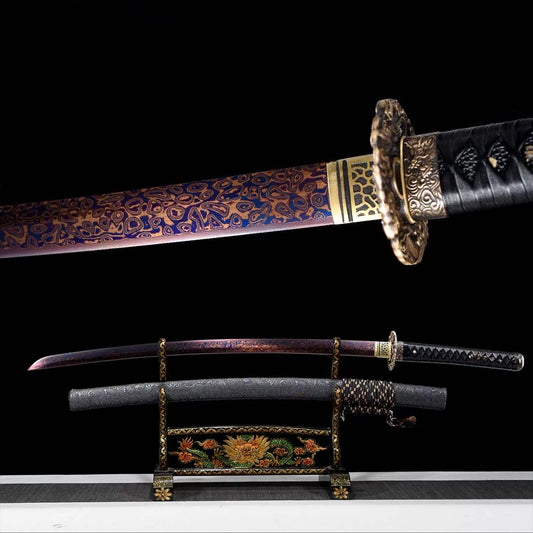
- Damascus steel construction featuring hand-forged folded patterns unique to each blade
- 1060 carbon steel core providing exceptional edge retention and cutting performance
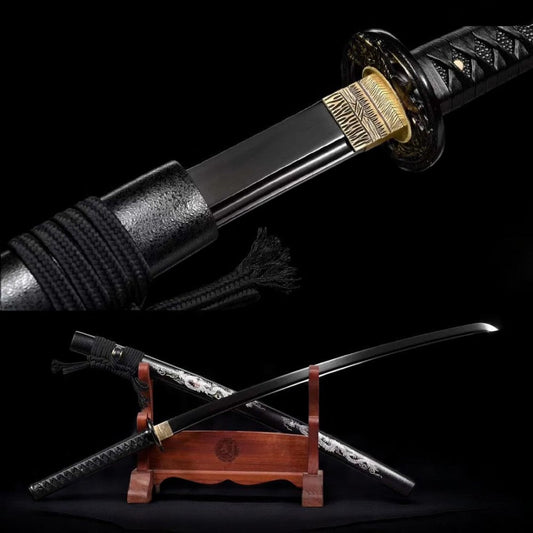
- Genuine ray skin handle (same) wrapped with traditional black cotton cord
- Full tang construction with removable bamboo pins for authentic maintenance access
- Hand-polished finish revealing the natural beauty of folded steel patterns
Honestly, this is one of my favorites in the collection—the Damascus patterns are absolutely stunning, and the weight feels perfect in hand.
⭐⭐⭐⭐⭐ "Absolutely stunning craftsmanship. The Damascus patterns are gorgeous and the balance feels perfect for practice cuts." - Michael R., Phoenix, AZ
Michonne Katana Sword
This functional katana is inspired by the Walking Dead's fierce warrior. It combines tactical practicality with traditional aesthetics:
- 1095 high carbon steel hardened to 58-60 HRC for superior cutting ability
- Black powder-coated finish providing weather resistance and tactical appearance
- Cord-wrapped handle offering secure grip during extended use
- Reinforced tang construction ensuring durability under stress
- Custom leather scabbard with adjustable shoulder carry system
⭐⭐⭐⭐⭐ "Perfect for my collection and martial arts practice. The steel quality exceeded my expectations." - Sarah K., Austin, TX
Shinobu Kocho Katana – Demon Slayer Edition
This exquisite butterfly-themed katana captures Shinobu's elegant yet precise weapon. The accuracy is incredible:
- 1060 carbon steel blade featuring authentic differential hardening
- Purple and black color scheme matching the anime's distinctive aesthetic
- Butterfly-motif tsuba crafted in oxidized steel with intricate detailing
- Premium silk wrapping in traditional purple and white diamond pattern
- Display-ready finish with custom wooden stand included
We've compared multiple versions side-by-side—and not gonna lie, this replica stands out for its attention to character-specific details. It also maintains functional sword proportions.
⭐⭐⭐⭐⭐ "The butterfly details are incredible. My daughter loves displaying this in her room." - Jennifer L., Miami, FL
Michonne Katana – Premium Edition
Our enhanced version features upgraded materials and enhanced functionality. This is for serious collectors:
- Damascus steel blade with visible folded patterns throughout the entire length
- Ray skin handle providing authentic texture and superior grip
- Brass fittings including tsuba, habaki, and pommel for premium appearance
- Hand-forged construction using traditional differential hardening techniques
- Museum-quality presentation with certificate of authenticity
Rengoku Kyojuro Katana Sword
The Flame Hashira's iconic weapon recreated with exceptional attention to character details:
- 1060 carbon steel construction offering optimal balance of hardness and flexibility
- Flame-inspired hamon pattern created through traditional clay tempering
- Orange and red handle wrapping matching Rengoku's distinctive color scheme
- Flame-motif tsuba featuring hand-carved fire designs
- Premium wooden saya with matching flame decorations
⭐⭐⭐⭐⭐ "The flame patterns on both blade and fittings are absolutely beautiful. Worth every penny." - David M., Denver, CO
Kanao Tsuyuri Katana Sword
Delicate yet precise, this replica captures Kanao's refined style:
- 1060 carbon steel blade with traditional differential hardening
- Pink and white aesthetic reflecting the character's gentle nature
- Flower-themed decorations throughout tsuba and handle fittings
- Traditional white same providing authentic grip texture
- Custom wooden display stand included with purchase
Jin Sakai Katana – Ghost of Tsushima Edition
This gaming-inspired masterpiece brings Tsushima's legendary ghost warrior to life:
- Functional 1060 carbon steel suitable for cutting practice and display
- Weather-resistant black finish inspired by the game's stealth aesthetic
- Traditional Japanese fittings maintaining historical accuracy
- Balanced weight distribution providing authentic handling characteristics
- Custom leather scabbard with adjustable carrying system
Sandai Kitetsu Katana Sword
One of the legendary cursed swords from One Piece. Recreated with meticulous attention to detail:
- 1060 carbon steel construction providing durability for display and practice
- Traditional Japanese polish revealing the natural beauty of the steel
- Authentic ray skin handle wrapped in traditional black cotton
- Hand-forged tsuba featuring the distinctive Kitetsu clan mon
- Museum-quality finish suitable for serious collectors
Our best-selling collection features these and many other premium options. They consistently receive outstanding customer reviews. For collectors interested in expanding their collection, our anime katana selection offers character-specific replicas. These maintain historical accuracy while celebrating modern entertainment.
Katana Buyer's Guide: Choosing Quality Swords {#guide}
Selecting your first collection of high-quality katana swords requires understanding key factors. These separate authentic replicas from decorative wall hangers. Steel type determines both performance and longevity. This makes it your most critical decision when comparing options.
1060 carbon steel provides the ideal entry point for new collectors. It offers excellent edge retention with moderate maintenance requirements. This steel type can achieve proper hardness through heat treatment. It remains affordable for most budgets. The carbon content (0.60%) creates blades that sharpen easily. They maintain edges through regular use.
1095 carbon steel steps up performance with higher carbon content. This enables superior cutting ability and more pronounced hamon patterns. However, this steel requires more careful maintenance to prevent rust and corrosion (which explains the higher price point). Experienced collectors often prefer 1095 for functional swords intended for cutting practice.
Damascus steel construction appeals to collectors who appreciate visible craftsmanship. It shows this through folded patterns. While not historically accurate for Japanese swords, Damascus katana showcase the smith's skill. They do this through beautiful layer patterns that emerge during forging. Each Damascus blade features unique patterns. This makes every sword one-of-a-kind.
So what does this mean for you? Traditional full tang design extends the blade completely through the handle. This provides optimal balance and prevents catastrophic failure during use. Partial tang construction (rat-tail or stick tang) creates weak points. These can separate under stress. This is a serious safety concern for functional swords.
Weight and balance directly affect handling characteristics. These separate quality replicas from mass-produced alternatives. Authentic katana maintain their point of balance 4-6 inches from the guard. This creates the dynamic feel that made these weapons so effective. Blades that feel handle-heavy or tip-heavy indicate poor balance. This affects both cutting performance and user safety.
Blade geometry must follow traditional proportions to achieve authentic performance. The shinogi (ridgeline) should run straight from guard to point. This creates the triangular cross-section that concentrates cutting force effectively. Poorly ground blades with uneven geometry cut poorly. They look obviously fake to experienced collectors.
Handle construction reveals manufacturing quality through materials and assembly methods. Genuine ray skin (same) provides the textured grip that prevents slipping. Synthetic alternatives often feel smooth and slippery when wet. Traditional cotton or silk wrapping should be tight and even. It should have proper diamond patterns that indicate careful assembly.
Scabbard quality affects both blade protection and aesthetic appeal. Premium wooden saya use close-grained hardwoods that resist warping. They provide smooth drawing action. The interior finish must be perfectly smooth. This prevents scratching the polished blade surface during use.
Price considerations should balance budget constraints with quality expectations. Entry-level functional katana typically cost $200-400. Premium pieces with Damascus steel or exceptional craftsmanship range $400-800. Decorative replicas under $200 often sacrifice materials and construction quality—and trust me, serious collectors notice this immediately.
Legal considerations vary by state and locality. Research local laws before purchasing. Most states allow katana ownership for collectors and martial artists. But some cities restrict blade length or carrying. Our entry-level collection provides excellent options for new collectors. You can explore legal requirements in your area.
Display planning should precede purchase decisions. Proper presentation enhances both aesthetic appeal and blade preservation. Traditional wall mounts, table stands, and display cases each serve different purposes. This depends on your space and security requirements. Our katana accessories include everything needed for professional presentation.
For collectors building comprehensive collections, our mid-range options provide excellent value. They maintain authentic construction methods. These swords bridge the gap between entry-level pieces and premium collector items—it's not perfect, but the quality is undeniable for the price range.
Why Choose Katana America for Your Collection {#why-us}
Every Katana America blade is made to order and hand-assembled in our partner workshops, then quality-checked before it ships. Count 3 to 4 weeks from your order to your door: 1 to 2 weeks of forging, then 1 to 2 weeks of tracked delivery. Prices are in US dollars, delivery is free on orders of $200 or more, and there are no customs fees to pay when your katana arrives. Collectors rate us 4.9/5 across 125+ verified reviews.
We understand the unique needs of collectors across the United States. They demand authentic quality without compromising on customer service or accessibility. Our team personally inspects every sword before sending it out. We ensure that your collection of high-quality katana swords meets the exacting standards that serious collectors expect.
They understand both traditional Japanese swordmaking and modern collector requirements. When you have questions about steel types, maintenance procedures, or display options, our experts provide detailed guidance. This is based on hands-on experience with every product we sell.
Payment in US dollars eliminates currency conversion fees.
Our quality guarantee backs every purchase with complete support. This includes detailed care instructions, maintenance guidance, and replacement parts when needed. We stand behind the authenticity and craftsmanship of every sword in our collection. This provides peace of mind that your investment receives proper protection.
Extensive product knowledge helps customers select the perfect sword for their specific needs. Are you starting your first collection? Or adding premium pieces to an established selection? Our staff regularly handles and tests the swords we sell. We provide insights that online reviews and specifications alone can't convey (which makes all the difference when selecting your perfect piece).
Secure packaging protects your investment during transport. We use custom-fitted boxes and protective materials designed specifically for sword transportation. We've sent thousands of swords across America without damage. We use packaging methods developed through years of experience with fragile, valuable items.
Our high-end collection represents the pinnacle of modern katana craftsmanship. It features museum-quality pieces that serious collectors treasure. These premium options showcase traditional techniques combined with modern metallurgy. This ensures consistent quality and authentic performance.
Building long-term relationships with collectors means providing ongoing support. This extends far beyond the initial purchase. Many customers return for additional pieces as their collections grow. They trust our expertise to guide them toward swords that complement their existing selections—and honestly, that's what collecting is all about.
Educational resources help new collectors learn proper care, handling, and display techniques. These preserve their investment while maximizing enjoyment. Our detailed guides cover everything from basic maintenance to advanced polishing techniques. These keep your swords looking and performing their best.
Are you interested in our custom katana options or traditional designs? We provide the expertise and support that makes collecting Japanese swords both enjoyable and rewarding for American enthusiasts.
Frequently Asked Questions About Katana Collections {#faq}
What makes a katana collection authentic and high quality?
Authenticity in a premium katana sword collection stems from traditional construction methods, proper materials, and attention to historical accuracy.
Genuine replicas feature full tang construction. The blade extends completely through the handle. They have differential hardening that creates visible hamon patterns. Traditional fittings like ray skin (same) handle wrapping are essential.
The steel composition should be high carbon (1060, 1095, or T10). It must be capable of achieving proper hardness through heat treatment. Authentic proportions matter. This includes proper blade curvature (sori) and weight distribution. These distinguish quality replicas from decorative wall hangers.
Premium collections also include historically accurate details. Hand-forged tsuba, traditional wooden scabbards (saya), and proper assembly matter. Assembly uses removable bamboo pins (mekugi) that allow for maintenance and inspection.
What steel type is best for collecting katana swords?
The optimal steel type for your katana sword collection depends on intended use and experience level.
1060 carbon steel provides excellent entry-level performance. It has good edge retention and moderate maintenance requirements. This makes it ideal for new collectors.
1095 carbon steel offers superior cutting performance and more pronounced hamon patterns. But it requires more careful maintenance to prevent corrosion (which explains why many experienced collectors prefer this for functional pieces).
T10 tool steel represents the premium option. It has exceptional hardness and edge retention capabilities.
Damascus steel creates beautiful folded patterns through forge-welding multiple layers. This appeals to collectors who appreciate visible craftsmanship.
If you ask me, for functional swords intended for cutting practice, 1095 or T10 steel performs best. For display pieces that occasionally see light use, 1060 carbon steel offers the perfect balance. It provides authenticity, performance, and affordability that most collectors prefer.
How do I care for my katana sword collection?
Proper care preserves both the beauty and functionality of your premium katana sword collection for generations.
Clean blades immediately after handling using soft cotton cloth. This removes fingerprints and moisture that cause corrosion. Apply a thin layer of mineral oil or specialized sword oil to carbon steel blades monthly. In humid climates, do this more frequently (trust me, even in air-conditioned homes, humidity can be an issue).
Store swords horizontally in their scabbards with the edge facing upward. This prevents gravity-induced warping. Avoid touching the blade with bare hands. Skin oils create corrosion patterns that require professional polishing to remove.
Inspect fittings regularly for loose pins (mekugi). Tighten as needed using proper tools. Handle wrapping (ito) should be retightened annually or when looseness develops. Professional maintenance every few years ensures that minor issues don't develop into expensive restoration problems.
Now, here's where it gets important: keep display areas clean and climate-controlled. Avoid direct sunlight that fades handle wrapping and wooden scabbards over time.
What size katana swords should I choose for my collection?
Selecting the proper size for your collection of katana swords depends on intended use, storage space, and personal preference.
Traditional katana measure 70-73cm (28-29 inches) in blade length. This provides the authentic proportions that made these weapons legendary. Shorter collectors or those with smaller display space might prefer wakizashi (30-60cm). These offer authentic Japanese sword characteristics in a more compact format.
Tachi (over 73cm) provide impressive presence but require larger display areas. For martial arts practice, standard katana length allows proper technique development. Shorter blades may not translate well to traditional forms.
When you pick up a sword, consider your height when selecting. The sword should feel balanced and controllable rather than unwieldy. Multiple sizes create interesting display variety. Wakizashi complement katana in traditional mounting arrangements.
Storage space significantly impacts practical considerations. Longer swords require more vertical clearance for proper wall mounting. They also need more horizontal space for display cases.
How do I display my collection of katana swords?
Professional display enhances both the aesthetic appeal and preservation of your katana collection. It also showcases these masterpieces properly.
Wall mounts provide space-efficient presentation. Use traditional kake (sword stands) or modern adjustable brackets. These support both scabbard and blade safely. Table displays offer closer examination opportunities. Use individual sword stands that showcase blade curvature and fittings details.
Display cases protect valuable pieces from dust, humidity, and handling. They also provide security against theft or accidental damage. Lighting plays a crucial role—and trust me, proper lighting makes all the difference. Soft, indirect illumination highlights hamon patterns and steel polish. Don't create heat that damages organic materials like silk wrapping or wooden scabbards.
Rotate displayed swords periodically. This prevents uneven fading from light exposure. Climate control maintains stable temperature and humidity levels. This prevents warping, cracking, and corrosion.
Group related pieces together. Examples include anime replicas, historical periods, or steel types. This creates themed displays that tell visual stories about your collection's development and focus areas.
Is it legal to own katana swords in the USA?
Katana sword collection ownership remains legal throughout most of the United States. Specific regulations vary by state and local jurisdiction.
Federal law doesn't restrict katana ownership for collectors and martial artists. But some states impose blade length limitations or require permits for carrying. Most municipalities allow home ownership and display without restrictions. Some cities prohibit public carrying regardless of permit status.
California, New York, and Massachusetts have specific blade length restrictions. These affect very long swords but typically don't impact standard katana dimensions (which explains why most of our collection meets nationwide requirements). College campuses and schools often prohibit all weapons regardless of local laws. Check institutional policies before bringing collection pieces to educational settings.
Transportation between states generally remains legal when swords are properly packed. They must not be readily accessible during travel. International travel requires checking destination country laws. Many nations strictly regulate sword importation.
Responsible ownership includes secure storage, especially in households with children. Understand that functional swords carry the same legal responsibilities as other edged weapons.
Conclusion: Building Your Premium Katana Collection {#conclusion}
Your journey into collecting authentic Japanese swords represents more than acquiring beautiful objects. You're preserving a millennium of craftsmanship, cultural heritage, and artistic achievement. This continues inspiring collectors worldwide.
A thoughtfully curated collection of premium katana swords becomes a lifetime passion. It grows more rewarding as your knowledge and appreciation deepen.
The swords we've featured represent the finest examples of traditional construction methods. We combine these with modern manufacturing precision. Each piece honors the legacy of Japanese swordmaking. It remains accessible for contemporary collectors who demand authenticity without compromising on quality or value.
Are you drawn to the elegant beauty of our Shinobu Kocho katana? Or the tactical functionality of our Jin Sakai katana? Every sword in our selection represents a commitment to excellence that serious collectors appreciate.
So what does this mean for you? Starting your collection doesn't require a massive investment. Our entry-level options provide authentic construction and premium materials. These grow more meaningful as your expertise develops. Many collectors begin with a single exceptional piece. They then gradually add complementary swords that create comprehensive collections. These reflect their personal interests and aesthetic preferences.
The relationships you build with fellow collectors, martial artists, and craftsmen become as valuable as the swords themselves. This community shares knowledge, techniques, and passion. This enriches your collecting experience far beyond the physical objects you acquire.
Ready to begin your katana collecting journey? Explore our complete authentic katana collection. Discover the perfect starting point for your own premium sword collection. Each piece comes with our guarantee of authenticity, quality, and customer support. This ensures your investment brings years of satisfaction and pride.
Related Articles for Deeper Learning
For detailed purchasing guidance, explore our Handmade Katana Sword: Premium Collection & Guide 2026. This covers advanced construction techniques and quality assessment methods.
Anime enthusiasts will find valuable insights in our Demon Slayer swords article. This explores character-specific details and historical accuracy in modern replicas.
New collectors benefit from reading Authentic Japanese Sword USA: Premium Katana Collection 2026. This provides essential guidance for making informed purchasing decisions and avoiding common collecting mistakes.
Ready to choose yours? Explore our hand-forged katana swords for sale and stands & accessories. Free U.S. shipping over $200, rated 4.9/5.
 Save $60