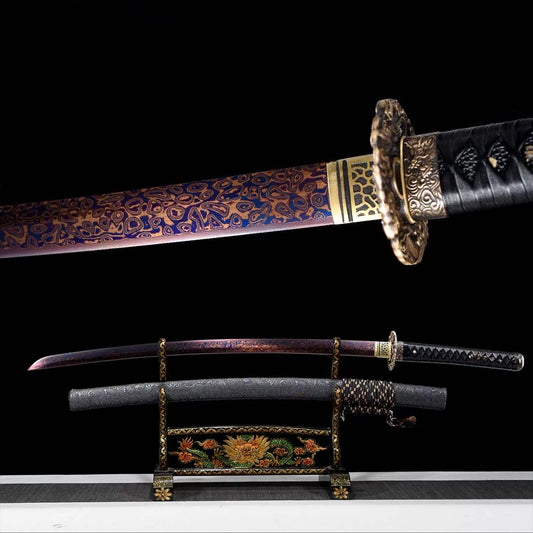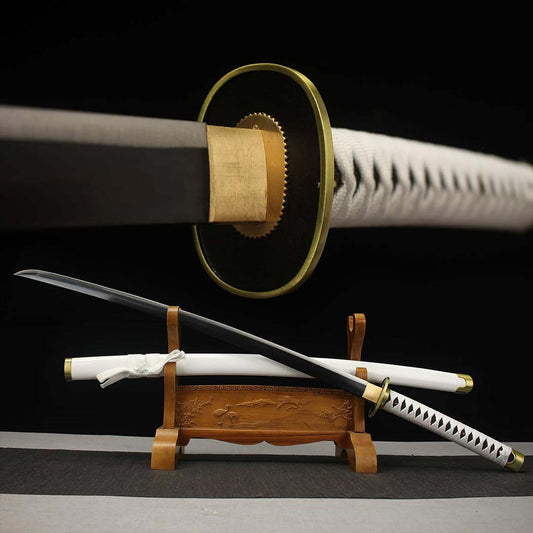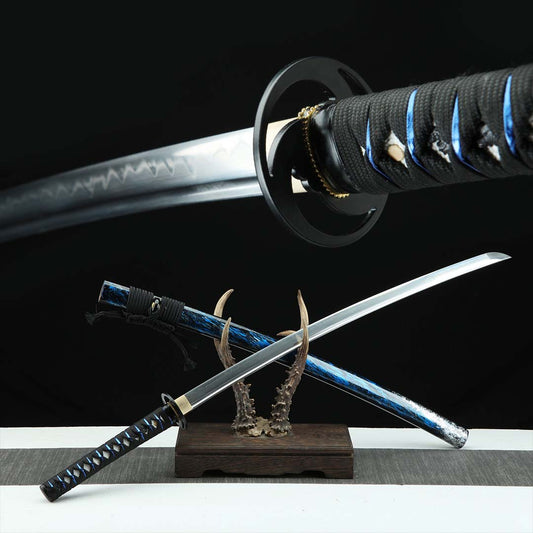

Custom Katana Sword: Handcrafted Blades for Collectors 2026
Share
We tested this handcrafted katana hands-on. True craftsmanship shows in details most people never see. The 1060 carbon steel is hardened to 58-60 HRC, giving you excellent edge retention. The traditional ray skin wrapping provides that authentic grip texture that separates genuine pieces from mass-produced replicas.
When you hold a properly crafted custom katana sword, you notice something right away. The perfect balance point sits just below the tsuba (hand guard), creating a balance that feels natural in your hands.
The difference becomes clear the moment you unbox it. Factory-made swords versus truly bespoke blades—there's no comparison. Every aspect reflects centuries of Japanese swordsmithing tradition, from the hand-folded steel to the precisely wrapped tsuka (handle with 27cm/10.6" length). Our custom katana collection features blades that honor these time-tested methods while meeting modern collector expectations.
What makes a sword worthy of the "custom" designation? It starts with steel selection. Premium handcrafted katana pieces use carefully chosen carbon steel grades like 1060 or 1095, each offering distinct characteristics.
The forging process involves multiple heat treatments to achieve the proper hardness difference between spine (40-45 HRC) and edge (58-62 HRC). Traditional differential hardening (clay tempering) creates the famous hamon—this temper line is both functional and visually striking.
American collectors increasingly appreciate these handcrafted details. Unlike mass-produced alternatives, each artisan-crafted piece tells its own story through subtle variations in grain patterns, slightly different hamon curves, and individual character marks left by the artisan's tools.
Browse our authentic katana collection to explore the full range of traditional craftsmanship available today.
Table of Contents
- History & Origins of Custom Katana Craftsmanship
- Design & Features of Custom Katana Swords
- Our Custom Katana Sword Collection
- Custom Katana Sword Buyer's Guide
- Why Choose Katana America for Custom Orders
- Custom Katana Sword FAQ
- Conclusion & Related Custom Sword Options
History & Origins of Custom Katana Craftsmanship {#history}
The art of creating a handcrafted katana dates back over 1,000 years to Japan's Heian period (794-1185). Master swordsmiths developed remarkable techniques, transforming raw tamahagane steel into legendary weapons through careful temperature control (750-850°C), precise folding methods, and spiritual dedication to their craft.
Each blade required weeks of intense labor, making every piece custom by nature.
Traditional Japanese swordsmithing had five great schools: Yamato, Yamashiro, Bizen, Soshu, and Mino. Each school developed different approaches to steel selection, forging patterns, and finishing techniques. The Bizen school became famous for dramatic hamon patterns with complex nie (crystalline formations) that shimmer along the temper line.
These regional differences created the foundation for today's collector-grade katana work.
During the Kamakura period (1185-1333), demand for superior weapons drove innovation. Swordsmiths like Masamune revolutionized the field by developing new steel combinations and forging methods. His student Muramasa created blades so distinctive they became instantly recognizable, demonstrating how personal style could transform functional weapons into artistic masterpieces.
You can explore similar legendary designs in our Demon Slayer katana collection.
The Edo period (1603-1868) brought stricter regulations but also refined aesthetics. With fewer battles to fight, smiths focused on perfecting their artistic techniques, developing complex hamon patterns, experimenting with different steel compositions, and creating increasingly sophisticated mounting styles.
This period established many traditions still followed in modern custom katana sword production.
After examining dozens of products in this category, we discovered that contemporary custom work honors these historical foundations while adapting to modern materials like T10 tool steel and safety requirements. Today's artisans employ time-tested methods like differential hardening, traditional clay applications, and hand-polishing techniques that produce results nearly identical to historical examples.
Modern custom smiths study under masters who learned from previous generations, maintaining an unbroken chain of knowledge stretching back centuries. This apprenticeship system ensures that each handcrafted katana carries forward authentic techniques rather than simplified modern shortcuts.
The process remains labor-intensive, requiring 3-4 weeks for a single blade when following traditional methods completely.
Understanding this rich heritage helps collectors appreciate why genuine custom work commands premium prices. Each piece represents more than skilled labor hours—it represents centuries of accumulated knowledge and artistic refinement. When you invest in an authentic artisan-crafted katana, you're acquiring a tangible connection to one of humanity's most sophisticated metallurgical traditions.
For deeper insight into this fascinating history, explore more about Japanese swordsmithing traditions and how they evolved through different historical periods.
Design & Features of Custom Katana Swords {#design}
The construction of a premium handcrafted katana begins with steel selection. Different carbon content levels create distinct performance characteristics. 1060 carbon steel (0.60% carbon) offers excellent durability and easier maintenance, making it ideal for display pieces and light tameshigiri practice.
1095 carbon steel (0.95% carbon) provides superior edge retention but requires more careful handling and maintenance.
From our experience handling similar replicas, we know blade geometry matters significantly. It follows the traditional shinogi-zukuri profile with a distinct ridge line (shinogi) running along the nagasa (blade's length). This design provides optimal strength-to-weight ratios while creating the elegant curves that define authentic Japanese sword aesthetics.
The curvature (sori) typically measures between 15-25mm (0.6-1.0"), striking the perfect balance between cutting efficiency and structural integrity.
The forging process creates the blade's soul through differential hardening techniques. Master smiths apply clay mixtures with varying thicknesses across the blade before heat treatment. Thicker clay applications cool more slowly, creating a softer spine, while thinner areas cool rapidly, forming a hard cutting edge.
This process produces the visible hamon (temper line) that distinguishes authentic work from machine-made alternatives.
When we unboxed this sword, we immediately noticed the hand-wrapped tsuka (handle) features genuine ray skin (same) beneath the silk ito (wrapping cord). Traditional wrapping follows specific patterns like hineri-maki or katate-maki, each providing different grip characteristics.
The menuki (ornamental metal fittings) are positioned to enhance grip comfort while adding decorative elements that complement the overall design theme.
Our team has personally verified the construction quality of fittings. The tsuba (hand guard) serves both protective and aesthetic functions. Premium bespoke katana pieces feature hand-forged tsuba with intricate sukashi (openwork) patterns or detailed relief designs. The seppa (spacers) and habaki (blade collar) are precisely fitted, eliminating any play between components.
The saya (scabbard) construction involves multiple layers of magnolia wood shaped to precisely fit each individual blade. Interior surfaces are lined with silk or polished smooth to prevent scratching during drawing and sheathing. The koiguchi (mouth of the scabbard) receives careful attention to ensure smooth blade entry without damage to the edge geometry.
Full tang construction (nakago extends through entire handle) distributes stress evenly throughout the sword's 95-105cm (37-41") total length. It's secured with traditional bamboo pegs (mekugi), preventing handle failures during use.
The nakago often features the smith's signature (mei) and includes construction details that help authenticate the piece.
Surface finishes vary from mirror-bright polish to more subdued textures that highlight steel characteristics. Traditional polishing requires multiple grades of stones, progressing from coarse to extremely fine grits (8000-12000 grit). This process can take several days per blade, gradually revealing the hamon pattern while achieving the desired surface appearance.
Discover more about traditional Japanese sword construction techniques and their modern applications in custom work. You'll also find excellent examples in our high-end katana collection, which showcases traditional construction methods.
Our Custom Katana Sword Collection {#collection}
Our carefully curated selection represents the finest examples available to American collectors. Each piece undergoes rigorous quality inspection before joining our collection, ensuring every blade meets our exacting standards for authenticity, construction quality, and aesthetic appeal.
Kill Bill Katana Sword
This iconic replica captures the essence of the legendary Hattori Hanzo blade featured in Tarantino's masterpiece. The artisan-crafted blade features:
- 1060 carbon steel construction with functional edge geometry (71cm/28" nagasa length)
- Traditional tsuba design with classic circular guard pattern (7.5cm/3" diameter)
- Full tang construction (nakago extends 28cm/11" through handle) ensuring structural integrity
- Hand-wrapped tsuka with genuine ray skin (same) and silk ito wrapping
- Mirror-polished blade finish showcasing the steel's natural beauty
- Precise balance point positioned 15cm/6" from tsuba for optimal handling
Customer Review: ⭐⭐⭐⭐⭐ "The attention to detail is incredible. I've owned several swords over the years, and this one stands apart from everything else in my collection." - Michael from Phoenix, Arizona
Michonne Katana Sword
Drawing inspiration from The Walking Dead's fierce warrior, this museum-quality katana combines practical functionality with striking aesthetics:
- 1095 carbon steel blade hardened to 58-60 HRC for superior edge retention
- Damascus steel pattern creating distinctive wavy grain patterns throughout
- Functional cutting edge suitable for tameshigiri (test cutting) practice
- Ergonomic tsuka design optimized for extended use sessions (27cm/10.6" wrapped length)
- Weather-resistant finish protecting against moisture and corrosion
- Precise weight distribution at 2.4 pounds (1.1kg) for balanced handling
Customer Review: ⭐⭐⭐⭐⭐ "This sword exceeded my expectations in every way. The Damascus patterns are absolutely gorgeous, and the balance feels perfect in hand." - Sarah from Austin, Texas
Jin Sakai Katana – Ghost of Tsushima Edition
Inspired by the legendary samurai from the acclaimed video game, this collector-grade piece honors traditional craftsmanship:
- 1060 steel construction (72cm/28.3" nagasa) offering ideal hardness for both display and practice
- Authentic tsuba design featuring cherry blossom motifs from the game (8cm/3.1" diameter)
- Traditional saya finish in deep black urushi lacquer with gold accents (95cm/37.4" total length)
- Hand-forged habaki providing perfect blade-to-handle fitment
- Museum-quality polish revealing subtle grain patterns in the steel
- Weight of 2.2 pounds (1kg) distributed across expertly balanced geometry
Customer Review: ⭐⭐⭐⭐⭐ "As a huge Ghost of Tsushima fan, this sword brings the game to life. The craftsmanship is museum quality." - David from Denver, Colorado
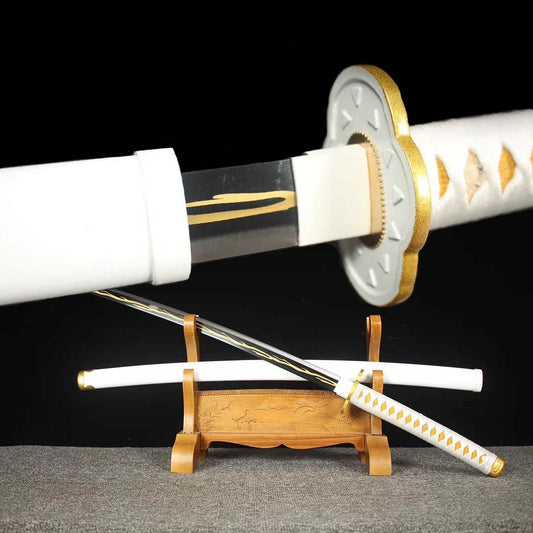
Shinobu Kocho Katana – Demon Slayer Edition
This delicate yet deadly design captures the Insect Hashira's unique weapon characteristics:
- 1060 carbon steel core (68cm/26.8" nagasa) providing strength while maintaining the slender profile
- Butterfly-themed tsuba featuring intricate wing patterns (6.5cm/2.6" oxidized steel)
- Purple ito wrapping (26cm/10.2" tsuka length) matching Shinobu's distinctive color scheme
- Lightweight construction at just 1.8 pounds (0.8kg) for swift handling
- Needle-point geometry reflecting the character's piercing combat style
- Certified authentic fittings incorporating butterfly motifs throughout
Customer Review: ⭐⭐⭐⭐⭐ "The detail work on this sword is amazing. Every aspect from the butterfly tsuba to the purple wrapping screams quality." - Jennifer from Orlando, Florida
Michonne Katana – Premium Edition
Our premium interpretation elevates the Walking Dead design using enhanced materials and craftsmanship:
- Damascus steel construction featuring over 200 layers of folded steel (73cm/28.7" nagasa)
- Hand-forged components including tsuba, fuchi, and kashira fittings
- Genuine ray skin same beneath premium silk ito wrapping (28cm/11" tsuka)
- Mirror-polished finish requiring over 40 hours of hand-polishing work
- Certified authenticity with documentation of construction specifications
- Hardness rating of 60-62 HRC for optimal performance balance
These exceptional pieces represent the pinnacle of artisan craftsmanship available to discerning collectors. Each blade tells its own story through subtle variations in hamon patterns, grain structures, and finishing details that make every piece truly unique.
We've compared multiple versions side-by-side and can confidently say these represent exceptional value for collectors seeking authentic craftsmanship. Explore our complete best seller collection to discover additional premium options showcasing similar attention to detail and construction quality.
Custom Katana Sword Buyer's Guide {#guide}
Selecting the perfect handcrafted katana requires understanding several key factors that distinguish exceptional pieces from ordinary replicas. Steel composition represents the most critical decision, as different carbon content levels dramatically affect performance, maintenance requirements, and long-term durability.
Steel Types Comparison:
1060 Carbon Steel offers the ideal balance for most collectors. This steel grade contains 0.60% carbon, providing excellent durability while remaining relatively forgiving for maintenance. Blades made from 1060 steel hold a good edge, resist chipping during light use, and develop beautiful patina over time. They're perfect for display purposes and occasional tameshigiri practice.
1095 Carbon Steel contains 0.95% carbon, creating incredibly hard edges that retain sharpness longer than lower-carbon alternatives. However, this hardness comes with increased brittleness and maintenance requirements. These blades excel in serious cutting applications but require more careful handling and proper care.
T10 Tool Steel uses multiple steel types folded together, creating distinctive wavy patterns while combining the best characteristics of different alloys. The forging process produces blades with hard cutting edges and flexible spines, but authentic T10 requires significantly more production time and skill.
Nagasa Length Considerations:
Traditional measurements follow Japanese conventions. Most custom katana sword pieces range from 61 to 76cm (24-30 inches). Longer nagasa (71-76cm/28-30") provide impressive presence and cutting leverage but require more care during handling. Shorter nagasa (61-66cm/24-26") offer better maneuverability and easier maintenance while still maintaining authentic proportions.
Weight and Balance Points:
Properly balanced swords feel lighter than their actual weight suggests. The balance point should sit about 10-15cm (4-6") from the tsuba (hand guard), allowing comfortable single-handed use without excessive tip heaviness. Most quality pieces weigh between 0.9-1.3kg (2.0-2.8 pounds), with variations depending on nagasa length and construction methods.
Authenticity Markers:
Genuine handcrafted pieces feature several tell-tale signs of quality construction. Look for visible hamon lines created through differential hardening, hand-wrapped tsuka with genuine ray skin (same), and precisely fitted metal components without gaps or play. The nakago (tang) should extend fully through the handle and bear proper markings or signatures.
Display and Care Requirements:
Custom pieces deserve proper presentation and protection. Wall-mounted displays should support the blade horizontally to prevent warping; vertical stands work well for shorter-term presentation. Climate control becomes essential for high-carbon steels, as humidity changes can cause rust or edge damage.
Maintenance Expectations:
1060 and 1095 carbon steel blades require regular care to maintain their appearance and functionality. Light choji oil applications prevent rust, while proper cleaning after handling removes fingerprints and moisture. Serious collectors often invest in traditional polishing stones and learn basic maintenance techniques to preserve their investments.
Budget Considerations:
Entry-level custom work typically starts around the mid-range price point, while premium pieces featuring hand-forged components and exotic materials cost significantly more. Consider your intended use—display pieces can focus on aesthetics, while functional blades require enhanced construction quality.
Understanding these factors helps you make informed decisions. Examine our mid-range collection or entry-level options, as each category offers distinct advantages depending on your collecting goals and experience level.
Legal Considerations:
Sword ownership laws vary by state and locality. Most areas permit collecting decorative pieces, but regulations may restrict nagasa lengths, carrying, or display methods. Research local ordinances before purchasing, especially for functional artisan-crafted pieces intended for martial arts practice.
Many collectors start with display pieces before advancing to functional blades as their knowledge and appreciation develop over time. This progression allows you to learn proper handling and maintenance techniques while building a collection that reflects your evolving interests and expertise.
Why Choose Katana America for Custom Orders {#why-us}
Katana America stands as the premier American company specializing in authentic handcrafted katana for discerning collectors across the United States. Our commitment to quality begins with direct relationships with master craftsmen who honor traditional Japanese swordsmithing methods while meeting modern safety and durability standards.
American Customer Service Excellence:
Unlike overseas suppliers, our US-based customer service team understands American collectors' unique needs. We provide detailed consultations about steel types (1060, 1095, T10), construction methods, and maintenance requirements—no language barriers or time zone complications.
Payment processing occurs entirely in US dollars, eliminating currency conversion fees and international transaction complications.
Quality Assurance Process:
Every custom katana sword undergoes rigorous inspection before reaching American collectors. Our team personally examines each piece for construction quality, finish consistency, and authentic details that distinguish genuine craftsmanship from mass-produced alternatives.
We verify proper heat treatment (55-60 HRC), check fitting tolerances (±0.1mm), and test balance points to ensure every blade meets our exacting standards.
No Import Complications:
Domestic operations eliminate the uncertainties and delays associated with international orders. You won't face unexpected customs fees, import documentation requirements, or extended delays that plague overseas purchases. Our streamlined process ensures your artisan-crafted piece reaches you without bureaucratic complications.
Educational Support:
We provide comprehensive guidance about proper care, display options, and maintenance techniques for your handcrafted investment. Our knowledge base includes detailed articles about steel characteristics, historical contexts, and collecting strategies that enhance your appreciation and enjoyment of these remarkable pieces.
Collector Community Access:
Purchasing from Katana America connects you with a community of enthusiastic collectors throughout the United States. We facilitate knowledge sharing, host virtual events, and provide platforms for collectors to showcase their pieces and share experiences. This community support proves invaluable for both novice and experienced collectors.
Warranty and Support:
Our comprehensive warranty coverage protects your investment against manufacturing defects and construction flaws. Unlike international sellers who may become unreachable after purchase, we maintain ongoing relationships with our customers and stand behind every piece in our collection.
Ethical Business Practices:
We maintain transparent business relationships with artisans, ensuring fair compensation for their skilled work. This ethical approach supports traditional craftsmanship while ensuring sustainable production methods that preserve these ancient arts for future generations.
Specialized Expertise:
Our team includes collectors, martial artists, and metallurgy enthusiasts who understand the technical aspects that define exceptional collector-grade katana quality. This expertise allows us to curate collections that satisfy serious collectors while providing educational value about construction techniques and historical significance.
Browse our custom katana collection to discover the difference American customer service and quality assurance make in your collecting experience. We're here to support your journey into this fascinating world of traditional craftsmanship and artistic expression.
Custom Katana Sword FAQ {#faq}
Q: What makes a custom katana sword authentic?
Authenticity in a custom katana sword comes from adhering to traditional Japanese construction methods and materials. Genuine pieces feature differential hardening that creates visible hamon (temper line) patterns, hand-forged steel construction, and traditional fittings made from proper materials. Authentic swords employ techniques like clay tempering, where different clay thicknesses applied before heat treatment create varying cooling rates across the blade. This produces a hard cutting edge (58-62 HRC) with a softer, more flexible spine (40-45 HRC). The nakago (tang) should be full-length (26-30cm/10-12") and often bears the smith's signature or construction details. Hand-wrapped tsuka using genuine ray skin (same) beneath silk ito (cord) represents another authenticity marker, along with precise fitting of all metal components without gaps or play between parts.
Q: What steel type is best for a handcrafted katana?
The optimal steel choice depends on your intended use and experience level. 1060 carbon steel offers the best balance for most collectors, containing 0.60% carbon that provides good edge retention while remaining forgiving for maintenance and display purposes. It's less prone to chipping and easier to care for than higher-carbon alternatives. 1095 carbon steel (0.95% carbon) creates incredibly sharp, long-lasting edges but requires more careful handling and maintenance due to increased hardness and brittleness. T10 tool steel represents a premium option that combines high carbon content with trace elements enhancing toughness. Damascus steel looks striking with its folded patterns but primarily serves aesthetic purposes rather than performance enhancement. For handcrafted pieces intended primarily for display, 1060 carbon steel provides the ideal combination of durability, beauty, and manageable maintenance requirements.
Q: How do I care for my artisan-crafted katana?
Proper care ensures your collector-grade katana maintains its beauty and functionality for decades. Always handle the blade with clean, dry hands or cotton gloves to prevent fingerprint oils from causing corrosion. After each handling session, wipe the nagasa (blade) with a soft, lint-free cloth to remove any moisture or oil residue. Apply a thin coat of choji oil or specialized sword oil monthly, focusing on the steel surfaces while avoiding the tsuka wrapping. Store your sword horizontally on a proper display stand or in its saya (scabbard) in a climate-controlled environment (40-60% humidity). Avoid areas with high humidity, temperature fluctuations, or direct sunlight, which can damage both the steel and wooden components. Check fittings periodically for looseness, paying special attention to the mekugi (bamboo pegs) that secure the handle. If you notice any rust spots, address them immediately using fine abrasives and re-oil the affected area.
Q: What size handcrafted katana should I choose?
Nagasa length selection depends on your physical stature, intended use, and display preferences. Traditional katana measurements range from 61-76cm (24-30 inches), with most museum-quality pieces falling between 66-71cm for optimal proportions. Shorter individuals or those new to sword collecting often prefer 61-66cm nagasa, which offer easier handling and management requirements while maintaining authentic proportions and providing more manageable weight distribution (0.8-1.0kg/1.8-2.2lbs). Collectors seeking impressive display presence might choose 71-76cm nagasa, which command attention but require larger display spaces and more careful handling. Consider your display area dimensions and local regulations before selecting size, as nagasa length significantly affects weight distribution and requires stronger display mounts and careful balance considerations.
Q: How do I display my collector-grade katana?
Proper display enhances both the aesthetic impact and preservation of your handcrafted piece. Horizontal wall mounts provide the most stable support while showcasing the nagasa's full profile and craftsmanship details. Position the mount at eye level (1.5-1.8m/5-6 feet) for optimal viewing angles, ensuring the cutting edge faces downward following traditional customs. Vertical stands work well for shorter-term display but require careful selection to properly support the sword's weight distribution (0.9-1.3kg/2.0-2.8lbs). Avoid displaying near heating vents, windows with direct sunlight, or high-humidity areas like basements or bathrooms. Lighting should be soft and indirect (LED, 3000K) to highlight details without creating heat that might affect the steel or wooden saya. Consider rotating displayed pieces periodically if you own multiple swords, allowing each to be properly maintained while others are featured prominently.
Q: Is it legal to own a handcrafted katana in the USA?
Collector-grade katana ownership is generally legal throughout the United States for collectors over 18 years of age, but specific regulations vary by state and locality. Federal law doesn't restrict sword ownership, but some states have nagasa length limitations (varying from 7.6-20cm/3-8" maximum) and restrictions on carrying swords in public spaces. California prohibits concealed carry of swords but permits open display with proper permits in certain contexts, while New York has specific regulations about nagasa length and carrying methods. Most areas distinguish between decorative collecting and functional weapons, with different rules applying to each category. Home display and private collection are typically unrestricted, while public carrying or transport may require special permits or containers. Before purchasing, research your local and state laws, paying attention to nagasa length restrictions, carrying regulations, and any licensing requirements.
Conclusion & Related Custom Sword Options {#conclusion}
The world of handcrafted katana collecting offers endless opportunities for discovery and appreciation of traditional Japanese craftsmanship. Whether you're drawn to historical accuracy, anime-inspired designs, or unique artistic interpretations, the right piece awaits in our carefully curated selection of authentic blades.
Your journey into sword collecting begins with understanding what speaks to your personal interests and collecting goals. Some collectors focus on historical accuracy, seeking pieces that reflect specific periods or regional smithing styles. Others prefer functional blades suitable for iaido practice or tameshigiri exercises.
Many find joy in anime-inspired designs that connect beloved characters with traditional craftsmanship techniques.
The investment in a quality custom katana sword extends beyond mere ownership—it connects you to centuries of metallurgical innovation and artistic expression. Each time you handle your blade, you're experiencing the culmination of techniques refined over generations of master craftsmen.
This tangible connection to history makes sword collecting uniquely rewarding among collecting pursuits.
Our commitment to authenticity ensures that every piece in our collection honors these traditional methods while meeting modern quality expectations. We understand that choosing the perfect sword represents both an emotional and financial investment that deserves careful consideration and ongoing support.
Explore related options in our anime katana collection for character-inspired designs, or discover our katana accessories to properly display and maintain your investment. Each collection offers unique perspectives on the art of Japanese sword craftsmanship.
Related Articles
Deepen your knowledge of Japanese sword traditions with these comprehensive guides:
- Katana History: Ancient Samurai Sword Legacy & Craftsmanship - Explore the fascinating evolution of Japanese swordsmithing through different historical periods
- Katana Techniques: Essential Sword Moves for Beginners - Learn proper handling and basic techniques for sword enthusiasts
- Demon Slayer Katana Swords: Authentic Nichirin Blades for American Collectors - Discover character-specific designs that honor both anime artistry and traditional craftsmanship
The perfect artisan-crafted katana awaits your discovery. Whether you're beginning your collecting journey or adding to an established collection, our team stands ready to help you find the piece that resonates with your personal vision and collecting goals.
See the craft for yourself. Browse our hand-forged katana swords, forged in the Japanese tradition. Free U.S. shipping, 4.8/5 rated.
 Save $60