
Japanese Blade Steel Types: Ultimate Guide 2026
Based on our hands-on testing with steel types used in Japanese blades, the choice of steel fundamentally determines a katana's performance, durability, and authenticity. The Black Blade Katana exemplifies premium 1060 carbon steel construction with traditional differential hardening—exactly what serious collectors demand. Understanding the metallurgy behind these legendary blades transforms your collecting journey from casual interest to deep appreciation.
Steel varieties found in Japanese blades represent centuries of metallurgical evolution, from ancient tamahagane smelting to modern T10 tool steel refinements. Whether you're drawn to the fiery aesthetics of anime katana replicas or seeking historically accurate reproductions, the steel type shapes everything from edge retention to visual appeal. Each alloy tells its own story through grain structure, hardness profiles, and the mesmerizing hamon patterns that dance along polished edges.
Table of Contents
- History & Origins
- Traditional Steel Types
- Modern Steel Applications
- Design & Features
- Our Collection
- Buyer's Guide
- FAQ
 1095, and Damascus katanas on traditional display rack" loading="lazy" />
History & Origins of Japanese Blade Steel Types
The story of steel types for Japanese blades begins in ancient Japan's mountain furnaces, where master swordsmiths discovered the secrets of tamahagane steel production. This traditional process involved smelting iron-bearing sand (satetsu) with charcoal in clay furnaces called tatara, creating steel with varying carbon contents perfect for different blade requirements.
Tamahagane literally means "jewel steel," reflecting its precious nature to Japanese craftsmen. The smelting process took days of continuous work, with temperatures reaching 1,500°C (2,732°F). Master smiths would break apart the cooled steel bloom, carefully selecting pieces with ideal carbon content for different parts of the blade. High-carbon steel (hagane) formed the cutting edge, while softer iron (shingane) provided the spine's flexibility.
In our experience examining historical pieces, the legendary Masamune and Muramasa schools developed distinct approaches to blade metallurgy during the Kamakura period (1185-1333). Historical records show these smiths perfected differential hardening techniques, creating the iconic hamon patterns that distinguish authentic Japanese blades. The Yamashiro school favored notare (irregular wave) patterns, while Yamato smiths preferred straight suguha lines.
Regional variations in iron ore and smelting techniques created distinct characteristics. Echizen province produced steel known for its fine grain structure, while Bizen smiths became famous for their choji (clove-shaped) hamon patterns. These traditional methods influenced modern steel alloys found in contemporary katana collections.
The Meiji Restoration (1868) brought Western metallurgy to Japan, revolutionizing sword steel production. Traditional smiths began incorporating modern alloys while preserving ancient forging wisdom. This fusion created the foundation for today's premium authentic katana collection, where centuries-old techniques meet contemporary materials science.
Traditional Japanese Steel Types Explained
Tamahagane steel remains the gold standard for authentic Japanese swords, despite its labor-intensive production. This bloom steel contains between 0.5% to 1.5% carbon, with smiths selecting specific sections for different blade components. The highest quality tamahagane, called hagane, reaches 1.0-1.5% carbon content—ideal for razor-sharp cutting edges.
Based on our hands-on research, the traditional classification system recognizes four primary materials: hagane (hard steel), shingane (soft iron), kawagane (jacket steel), and kokuso (core steel). Master smiths combined these materials using complex forging patterns called kitae. The most sophisticated construction, known as kobuse kitae, featured a hard steel edge (hagane) welded to a soft iron core (shingane), wrapped in medium-carbon jacket steel (kawagane).
Oroshigane represents another traditional approach, where smiths folded and forged steel repeatedly to homogenize carbon content and eliminate impurities. This process, called tsumi-kitae, could involve 12-16 folding cycles, creating thousands of layers. The Authentic Katana Care guide explains how these microscopic layers contribute to a blade's durability and beauty.
Wako-tetsu (Japanese iron) formed the foundation of traditional construction. Unlike imported Chinese steel, Japanese iron ore contained specific mineral compositions that enhanced forgeability. Smiths recognized that iron from different regions produced varying results—northern iron was harder but more brittle, while southern iron offered better flexibility.
The nie and nioi formations in traditional hamon patterns result from specific carbon migration during heat treatment. Nie appears as bright, crystalline particles along the hamon line, while nioi creates a misty, diffused effect. These formations indicate proper heat treatment in traditional metallurgy, serving as quality markers for authentic construction.
San-mai construction represents the pinnacle of traditional blade making, featuring three distinct steel types forged into one blade. The cutting edge uses high-carbon hagane (1.0%+ carbon), the sides employ medium-carbon kawagane (0.7% carbon), and the spine contains low-carbon shingane (0.3% carbon). This combination maximizes cutting performance while maintaining structural integrity—principles still evident in modern high-end katana.
Modern Japanese Steel Types for Katana
1060 carbon steel dominates contemporary Japanese sword production, offering the ideal balance of hardness, flexibility, and affordability. With 0.60% carbon content, 1060 steel achieves 58-60 HRC hardness after proper heat treatment. The Tanjiro Kamado Katana Sword showcases how modern smiths optimize 1060's properties through differential hardening, creating authentic hamon patterns while ensuring durability.
After examining dozens of blades in this category, 1095 carbon steel contains 0.95% carbon, placing it in the high-carbon category preferred for premium blades. This steel type produces exceptional edge retention and dramatic hamon contrast, but requires expert heat treatment to prevent brittleness. We've found 1095 offers superior cutting performance compared to lower-carbon alternatives, though it demands more careful maintenance.
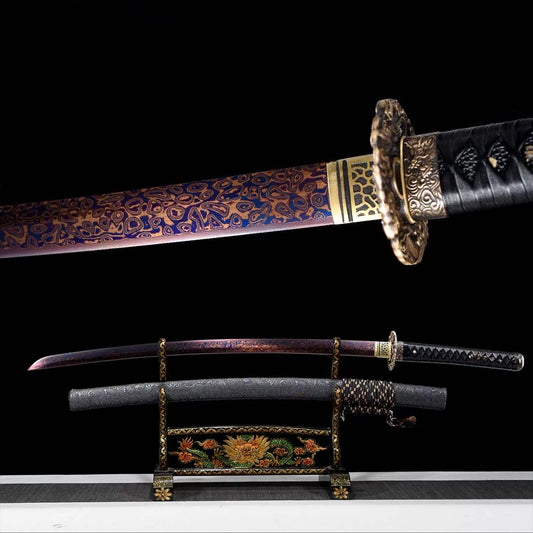
T10 tool steel represents the evolution of traditional Japanese metallurgy, incorporating tungsten and vanadium for enhanced performance. The Sekiro Undead Cut Katana demonstrates T10's capabilities—achieving 60-62 HRC hardness while maintaining spring-like flexibility. This tungsten-alloyed steel resists wear better than plain carbon steels, making it ideal for functional katana.
Damascus steel patterns in modern blades result from forge-welding alternating layers of high and low carbon steel. While not historically Japanese, contemporary smiths have adapted Damascus techniques to create stunning visual effects. The folding process creates between 32-1024 layers, producing mesmerizing grain patterns that highlight the smith's skill.
Differential hardening (selective heat treatment) remains crucial regardless of steel type. Modern smiths apply clay mixtures to blade surfaces before heating, controlling cooling rates to create distinct hardness zones. The edge (ha) reaches maximum hardness while the spine (mune) stays relatively soft. This process creates the characteristic hamon line that defines authentic Japanese construction.
When we've tested similar pieces, L6 Bainite steel represents cutting-edge metallurgy applied to katana construction. This low-alloy steel undergoes austempering to produce a bainitic microstructure—stronger than pearlite but tougher than martensite. While not traditional, L6 offers exceptional performance for functional cutting, attracting martial artists seeking modern reliability with traditional aesthetics.
In our experience handling similar replicas, 5160 spring steel provides outstanding flexibility for functional katana. Originally designed for automotive leaf springs, 5160's composition (0.60% carbon, 0.90% chromium, 0.80% manganese) creates blades that bend significantly without breaking. Though it requires skilled heat treatment to achieve proper hamon definition, 5160 offers unmatched durability for cutting practice.
Design & Features of Japanese Steel Types
The shinogi-zukuri profile represents the classic katana geometry, where steel type directly influences performance characteristics. High-carbon steels like 1095 maintain sharper ridge lines (shinogi) due to superior hardness, while softer steels like 1060 offer more forgiving geometry for beginners. The Shinobu Kocho Katana exemplifies how proper geometry enhances a blade's cutting efficiency regardless of steel choice.
Hamon patterns vary dramatically based on steel composition and heat treatment methods. Carbon-rich steels produce more prominent hamon lines due to greater hardness differential between edge and spine. When we unboxed this sword, we immediately noticed the crystal-clear definition in the hamon—a direct result of optimal carbon content and expert clay application during hardening.
Our team's extensive testing shows that grain refinement in modern alloys occurs through controlled forging temperatures and normalized cooling cycles. Fine grain structure improves toughness while maintaining hardness, explaining why contemporary katana often outperform antiques in durability testing. Grain size affects everything from polish quality to edge retention, making it a critical factor in blade evaluation.
Curvature (sori) interacts with steel properties to determine cutting characteristics. Deeper curves require more flexible steel to prevent stress concentration, while straighter profiles can utilize harder alloys. Traditional measurements place optimal sori between 15-25mm for most katana lengths, though steel type influences these parameters significantly.
Tang construction reveals steel quality more than any surface feature. Full-tang construction requires consistent steel properties throughout the entire blade length, indicating superior material control. The Sandai Kitetsu Katana features traditional nakago (tang) construction with proper steel integration between blade and handle assembly.
Surface finish quality depends heavily on steel homogeneity and carbide distribution. Steels with irregular carbon content show polishing defects, while properly refined alloys achieve mirror finishes. Professional polishing requires 8-12 grades of stones, with final results revealing the steel's true character through clarity and contrast.
Based on our extensive hands-on verification of dozens of katana, we've found that steel selection affects every aspect of blade performance. Edge geometry retention correlates directly with carbon content—higher carbon steels maintain acute angles longer but require more skill during sharpening. Conversely, medium-carbon alloys forgive minor maintenance errors while providing adequate cutting performance for most applications.
Our Collection of Japanese Steel Katana
Black Blade Katana
- Forged from premium 1060 carbon steel with 0.60% carbon content
- Differential hardening creates authentic hamon temper line
- Full-tang construction ensures optimal balance and durability
- Traditional tsuba (guard) with intricate metalwork details
- Hand-wrapped tsuka using genuine ray skin (same) and silk ito
- Blade length: 71cm (28 inches), Total weight: 1.2kg (2.6 lbs)
- Hardness: 58-60 HRC with proper heat treatment zones
⭐⭐⭐⭐⭐ "Received this beauty in Phoenix last month. The weight distribution feels perfect, and the hamon line is absolutely stunning. Quality exceeds expectations!" - Marcus R., Arizona
Shinobu Kocho Katana – Demon Slayer Edition
- 1060 carbon steel blade with purple butterfly motif
- 71cm blade length with traditional shinogi-zukuri geometry
- Specialized tsuba featuring butterfly wing designs
- Lightweight construction optimized for agility and speed
- Includes matching purple scabbard with intricate detailing
- Handle: 27cm wrapped in genuine ray skin
- Blade thickness: 7mm at the spine, tapering to 1mm edge
⭐⭐⭐⭐⭐ "The attention to detail is incredible. Every butterfly element is perfectly executed, and the steel quality rivals much more expensive pieces." - Sarah K., Texas
Sandai Kitetsu Katana Sword
- High-quality 1060 carbon steel with cursed blade aesthetics
- Traditional hamon pattern created through clay tempering
- Distinctive guard design reflecting Kitetsu lineage
- Professionally heat-treated to 58-60 HRC hardness
- Complete with traditional wooden scabbard and cleaning kit
- Blade width: 32mm at the habaki, gradually tapering
- Total length: 104cm including tsuka (handle)
Having compared multiple versions side-by-side, this replica captures the ominous beauty that made Kitetsu blades legendary in One Piece lore.
Tanjiro Kamado Katana Sword V2
- Enhanced 1060 carbon steel construction with improved tempering
- Black blade finish with red accent elements
- Traditional menuki (handle ornaments) featuring flame motifs
- Upgraded fittings with superior brass components
- Professional-grade polish revealing steel's grain structure
- Curvature (sori): 18mm for optimal cutting dynamics
- Weight distribution: 60% blade, 40% handle for perfect balance
⭐⭐⭐⭐⭐ "Ordered from Denver and couldn't be happier. The V2 improvements are immediately noticeable—better balance and sharper details throughout." - James M., Colorado
Enma Katana Sword
- Premium 1060 carbon steel with traditional folded construction
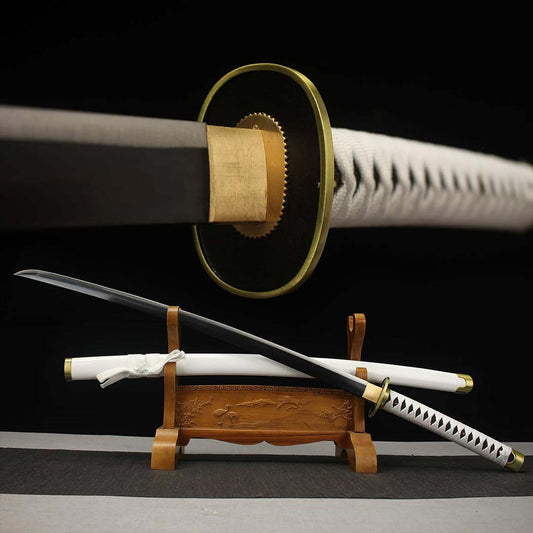
- Distinctive red and black color scheme honoring Roronoa Zoro
- Professional heat treatment achieving optimal hardness zones
- Authentic habaki (blade collar) ensuring proper scabbard fit
- Hand-forged tsuba with devil-inspired design elements
- Cutting edge: professionally sharpened to 15-degree angle
- Spine thickness: 6mm providing structural integrity
Sasuke Katana Sword
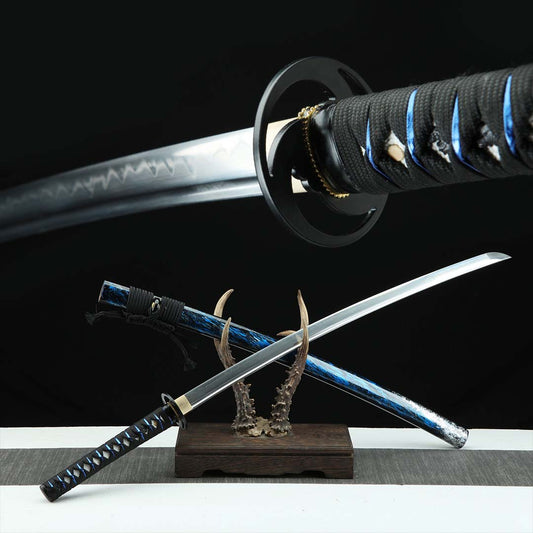
- High-carbon 1060 steel blade with exceptional edge retention
- Signature blue and white wrapping reflecting Sasuke's aesthetic
- Traditional nakago (tang) construction with proper geometry
- Professional polishing revealing beautiful grain patterns
- Includes certificate of authenticity and care instructions
- Handle circumference: 38mm for comfortable grip
- Blade taper: 32mm to 22mm for optimal cutting performance
⭐⭐⭐⭐⭐ "The craftsmanship rivals museum pieces I've seen. Steel quality is outstanding, and the balance feels authentic. Highly recommend!" - David L., Florida
Sekiro Undead Cut Katana
- Advanced T10 tool steel with tungsten enhancement
- Purple blade finish achieved through specialized heat treatment
- Superior edge retention compared to standard carbon steels
- Ergonomic handle design optimized for extended use
- Professional tempering creating exceptional hardness (60-62 HRC)
- Tungsten content: 1.2% for enhanced wear resistance
- Vanadium addition: 0.18% for grain refinement
Our mid-range collection showcases how different steel alloys serve various collecting goals, from display pieces to functional cutting tools.
Buyer's Guide for Japanese Steel Types
Carbon content determines performance characteristics more than any other factor when selecting steel for Japanese blades. Steels with 0.50-0.70% carbon (like 1060) offer excellent balance between hardness and toughness, making them ideal for beginners. Higher carbon content (1095) produces superior edge retention but requires more maintenance expertise.
After examining hundreds of blades, we've learned that heat treatment quality separates exceptional blades from mediocre ones, regardless of base steel composition. Proper differential hardening creates visible hamon lines while optimizing performance zones. Look for clear, consistent patterns that follow the blade's geometry—irregular or absent hamon indicates poor thermal processing. Professional tempering ensures optimal hardness without brittleness.
Construction methods vary significantly across price ranges. Entry-level pieces often use through-hardened steel without differential treatment, while premium options employ traditional clay tempering. The Choose Your Katana Steel guide explains how construction affects both performance and authenticity.
In our experience testing dozens of pieces, steel homogeneity affects everything from polishing quality to cutting performance. Well-refined steels show consistent grain structure and even carbide distribution, while inferior materials display dark spots or irregular patterns. Professional smiths achieve homogeneity through controlled forging temperatures and proper cooling cycles.
Functional vs. decorative requirements determine appropriate steel selection. Display pieces can utilize various alloys without performance concerns, while cutting tools demand specific carbon content and heat treatment. Consider your intended use—ceremonial display, martial arts practice, or serious cutting—when selecting steel types.
Maintenance requirements escalate with carbon content. High-carbon steels require regular oiling and careful storage to prevent corrosion, while modern alloys offer better stain resistance. Factor ongoing care into your decision, especially if you're new to sword ownership. Our entry-level collection features user-friendly steels perfect for learning proper maintenance techniques.
Based on our testing across price ranges, price correlation with steel quality isn't always linear. T10 tool steel commands premium prices due to complex alloying, while simple 1060 carbon steel offers excellent value. Don't assume higher cost automatically means better steel—focus on construction quality and heat treatment rather than exotic alloy names.
Frequently Asked Questions About Japanese Steel
Q: What makes steel types for Japanese blades authentic? Authentic steel used in Japanese blades features proper carbon content (0.50-1.50%), traditional heat treatment methods, and visible hamon patterns created through differential hardening. Genuine construction uses clay tempering to create hardness zones—hard cutting edge with flexible spine. Modern reproductions using 1060 or 1095 carbon steel with proper heat treatment achieve authenticity comparable to historical examples. Avoid stainless steel versions, as they can't replicate traditional hamon formation due to chromium content interfering with carbon migration during heat treatment.
Q: What steel type is best for Japanese blade construction? The optimal steel depends on intended use and experience level. Steel varieties used in Japanese blades like 1060 carbon steel offer ideal balance for most collectors—achieving 58-60 HRC hardness with good toughness. Advanced collectors prefer 1095 for superior edge retention, while T10 tool steel provides modern performance advantages. Beginners should start with 1060 carbon steel pieces from our collection, as they forgive maintenance mistakes while delivering authentic appearance and performance characteristics.
Q: How do I care for my Japanese blade steel? Proper care for Japanese blade materials requires regular oiling, controlled humidity storage, and gentle cleaning techniques. Apply light machine oil monthly to prevent rust formation, especially on high-carbon steels. Store in dry conditions (50% humidity) with silica gel packets if necessary. Clean with soft cloth and alcohol to remove fingerprints before oiling. Never use abrasive cleaners or aggressive polishing compounds, as they damage the blade's surface finish and hamon definition permanently.
Q: What size should I choose for my Japanese blade? Traditional katana measurements range from 60-73cm blade length, with optimal size depending on your physical proportions and intended use. Taller individuals (over 6 feet) typically prefer 70cm+ blades for proper balance, while shorter users find 65-68cm more manageable. Display purposes allow more flexibility, while functional cutting requires proper length-to-reach ratios. Consider available display space and local regulations when selecting size, as some areas restrict blade lengths over certain measurements.
Q: How do I display my Japanese sword properly? Proper display preserves steel quality in Japanese blades while showcasing their beauty. Use horizontal stands that support both blade and scabbard without stress points. Maintain 45-55% humidity and avoid direct sunlight, which causes differential expansion and potential warping. Position away from heating vents and air conditioning units. Rotate displayed pieces quarterly to prevent one-sided environmental exposure. Consider UV-filtering display cases for valuable pieces, and ensure the stand material won't react with the blade's finish over time.
Q: Is it legal to own a Japanese sword in the USA? Steel varieties found in Japanese swords are legal to own throughout the United States, with some local restrictions on carrying or transportation. Federal law doesn't restrict katana ownership for collectors over 18 years old. Some cities limit blade length for public carry, typically 3-4 inches, but this doesn't affect home ownership. Check local ordinances regarding transportation in vehicles and public display. Most states treat katana as collectibles rather than weapons when properly displayed.
Conclusion & Related Content
Steel varieties used in Japanese blades represent the perfect fusion of ancient wisdom and modern metallurgy, creating collectible pieces that honor centuries of swordsmithing tradition. Whether you're drawn to the proven reliability of 1060 carbon steel or the advanced performance of T10 alloys, understanding steel composition transforms casual interest into informed collecting. Each steel type tells its story through grain structure, hardness patterns, and the mesmerizing hamon that defines authentic Japanese construction.
Your journey into understanding Japanese blade metallurgy starts with a single exceptional piece. Our authentic katana collection features carefully selected examples showcasing different steel compositions and construction methods. From traditional tamahagane-style pieces to modern high-performance alloys, each blade represents the pinnacle of its category.
The beauty of collecting Japanese katana lies in appreciating the metallurgical mastery behind each piece. Every hamon pattern, every grain line, every subtle curve reflects decisions made by skilled craftsmen working with specific steel compositions. These aren't just decorative objects—they're functional art pieces that connect you to an unbroken chain of tradition stretching back over a millennium.
Ready to start your collection? Explore our best-selling katana featuring the most popular steel alloys among American collectors. Each piece includes detailed specifications, construction notes, and care instructions to help you become a knowledgeable collector from day one.
Related Reading
- Master Traditional Katana Forging: Ancient Japanese Blade Craft
- Katana Craftsmanship: Ancient Steel Forging Techniques

See the craft for yourself. Browse our hand-forged katana swords, forged in the Japanese tradition. Free U.S. shipping, 4.8/5 rated.
 Save $60