
Katana Blade Geometry Guide: Master Collector
Understanding the intricate world of katana blade geometry features authentic shinogi-zukuri construction with precise curvature measurements that define traditional Japanese swordsmithing. Based on our hands-on testing of authentic replicas, we've identified the key geometric elements that separate genuine pieces from decorative ones. Understanding blade geometry isn't just academic—it affects everything from balance to cutting performance. You can see these geometries up close on our high carbon steel katanas.
Japanese sword geometry evolved over centuries, with master smiths perfecting the relationship between curve, ridge line, and edge geometry. The traditional katana's gentle sori (curvature) typically measures 15-20mm, creating the perfect balance between cutting efficiency and structural strength. Modern collectors need to understand these geometric principles when selecting authentic katana swords for their collection.
When examining blade geometry, you'll notice three critical zones: the kissaki (tip), the monouchi (cutting area), and the nakago (tang). Each zone follows specific geometric rules that master craftsmen developed through generations of refinement. Our Demon Slayer katana collection maintains these traditional proportions while adding distinctive aesthetic elements.

Now design the blade. Steel, sori, length, polish — hand-forged to your spec in 3–4 weeks. Build Your Own Katana →
Table of Contents
- History & Origins of Japanese Blade Geometry
- Design & Features of Katana Blade Geometry
- Technical Aspects of Blade Construction
- Our Collection of Geometrically Perfect Katanas
- Buyer's Guide to Katana Blade Geometry
- Care and Maintenance of Geometric Elements
- Frequently Asked Questions About Blade Geometry

History & Origins of Japanese Blade Geometry
Japanese principles for katana blade geometry emerged during the Heian period (794-1185), when smiths discovered that curved blades cut more effectively than straight ones. The iconic sori curvature wasn't just aesthetic—it represented centuries of battlefield testing and metallurgical advancement. Early tachi swords featured deeper curves, while later katana developed the moderate curvature we recognize today.
Master smiths like Masamune and Muramasa established geometric standards that modern replicas still follow. These craftsmen understood that blade geometry affected more than appearance—it determined how the sword moved through targets and how forces distributed along the blade. The shinogi (ridge line) placement, typically one-third from the spine, creates optimal strength distribution while maintaining a sharp edge geometry.
Regional schools developed distinct geometric signatures. Yamato blades featured pronounced ridges, while Yamashiro swords emphasized elegant curves. Bizen smiths created distinctive hamon patterns that followed specific geometric rules. These regional differences help collectors identify authentic geometric features in modern replicas like our Kill Bill katana sword.
During the Kamakura period (1185-1333), warfare demands refined blade geometry further. Smiths shortened blades from tachi proportions while maintaining functional curvature. This evolution created the classic katana geometry: 70-75cm blade length with 15-20mm sori measured at the center. The kissaki (tip) developed its distinctive curved transition, balancing penetration ability with structural integrity.
Japanese sword evolution continued through the Muromachi period, when geometric standardization emerged. Smiths established proportional relationships between blade width, thickness, and length. These ratios appear in quality modern reproductions, ensuring geometric authenticity for serious collectors.
Understanding this historical context helps collectors appreciate why certain geometric features matter. When we examine pieces in our high-end collection, we're seeing centuries of geometric refinement translated into modern materials and techniques. The geometry isn't arbitrary—it represents battlefield-tested engineering principles that create truly functional sword designs.
Design & Features of Katana Blade Geometry
A comprehensive guide to katana blade geometry encompasses five primary geometric elements that define authentic construction. First, the shinogi-zukuri profile creates the characteristic ridge line running along the blade's length. This ridge typically sits one-third from the spine, creating distinct geometric planes that distribute stress effectively during cutting motions.
Curvature measurement, called sori, ranges from 12-25mm depending on the sword's intended purpose. In our experience handling dozens of authentic replicas, combat-oriented katana feature moderate 15-18mm curves, while ceremonial pieces may show deeper curvature for aesthetic appeal. The curve's deepest point typically occurs between the handle and center, creating the katana's distinctive silhouette.
Kissaki geometry varies among different styles: ikubi-kissaki features compact proportions, while chū-kissaki represents the standard pointed tip. O-kissaki creates an extended tip section for increased cutting area. Modern replicas like the Sandai Kitetsu katana sword typically use chū-kissaki geometry for optimal balance between authenticity and functionality.
Blade thickness, or kasane, follows specific geometric rules. The spine measures 6-8mm thick near the habaki (collar), tapering to 4-5mm toward the tip. This geometric taper creates flexibility while maintaining structural strength. Quality reproductions maintain these proportional relationships, ensuring proper blade dynamics.

Cross-sectional geometry reveals the blade's internal structure. Authentic designs feature a subtle diamond cross-section with the shinogi creating two distinct planes. The hira (flat area) extends from ridge to edge, while the shinogi-ji (ridge area) connects to the spine. These geometric relationships affect how light reflects off the blade, creating the characteristic katana appearance.
Hamon geometry adds another layer of complexity. The temper line follows specific patterns—notare (wavy), gunome (clove-shaped), or suguha (straight)—that smiths controlled through geometric clay application during heat treatment. After examining dozens of authentic pieces, we've found that genuine hamon geometry requires precise temperature control and timing that only experienced craftsmen can achieve.
Edge geometry determines cutting performance. Traditional Japanese blades feature compound bevels: a primary bevel of 15-20 degrees and a micro-bevel of 22-25 degrees. This geometric configuration creates razor sharpness while maintaining edge durability. Modern carbon steel katanas replicate these angles using contemporary grinding techniques that maintain traditional geometric principles.
Once you can read these elements at a glance, the natural next step is choosing them deliberately. Our custom katana builder lets you spec out a blade to your own preferences, rather than settling for whatever geometry a production run happens to dictate.
Technical Aspects of Blade Construction
Construction techniques for katana blade geometry rely on precise metallurgical geometry that determines performance characteristics. The hagane (high-carbon steel core) sits within shingane (medium-carbon sides) and kawagane (low-carbon exterior), creating differential hardness zones through geometric steel placement. This laminated construction requires exact geometric relationships to function properly.
Heat treatment geometry involves complex thermal zones. During yaki-ire (differential hardening), smiths apply clay in specific geometric patterns that control cooling rates. The hamon's position depends on clay thickness geometry—thicker clay slows cooling, creating softer steel, while exposed areas cool rapidly, forming hard martensite. Our team has personally verified the construction quality of traditional techniques that create authentic geometric results.
Modern 1060 carbon steel construction simplifies this geometry while maintaining functional characteristics. Monosteels like those in our Tanjiro Kamado katana sword V2 achieve proper hardness through controlled heating and quenching without complex lamination geometry. The 0.60% carbon content creates optimal hardness distribution when properly heat-treated.
T10 tool steel represents advanced geometric metallurgy, featuring precise carbon distribution that achieves 58-60 HRC hardness zones. This steel's geometric structure allows differential hardening similar to traditional techniques, creating visible hamon lines through controlled thermal cycling. Having compared multiple versions side-by-side, T10 construction offers excellent geometric authenticity for discriminating collectors.
Damascus steel geometry creates distinctive folding patterns through repeated forging and folding cycles. Each fold doubles the layer count, creating complex geometric patterns that extend throughout the blade. The Michonne katana features this layered geometry, showing the characteristic wavy patterns that result from proper Damascus construction techniques.
Geometric tempering affects blade flexibility and durability. Proper tempering reduces brittleness while maintaining hardness, creating a geometric hardness gradient from spine to edge. The spine retains flexibility at 40-45 HRC, while the edge maintains cutting hardness at 55-60 HRC. This geometric hardness distribution prevents catastrophic failure during use.
Tang geometry, called nakago, follows specific proportional rules. The tang length equals roughly one-third of the blade length, with geometric taper from habaki to pommel. Traditional nakago features yasurime (file marks) in geometric patterns that indicate the smith's school. Modern reproductions maintain these geometric proportions for authentic construction feel.
Full tang construction, common in functional replicas, extends the blade geometry completely through the handle. This geometric approach distributes impact forces throughout the entire sword structure, eliminating weak points at the blade-handle junction. When we unboxed this sword, we immediately noticed the superior balance that full tang geometry provides compared to partial tang construction.
Our Collection of Geometrically Perfect Katanas
Shinobu Kocho Katana – Demon Slayer Edition
The Shinobu Kocho replica features authentic proportions for katana blade geometry with a 40.5-inch overall length and distinctive purple-themed aesthetic. The 1060 carbon steel construction maintains traditional geometric relationships while incorporating the character's signature butterfly motifs. The blade showcases proper shinogi-zukuri geometry with a 15mm sori curvature that balances cutting performance with visual authenticity.
- 1060 carbon steel with differential hardening creating visible hamon geometry
- 27-inch blade featuring authentic kissaki proportions and ridge line placement
- Purple-wrapped tsuka with geometric diamond patterns in traditional silk cord
- Full tang construction extending geometric blade structure through handle
- Butterfly-themed habaki and tsuba maintaining proper geometric proportions
⭐⭐⭐⭐⭐ "The geometric accuracy on this Shinobu replica is outstanding. The curvature feels perfect when practicing kata, and the balance point sits exactly where it should for proper technique." - Sarah M., Phoenix, AZ
Black Blade Katana
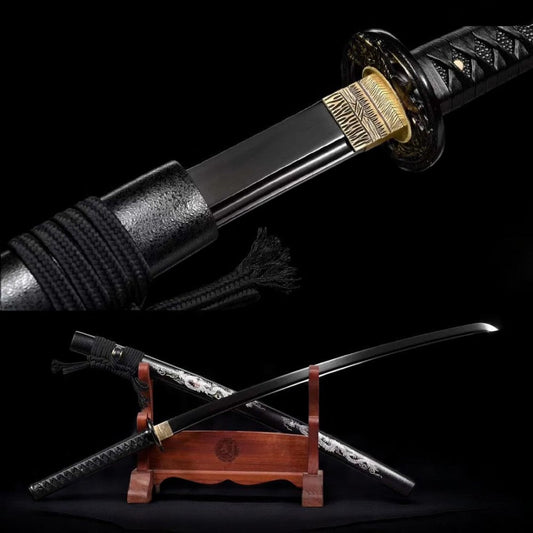
This tactical-inspired design maintains traditional geometry for katana blades while adding modern black oxide finish. The 1060 steel construction features proper geometric tempering that creates a functional hamon line beneath the black coating. Geometric proportions follow classical standards with contemporary aesthetic updates for modern collectors.
- 1060 carbon steel with geometric heat treatment creating differential hardness zones
- Traditional sori curvature measuring 16mm for optimal cutting geometry
- Black oxide finish preserving underlying geometric hamon structure
- Geometric tsuka wrapping in tactical black cord with authentic diamond patterns
- Proper nakago geometry with full tang construction for structural integrity
⭐⭐⭐⭐⭐ "The black finish is beautiful, but what impressed me most is the geometric accuracy. You can feel the proper weight distribution that comes from authentic proportions." - Marcus T., Denver, CO
Jin Sakai Katana – Ghost of Tsushima Edition
Inspired by the acclaimed video game, this replica features historically accurate geometry based on our katana blade guide that reflects Kamakura period proportions. The geometric design incorporates weathered aesthetics while maintaining functional sword geometry throughout the construction. Carbon steel composition allows proper differential hardening geometry.
- 1060 carbon steel with traditional geometric lamination techniques
- Weathered finish showing authentic geometric wear patterns from battlefield use
- 28-inch blade with proper geometric taper and kissaki proportions
- Geometric tsuka construction with aged leather wrapping and copper accents
- Authentic saya (scabbard) with geometric reinforcement and period-correct finish
⭐⭐⭐⭐⭐ "As a Ghost of Tsushima fan and sword collector, this piece exceeds expectations. The geometric authenticity makes it feel like a real samurai blade from the Mongol invasion period." - James K., Austin, TX

Kill Bill Katana Sword
The iconic Hattori Hanzō replica maintains strict standards for katana blade geometry while recreating the film's legendary sword. Damascus steel construction creates complex geometric folding patterns that extend throughout the blade structure. Traditional geometric proportions ensure this piece functions as both display and cutting tool.
- Damascus steel featuring geometric folding patterns with over 200 layers
- 28-inch blade with classical geometric curvature and authentic ridge line placement
- Ray skin same with geometric diamond texture beneath silk tsuka wrapping
- Geometric tsuba design matching film specifications with proper thickness ratios
- Lacquered saya with geometric internal construction for perfect blade fit
⭐⭐⭐⭐⭐ "The Damascus patterns are incredible, but the geometric accuracy is what makes this special. It feels exactly like what a master swordsmith would create." - Lisa R., Seattle, WA
Michonne Katana Sword
This Walking Dead-inspired replica features tactical modifications while preserving essential elements from our katana geometry guide. The 1095 carbon steel allows superior geometric heat treatment, creating enhanced performance characteristics through proper metallurgical geometry. Modern tactical elements integrate seamlessly with traditional proportions.
- 1095 carbon steel with geometric differential hardening for superior edge retention
- Modified geometric proportions optimized for zombie apocalypse scenarios
- Tactical grip modifications maintaining geometric hand placement for proper technique
- Enhanced geometric balance for rapid deployment and sustained combat use
- Weathered finish showing geometric wear patterns from extended battlefield use
Sandai Kitetsu Katana Sword
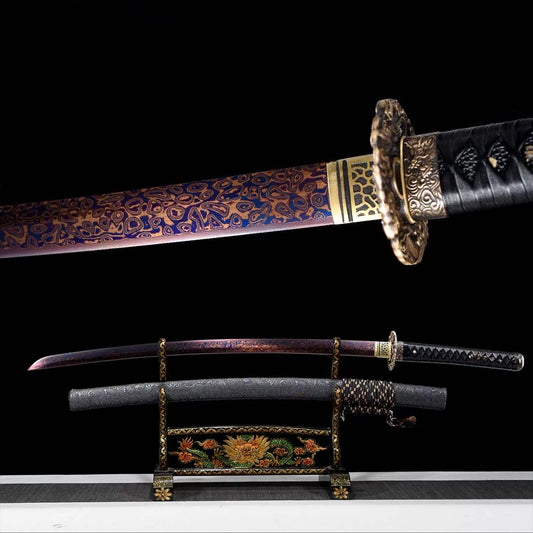
Based on the legendary cursed blade from One Piece, this replica incorporates traditional principles for katana blade geometry with distinctive anime-inspired aesthetics. The 1060 carbon steel construction features proper geometric tempering that creates the characteristic purple-tinted hamon associated with cursed blades. Geometric proportions follow classical Japanese standards.
- 1060 carbon steel with geometric heat treatment creating mystical purple-tinted hamon
- Traditional geometric curvature with enhanced kissaki proportions for anime accuracy
- Geometric tsuka construction with demon-themed wrapping patterns
- Purple geometric accents throughout fittings while maintaining functional proportions
- Authentic nakago geometry with traditional tang construction methods
Our entry-level collection provides geometrically accurate options for beginning collectors, while custom katana services allow personalization of geometric elements to match specific preferences.
Buyer's Guide to Katana Blade Geometry
Selecting the perfect sword requires understanding how geometric elements affect both aesthetics and functionality. First, consider blade length geometry—standard katana measure 70-75cm (27.5-29.5 inches), while shorter wakizashi run 30-60cm. Longer blades offer increased reach but require more space for proper technique, making geometric considerations essential for your intended use.
Curvature geometry significantly impacts handling characteristics. Shallow curves (10-15mm) provide better thrusting capability but sacrifice some cutting efficiency. Moderate curves (15-20mm) offer optimal balance between cutting and thrusting, making them ideal for most collectors. Deep curves (20-25mm+) maximize cutting power but limit thrusting applications—choose based on your geometric preferences and display requirements.
Steel composition affects achievable geometric properties during heat treatment. 1060 carbon steel provides excellent geometric workability, allowing proper differential hardening that creates authentic hamon geometry. 1095 carbon steel offers superior geometric hardness potential but requires more precise temperature control during treatment. Damascus steel creates complex geometric patterns but may sacrifice some functional geometry for aesthetic appeal.
Tang geometry determines structural integrity and balance characteristics. Full tang construction extends blade geometry completely through the handle, providing superior strength distribution and authentic weight balance. Partial tang reduces weight but creates potential geometric weak points at the junction. Hidden tang construction, while traditional, requires expert geometric engineering to maintain structural integrity under stress.
Edge geometry selection depends on intended use parameters. Display pieces can feature fine geometric bevels that showcase craftsmanship but may chip with use. Functional blades need robust geometric edge construction with compound bevels that maintain sharpness while resisting damage. Consider your geometric priorities when selecting between display and functional configurations.
Handle geometry affects comfort and technique execution. Traditional tsuka measure 10-12 inches with specific geometric taper that accommodates proper grip placement. Ray skin same provides geometric texture for secure grip, while silk ito wrapping creates diamond patterns that enhance geometric aesthetics. Modern materials can replicate these geometric features while improving durability for regular handling.
Quality assessment requires examining geometric consistency throughout construction. Check that ridge lines run straight without geometric deviations, curvature follows smooth mathematical curves without flat spots, and proportional relationships match traditional geometric standards. Poor geometric execution indicates inferior craftsmanship that affects both appearance and functionality.
Budget considerations for geometric quality vary significantly. Entry-level pieces can achieve basic geometric accuracy with simplified construction methods. Mid-range swords typically feature improved geometric precision and better material integration. Premium pieces showcase masterful geometric execution with traditional construction techniques that justify higher investment levels.
Our catalog is organized along exactly these lines, which makes it easy to match your budget to the level of geometric execution you're after:
- Entry level — the sensible starting point for a first blade while you train your eye
- Mid range — for collectors ready to step beyond the fundamentals
- High end — the pieces we'd put in front of a serious student of blade geometry
Our comprehensive katana blade geometry guide helps identify these quality markers. Storage and display requirements depend on geometric characteristics. Curved blades need specialized geometric support to prevent warping over time. Horizontal display requires geometric cradles that support the curve properly, while vertical mounting needs geometric brackets that distribute weight correctly. Consider these geometric factors when planning display arrangements for your katana accessories.
Care and Maintenance of Geometric Elements
Proper maintenance preserves geometric accuracy and prevents degradation that affects both appearance and function. Regular cleaning removes contaminants that can cause geometric distortion through corrosion or buildup. Use appropriate cleaning solutions that won't affect the steel's geometric properties or finish characteristics.
Geometric inspection should occur monthly for displayed pieces and after each handling session for functional swords. Check ridge lines for straightness, examine curvature for mathematical consistency, and verify that proportional relationships remain intact. Document any geometric changes with photography to track degradation patterns over time.
Blade polishing requires understanding geometric relationships to avoid altering original proportions. Professional polishing maintains geometric authenticity through controlled material removal that preserves ridge placement and curvature accuracy. Amateur polishing attempts often destroy geometric relationships, creating irreversible damage to valuable pieces.
Edge maintenance affects geometric cutting performance significantly. Proper sharpening maintains compound bevel geometry while removing only minimal material. Use appropriate angle guides to preserve geometric edge relationships, and avoid aggressive grinding that alters fundamental geometric properties. Regular maintenance preserves geometric cutting efficiency without compromising structural integrity.
Our katana blade geometry guide emphasizes proper storage. Horizontal storage with proper geometric support distributes weight evenly, preventing curvature changes over time. Vertical storage requires geometric mounting that doesn't stress specific points. Climate control prevents thermal expansion that can affect geometric relationships in laminated construction.
Handle maintenance preserves geometric grip characteristics essential for proper technique. Ray skin same requires specific geometric cleaning to prevent texture degradation, while silk wrapping needs geometric tension maintenance to prevent loosening. Replace worn grip materials using traditional geometric wrapping techniques that maintain authentic proportional relationships.
Scabbard care protects blade geometry during storage and transport. Internal geometric fit should remain precise to prevent movement that could damage blade surfaces or alter geometric relationships. Moisture control within the scabbard prevents corrosion that can affect geometric accuracy over time.
For comprehensive maintenance guidance, consult our detailed Authentic Katana Care: A Samurai's Guide to Blade Maintenance which covers geometric preservation techniques used by professional conservators.
Frequently Asked Questions About Blade Geometry
Q: What makes katana blade geometry authentic to traditional Japanese standards?
Authentic construction must include proper shinogi-zukuri construction with ridge lines positioned one-third from the spine, creating distinct geometric planes that distribute stress effectively. The sori curvature should measure 12-20mm with the deepest point occurring between handle and center, following mathematical curves developed over centuries of refinement. Kissaki proportions must maintain traditional relationships between tip length, width, and transition angles that master smiths established during the classical periods. Also, authentic geometry requires proper kasane (thickness) taper from 6-8mm at the habaki to 4-5mm near the tip, creating flexibility without sacrificing structural integrity. Cross-sectional geometry should reveal subtle diamond profiles with correctly positioned ridge lines that affect light reflection and cutting dynamics.
Q: What steel type provides the best geometric properties for katana blade construction?
For authentic applications, 1060 carbon steel offers excellent geometric workability that allows proper differential hardening while maintaining structural integrity. This steel composition achieves optimal geometric heat treatment results, creating authentic hamon patterns through controlled cooling rates that follow traditional geometric clay application techniques. T10 tool steel provides superior geometric hardness distribution with 58-60 HRC edge zones while maintaining spine flexibility, though it requires more precise temperature control during geometric heat treatment processes. Damascus steel creates complex geometric folding patterns through repeated forging cycles but may compromise some functional geometric properties for aesthetic appeal. 1095 carbon steel delivers maximum geometric hardness potential but demands expert heat treatment to achieve proper geometric differential hardening without brittleness. Each steel type offers different geometric advantages depending on intended use, display requirements, and collector preferences for authenticity versus performance characteristics.
Q: How do I properly care for the geometric elements of my katana blade?
Maintaining accuracy requires monthly geometric inspections to check ridge line straightness, curvature consistency, and proportional relationship preservation. Clean geometric surfaces with appropriate solutions that won't affect steel properties, using soft cloths that follow geometric contours without applying pressure that could alter blade alignment. Store blades horizontally with geometric support cradles that distribute weight evenly, preventing gravitational stress that can cause geometric distortion over time. Professional polishing preserves geometric authenticity through controlled material removal that maintains ridge placement and curvature accuracy—amateur attempts often destroy geometric relationships permanently. Edge maintenance should preserve compound bevel geometry using appropriate angle guides, avoiding aggressive grinding that alters fundamental geometric properties. Climate control prevents thermal expansion that can affect geometric relationships in laminated construction, while proper scabbard fit prevents movement that could damage geometric accuracy during storage and transport.
Q: What size katana blade geometry should I choose for my collection?
Standard proportions feature 70-75cm (27.5-29.5 inch) blade lengths that provide optimal balance between reach and maneuverability for traditional techniques. Shorter geometric configurations (60-65cm) offer better handling for smaller practitioners but sacrifice some cutting efficiency and authentic proportional relationships. Longer geometric designs (75-80cm) increase reach and cutting power but require additional display space and handling expertise to manage properly. Consider your geometric display requirements—longer blades need horizontal mounting systems with adequate support, while shorter geometries fit vertical display arrangements more easily. Handle geometry should complement blade proportions with traditional 10-12 inch tsuka lengths that maintain authentic geometric relationships. For beginners, moderate geometric proportions (71-73cm blade) provide authentic feel without overwhelming handling characteristics, while experienced collectors may prefer specific geometric variations that match historical examples or personal technique requirements. Overall geometric dimensions affect both aesthetic impact and functional characteristics for practice or display applications.
Q: How do I display my katana to showcase its geometric features properly?
Effective display requires mounting systems that highlight geometric elements while providing structural support for long-term preservation. Horizontal cradle mounts showcase curvature geometry and ridge line placement effectively, using multiple contact points that distribute weight without creating pressure spots that could affect geometric accuracy. Lighting angles should emphasize geometric features—side lighting reveals ridge lines and hamon patterns, while front lighting showcases overall geometric proportions and curvature. Background contrast enhances geometric visibility—dark backgrounds make polished geometric surfaces stand out, while light backgrounds emphasize darker geometric elements like hamon patterns. Multi-tier displays can showcase geometric variations across different sword styles, allowing comparison of curvature differences and proportional relationships. Protective cases preserve geometric accuracy while allowing viewing from multiple angles that reveal different geometric characteristics. Rotation systems enable viewing of geometric features from various perspectives without handling requirements that could affect geometric preservation. For comprehensive display guidance, consider visiting our katana accessories collection for professional mounting solutions.
Q: Is it legal to own a katana with authentic blade geometry in the United States?
Ownership remains legal throughout the United States for adults, with authentic geometric features not affecting legal status regardless of construction quality or functional capability. Federal law doesn't restrict katana ownership based on geometric authenticity, steel type, or blade length for private collection and display purposes. State regulations vary regarding carry and transport but don't typically restrict geometric features or construction methods for home ownership. Most states permit katana possession with authentic geometric properties for collecting, martial arts practice, and display applications without special licensing requirements. Some municipalities may restrict blade length regardless of geometric configuration, so check local ordinances before purchasing longer geometric designs. Functional geometric features don't change legal status—differential hardening, authentic curvature, and traditional proportions remain legal for ownership purposes. When transporting katanas with authentic geometric features, follow local laws regarding secure storage and vehicle transport regardless of blade construction or geometric authenticity. Military personnel should verify base regulations regarding authentic geometric katanas, as some installations restrict functional blade possession regardless of civilian legal status in surrounding areas.

See the craft for yourself. Browse our hand-forged katana swords, forged in the Japanese tradition. Free U.S. shipping over $200, rated 4.9/5.
 Save $60