
Katana Origins: The Sacred Birth of Japan
The rhythmic hammering echoes through the mountain forge as sparks dance in the darkness. Steam rises from the quench tank as molten steel meets water with a violent hiss. For over a thousand years, this sacred ritual has given birth to the world's most revered weapon - the Japanese katana. Each blade carries within it not just the strength of folded steel, but the soul of a warrior culture that shaped an entire civilization.
The katana origins japanese sword history spans centuries of refinement, spiritual significance, and technological innovation that began in ancient Japan's feudal era. Today, collectors worldwide seek authentic katana replicas that honor this incredible legacy while bringing the artistry of Japanese swordsmithing into modern homes.

Table of Contents
The Dawn of the Katana Era
The study of katana origins japanese sword history reveals that these legendary weapons trace back to Japan's Heian period (794-1185), emerging from the chaos of civil wars that demanded superior weapons. Unlike the straight-bladed tachi that came before, the katana's distinctive curved design revolutionized combat effectiveness. This curvature, known as sori, wasn't merely aesthetic - it represented a breakthrough in metallurgical engineering that allowed for faster draws and more powerful cutting strikes.
The legendary swordsmith Amakuni is often credited with creating the first curved Japanese sword around 700 CE, though the true katana form didn't fully develop until the 10th century. During the Kamakura period (1185-1333), master smiths like Masamune perfected techniques that would define Japanese swordmaking for centuries. Understanding katana origins japanese sword history reveals that these early katanas weren't just weapons; they were symbols of the emerging samurai class and their unwavering code of honor.
Historical records show that each katana required months of careful forging, with smiths following spiritual rituals as sacred as the metallurgical processes. The blade's creation involved repeated folding of steel - sometimes over 16 times - creating thousands of layers that gave the katana its legendary strength and distinctive hamon (temper line).
The rise of the katana coincided with Japan's feudal era, when samurai warriors needed weapons that could perform at close range while maintaining the spiritual purity demanded by Bushido. This period established many of the design principles we see in today's anime katana replicas, where fictional blades often draw inspiration from these ancient masterworks rooted in authentic Japanese sword heritage.
Sacred Steel and Spiritual Significance
Beyond their practical application, katanas held profound spiritual significance in Japanese culture. The Shinto belief system viewed the katana as possessing a spirit or tamashii, making each blade a living entity deserving of respect and reverence. This spiritual aspect explains why samurai warriors often named their katanas and treated them as trusted companions rather than mere tools.
The forging process itself became a sacred ritual deeply embedded in katana origins japanese sword history. Swordsmiths underwent purification ceremonies before beginning work, and the forge was considered hallowed ground. Many smiths incorporated prayers and meditation into their craft, believing that the blade would inherit the maker's spiritual energy. This tradition continues to influence modern collectors who seek high-end katanas that honor these ancient practices.
The katana's role extended beyond warfare into Japanese art, literature, and philosophy. The concept of mono no aware - the bittersweet awareness of the impermanence of all things - found perfect expression in the katana's dual nature as both destroyer and preserver of honor. Great literary works like "The Tale of Genji" and "The Tale of the Heike" elevated the katana to mythical status, inspiring countless stories that continue to influence modern custom katana designs.

During the Edo period (1603-1868), when Japan entered an era of relative peace, the katana's spiritual significance actually increased. With fewer opportunities for battlefield use, the sword became a symbol of social status and spiritual discipline. This period saw the development of elaborate sword schools and the codification of techniques that would later inspire martial arts practices worldwide, further enriching the tapestry of katana origins japanese sword history.
Master Craftsmanship Through the Ages
The technical mastery required to create a true katana represents one of humanity's greatest metallurgical achievements within the rich narrative of katana origins japanese sword history. Traditional Japanese swordsmithing employed sophisticated techniques that wouldn't be fully understood by Western metallurgy until the modern era. The process began with tamahagane steel, produced in clay furnaces called tatara through a grueling 72-hour smelting process.
Master smiths developed various construction methods, with the most famous being the kobuse technique, where a hard steel edge is wrapped in softer, more flexible steel. This created a blade that could maintain a razor-sharp edge while absorbing the shock of combat without breaking. The differential hardening process, achieved through selective clay application before quenching, created the distinctive hamon pattern that serves as the blade's signature.
Advanced metallurgical studies have revealed that traditional katanas achieved properties comparable to modern steel alloys through purely empirical methods. The folding process eliminated impurities while creating a complex carbon gradient throughout the blade, resulting in steel that was simultaneously hard and flexible.
The five great sword schools - Yamato, Yamashiro, Bizen, Soshu, and Mino - each developed distinctive techniques that can still be identified in surviving blades. These regional styles influenced the aesthetic preferences we see in contemporary best seller replicas, where collectors often seek specific school characteristics in their displays.
Modern smiths creating entry level katanas still employ many traditional techniques, though contemporary steel alloys like 1060 and 1095 carbon steel provide consistent quality that was difficult to achieve with historical methods. The challenge for today's craftsmen lies in honoring traditional aesthetics while ensuring reliability for modern collectors and martial artists who appreciate authentic Japanese sword craftsmanship.
Legendary Blades in Our Collection
Cinema and Pop Culture Legends
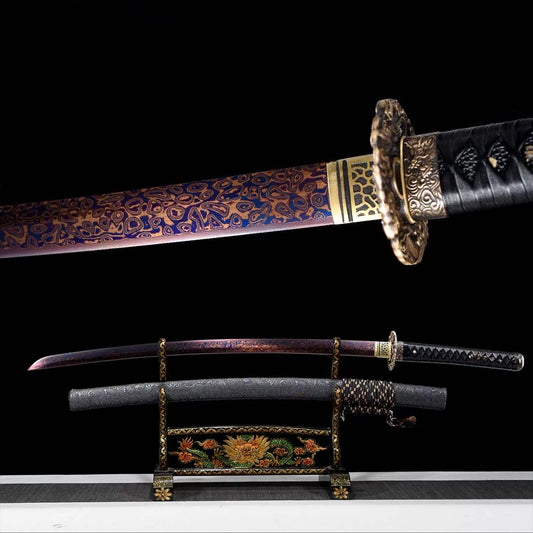
The iconic blade that launched a thousand collector dreams, this meticulously crafted replica captures the legendary elegance of cinema's most famous katana. Forged from premium carbon steel with authentic Damascus folding patterns, this sword represents the pinnacle of functional artistry.
• Hand-forged Damascus steel construction with visible folding patterns • Traditional cotton wrapping over genuine ray skin handle • Full tang construction ensuring structural integrity • Razor-sharp edge suitable for cutting demonstrations • Comes with premium wooden scabbard and display stand
⭐⭐⭐⭐⭐ "The attention to detail is incredible. The Damascus patterns are stunning and the balance is perfect for practice." - Michael R., Denver, Colorado
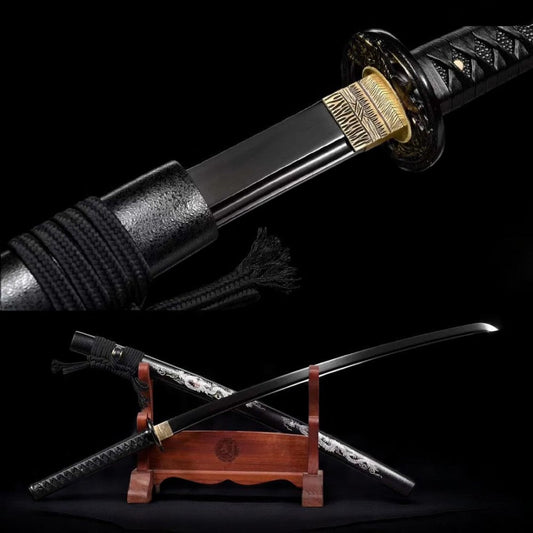
Inspired by the post-apocalyptic warrior's trusted companion, this fully functional katana combines 1095 carbon steel durability with authentic Japanese aesthetics. The blade's construction reflects the practical needs of survival while maintaining the spiritual essence of traditional katana design rooted in centuries of Japanese sword heritage.
• 1095 high-carbon steel for superior edge retention • Damascus steel outer layers creating distinctive patterns • Functional design optimized for actual use • Traditional tsuba (hand guard) with weathered finish • Leather-wrapped scabbard for field carry
⭐⭐⭐⭐⭐ "This katana has incredible cutting power and the Damascus steel is absolutely beautiful. Perfect for my collection." - Sarah L., Austin, Texas

Gaming and Anime Masterpieces
Jin Sakai Katana – Ghost of Tsushima Edition
Channel the spirit of feudal Japan with this stunning replica of the legendary samurai's blade. Crafted from 1060 carbon steel, this katana embodies the honor and tradition of the samurai while maintaining the practical edge needed for modern collectors who appreciate katana origins japanese sword history.
• 1060 carbon steel blade for optimal balance of hardness and flexibility • Traditional Mongol invasion era design elements • Hand-forged construction with authentic heat treatment • Intricate tsuba featuring Ghost of Tsushima motifs • Premium display box with certificate of authenticity
⭐⭐⭐⭐⭐ "The craftsmanship is outstanding. Every detail matches the game perfectly and the steel quality is exceptional." - David K., Phoenix, Arizona
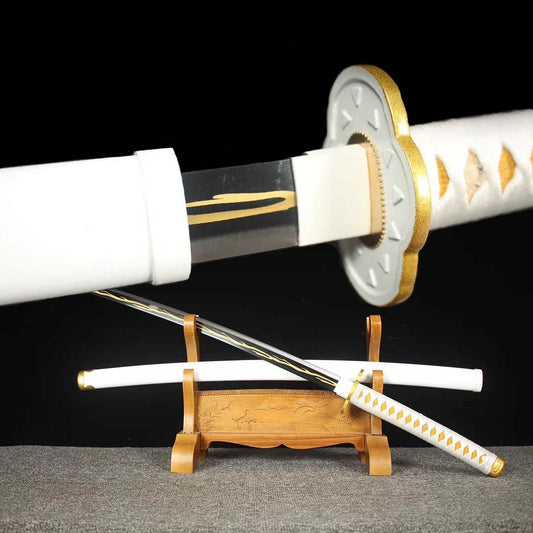
Shinobu Kocho Katana – Demon Slayer Edition
The delicate yet striking butterfly blade represents the perfect fusion of beauty and precision. This 1060 carbon steel masterpiece captures the unique aesthetic of the Insect Hashira's weapon while maintaining the structural integrity demanded by serious collectors.
• 1060 carbon steel construction with superior edge geometry • Butterfly-inspired tsuba with intricate metalwork • Purple and white color scheme matching the character design • Lightweight construction reflecting Shinobu's style • Includes premium display stand and maintenance kit
Premium Walking Dead Collection
Michonne Katana – Premium Edition
The ultimate expression of post-apocalyptic elegance, this premium version elevates the Michonne design with superior materials and enhanced craftsmanship. The 1095 carbon steel blade provides unmatched performance for serious collectors and martial artists.
• Premium 1095 carbon steel with advanced heat treatment • Enhanced Damascus steel patterns throughout the blade • Superior handle construction with premium materials • Weather-resistant finish for long-term durability • Collector's edition packaging with numbered certificate
⭐⭐⭐⭐⭐ "The premium edition really lives up to its name. The steel quality and craftsmanship are on another level entirely." - Jennifer M., Seattle, Washington
One Piece Legendary Blades
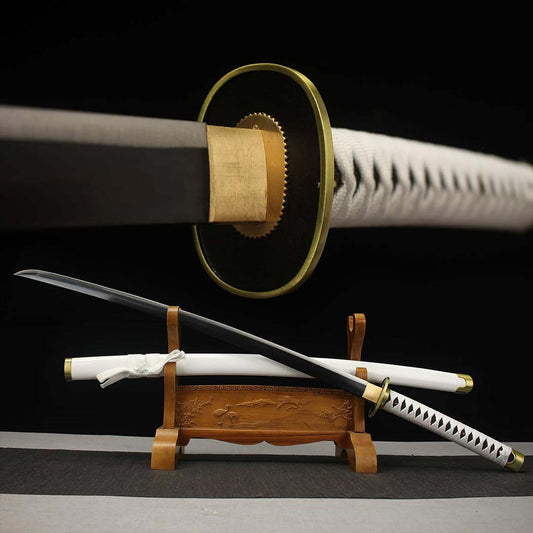
One of the legendary cursed blades from the One Piece universe, this 1060 steel katana brings the mystique of Zoro's arsenal to collectors worldwide. The distinctive design captures the ominous beauty of this fictional masterwork while providing real-world cutting performance.
• 1060 carbon steel with traditional Japanese geometry • Cursed blade aesthetic with darkened finish • Authentic Japanese sword proportions and balance • Traditional ray skin and cotton handle wrapping • Includes wooden scabbard with custom fitting
Demon Slayer Masterworks
Tanjiro Kamado Katana Sword V2
The evolved version of the young demon slayer's blade reflects his growth as a warrior. This 1060 carbon steel katana captures the distinctive black blade with flame-inspired details that made Tanjiro's sword instantly recognizable.
• Enhanced 1060 carbon steel construction with improved tempering • Black blade finish with red flame accents • Upgraded handle design with superior ergonomics • Traditional Japanese mounting with modern reliability • V2 improvements include better balance and durability
The original demon slayer's blade that started a collection revolution. This 1060 steel katana maintains the pure essence of Tanjiro's weapon while providing the functionality modern collectors demand.
• 1060 carbon steel blade with authentic Japanese profile • Distinctive black blade coloring true to the anime • Traditional handle construction with cotton wrapping • Balanced weight distribution for martial arts practice • Complete with wooden scabbard and care instructions
⭐⭐⭐⭐⭐ "Perfect replica of Tanjiro's sword. The black blade finish is exactly right and the steel quality is impressive." - Robert T., Miami, Florida
For collectors seeking the complete experience, explore our full anime katana collection where legendary blades from across Japanese pop culture await your discovery.
Understanding Steel Types and Quality
The foundation of any exceptional katana lies in its steel composition, and understanding these differences is crucial for making informed collecting decisions rooted in the rich traditions of katana origins japanese sword history. Modern katana replicas primarily use three steel types, each offering distinct advantages for different collecting purposes and budgets.
1060 Carbon Steel represents the sweet spot for most collectors, offering excellent flexibility and durability. With 0.60% carbon content, this steel provides sufficient hardness for maintaining sharp edges while remaining flexible enough to withstand impact. Most mid-range katanas feature 1060 steel, making it ideal for collectors who want both display quality and functional capability.
1095 Carbon Steel contains 0.95% carbon, creating harder blades that hold incredibly sharp edges. This high-carbon content makes 1095 ideal for cutting exercises and martial arts practice, though it requires more careful maintenance to prevent corrosion. Serious collectors often prefer 1095 for its superior performance characteristics that echo the demanding standards of traditional Japanese swordsmithing.
Damascus Steel involves folding multiple steel types together, creating distinctive wavy patterns reminiscent of traditional Japanese construction. Modern Damascus combines aesthetic beauty with functional performance, though it typically commands premium pricing due to the complex forging process required.
The heat treatment process dramatically affects performance regardless of steel type. Proper differential hardening creates the coveted hamon line while ensuring optimal blade geometry. Quality katana accessories like maintenance kits become essential for preserving these carefully engineered properties over time.
Collector's Guide to Authentic Katanas
Building a meaningful katana collection requires understanding both historical significance and practical considerations deeply rooted in katana origins japanese sword history. Successful collectors focus on specific themes or periods rather than attempting to acquire everything available. Popular collecting approaches include focusing on particular anime series, historical periods, or steel construction types.
Authentication markers distinguish quality pieces from mass-produced imitations. Look for proper blade geometry with authentic curvature, traditional construction methods like full-tang mounting, and attention to details like authentic ray skin handles and cotton wrapping. The presence of a proper hamon line indicates differential hardening, a hallmark of traditional construction.
Display considerations significantly impact long-term enjoyment of your collection. Proper stands prevent blade damage while showcasing the katana's natural beauty. Many collectors create themed displays grouping related pieces together, such as organizing custom katanas by historical period or fictional universe.
Storage requirements extend beyond display aesthetics. Proper humidity control prevents rust formation on carbon steel blades, while regular maintenance preserves both functionality and appearance. Quality pieces deserve quality care, making proper storage solutions a worthy investment for serious collectors.
For those interested in broader sword traditions beyond katanas, consider exploring how these Japanese masterworks influenced weapons development across different cultures through our comprehensive Katana History: From Ancient Roots to Modern Samurai guide.

Market trends show growing appreciation for pieces that blend historical accuracy with pop culture significance. The most sought-after replicas successfully capture both the technical excellence of traditional construction and the emotional resonance of beloved fictional weapons.
Why American Collectors Choose Katana America
Every Katana America blade is made to order and hand-assembled in our partner workshops, then quality-checked before it ships. Count 3 to 4 weeks from your order to your door: 1 to 2 weeks of forging, then 1 to 2 weeks of tracked delivery. Prices are in US dollars, delivery is free on orders of $200 or more, and there are no customs fees to pay when your katana arrives. Collectors rate us 4.9/5 across 125+ verified reviews.
Our team offers expert guidance in building collections while ensuring every purchase meets expectations.
Payment in US dollars eliminates currency conversion complications and hidden fees.
Our commitment to authenticity drives every aspect of our operation. Each piece undergoes rigorous quality inspection before shipping, ensuring that collectors receive katanas worthy of their investment. We partner exclusively with craftsmen who respect traditional techniques while meeting modern quality standards.
The American collector community continues growing, with enthusiasts from martial artists to pop culture fans discovering the appeal of these legendary blades. Our curated selection focuses on pieces that honor the katana's rich heritage while serving the practical needs of contemporary collectors who want authentic katana replicas they can trust.
Frequently Asked Questions
Q: What makes a katana historically authentic compared to decorative replicas?
Authentic katanas feature traditional construction elements including differential hardening, proper steel composition, and historically accurate proportions. True katanas display a visible hamon (temper line) created through selective clay application during heat treatment. The blade should exhibit proper curvature (sori) and maintain traditional length ratios between blade, handle, and overall dimensions. Quality replicas use high-carbon steel like 1060 or 1095, while decorative pieces often employ stainless steel unsuitable for functional use. Authentic construction includes full-tang mounting, traditional ray skin handles, and cotton wrapping applied using historical methods.
Q: How do I choose between 1060 and 1095 carbon steel for my katana?
The choice between steel types depends on intended use and maintenance preferences. 1060 carbon steel offers excellent flexibility and durability, making it ideal for collectors seeking display pieces with occasional cutting capability. This steel forgives minor maintenance lapses while providing satisfactory edge retention. 1095 carbon steel contains higher carbon content, creating harder blades that maintain razor-sharp edges longer. However, 1095 requires more diligent maintenance to prevent corrosion and can be more brittle under extreme stress. For beginners or primary display pieces, 1060 provides the best balance of performance and practicality.
Q: What are the proper dimensions for an authentic katana?
Traditional katana dimensions follow strict proportional relationships developed over centuries. The blade length (nagasa) typically measures 24-28 inches, with 26 inches being most common. Handle length should equal approximately 25-30% of blade length, usually 8-12 inches. The curve (sori) measures roughly 0.5-0.75 inches at its deepest point, located about one-third from the handle. Total weight ranges from 2-3 pounds, with proper balance point located 4-6 inches from the guard. These proportions ensure proper handling characteristics and maintain the weapon's intended performance envelope. Deviations from these standards often indicate decorative rather than functional construction.
Q: How should I maintain and care for my carbon steel katana?
Carbon steel katanas require regular maintenance to prevent corrosion and maintain performance. After any handling, wipe the blade with a clean, dry cloth to remove oils and moisture. Apply a thin layer of mineral oil or specialized sword oil monthly, ensuring complete coverage of all metal surfaces. Store katanas in low-humidity environments, ideally below 50% relative humidity. Avoid touching the blade with bare hands, as skin oils accelerate corrosion. For long-term storage, apply heavier oil coatings and check periodically for rust formation. Never use abrasive cleaners or aggressive polishing compounds that can damage the blade's finish or alter its geometry.
Q: What display options work best for katana collections?
Proper display enhances both security and visual appeal while protecting your investment. Wall-mounted stands work excellently for single pieces, allowing full appreciation of the katana's lines while keeping it safely positioned. Table stands suit rotating displays and closer examination. Avoid direct sunlight that can fade handle wrapping or damage lacquered finishes. Group related pieces thematically - anime katanas together, historical replicas separately. Ensure adequate spacing to prevent accidental contact between pieces. Consider lighting that highlights the blade's hamon and surface polish without creating heat. Quality katana accessories include stands designed specifically for safe, attractive display while allowing easy access for maintenance.
Conclusion
The katana's journey from ancient Japanese forges to modern American collections represents one of history's most remarkable stories of craftsmanship, spirituality, and cultural significance. These legendary blades continue capturing imaginations worldwide, bridging centuries of tradition with contemporary collecting passion.
Whether drawn to the mystical allure of historical masterpieces or the vibrant appeal of anime-inspired replicas, today's collectors have unprecedented access to quality katanas that honor traditional craftsmanship. Each blade in your collection carries forward the legacy of master smiths who elevated swordmaking to an art form, preserving the essence of katana origins japanese sword history for future generations.
The katana's enduring appeal lies not merely in its functional excellence, but in its embodiment of the warrior spirit that shaped Japanese culture. As you build your collection, remember that each authentic piece connects you to this incredible heritage while providing tangible beauty for contemporary appreciation.
Ready to begin your katana journey? Explore our complete katana sword collection where legendary craftsmanship meets modern accessibility, bringing these extraordinary weapons within reach of every serious collector.
See the craft for yourself. Browse our hand-forged katana swords, forged in the Japanese tradition. Free U.S. shipping over $200, rated 4.9/5.
 Save $60