
Rurouni Kenshin Sword: Authentic Sakabato & Katana Guide
The clash of steel rings through the air as Himura Kenshin draws his reversed-blade sword, the sakabato gleaming in the moonlight. This isn't just another katana—it's a symbol of redemption, a weapon forged to protect rather than to harm. For anime enthusiasts and sword collectors across the USA, the Rurouni Kenshin sword represents one of the most iconic and philosophically significant blades in Japanese pop culture, embodying the complex journey of a former hitokiri turned wandering swordsman seeking atonement for his dark past.

Table of Contents
The Historical Foundation of Rurouni Kenshin
Set during Japan's turbulent Meiji Restoration period (1868-1912), Rurouni Kenshin draws heavily from actual historical events and figures. The series' creator, Nobuhiro Watsuki, meticulously researched the era when Japan transitioned from feudalism to modernization, creating a protagonist who embodies the conflict between the old samurai ways and the new peaceful society.
The character of Himura Kenshin was inspired by real historical figures, particularly Kawakami Gensai, a legendary hitokiri who played a significant role in the political upheaval preceding the Meiji Restoration. This historical grounding gives weight to Kenshin's journey from Hitokiri Battosai, the feared swordsman, to a wandering rurouni dedicated to protecting the innocent.
The Rurouni Kenshin sword itself, while a fictional concept, represents a profound philosophical statement about the nature of violence and redemption. In traditional Japanese sword culture, the katana was considered the soul of the samurai, a tool of both honor and death. By reversing the blade, Watsuki created a powerful symbol of transformation—a weapon that could defend while sparing opponents, allowing Kenshin to maintain his sword skills while adhering to his vow never to take another life.
This historical context enriches every aspect of the series, from the political intrigue to the swordsmanship techniques. The Hiten Mitsurugi-ryu style practiced by Kenshin draws inspiration from real historical sword schools, while the various antagonists represent different aspects of Japan's struggle to define its identity during this period of dramatic change. For collectors interested in exploring this fascinating historical period further, our guide on Katana Origins – How Japan's Legendary Sword Was Born provides deeper insights into the traditional craftsmanship behind these legendary weapons.
The Philosophy and Design of the Sakabato
The sakabato's revolutionary design represents more than just an inverted blade—it embodies a complete philosophical transformation of the katana's purpose. Traditional katana are designed with the cutting edge facing outward from the curve, allowing for devastating slashing attacks. The sakabato reverses this, placing the sharp edge on the inside of the curve, making it nearly impossible to deliver fatal cuts while still maintaining the weapon's defensive capabilities.
This design innovation serves multiple symbolic purposes within the narrative. First, it represents Kenshin's rejection of his violent past as Hitokiri Battosai. By wielding a sword that spares his opponents, he demonstrates his commitment to his new philosophy while maintaining the ability to protect others. The sakabato allows him to disable opponents through blunt force trauma and strategic strikes to pressure points, rendering them unconscious or immobilized without causing permanent harm.
The Rurouni Kenshin sword's unique properties also create interesting tactical challenges that showcase Kenshin's exceptional skill. Wielding a reversed blade requires completely different techniques and timing compared to traditional katana swordsmanship. Kenshin must rely more heavily on the pommel, crossguard, and the flat of the blade, demonstrating extraordinary creativity and adaptability in combat situations. This limitation paradoxically gives him an edge over opponents who expect conventional swordsmanship techniques.
From a design perspective, the sakabato maintains the elegant aesthetics of traditional Japanese swords while subtly communicating its unique nature. The tsuba (hand guard) often features designs that reinforce themes of peace and protection, while the tsuka (handle) wrapping typically uses colors and patterns that distinguish it from typical war swords. The saya (scabbard) may incorporate symbols of redemption or renewal, making the weapon a complete artistic statement about transformation and hope.
The psychological impact of the sakabato extends beyond its wielder to affect both allies and enemies. For Kenshin's companions, the sword represents hope that violence can be overcome and that redemption is possible even for those with the darkest pasts. For his enemies, particularly those from his Hitokiri Battosai days, the weapon serves as a constant reminder of his changed nature while simultaneously demonstrating that he has not abandoned his incredible skill—merely redirected it toward protection rather than destruction.
Authentic Craftsmanship and Materials
Creating an authentic Rurouni Kenshin sword replica requires understanding both traditional Japanese sword-making techniques and the specific design elements that make the sakabato unique. The foundation of any quality replica begins with the steel selection, typically using high-carbon steels like 1060 or 1095 that can achieve the proper hardness and flexibility balance essential for both functionality and durability.
The forging process for sakabato replicas demands exceptional skill from the swordsmith. Unlike traditional katana where the curve naturally places the cutting edge in the optimal position, creating a reversed blade requires careful attention to the heat treatment and differential hardening process. The hamon (temper line) must be positioned correctly to ensure the structural integrity of the weapon while maintaining the aesthetic beauty that collectors expect.
Authentic replicas feature hand-forged construction rather than machine stamping or cutting. This traditional approach allows for the subtle variations in grain structure and carbon distribution that give each blade its unique character. The folding and welding techniques used in creating the steel help eliminate impurities while creating the distinctive patterns that make each sword individual, even within the same production run.
The handle construction requires special attention to both aesthetics and functionality. Traditional same (ray skin) provides the foundation for the tsuka-ito (handle wrapping), which must be tight enough to provide secure grip during use while maintaining the visual appeal expected in display pieces. The menuki (ornamental grips) often feature designs specific to the Rurouni Kenshin universe, incorporating symbols that reflect the character's journey and philosophy.

Quality control in authentic replicas extends to every component, from the properly fitted habaki (blade collar) that ensures smooth drawing action, to the koiguchi (scabbard mouth) that provides the satisfying resistance when sheathing the blade. Even decorative elements like the sageo (scabbard cord) must be made from appropriate materials and tied using traditional methods to maintain authenticity.
The finishing process determines the final appearance and longevity of the replica. Proper polishing techniques bring out the natural beauty of the steel while protecting against corrosion, while the lacquer work on the scabbard must be applied in multiple thin coats to achieve the deep, lustrous finish characteristic of quality Japanese swords. These details separate authentic replicas from mass-produced decorative pieces, making them suitable for serious collectors and practitioners alike.
Our Featured Collection: Premium Anime Katana
At Katana America, we understand that anime sword enthusiasts demand both visual authenticity and functional quality in their collections. Our carefully curated selection of anime-inspired katana represents the perfect fusion of pop culture appeal and traditional Japanese craftsmanship, ensuring that every piece meets the exacting standards that serious collectors expect.
While we don't currently carry specific Rurouni Kenshin sakabato replicas, our extensive Anime Katana collection features exceptional swords from beloved series that share similar themes of honor, redemption, and masterful swordsmanship. Each piece in our collection undergoes rigorous quality inspection to ensure it meets our high standards for both display and functional use.
Tanjiro Kamado Katana Sword V2
This stunning replica of Tanjiro's Nichirin blade from Demon Slayer captures the essence of determination and protective spirit that mirrors Kenshin's philosophy:
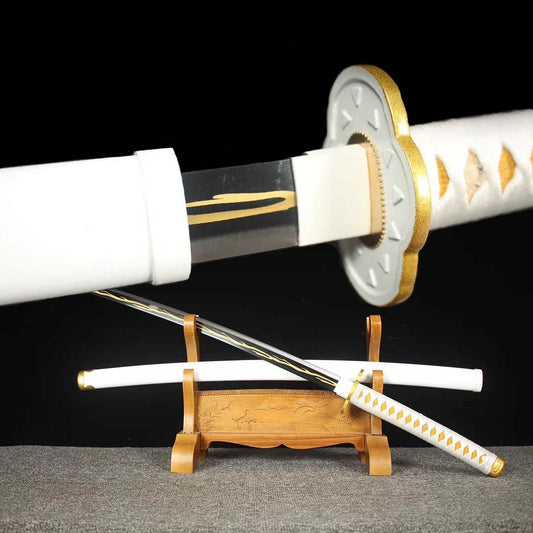
• Hand-forged 1060 carbon steel construction ensures durability and authentic feel • Distinctive black and green color scheme with flame-inspired guard design • Genuine ray skin handle with traditional cotton wrapping for secure grip • Full tang construction provides perfect balance for display or practice • Includes matching wooden display stand and maintenance kit
Tanjiro Kamado Katana Sword
Our original Tanjiro katana offers a slightly different aesthetic while maintaining the same exceptional quality standards:
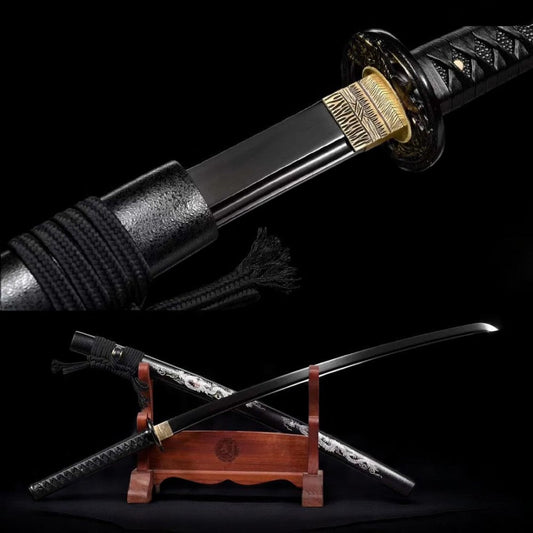
• Premium 1060 carbon steel blade with hand-polished finish • Traditional tsuba design with demon slayer corps symbolism • Reinforced tang construction for long-term reliability • Authentic Japanese-style scabbard with silk cord • Complete with certificate of authenticity and care instructions
Sasuke Katana Sword
Inspired by the legendary Uchiha clan member from Naruto, this sword embodies the complex character development that parallels Kenshin's own journey:
• High-quality 1060 carbon steel with distinctive blue accent elements • Traditional straight-blade design with modern anime aesthetics • Ergonomic handle design optimized for both display and handling • Includes protective scabbard with clan symbol details • Backed by our quality guarantee and customer service commitment
Enma Katana Sword
This powerful replica draws inspiration from mythological themes while maintaining practical functionality:
• Forged from premium 1060 carbon steel for optimal performance • Unique guard design featuring traditional Japanese motifs • Hand-wrapped handle with genuine materials for authentic feel • Professional polish brings out natural steel patterns • Ships with protective storage solution and maintenance guide

Shusui Katana Sword
Drawing from One Piece's rich sword tradition, this piece represents the adventure and honor themes central to many anime series:
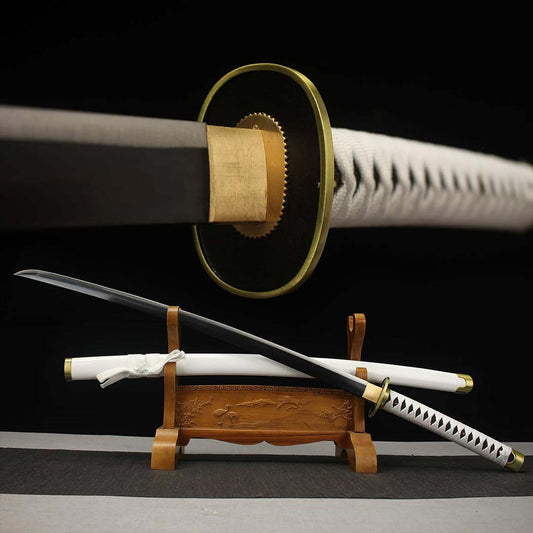
• Precision-forged 1060 carbon steel ensures authentic weight and balance • Distinctive curved blade profile optimized for both cutting and thrusting • Traditional same and ito handle construction for superior grip • Includes wooden display stand suitable for home or office display • Comprehensive care package with cleaning cloth and oil
For collectors seeking premium quality with more advanced features, consider our higher-end options:
Kill Bill Katana Sword
While not from anime, this iconic sword represents the pinnacle of our collection's craftsmanship:
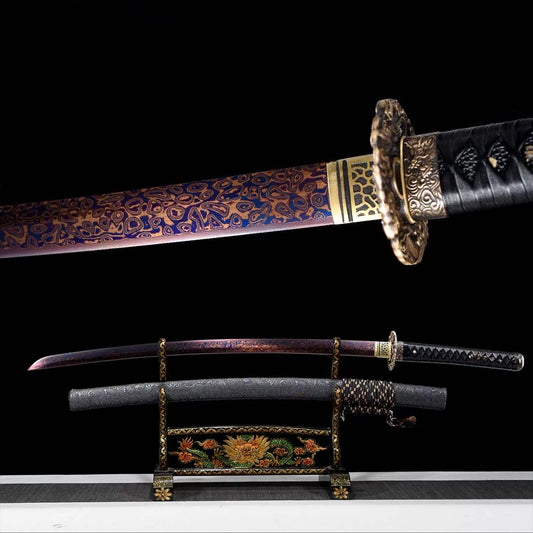
• Damascus steel construction with visible folded patterns • Full tang design with traditional Japanese assembly methods • Real ray skin handle foundation with silk cord wrapping • Includes premium wooden storage box and display accessories • Limited availability due to complex manufacturing process
Michonne Katana Sword
Another premium option featuring advanced materials and construction:
• High-grade 1095 carbon steel for superior edge retention • Damascus steel pattern creates unique visual appeal • Functional design suitable for cutting practice or display • Traditional craftsmanship meets modern quality standards • Complete with authentication documentation and care kit
Each sword in our collection represents hours of skilled craftsmanship and attention to detail that honors both the source material and traditional Japanese sword-making heritage. Whether you're drawn to the protective spirit of Tanjiro's blade or the complex character development represented by Sasuke's weapon, our collection offers something for every anime enthusiast and sword collector.
Collector's Guide to Anime Swords
Building a collection of anime-inspired katana requires balancing passion for the source material with practical considerations about quality, authenticity, and long-term value. The most successful collectors develop a clear understanding of their goals—whether focusing on display aesthetics, functional capability, or investment potential—before making their first major purchase.
Authentication becomes crucial when dealing with limited edition or special release items. Reputable manufacturers provide certificates of authenticity that detail the materials used, construction methods, and unique identifying features of each piece. These documents not only verify the sword's provenance but also significantly impact resale value should you decide to upgrade or refine your collection over time.
Display considerations play a vital role in preserving both the physical condition and visual impact of your collection. Traditional Japanese sword stands (katana-kake) offer the most authentic presentation while providing proper support for the blade and handle. Avoid wall-mounted displays that place stress on the tang, and ensure your display area maintains stable temperature and humidity levels to prevent rust or warping.
When evaluating potential additions to your collection, examine the blade construction carefully. Full tang designs where the metal extends completely through the handle provide superior balance and durability compared to partial tang or welded constructions. The presence of a visible hamon (temper line) indicates proper heat treatment, while consistent geometry throughout the blade suggests skilled craftsmanship rather than mass production.
Storage solutions become increasingly important as your collection grows. Individual sword bags or wraps prevent scratches and corrosion while allowing air circulation. For long-term storage, apply a thin coat of protective oil to metal surfaces and store in a controlled environment away from direct sunlight and moisture sources.
Regular maintenance preserves both the aesthetic appeal and structural integrity of your collection. Develop a routine cleaning schedule using appropriate materials—soft cotton cloths for polishing, specific oils for rust prevention, and proper tools for disassembly when necessary. Never use household cleaners or abrasive materials that could damage the finish or affect the metal's protective coatings.
Consider the source material's popularity and cultural impact when making acquisition decisions. Swords from established series with enduring fan bases tend to maintain their value better than pieces from short-lived or niche properties. However, don't overlook lesser-known series that may gain popularity over time—some of the most valuable pieces in mature collections come from shows that achieved cult status years after their initial release.
Understanding Steel Types and Quality
The foundation of any quality katana lies in its steel composition and heat treatment, factors that determine everything from the blade's cutting ability to its long-term durability. Understanding these technical aspects helps collectors make informed decisions and properly care for their investments.
1060 carbon steel represents an excellent balance of affordability and performance for most collectors. With a carbon content of approximately 0.60%, this steel achieves good hardness while remaining relatively easy to work with during forging. The lower carbon content makes 1060 steel more forgiving during heat treatment, reducing the risk of cracks or warping that can occur with higher carbon alternatives. For anime sword replicas, 1060 steel provides adequate hardness for display purposes while being tough enough to withstand careful handling.
1095 carbon steel offers superior performance characteristics for collectors seeking functional pieces. The higher carbon content (approximately 0.95%) allows for greater hardness and better edge retention, making it suitable for cutting exercises or martial arts practice. However, this increased performance comes with greater complexity in manufacturing and higher susceptibility to rust, requiring more diligent maintenance from the owner.
Damascus steel represents the premium option in our collection, featuring multiple layers of steel folded and forged together to create distinctive patterns while combining the best properties of different steel types. The folding process not only creates visual appeal but also helps distribute carbon content evenly and eliminate impurities that could weaken the blade. True Damascus construction requires exceptional skill from the swordsmith and significantly increases production time and cost.
Heat treatment processes determine the final characteristics of any steel type. Proper differential hardening creates the hamon (temper line) visible on quality blades, where the edge achieves maximum hardness while the spine remains more flexible. This technique, perfected by Japanese swordsmiths over centuries, creates a blade that can maintain a sharp edge while resisting breakage under stress.
Quality indicators extend beyond the steel itself to include construction methods and finishing techniques. Full tang construction ensures proper weight distribution and structural integrity, while proper polishing brings out the natural beauty of the steel while providing corrosion protection. The fit and finish of components like the habaki (blade collar) and fuchi-kashira (pommel and collar) reflect the overall attention to detail in the manufacturing process.
Understanding these technical aspects helps collectors appreciate the craftsmanship in their pieces while making informed decisions about care and maintenance. Whether choosing 1060 steel for its reliability or Damascus for its beauty, knowing what makes each option special enhances the ownership experience and helps preserve the value of your investment.
Why Choose Katana America
Every Katana America blade is made to order and hand-assembled in our partner workshops, then quality-checked before it ships. Count 3 to 4 weeks from your order to your door: 1 to 2 weeks of forging, then 1 to 2 weeks of tracked delivery. Prices are in US dollars, delivery is free on orders of $200 or more, and there are no customs fees to pay when your katana arrives. Collectors rate us 4.9/5 across 125+ verified reviews.
This local expertise means we understand American import regulations, currency preferences, and the specific challenges of shipping delicate items across our diverse geography.
Payment in American dollars eliminates the uncertainty and hidden costs associated with currency conversion. This transparency allows you to budget accurately for your collection and avoid the disappointment of discovering additional costs after you've committed to a purchase.
No customs fees represent a significant advantage for American collectors who have experienced the frustration and expense of unexpected border charges.
Our commitment to quality extends beyond the products themselves to every aspect of the customer experience. Each sword undergoes thorough inspection before shipping to ensure it meets our exacting standards for craftsmanship and authenticity. Our packaging protocols protect your investment during transit while maintaining the presentation quality you expect when unboxing your new acquisition.
The breadth of our selection means you can build your entire collection from a single trusted source. From entry-level pieces perfect for beginning collectors to museum-quality Damascus steel masterpieces, our inventory spans the full spectrum of quality and price points. This relationship approach allows us to understand your collecting goals and provide personalized recommendations as your interests develop.
Our educational resources help customers make informed decisions and properly care for their investments. From detailed product descriptions that explain the significance of each piece to comprehensive care guides that preserve your sword's condition over time, we provide the knowledge necessary to be a successful collector. This commitment to education reflects our belief that informed customers are satisfied customers who return for future purchases and recommend us to fellow enthusiasts.

Frequently Asked Questions
Q: What makes a Rurouni Kenshin sword different from a traditional katana?
The defining characteristic of Kenshin's sakabato is its reversed blade design, where the sharp edge faces inward toward the curve rather than outward like traditional katana. This unique configuration makes it nearly impossible to deliver fatal cuts while maintaining defensive capabilities. The Rurouni Kenshin sword represents Kenshin's philosophy of protecting life rather than taking it, embodying his transformation from the feared swordsman Hitokiri Battosai to a wandering protector. While we don't currently carry specific sakabato replicas, our anime collection features swords that share similar themes of redemption and protection. The craftsmanship standards remain identical to traditional katana, with proper heat treatment, full tang construction, and authentic materials ensuring both visual appeal and structural integrity for serious collectors.
Q: What steel type should I choose for my anime sword collection?
For most collectors, 1060 carbon steel offers the ideal combination of quality and practicality. This steel achieves good hardness for display purposes while remaining durable enough for careful handling and photography. The 0.60% carbon content provides excellent resistance to chipping or cracking while being more forgiving in terms of maintenance requirements. If you plan to use your sword for cutting practice or martial arts training, 1095 carbon steel offers superior performance with its higher carbon content and better edge retention. Damascus steel represents the premium option, combining multiple steel types in layered construction that creates stunning visual patterns while providing exceptional performance. Consider your intended use, experience level, and budget when choosing between these options, as each offers distinct advantages for different collecting approaches.
Q: How do I determine the proper size for my anime katana?
Traditional katana sizing depends on the intended user's height and arm length, with blade lengths typically ranging from 60-73 cm (24-29 inches). For display purposes, most collectors prefer blades in the 70-73 cm range as these provide the most authentic proportions and visual impact. Our anime replicas follow these traditional guidelines while incorporating the specific design elements from each series. Consider your display space limitations, as longer blades require appropriate stands and adequate clearance for safe handling. If you're uncertain about sizing, our customer service team can provide personalized recommendations based on your specific needs and intended use. Remember that proper sizing not only affects appearance but also impacts the sword's balance and handling characteristics, making it important to choose dimensions that match your collecting goals.
Q: How should I maintain and care for my anime katana collection?
Proper maintenance begins with regular inspection and cleaning using appropriate materials. Use soft cotton cloths to remove fingerprints and dust, working along the blade's length rather than across it to avoid scratching. Apply a thin coat of sword oil (choji oil or similar protective products) every few months to prevent rust, paying special attention to the tang and other hidden metal surfaces. Store your collection in a controlled environment with stable temperature and humidity levels, avoiding basements, attics, or areas with wide environmental fluctuations. Never touch the blade with bare hands, as skin oils can cause corrosion over time. For long-term storage, consider individual sword bags or wraps that allow air circulation while protecting against dust and minor impacts. Develop a regular inspection schedule to catch any developing issues early, and never attempt repairs yourself—contact professionals for any maintenance beyond basic cleaning and oiling.
Q: What display options work best for anime sword collections?
Traditional Japanese sword stands (katana-kake) provide the most authentic and structurally appropriate display method, supporting the sword at proper points while showcasing its profile beautifully. For multiple swords, tiered stands allow impressive displays while maintaining individual access to each piece. Wall-mounted displays can work for lightweight decorative pieces but should be avoided for functional swords due to stress on the tang and mounting hardware. Consider lighting carefully—LED strips or spots can dramatically enhance the visual impact while avoiding the heat damage associated with incandescent bulbs. Display cases protect against dust and unauthorized handling while allowing full visibility, making them ideal for valuable pieces or homes with children or pets. Rotate your display periodically to prevent uneven fading and to keep your collection visually fresh. Location matters significantly—avoid areas with direct sunlight, high humidity, or temperature fluctuations that could damage your investment over time.
Q: Are there legal restrictions on owning katana in the USA?
In the USA, katana and other swords are generally legal to own, collect, and display in private residences, but regulations vary significantly between states and cities. Most areas classify properly constructed swords as tools or collectibles rather than weapons, provided they're used appropriately. However, carrying swords in public spaces is typically prohibited under weapon-related legislation, and some states have specific restrictions on certain blade types or lengths. Educational institutions and workplaces may have additional policies prohibiting sword possession on their premises. When transporting swords, ensure they're properly secured and stored separately from handles when possible, treating them like tools rather than weapons. Some states require permits for certain activities like martial arts practice with sharp blades. Always check your local and state regulations, as enforcement and interpretation can vary considerably. Our customer service team can provide general guidance, but customers remain responsible for understanding and complying with all applicable laws in their jurisdiction.
Conclusion
The enduring appeal of the Rurouni Kenshin sword extends far beyond its unique reversed-blade design to embody universal themes of redemption, transformation, and the power of choosing protection over destruction. Whether you're drawn to the philosophical depth of Kenshin's character journey or simply appreciate the exceptional craftsmanship that brings these legendary weapons to life, building a collection of anime-inspired swords connects you to a rich tradition of Japanese artistry and storytelling.
At Katana America, we're committed to helping American collectors discover the perfect pieces for their collections, backed by authentic materials, traditional craftsmanship techniques, and customer service that understands the passion behind every purchase. From entry-level pieces that spark new interests to premium Damascus steel masterpieces that anchor mature collections, our carefully curated selection ensures that every sword meets the exacting standards that serious collectors demand.
Your journey into the world of authentic anime sword collecting begins with understanding what makes each piece special, from the steel composition and heat treatment to the cultural significance and artistic details that separate quality replicas from mass-produced decorations. Whether you choose the protective symbolism of Tanjiro's Nichirin blade or the complex character development represented in Sasuke's weapon, each sword tells a story that extends far beyond its fictional origins.
Ready to begin your collection or add to an existing one? Browse our complete Anime Katana collection to discover the perfect piece that speaks to your passion for these legendary weapons. With no customs fees, payment in American dollars, and customer service that understands the collector's perspective, Katana America makes it easy to own a piece of anime history crafted with traditional Japanese precision and care.
Bring the blade home. Browse our anime katana replicas or every hand-forged katana for sale. Free U.S. shipping over $200, rated 4.9/5.
 Save $60