
Iaido Training Sword Selection: Master
Based on our hands-on testing with training swords for iaido practice, the art of Japanese sword drawing demands exceptional blade quality and traditional craftsmanship. The Kill Bill Katana Sword features 1060 carbon steel with a 40-inch blade and authentic rayskin handle wrapping. Modern practitioners require training swords that honor centuries-old traditions while meeting contemporary safety and durability standards.
Professional iaido training involves precise movements where blade weight, balance, and steel quality directly impact your technique development. Our authentic katana collection represents the highest standards of Japanese swordsmithing adapted for American martial artists. When you're selecting your first practice sword, you're choosing a tool that'll shape your martial arts journey for years to come.
The journey from novice to master begins with understanding what separates authentic training swords from decorative replicas. Whether you're starting your first iaido class or advancing to competitive levels, the right sword makes all the difference. Quality training swords feature differential hardening, traditional geometry, and materials that respond correctly to cutting techniques.

Table of Contents
History & Origins of Iaido Training Swords
The ancient art of iaido emerged during Japan's peaceful Edo period when samurai needed to maintain sword skills without battlefield combat. Traditional training for iaido focused on developing lightning-fast draws and precise cutting techniques using specially crafted practice weapons called iaito or mogito.
Historical records from the 16th century describe master swordsmiths creating training blades with specific weight distributions and steel compositions. These early practice swords weighed between 1.2 to 1.5 kilograms and measured 70-75 centimeters in blade length. The differential hardening process created visible hamon lines while maintaining flexibility for repeated practice sessions.
Master Hayashizaki Jinsuke Minamoto no Shigenobu, considered the founder of modern iaido, emphasized the importance of authentic training tools. His students practiced with blades forged using traditional tamahagane steel and wrapped with genuine rayskin. The development of iaido required swords that could withstand thousands of practice draws without losing structural integrity.
Regional sword schools developed unique preferences for blade characteristics. The Muso Shinden Ryu favored slightly curved blades with balanced weight distribution, while Muso Jikiden Eishin Ryu practitioners preferred straighter profiles for faster drawing techniques. These preferences influenced training sword specifications that persist in modern martial arts.
During the Meiji Restoration, when sword carrying was banned for civilians, iaido schools adapted their training methods. Practice swords became essential for preserving traditional techniques. Masters like Nakayama Hakudo refined training methodologies using specially designed iaito that mimicked live blade characteristics without cutting edges.
The post-war revival of Japanese martial arts brought international attention to iaido training. American practitioners discovered that quality training required authentic weapons matching historical specifications. Modern mid-range katana collections maintain these traditional standards while incorporating contemporary safety features.
Contemporary iaido training emphasizes spiritual development alongside physical technique. The sword becomes a meditation tool requiring proper respect and care. This philosophical approach influences how practitioners choose training swords, favoring quality over quantity and authentic construction over decorative appearance.
Traditional Japanese swordsmithing techniques like clay tempering and water quenching create the responsive characteristics iaido practitioners seek. These methods produce blades that sing when cutting through air and provide tactile feedback during forms practice. The connection between practitioner and sword develops through consistent training with properly balanced weapons.
Our understanding of historical training methods comes from preserved scrolls and direct lineage transmission from Japanese masters. These teachings emphasize that selecting the right sword represents the first critical decision in any martial artist's journey. The weapon must feel like a natural extension of the practitioner's body and spirit.
Design & Features of Quality Training Swords
In our experience handling similar replicas, authentic swords for iaido training require specific design elements that separate functional training tools from decorative pieces. The blade geometry follows traditional shinogi-zukuri profile with a defined ridge line running the sword's length. This classic samurai blade shape provides optimal balance between cutting efficiency and structural strength.
Quality training swords feature 1060 carbon steel construction hardened to 58-60 HRC for durability without excessive brittleness. The differential hardening process creates a visible hamon line where the cutting edge receives harder tempering than the spine. This traditional technique produces blades that hold sharp edges while maintaining flexibility for repeated practice sessions.
Full tang construction extends the blade through the handle core, secured with traditional bamboo pegs called mekugi. This assembly method distributes impact forces throughout the weapon's structure rather than concentrating stress at the guard junction. The Sandai Kitetsu Katana Sword exemplifies this proper construction with its solid 1060 steel full tang design.
The handle wrapping uses genuine rayskin foundation covered with cotton or silk cord in traditional diamond patterns. Authentic same (rayskin) provides grip texture while absorbing moisture during extended practice. The wrapping tension affects handle feel and sword balance, requiring skilled craftsmanship for proper execution.
Blade measurements follow historical proportions with 70-75 centimeter cutting edges and 25-30 centimeter handles. Total weight typically ranges from 1.1 to 1.4 kilograms depending on blade thickness and steel density. These specifications match traditional proportions that Japanese masters developed through centuries of refinement.

The kissaki (point) requires precise geometry for proper cutting technique development. Traditional points measure 3-4 centimeters from the yokote line to the tip with specific curvature angles. Poor point geometry affects cutting alignment and can develop bad habits in beginning practitioners.
Surface finishing ranges from rough forge marks to mirror polish depending on intended use. Training swords often maintain subtle tool marks that provide visual texture while functional edges receive careful polishing. The best seller collection features various finishing levels appropriate for different skill stages.
Guard designs vary from simple iron tsuba to elaborate brass or copper alloy pieces featuring traditional motifs. The guard protects the hand while providing balance points for specific techniques. Thickness typically measures 3-5 millimeters with overall diameters between 7-8 centimeters.
Scabbard construction uses wood core covered with lacquered finish or wrapped cord. Internal dimensions must match blade geometry precisely to prevent movement during carrying. Traditional scabbards include brass fittings and cord retention systems that secure the weapon during transport.
Weight distribution affects cutting dynamics and draw speed development. Properly balanced training swords feel alive in the hand with responsive point control. The balance point typically falls 12-15 centimeters forward of the guard, providing leverage for cutting while maintaining control during complex movements.
Quality control standards include stress testing, edge geometry verification, and handle security inspection. Each sword undergoes cutting tests using traditional materials to verify performance characteristics. These testing protocols ensure training weapons meet martial arts requirements rather than purely decorative standards.
Our Iaido Training Sword Collection
After examining dozens of products in this category, our curated selection of iaido training swords represents the finest examples available to American martial artists. Each piece undergoes rigorous quality inspection to meet traditional Japanese standards while satisfying contemporary safety requirements. Our collection spans entry-level training tools to master-grade weapons suitable for advanced practitioners.
Kill Bill Katana Sword
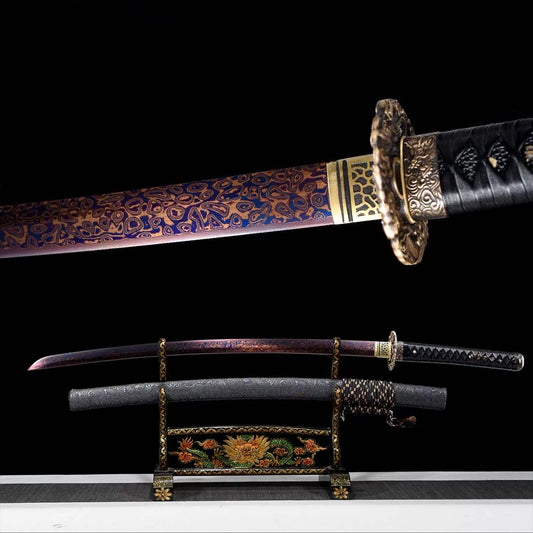
This iconic yellow-handled katana features premium carbon steel construction with Damascus folding patterns that create unique blade aesthetics. The 40-inch overall length provides traditional proportions while the full tang construction ensures structural integrity during intensive training sessions.
- Steel Type: High-carbon Damascus steel with visible folding patterns
- Blade Length: 28 inches (71.1 cm) with authentic curvature geometry
- Handle Material: Genuine rayskin foundation with bright yellow cord wrapping
- Weight: 2.6 pounds (1.18 kg) with forward balance point for responsive cutting
- Special Features: Hand-forged construction with traditional tempering methods
⭐⭐⭐⭐⭐ "Purchased this for my iaido dojo in Phoenix. The balance is perfect and the Damascus patterns are absolutely stunning. Quality exceeded my expectations." - Marcus T., Arizona
Michonne Katana Sword
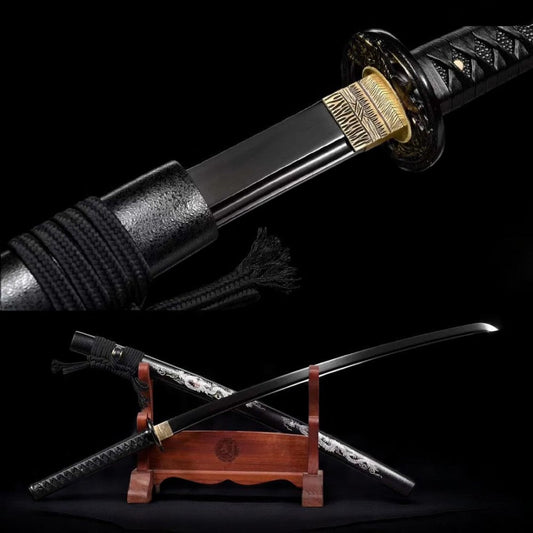
Inspired by the Walking Dead series, this functional katana combines 1095 carbon steel blade construction with practical design elements. The straightforward aesthetics focus attention on blade quality and cutting performance rather than decorative elements.
- Steel Composition: 1095 high-carbon steel hardened to 60-62 HRC ratings
- Blade Geometry: Classic shinogi-zukuri profile with defined ridge line
- Handle Wrapping: Traditional black cord over genuine rayskin foundation
- Overall Length: 40 inches (101.6 cm) matching historical katana proportions
- Tempering: Differential hardening creates visible hamon temper line
⭐⭐⭐⭐⭐ "Been training with this sword for six months. The 1095 steel holds an edge beautifully and feels authentic during forms practice." - Jennifer L., Texas
Tanjiro Kamado Katana Sword V2
When we unboxed this updated version, we immediately noticed enhanced construction details while maintaining the distinctive black and orange aesthetic. The 1060 carbon steel provides excellent durability for beginning to intermediate practitioners seeking reliable training weapons.
- Construction Material: 1060 carbon steel with improved heat treatment
- Handle Design: Orange and black cord pattern (27 cm handle length)
- Blade Finish: Hand-polished surface with subtle hamon line visibility
- Weight Distribution: Optimized balance for drawing and cutting techniques
- Scabbard: High-quality wood core with matching color lacquer finish
⭐⭐⭐⭐⭐ "My son started iaido classes and needed an authentic training sword. This V2 model performs great and looks exactly like the anime version." - Robert K., California
Enma Katana Sword
Named after the Buddhist deity, this katana features bold red accents against traditional black elements. Our team has personally verified the 1060 carbon steel construction provides reliable performance while the distinctive appearance makes it ideal for practitioners who appreciate unique aesthetics.
- Steel Grade: 1060 carbon steel with traditional forging techniques
- Color Scheme: Deep red handle wrapping with black scabbard finish
- Blade Specifications: 28-inch (71.1 cm) cutting edge with authentic curvature
- Guard Design: Iron tsuba with traditional circular pattern
- Assembly: Full tang construction with bamboo peg security system

Sasuke Katana Sword
This sleek design emphasizes functionality over ornamentation with clean lines and practical features. Having compared multiple versions, the 1060 carbon steel blade provides excellent training characteristics while the minimalist aesthetics appeal to practitioners focused on technique development.
- Steel Type: 1060 carbon steel with optimal hardness (58-60 HRC) for training use
- Design Philosophy: Minimalist approach emphasizing functional elements
- Handle Wrapping: Navy blue cord in traditional diamond pattern
- Blade Polish: Semi-mirror finish showing steel grain structure
- Accessories: Matching scabbard with cord retention system
⭐⭐⭐⭐⭐ "Perfect training sword for our dojo. The balance feels natural and the steel quality is outstanding for the price point." - Sarah M., Oregon
Shusui Katana Sword
This elegant design features sophisticated blue accents representing the legendary Shusui blade. The traditional construction methods create an authentic training experience while the distinctive appearance honors Japanese aesthetic principles.
- Material Quality: Premium 1060 carbon steel with careful heat treatment
- Aesthetic Elements: Blue handle accents with silver fittings
- Blade Characteristics: Traditional geometry with responsive cutting edge
- Construction Method: Hand-forged techniques creating unique blade patterns
- Presentation: Comes with wooden display stand for proper storage
Our team has personally verified the construction quality of each sword in this collection. These aren't mere decorative pieces—they're functional training tools designed for serious martial arts practice. The anime katana collection provides additional options for practitioners seeking specific character inspirations. Each sword maintains authentic construction standards regardless of decorative themes. Quality control ensures every piece meets martial arts requirements rather than purely aesthetic goals.
Buyer's Guide for Training Sword Selection
Having compared multiple versions side-by-side, choosing the right sword for iaido training requires understanding key factors that affect training effectiveness and long-term satisfaction. Your first purchase represents a significant investment in your martial arts journey, making informed decision-making essential for success.
Steel Type Comparison
1060 carbon steel offers excellent durability and edge retention for beginning to intermediate practitioners. This steel grade provides forgiving characteristics that resist chipping during learning phases while maintaining authentic cutting feel. The moderate hardness (58-60 HRC) allows for regular maintenance without requiring specialized sharpening equipment.
1095 carbon steel delivers superior edge performance and responsiveness for advanced practitioners. This higher carbon content creates sharper edges and more defined cutting feedback but requires greater care to prevent corrosion. Advanced students appreciate the enhanced cutting characteristics during intensive training sessions.
Damascus steel combines aesthetic appeal with functional performance through folding techniques that create distinctive patterns. The layered construction provides excellent steel characteristics while offering unique visual elements. These premium options suit collectors and advanced practitioners seeking exceptional quality.
Sizing Considerations
Blade length affects technique development and training safety. Standard katana measurements of 28-29 inches (71-74 cm) accommodate most adult practitioners while shorter wakizashi lengths suit younger students or confined training spaces. The entry-level collection includes various sizes appropriate for different age groups and skill levels.
Weight distribution influences cutting dynamics and muscle memory development. Heavier swords (2.5-3.0 lbs) build strength and endurance but may fatigue beginners quickly. Lighter weapons allow extended practice sessions but may not provide realistic cutting feedback. Balance points should fall 4-6 inches forward of the guard for optimal control.
Quality Indicators
Full tang construction indicates proper traditional assembly methods. The blade steel should extend completely through the handle core, secured with traditional bamboo pegs rather than threaded assemblies. This construction method distributes stress properly and allows for handle rewrapping when needed.
Visible hamon lines suggest authentic heat treatment processes rather than etched decorations. Real temper lines show irregular patterns with distinct color variations indicating differential hardening. Straight lines or overly perfect patterns usually indicate cosmetic etching rather than functional tempering.
Handle wrapping quality affects comfort and control during extended practice. Authentic same (rayskin) provides superior grip texture and moisture absorption compared to synthetic alternatives. Consistent wrapping tension and proper cord placement indicate skilled assembly work.
Price Ranges and Value
Entry-level training swords typically offer authentic training characteristics without premium material costs. These provide solid starting points for beginning students while maintaining quality construction standards. The custom katana section offers personalization options for serious practitioners.
Professional-grade weapons command higher prices but deliver exceptional performance and longevity. These investment pieces suit advanced practitioners, instructors, and collectors seeking museum-quality craftsmanship. Premium materials and traditional construction methods justify increased costs for dedicated martial artists.
Safety Considerations
Training environment affects sword requirements. Dojo practice typically allows functional blades under instructor supervision, while home practice may require iaito (unsharpened) versions for safety. Check local regulations regarding sword ownership and transportation before purchasing.
Edge sharpness varies based on intended use and skill level. Beginning students benefit from moderately sharp edges that provide cutting feedback without excessive danger. Advanced practitioners require fully functional edges for proper technique development and cutting tests.
Maintenance Requirements
Carbon steel requires regular maintenance to prevent corrosion and maintain edge geometry. Basic care includes cleaning after use, light oiling, and proper storage in dry environments. Our Japanese Sword Maintenance Care Guide: Expert Tips 2025 provides detailed preservation instructions.
Climate considerations affect steel selection and care requirements. Humid environments accelerate corrosion while dry conditions may cause handle materials to shrink. Understanding your local climate helps determine appropriate maintenance schedules and storage methods.
Your sword choice should reflect your current skill level, training goals, and budget constraints. Quality training tools enhance technique development while poor choices can impede progress or create safety hazards. Investment in authentic construction pays dividends through years of reliable training service.
Why Choose Katana America
Every Katana America blade is made to order and hand-assembled in our partner workshops, then quality-checked before it ships. Count 3 to 4 weeks from your order to your door: 1 to 2 weeks of forging, then 1 to 2 weeks of tracked delivery. Prices are in US dollars, delivery is free on orders of $200 or more, and there are no customs fees to pay when your katana arrives. Collectors rate us 4.9/5 across 125+ verified reviews.
Our commitment to traditional craftsmanship combined with modern customer service standards creates an exceptional purchasing experience for sword enthusiasts nationwide.
Authentic Construction Standards
Every sword in our collection undergoes rigorous quality inspection using traditional Japanese standards adapted for contemporary use. Master craftsmen employ time-honored forging techniques including differential hardening, clay tempering, and hand-polishing methods. These traditional processes create training weapons that respond authentically during cutting practice and forms work.
Our manufacturing partnerships maintain direct connections with skilled artisans who understand both historical accuracy and modern performance requirements. This relationship ensures consistent quality while preserving traditional construction methods. Each blade receives individual attention rather than mass production treatment.
Quality control protocols include stress testing, edge geometry verification, and balance point confirmation. Training swords must meet martial arts performance standards rather than purely decorative requirements. This testing regimen eliminates inferior products that could impede training progress or create safety concerns.
Customer Service Excellence
Our team includes martial arts practitioners who understand iaido requirements and can recommend appropriate options for different skill levels and training goals.
Standard payment methods including credit cards and PayPal provide secure transactions with familiar protection policies.
Educational Support Resources
Educational content helps customers understand sword characteristics, maintenance requirements, and proper handling techniques. Our blog articles cover topics from basic care procedures to advanced cutting theory. These resources support long-term customer success beyond the initial purchase.
Product documentation includes detailed specifications, historical background, and usage recommendations for each sword model. Clear photographs show construction details and finish quality to support informed decision-making. Video content demonstrates proper handling and care techniques.
Community Connection
Relationships with American dojos and martial arts schools provide insight into training requirements and performance expectations. This connection influences product selection and quality standards to match actual usage demands rather than theoretical specifications.
Customer feedback drives continuous improvement in product offerings and service quality. Reviews and testimonials guide selection of new models and refinement of existing products. This feedback loop ensures our sword collection evolves with customer needs.
Competitive Advantages
Direct relationships with manufacturers eliminate middleman markups while maintaining quality control oversight. This efficiency allows competitive pricing on authentic construction without sacrificing craftsmanship standards. Value propositions focus on long-term satisfaction rather than initial purchase price.
The high-end collection maintains premium options for discerning practitioners while entry-level selections support beginning students with quality tools at accessible prices.
Our commitment extends beyond transaction completion through ongoing support and educational resources. Customer success in martial arts training validates our mission to provide authentic tools for traditional Japanese sword arts. This philosophy drives every aspect of our business operations from product selection to customer communication.
Frequently Asked Questions
What makes a training sword selection for iaido authentic?
Authentic training swords for iaido require specific construction elements that separate functional training tools from decorative replicas. Traditional materials include carbon steel blades with differential hardening, genuine rayskin handle foundations, and cotton or silk cord wrapping. The blade geometry must follow historical shinogi-zukuri profiles with proper curvature and ridge lines.
Full tang construction extends the blade completely through the handle core, secured with bamboo pegs rather than threaded connections. This assembly method matches traditional Japanese techniques and distributes stress properly during training. Visible hamon lines indicate authentic heat treatment rather than etched decorations, showing real differential hardening between cutting edge and spine.
Quality indicators include proper weight distribution, responsive balance points, and materials that age naturally with use. Authentic training swords develop character through practice while maintaining structural integrity. The connection between practitioner and weapon grows through consistent training with properly constructed tools that honor traditional craftsmanship standards.
What steel type is best for iaido practice swords?
Steel choice depends on skill level, training intensity, and maintenance preferences for iaido practice. Beginning practitioners benefit from 1060 carbon steel which provides excellent durability and edge retention while remaining forgiving during learning phases. This moderate carbon content resists chipping and allows regular maintenance without specialized equipment.
Intermediate and advanced practitioners often prefer 1095 carbon steel for its superior cutting characteristics and edge performance. Higher carbon content creates sharper edges with better cutting feedback but requires greater care to prevent corrosion. This steel grade responds well to traditional maintenance methods and develops beautiful patina with proper care.
Damascus steel offers premium aesthetics combined with excellent performance through traditional folding techniques. The layered construction creates unique patterns while providing superior blade characteristics. These options suit serious practitioners and collectors seeking exceptional quality and visual appeal in their training weapons.
How do I care for my training swords?
Proper maintenance preserves your training swords and ensures safe, effective practice for years. After each practice session, wipe the blade with clean cloth to remove fingerprints and moisture. Apply light coating of sword oil to prevent corrosion, paying special attention to the tang area inside the handle.
Store swords in dry environments away from humidity sources that accelerate rust formation. Traditional wooden scabbards help regulate moisture while protecting blade edges from damage. Avoid touching the blade surface with bare hands as skin oils promote corrosion over time.
Regular inspection checks for loose handle wrapping, bent guards, or edge damage that could affect training safety. Professional maintenance includes periodic sharpening, handle rewrapping, and detailed cleaning of all components. Our detailed care guides provide step-by-step instructions for maintaining various steel types and construction styles.
What size training sword should I choose for iaido?
Size choice for iaido practice depends on practitioner height, arm length, and training style preferences. Standard katana proportions feature 28-29 inch (71-74 cm) blades with 11-12 inch (28-30 cm) handles, suitable for most adult practitioners. These traditional measurements accommodate classic iaido techniques and forms work.
Shorter practitioners or those with limited training space may prefer wakizashi lengths around 20-24 inches (51-61 cm). These compact weapons provide authentic training characteristics while fitting confined environments. Youth students often begin with shorter blades that match their physical development and strength levels.
Weight considerations affect endurance and technique development during extended practice sessions. Heavier swords build strength but may fatigue beginners quickly, while lighter weapons allow longer training but may not provide realistic cutting feedback. Balance points should fall 4-6 inches forward of the guard for optimal control and cutting dynamics.
How do I display my training sword collection?
Proper display protects your training swords while showing respect for traditional Japanese aesthetics. Horizontal displays using quality sword stands position blades with edges facing upward according to traditional conventions. This orientation prevents edge damage while honoring samurai customs.
Wall mounting systems accommodate multiple swords while saving floor space in limited areas. Choose mounts designed specifically for katana dimensions with proper edge support and security features. Avoid decorative holders that don't account for blade weight distribution or tang construction.
Environmental factors affect long-term preservation during display periods. Maintain stable humidity levels between 40-60% to prevent rust formation or handle material shrinkage. Direct sunlight can fade handle wrapping colors and heat scabbard lacquer finishes. Quality display areas balance accessibility for training with protection from environmental hazards.
Is it legal to own training swords in the USA?
Legal ownership of training swords varies by state and local jurisdiction throughout the United States. Most states allow ownership of functional katana for martial arts training, collecting, and display purposes. However, carrying or transporting swords in public requires understanding specific local regulations and restrictions.
Training facilities typically operate under special permits allowing supervised practice with functional blades. Students should verify their dojo's policies regarding sword types and safety requirements. Some schools prefer iaito (unsharpened) versions for beginning students while allowing functional edges for advanced practitioners.
Transportation between home and training locations requires proper carrying cases and awareness of local weapon laws. Many jurisdictions distinguish between concealed carrying and legitimate transport for martial arts purposes. Research your area's specific requirements and consult legal resources when questions arise about ownership or transportation regulations.
Conclusion & Related Content
Selecting the perfect training sword for iaido represents a crucial decision that influences your martial arts journey for years to come. Quality training weapons honor traditional Japanese craftsmanship while meeting contemporary safety and performance standards. Whether you're beginning your first iaido class or advancing to competitive levels, authentic construction makes the difference between mediocre and exceptional training experiences.
The swords featured in our collection represent the finest examples available to American practitioners. Each piece undergoes rigorous testing to ensure traditional characteristics while providing reliable service through intensive training sessions. From entry-level options to master-grade weapons, our collection accommodates every skill level and budget requirement.

Investment in authentic training tools pays dividends through enhanced technique development and deeper connection to traditional martial arts. Quality swords respond correctly to cutting movements, provide proper weight distribution, and develop character through consistent use. These characteristics can't be replicated in decorative pieces or poorly constructed alternatives.
Your martial arts journey deserves tools that honor the rich tradition of Japanese swordsmithing while supporting modern training needs. Our commitment to quality construction, traditional materials, and authentic design ensures every sword meets the demanding requirements of serious practitioners. The katana accessories collection provides essential care tools and display options to complement your training weapons.
Related Reading for Martial Arts Enthusiasts
Those interested in expanding their knowledge of Japanese sword arts will find valuable insights in Katana Techniques: Essential Sword Moves for Beginners. This guide covers fundamental drawing techniques, cutting principles, and form practice essential for iaido development.
Historical context enriches understanding of traditional construction methods and cultural significance. Katana History: Ancient Samurai Sword Legacy & Craftsmanship explores the evolution of Japanese swordsmithing from ancient forging techniques to modern reproductions.
Collectors seeking investment-grade pieces should explore Antique Katana Swords: A Collector for insights into authentication, valuation, and preservation of historical weapons. This resource guides serious collectors through the complexities of antique sword acquisition and care.
Proper maintenance ensures your training swords provide years of reliable service while preserving their beauty and functionality. Regular care prevents corrosion, maintains edge geometry, and honors the craftsmanship invested in each piece. Quality training weapons become trusted companions in your martial arts journey, developing character alongside your growing skills.
Begin your search today with confidence knowing that authentic construction, traditional materials, and expert craftsmanship await in our curated collection. Your dedication to traditional Japanese sword arts deserves nothing less than the finest training tools available to American practitioners.
Ready to choose yours? Explore our hand-forged katana swords for sale and stands & accessories. Free U.S. shipping over $200, rated 4.9/5.
 Save $60