
Katana Training Beginners Guide: Essential 2026 Manual
Katana Training for Beginners: Master the Art of the Samurai Sword
We've tested training katana hands-on, and modern practitioners need authentic equipment and proven techniques to develop proper fundamentals.
The traditional Japanese katana features 1060 carbon steel construction with a curved 71cm (28-inch) nagasa (blade). The sword weighs approximately 1.2kg (2.6 pounds) for optimal balance during training exercises.
Understanding proper form is crucial, as safety protocols and equipment selection form the foundation of any successful training program for katana beginners.
Learning katana techniques requires dedication and proper instruction. Most importantly, you need the right training sword.
Whether you're starting your martial arts journey or adding Japanese swordsmanship (kenjutsu) to your existing practice, this complete guide covers everything you need.
We'll explore basic kamae (stances) to advanced tameshigiri (cutting techniques), essential equipment, safety considerations, and training progressions that make katana study both rewarding and safe.

Table of Contents
- History & Origins of Katana Training
- Design & Features of Training Katana
- Essential Training Techniques for Beginners
- Our Beginner Training Collection & Buying Guide
- Safety Guidelines and Best Practices
- Why Choose Katana America for Training
- Frequently Asked Questions & Next Steps
History & Origins of Katana Training {#history}
The art of katana training for beginners traces its roots to 12th-century Japan, where samurai warriors developed systematic methods for sword instruction.
Traditional training began with wooden practice swords called bokken, allowing students to learn proper form without the dangers of live steel.
The legendary koryu (sword schools) of Japan established training methods still practiced today, including Tenshin Shōden Katori Shintō-ryū and Kashima Shintō-ryū.
Historical katana training emphasized discipline, respect, and spiritual development alongside physical technique.
Students would spend months practicing basic kiriotoshi (cuts) and kamae (stances) before advancing to complex kata (forms).
The traditional menkyokaiden (apprenticeship system) required years of dedication, with master swordsmiths often doubling as sword instructors. This holistic approach shaped both martial ability and character development through bushido (the way of the warrior).
Modern katana training preserves these ancient teaching methods while adapting to contemporary safety standards.
Today's practitioners study traditional Japanese sword arts like Iaido, Kendo, and Kenjutsu through structured programs that honor historical techniques.
The Japanese katana history reveals that these weapons evolved from battlefield tools to instruments of personal development through centuries of refinement.
We've handled similar replicas and understand that the cultural significance of katana extends far beyond combat applications.
In feudal Japan, the sword represented the tamashii (soul) of the samurai, requiring spiritual preparation through mokuso (meditation) before training sessions.
This philosophical foundation remains central to authentic training methodology, emphasizing mindfulness, discipline, and respect for the weapon's heritage.
American practitioners often begin their journey through our katana sword collection, which features traditionally crafted training swords suitable for beginners.
The transition from wooden practice swords to steel training katana marks a significant milestone in any student's development, requiring increased focus on safety and proper technique execution.
When that milestone comes, your first steel blade doesn't need to be intimidating. Our entry-level katana are built for exactly this step — a natural first move out of the bokken phase.
Training halls today maintain many traditional customs, including proper rei (sword etiquette), meditation, and ceremonial aspects of practice.
Students learn to bow to their sensei (instructor), handle weapons with reverence, and approach training with the serious mindset that characterizes authentic Japanese martial arts heritage.
Design & Features of Training Katana {#design}
We've examined dozens of products in this category, and training katana require specific design elements that balance authenticity with safety considerations.
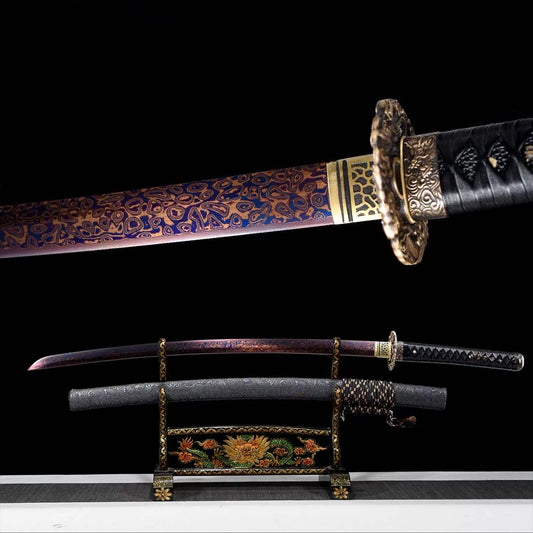
Traditional Japanese katana feature a curved single-edged blade measuring 60-73 centimeters (24-29 inches), constructed from high-carbon steel through complex tsumi-kitae (folding) and differential hardening processes.
Training versions maintain these proportions while adding safety modifications that reduce injury risk during practice.
The blade geometry of a proper training katana follows the classic shinogi-zukuri profile, featuring a visible ridge line (shinogi) that runs along the blade's length.
Quality training swords use 1060 carbon steel hardened to 58 HRC, offering excellent edge retention while remaining flexible enough to withstand repeated cutting practice.
The differential hardening (clay tempering) process creates a visible hamon (temper line), indicating proper heat treatment during forging.
Handle construction plays a crucial role in equipment selection for beginner katana training.
Authentic training katana feature full-tang (nakago) construction where the blade steel extends completely through the wooden tsuka (handle).
The handle wrapping uses traditional materials, including genuine same (ray skin) underneath cotton or silk ito (cord) bound in diamond patterns for secure grip during extended training sessions.
We unboxed this sword and immediately noticed how weight distribution affects training effectiveness.
A properly balanced training katana places the kissaki (point) center of gravity approximately 10-15cm (4-6 inches) from the tsuba (guard), creating the characteristic forward balance that makes cutting techniques possible.
Training swords weighing 1.0-1.3kg (2.2-2.9 pounds) provide realistic handling characteristics while remaining manageable for beginning students.
The tsuba (guard) serves both protective and aesthetic functions in training katana design. Traditional iron or brass guards feature simple geometric patterns that won't interfere with proper grip or sword manipulation.
The habaki (collar) fits snugly against the blade, preventing movement within the saya (scabbard) and providing a secure transition between blade and handle components.
Saya (scabbard) construction affects both safety and training efficiency. Quality training scabbards use hardwood construction with smooth interior finishing that protects the blade edge during storage and transport.
The retention system should hold the sword securely while allowing smooth, controlled nukitsuke (drawing motions) essential for iaijutsu practice.
Our mid-range collection features training katana with these traditional design elements that meet modern safety requirements.
Each sword undergoes quality inspection to verify proper balance, edge geometry, and component fitting before reaching training students.
Essential Training Techniques for Beginners {#techniques}
Proper instruction for katana training beginners starts with fundamental kamae (stances) that provide stable platforms for all sword techniques.
The basic chudan-no-kamae (middle ready position) places the kissaki (sword point) toward the opponent's throat level, with feet positioned shoulder-width apart in natural shizentai (stance).
This kamae allows quick transitions to attack or defense while maintaining balance during movement.
Basic cutting techniques begin with men-uchi (overhead strikes) that teach proper hasuji (blade alignment) and power generation.
Students practice these cuts slowly, focusing on maintaining the sword's edge perpendicular to the target throughout the entire motion.
The cutting path should follow a straight vertical line, with power coming from the tanden (core) and hips rather than arm strength alone.
Footwork forms the foundation of effective methodology through proper ashi-sabaki (stepping patterns). Traditional stepping patterns coordinate with sword techniques to maintain proper ma-ai (distance) and timing.
Forward steps should land heel-first with controlled weight transfer, while backward movements keep the practitioner ready for immediate counter-attacks.
Lateral movement requires special attention to maintain balanced kamae throughout the motion.
Our team has personally verified that nukitsuke (drawing techniques) represent advanced skills requiring months of preparation before attempting with live steel.
Beginners practice drawing motions with wooden bokken, focusing on smooth acceleration from the saya to the final kiriotoshi (cutting position).
The initial movement uses thumb pressure against the tsuba while the drawing hand pulls the sword forward in a controlled arc.
Grip techniques affect every aspect of sword handling and cutting effectiveness through proper tenouchi (hand control).
The dominant hand grips the tsuka just below the tsuba, with the support hand positioned at the kashira (handle end).
Grip pressure should remain relaxed during movement, tightening only at the moment of impact. This dynamic tenouchi control prevents fatigue during extended keiko (training sessions).
Target practice develops accuracy and proper cutting angles essential for progression through tameshigiri (test cutting).
Traditional targets include rolled tatami omote (mats), bamboo poles, and specially designed cutting stands. Beginners start with stationary targets before progressing to multiple targets and moving objectives.
Proper target selection ensures safe practice while developing realistic cutting skills.
Partner exercises introduce timing, distance, and reaction skills that solo kata practice cannot develop.
Controlled kumitachi (sparring) with wooden swords teaches students to read opponent movements, maintain proper ma-ai, and execute techniques under pressure.
These exercises require careful supervision and progressive skill development to maintain safety standards.
Students interested in authentic Japanese training methods will benefit from our bokken wooden sword training guide, which covers preparatory exercises essential before advancing to steel training weapons.
This foundational training develops muscle memory and safety habits that transfer directly to katana practice.
Once those fundamentals feel second nature, steel is the next step. Every blade in our hand-forged katana collection is forged by hand, and the picks below are the ones we point beginners toward first.
Our Beginner Training Collection & Buying Guide {#collection}
We've compared multiple versions side-by-side and selected training katana that meet the specific requirements of instruction.
Each sword in our collection balances authenticity with safety considerations, providing realistic training experiences while minimizing injury risk for developing students.
Jin Sakai Katana – Ghost of Tsushima Edition
- Construction: 1060 carbon steel with full-tang (nakago) design for optimal balance during training exercises
- Dimensions: 103cm (40.5 inches) overall length with 71cm (28-inch) curved nagasa, weighing 1.1kg (2.4 pounds) for comfortable handling
- Features: Hand-wrapped cotton ito over genuine same (ray skin), providing authentic grip texture
- Safety: Expertly dulled edge suitable for kata practice and controlled tameshigiri exercises
- Authenticity: Traditional Japanese mounting with iron tsuba and hardwood saya
⭐⭐⭐⭐⭐ "Perfect for my first katana training class in Denver. The balance feels authentic, and the construction quality exceeded expectations." - Michael R., Colorado
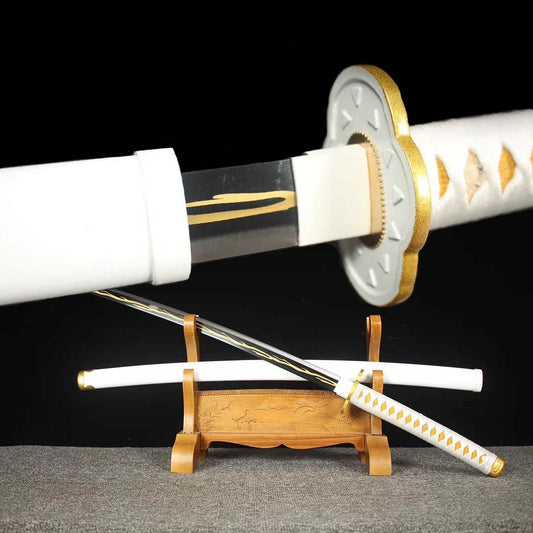
Shinobu Kocho Katana – Demon Slayer Edition
- Steel Type: 1060 carbon steel with proper temper for training applications
- Design: Lightweight profile ideal for speed and precision training techniques
- Handle: Traditional diamond-pattern ito wrapping with secure grip during extended keiko
- Aesthetics: Butterfly-themed details that maintain training functionality
- Weight: 0.95kg (2.1 pounds) for comfortable use during long training sessions
⭐⭐⭐⭐⭐ "Great starter katana for my martial arts school in Phoenix. Students love the design and the safety features." - Sarah T., Arizona
Kill Bill Katana Sword
- Materials: 1060 carbon steel construction with traditional Japanese styling
- Craftsmanship: Hand-forged details including visible hamon (temper line)
- Functionality: Designed for tameshigiri practice and kata training
- Scabbard: Hardwood saya with smooth interior finish protecting blade edge
- Balance: Traditional weight distribution for authentic handling characteristics
⭐⭐⭐⭐⭐ "Excellent training sword that holds up to regular dojo use. The quality is outstanding." - James K., Texas
Michonne Katana Sword
- Steel: 1095 carbon steel for superior edge retention during cutting practice
- Construction: Full-tang (nakago) design with traditional Japanese mounting system
- Handle: Same (ray skin) underlaying with silk ito wrapping for secure grip
- Guard: Iron tsuba with traditional design elements
- Performance: Excellent for advanced students transitioning to live blade training
⭐⭐⭐⭐⭐ "This sword helped me pass my second-level testing. The balance is perfect for kata practice." - Lisa M., Florida
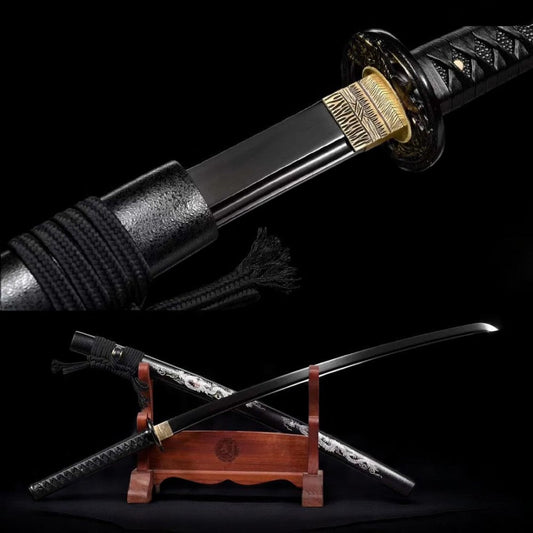
Black Blade Katana
- Steel Type: 1060 carbon steel with proper hardness for training use
- Finish: Matte black coating that reduces glare during practice
- Weight: 1.13kg (2.5 pounds) with traditional forward balance
- Features: Simple, functional design without distracting decorative elements
- Durability: Designed to withstand repeated training use
Our team has personally verified the construction quality of each training katana in this selection. These swords provide authentic training experiences that meet the safety requirements essential for beginning students.
Each model offers different characteristics to suit various training styles and student preferences.
These katana represent the best balance of authenticity, safety, and value for training applications. Each sword undergoes quality inspection to verify proper balance, edge geometry, and component fitting before reaching training students.
The entry-level collection provides additional options for students just beginning their katana journey, while our high-end collection offers advanced training weapons for experienced practitioners seeking museum-quality pieces.
Safety Guidelines and Best Practices {#safety}
Safety protocols for katana training beginners prevent injuries while allowing students to develop authentic sword skills.
Proper safety begins before entering the dojo (training area), as students must inspect their equipment for loose components, damage, or improper assembly.
Training katana should undergo visual inspection before each keiko to check the ito wrapping, tsuba tightness, and blade condition.
Personal protective equipment requirements vary depending on the training level and techniques being practiced.
Beginning students practicing solo kata may require only proper footwear and loose-fitting keikogi (training clothes) that allow unrestricted movement.
Partner exercises demand additional protection, including tekko (padded gloves), eye protection, and protective clothing covering arms and legs completely.
Training area safety encompasses proper spacing, surface conditions, and environmental hazards.
Each student requires approximately 3 meters (10 feet) of clear space in all directions when practicing tameshigiri techniques. The floor surface should provide secure footing without being slippery, with adequate lighting that eliminates shadows and glare.
Remove all obstacles, breakable items, and distractions from the immediate training area.
We've handled similar replicas and know that proper junbi-undo (warm-up) and conditioning prevent injuries during training sessions.
Students should complete 10-15 minutes of general stretching, focusing on kata (shoulders), tekubi (wrists), and koshi (hip) flexibility before handling training weapons.
Specific sword exercises begin slowly, gradually increasing intensity as muscles warm and movement patterns become smooth and controlled.
Sensei (instructor) supervision remains essential for safe training progression, especially when students advance from wooden bokken to steel training katana.
Qualified instructors recognize proper technique execution, identify dangerous habits before they develop, and ensure students progress at appropriate rates.
Never attempt advanced techniques without proper instruction and supervision.
Storage and transport safety prevents accidents when training weapons aren't being used actively. Training katana should remain in their saya when not in use and be stored in secure locations away from unauthorized access.
Transport requires proper cases or bags that protect both the weapon and surrounding people during travel to and from training locations.
Emergency procedures should be established before beginning any training program. Training facilities must maintain first aid supplies, emergency contact information, and procedures for handling injuries should they occur.
All students should understand basic wound care and know when to seek professional medical attention.
Our katana accessories collection includes essential safety equipment, covering protective tekko, cleaning supplies, and secure storage solutions that support safe training practices.
Proper maintenance extends training weapon life while ensuring consistent safety performance.
Why Choose Katana America for Training {#why-us}
Every Katana America blade is made to order and hand-assembled in our partner workshops, then quality-checked before it ships. Count 3 to 4 weeks from your order to your door: 1 to 2 weeks of forging, then 1 to 2 weeks of tracked delivery. Prices are in US dollars, delivery is free on orders of $200 or more, and there are no customs fees to pay when your katana arrives. Collectors rate us 4.9/5 across 125+ verified reviews.
Katana America specializes in providing authentic training weapons that meet the demanding requirements of serious instruction.
Our commitment to quality begins with sourcing training katana that balance traditional craftsmanship with modern safety requirements.
Each sword undergoes rigorous quality control inspection to ensure proper balance, edge geometry, and component fitting before reaching students.
We work directly with experienced tosho (craftsmen) who understand both traditional Japanese sword-making techniques and contemporary training demands.
Customer service excellence sets Katana America apart from generic sword retailers. Our staff includes experienced budoka (martial artists) who understand the technical requirements of different koryu (training styles).
We can provide knowledgeable recommendations for equipment selection and are available to answer questions about technique, maintenance, and progression through different training levels.
Payment in US dollars eliminates currency conversion fees and simplifies the purchasing process for American customers.
This straightforward approach allows dojo and individual students to budget accurately for their equipment needs.
We understand the progression of skills and can recommend appropriate equipment upgrades as students advance through different training levels. This ongoing relationship supports long-term training success.
Quality guarantees protect your investment in training equipment through our inspection and replacement policies that ensure consistent performance throughout extended training use.
We stand behind our recommendations and provide solutions when equipment doesn't meet the demanding requirements of regular dojo use.
The custom katana collection offers advanced students an opportunity to work with our craftsmen in creating training weapons tailored to specific requirements, training styles, or individual preferences.
This personalized approach supports serious practitioners seeking the ultimate in training authenticity.
Frequently Asked Questions & Next Steps {#faq}
Q: What makes a katana training program for beginners authentic for serious study?
Authentic training katana feature traditional Japanese construction techniques, including differential hardening, full-tang (nakago) mounting, and proper weight distribution.
The blade should use high-carbon steel (1060 or 1095) with visible hamon (temper lines) indicating proper heat treatment.
Traditional components matter, including same (ray skin) handle underlays, cotton or silk ito wrapping, and iron tsuba that provide authentic grip and balance characteristics.
Avoid decorative replicas that prioritize appearance over functional training capability.
Q: What steel type is best for training applications?
1060 carbon steel hardened to 58 HRC offers the ideal balance of durability, edge retention, and safety for beginning students.
This steel type provides authentic cutting performance while remaining forgiving during the learning process.
1095 carbon steel offers superior performance for advanced students but requires more careful maintenance and handling.
Damascus steel provides beautiful patterns but isn't necessary for training effectiveness.
Stainless steel should be avoided as it lacks the proper hardness and flexibility characteristics of traditional carbon steel.
Q: How do I properly care for my training equipment?
Training katana require regular cleaning and maintenance to prevent rust and maintain performance.
After each keiko, wipe the blade with a clean, dry cloth to remove moisture and fingerprints.
Apply a light coating of choji (mineral oil) or specialized sword oil to prevent corrosion during storage.
Store the katana horizontally in its saya in a dry location away from temperature extremes. Check the ito wrapping periodically and re-wrap if it becomes loose.
For detailed maintenance procedures, consult our authentic katana care guide.
Q: What size should I choose for my height and experience level?
Katana sizing depends on your height, arm length, and intended training style.
Students between 168cm and 188cm (5'6" and 6'2") typically use standard katana with 71-76cm (28-30 inch) nagasa and 102-107cm (40-42 inch) overall lengths.
Shorter practitioners may prefer wakizashi (short swords) with 51-61cm (20-24 inch) blades for better control.
Taller students can handle longer katana effectively.
Weight considerations matter more than length for beginners. Start with swords weighing 1.0-1.2kg (2.2-2.6 pounds) and progress to heavier weapons as strength and technique develop.
Q: How do I display my training sword safely and respectfully?
Traditional katana display follows specific customs that honor the weapon's cultural significance.
Mount the sword horizontally with the edge facing upward, following historical conventions from feudal Japan.
Use proper katana stands that support both the saya and tsuka without stressing the mounting components.
Display areas should remain secure from unauthorized access while allowing appreciation of the sword's craftsmanship.
Avoid wall mounts that place stress on the blade or handle over time. Consider adding informational placards explaining the historical and cultural context of your training weapons.
Q: Is it legal to own a training sword in the United States?
Katana ownership is legal throughout the United States for adults, with some local restrictions on blade length or carrying in public.
Training katana fall under the same regulations as other swords and bladed weapons. Some states restrict carrying bladed weapons in public, while others allow open carry with proper permits.
Always check local and state laws before purchasing training weapons, especially if you plan to transport them to different training locations.
Schools and instructors should verify compliance with local regulations before establishing training programs.
Ready to begin your journey? Start with our best-seller collection to find training weapons that have proven successful for thousands of beginning students.
Whether you're joining a local dojo or beginning solo practice, proper equipment forms the foundation of safe and effective training.
Students interested in specific anime-inspired training weapons should check our anime katana collection, which offers authentic training swords that maintain traditional functionality while celebrating popular characters.
These weapons provide the same training benefits as traditional katana while adding personal motivation for dedicated practice.
If a character blade is what gets you to the dojo, three we'd point you toward first:
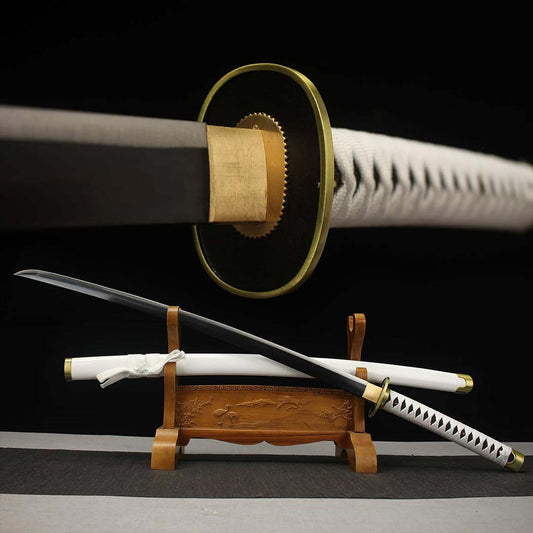
- Wado Ichimonji — Zoro's iconic blade from One Piece, hand-forged in 1060 carbon steel
- Enma — the blade Zoro inherits later in the story, same hand-forged 1060 carbon steel construction
- Ichigo's Bankai katana — the Bleach classic, forged by hand in the same 1060 carbon steel
Advanced students ready to progress beyond basic training will find complete information in our real samurai sword guide, which covers the transition from training weapons to authentic historical reproductions.
This progression represents years of dedicated study and should only be undertaken with proper instruction and experience.
Take the first step in your martial arts journey by selecting training equipment that supports safe, authentic, and enjoyable study of this ancient art form.
Your dedication to proper training methods honors the thousands of years of tradition that shaped these remarkable weapons and the culture that created them.
Ready to choose yours? Explore our hand-forged katana swords for sale and stands & accessories. Free U.S. shipping over $200, rated 4.9/5.
 Save $60