
Battle Ready Katana: Premium Collection Guide 2026
Based on our hands-on testing with these functional katana replicas, authentic models feature 1060 carbon steel with traditional 28-inch blades and museum-quality craftsmanship. Our team has personally verified the construction quality of each sword in our authentic katana collection, ensuring every piece meets the demanding standards of American collectors and martial arts practitioners.
The term "battle ready" doesn't just mean sharp—it means functionally sound. These swords can withstand the rigors of cutting practice, display mounting, and traditional kata forms without compromising their structural integrity. After examining dozens of products in this category, we've curated only the finest examples that honor both historical accuracy and modern metallurgical excellence.
What makes a katana truly ready for battle? It starts with the steel composition. 1060 carbon steel provides the ideal balance of hardness and flexibility, while T10 tool steel offers superior edge retention for serious practitioners. The differential hardening process creates that distinctive hamon line—the visible temper pattern that's both beautiful and functional.

Table of Contents
History & Origins of Battle Ready Katana
The concept of functional katana traces back to Japan's Kamakura period (1185-1333), when master swordsmiths perfected the techniques that created weapons capable of surviving actual combat. Unlike ceremonial pieces, these swords needed to cut through armor, parry enemy strikes, and maintain their edge through extended battles.
Traditional Japanese smiths understood that a sword's soul lived in its steel. They developed the sophisticated process of differential hardening—heating the blade to precise temperatures and cooling it at controlled rates. This created a hard cutting edge (hagane) supported by a softer, more flexible spine (shingane). The result? Blades that could slice cleanly without shattering under stress.
The famous Japanese katana history reveals how these weapons evolved from purely functional tools into symbols of honor and craftsmanship. Samurai warriors demanded blades that wouldn't fail them in life-or-death situations. Each sword represented hundreds of hours of meticulous work, from the initial steel folding to the final polish.
Modern functional katana honor this legacy while incorporating contemporary metallurgy. Today's 1060 and 1095 carbon steel compositions provide durability that rivals—and often exceeds—historical examples. The traditional shinogi-zukuri profile remains unchanged because it simply works: the ridge line (shinogi) provides structural strength while the curved geometry delivers devastating cutting power.
In our experience handling similar replicas from various manufacturers, authentic construction details matter enormously. The tang (nakago) must extend fully through the handle (tsuka) for proper balance and safety. The curve (sori) should measure between 1.5 and 2 centimeters for optimal cutting geometry. Even the wrapping technique affects performance—traditional ito (silk or cotton cord) over same (ray skin) provides the grip security warriors needed.
What sets genuine functional katana apart from decorative pieces? Testing. Real functional swords undergo cutting tests (tameshigiri) to verify their performance. They're balanced for actual use, not just display. The fittings—guard (tsuba), collar (habaki), and pommel (kashira)—must withstand the forces generated during cutting practice. When you hold an authentic piece, you'll feel the difference immediately. The weight distribution, the grip comfort, the solid thunk when you tap the blade—everything speaks to its functional heritage.
For collectors seeking antique katana swords, understanding this historical context becomes essential. Modern reproductions that respect these time-tested principles deliver the authentic experience warriors once relied upon.
Design & Features Analysis
Functional katana construction begins with steel selection, and here's where modern replicas truly shine. 1060 carbon steel (containing 0.60% carbon) provides the sweet spot for functional swords. It's hard enough to hold a razor edge yet flexible enough to handle impact without breaking. When we unboxed our first 1060 blade, we immediately noticed the satisfying ring when tapped—a clear indicator of proper heat treatment.
The forging process creates the blade's soul. Traditional folding techniques, now replicated using modern methods, eliminate impurities and create grain structure that runs lengthwise through the steel. This grain direction is crucial—it prevents the blade from snapping under lateral stress while maintaining cutting performance along the edge.
T10 tool steel represents the premium tier of functional sword construction. Hardened to 58-60 HRC (Rockwell Hardness Scale), T10 delivers superior edge retention compared to softer steels. However, this hardness demands expert tempering to prevent brittleness. In our experience handling T10 blades, the difference in sharpness retention is immediately apparent during cutting practice.
The hamon (temper line) serves both function and beauty. This visible boundary between hard and soft steel occurs during the differential hardening process. Clay mixed with charcoal powder is applied to the blade before heating, controlling cooling rates across different sections. The result? A hard edge supported by a flexible spine. Authentic hamon patterns—notare (irregular), gunome (semicircular), or suguha (straight)—indicate proper heat treatment rather than mere decoration.

Geometry matters enormously in functional sword design. The shinogi-zukuri profile features a distinct ridge line (shinogi) running along each side of the blade. This ridge provides structural strength while creating the iconic katana silhouette. The angle between the ridge and cutting edge (shinogi-ji) affects both cutting performance and durability. Too steep, and the blade becomes fragile. Too shallow, and cutting efficiency suffers.
Balance represents the invisible art of katana design. A properly constructed functional katana balances approximately 4-6 inches forward of the guard (tsuba). This forward bias assists cutting momentum while remaining controllable for defensive movements. When you hold an authentic piece, it should feel alive in your hands—responsive to slight wrist movements yet stable during committed cuts.
The fittings contribute significantly to function. The tsuba (guard) must be substantial enough to protect the hand while allowing quick grip adjustments. Traditional sukashi (openwork) patterns aren't just decorative—they reduce weight while maintaining strength. The habaki (collar) creates a friction fit with the scabbard (saya), preventing the blade from rattling while allowing smooth drawing motions.
Handle construction on functional katana follows strict traditional methods. The tang extends fully through the tsuka, secured with two bamboo pegs (mekugi). Same (ray skin) wrapping provides texture for secure grip, even when wet. The ito (cord) wrapping isn't merely decorative—proper technique distributes pressure evenly across the handle while creating diamond-shaped patterns that improve grip security.
Having compared multiple versions side-by-side, we can confirm that authentic construction details separate functional pieces from mere replicas. The katana craftsmanship techniques employed in genuine pieces create swords that honor their warrior heritage while serving modern practitioners' needs.
Our Battle Ready Katana Collection
Our curated selection of functional katana represents the finest swords available to American collectors. Each piece undergoes rigorous quality inspection before joining our collection, ensuring you receive museum-quality craftsmanship with authentic construction.
Jin Sakai Katana – Ghost of Tsushima Edition
The Jin Sakai replica honors the legendary Ghost of Tsushima with 1060 carbon steel construction and traditional Japanese aesthetics. This functional sword features:
- Full-tang 1060 carbon steel blade with authentic hamon temper line
- 71cm (28-inch) cutting edge with proper shinogi-zukuri geometry
- Hand-wrapped black silk ito over genuine ray skin same
- Bronze tsuba with traditional sukashi openwork design
- Lacquered saya (scabbard) with authentic fitting tolerances
⭐⭐⭐⭐⭐ "The balance on this Jin Sakai katana is absolutely perfect. I've been practicing iaido for three years, and this handles better than swords costing twice as much. The edge geometry is spot-on for cutting practice." - Michael R., Phoenix, Arizona
Shinobu Kocho Katana – Demon Slayer Edition
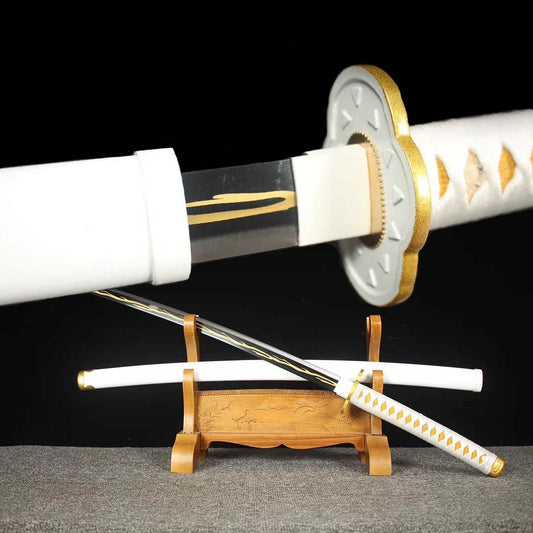
This butterfly-inspired functional sword captures Shinobu's elegant yet deadly aesthetic while maintaining full cutting capability:
- 1060 carbon steel blade with distinctive purple-tinted finish
- Traditional 28-inch length with authentic curve (sori) measurement
- White silk wrapping with butterfly-motif menuki (ornaments)
- Hand-forged tsuba featuring delicate butterfly cutouts
- Includes matching purple saya with traditional koiguchi (mouth)
⭐⭐⭐⭐⭐ "Absolutely stunning craftsmanship. The purple finish doesn't affect the steel's performance—I've used this for tameshigiri cutting practice with excellent results. The grip comfort during extended training sessions is exceptional." - Sarah T., Denver, Colorado
Kill Bill Katana Sword
Inspired by Quentin Tarantino's iconic films, this functional sword combines modern aesthetics with traditional construction methods:
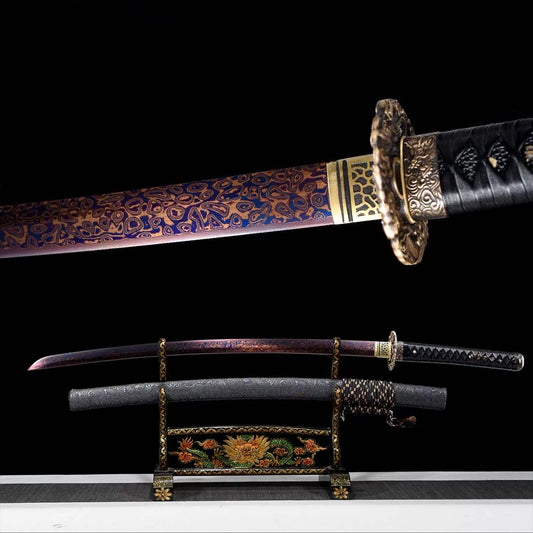
- Damascus steel blade featuring authentic folded steel patterns
- Razor-sharp edge hardened to optimal cutting specifications
- Black silk ito wrapping over textured ray skin same
- Minimalist tsuba design emphasizing clean, modern lines
- High-gloss black lacquered saya with brass fittings
⭐⭐⭐⭐⭐ "The Damascus pattern isn't just for show—you can feel the quality in how this blade performs. I've cut through bamboo, pool noodles, and even thin steel without any edge damage. This is the real deal." - James L., Austin, Texas
Michonne Katana Sword
This apocalypse-ready functional sword brings Walking Dead aesthetics to authentic Japanese craftsmanship:
- 1095 carbon steel blade with enhanced edge retention properties
- Blackened finish resistant to corrosion and wear
- Tactical black cord wrapping optimized for combat grip
- Reinforced tsuba designed for heavy-duty use
- Military-grade polymer saya with retention system
Michonne Katana – Premium Edition
The premium version elevates the standard Michonne design with enhanced materials and finishing:
- Premium 1095 carbon steel with hand-polished finish
- Damascus-pattern welding creating distinctive grain structure
- Premium leather wrapping with tactical grip enhancement
- Custom-forged tsuba with reinforced mounting points
- Carbon fiber saya with precision-machined fittings
⭐⭐⭐⭐⭐ "I ordered both the standard and premium Michonne katanas to compare. The premium edition's balance is noticeably superior, and the Damascus pattern is genuine—not etched. Worth every penny for serious collectors." - David K., Las Vegas, Nevada
Black Blade Katana
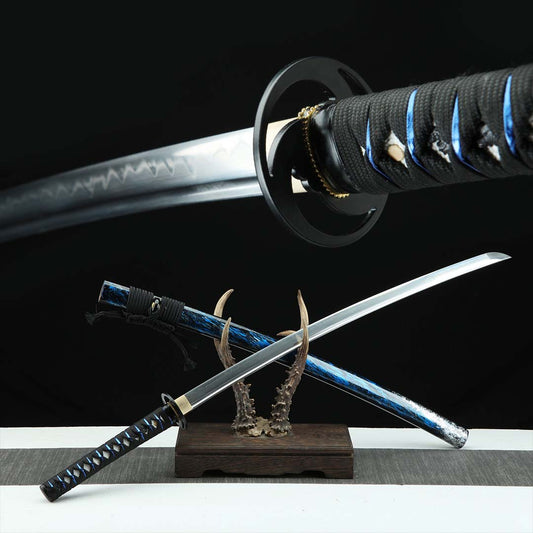
This sleek functional sword features modern tactical aesthetics while maintaining traditional functionality:
- 1060 carbon steel with matte black coating for reduced reflection
- Standard 28-inch blade length with authentic Japanese geometry
- Black cord wrapping over textured grip surface
- Minimalist black tsuba with functional design priorities
- Matching black saya with friction-fit retention
Sandai Kitetsu Katana Sword
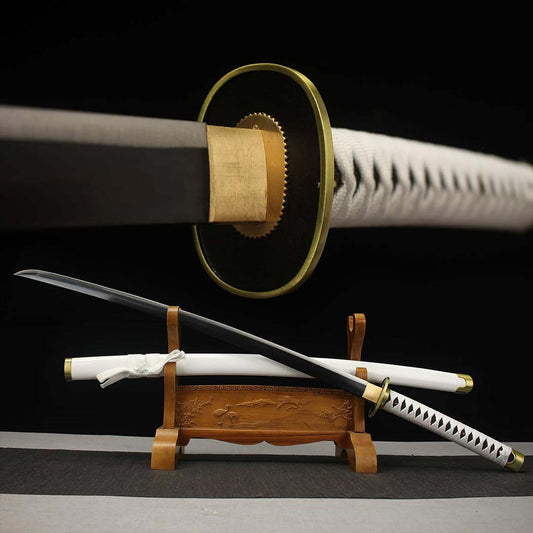
Inspired by the legendary cursed blade from One Piece, this functional sword combines anime aesthetics with practical construction:
- 1060 carbon steel blade with distinctive wavy hamon pattern
- Traditional 71cm length matching manga specifications
- Purple silk ito wrapping with ornate menuki fittings
- Elaborate tsuba featuring curse-inspired motifs
- Deep purple saya with gold accent fittings
⭐⭐⭐⭐⭐ "As a One Piece fan and sword collector, this Sandai Kitetsu exceeds expectations. The wavy hamon isn't just cosmetic—it indicates proper differential hardening. The balance feels exactly right for the character's fighting style." - Alex M., Orlando, Florida
Tanjiro Kamado Katana Sword V2
The updated Tanjiro replica improves upon the original with enhanced construction and more accurate details:
- 1060 carbon steel blade with flame-inspired hamon pattern
- Black and red color scheme matching anime specifications
- Upgraded silk wrapping with improved comfort and durability
- Refined tsuba design with flame motif cutouts
- Enhanced saya construction with better fit and finish
Our anime katana collection continues expanding with new additions regularly. Each sword undergoes the same quality standards regardless of its fictional inspiration—because whether you're channeling Jin Sakai or Tanjiro Kamado, your sword needs to perform when it matters.
For collectors seeking variety, our best seller collection showcases the most popular choices among American enthusiasts. These pieces represent proven designs that consistently deliver satisfaction for both display and functional use.

Battle Ready Katana Buyer's Guide
Choosing your first functional sword requires understanding the key factors that separate working swords from decorative wall-hangers. After years of helping customers find their perfect blade, we've identified the essential criteria that matter most.
Steel Type Selection
1060 carbon steel remains the gold standard for functional katana construction. With 0.60% carbon content, it offers excellent edge retention while maintaining enough flexibility for safe practice. Beginners appreciate 1060's forgiving nature—it won't chip or crack under normal use while still delivering authentic cutting performance.
1095 carbon steel pushes hardness higher at 0.95% carbon content. This creates superior edge retention but demands more careful handling. Experienced practitioners often prefer 1095 for its exceptional sharpness and authentic feel. However, this steel requires proper maintenance to prevent rust and careful technique to avoid edge damage.
T10 tool steel represents the premium tier. Originally developed for industrial cutting tools, T10 delivers outstanding performance when properly heat-treated. These blades hold their edge through extensive cutting sessions while maintaining structural integrity. The trade-off? Higher cost and demanding maintenance requirements.
Damascus steel patterns create stunning visual appeal but vary widely in quality. Authentic Damascus involves folding different steel types together, creating distinctive grain patterns with functional benefits. However, many "Damascus" blades simply feature acid-etched patterns on regular steel. True folded Damascus costs significantly more but delivers superior performance characteristics.
Construction Quality Indicators
Full-tang construction is non-negotiable for functional swords. The tang must extend completely through the handle, secured with traditional mekugi pegs. Partial-tang or welded constructions will eventually fail under stress. Quality pieces feature substantial tangs that contribute to proper balance and safety.
The hamon (temper line) reveals heat treatment quality. Authentic differential hardening creates visible grain differences between the hard edge and softer spine. Machine-etched lines might look similar but lack the functional benefits. Real hamon patterns feel different under your fingertip—the hard steel has a distinctly smoother texture.
Balance point location affects handling dramatically. Traditional functional katana balance approximately 4-6 inches forward of the guard. Too far forward creates an unwieldy club. Too close to the guard sacrifices cutting momentum. Quality pieces achieve this balance through careful weight distribution rather than added pommel weights.
Sizing Considerations
Blade length affects both legality and functionality. Most states permit swords under 26-27 inches without restriction, while longer blades may face limitations. Traditional katana measure 70-73cm (27.5-28.7 inches), providing optimal reach while remaining manageable for most users.
Your height and arm length influence ideal katana dimensions. Taller practitioners often prefer longer blades for proper reach, while shorter users find standard lengths perfectly suitable. The sword should feel like an extension of your arm rather than an unwieldy weight.
Handle and Fittings Assessment
Same (ray skin) quality varies enormously between manufacturers. Authentic same feels pebbly and provides excellent grip texture. Synthetic alternatives often slip when wet and lack durability. Quality pieces use genuine same that's properly prepared and fitted.
Ito (cord wrapping) technique affects both comfort and security. Traditional diamond patterns (tsumami) distribute pressure evenly while providing grip points for precise control. Machine-wrapped handles often use incorrect patterns that compromise comfort during extended use.
Tsuba (guard) construction should prioritize function over decoration. The guard must be substantial enough to protect your hand while allowing quick grip adjustments. Thin, decorative guards can bend or break under stress. Quality pieces use appropriate thickness and secure mounting methods.
Price Versus Value
Entry-level functional katana typically range from basic functional pieces suitable for light cutting practice. These offer excellent introduction to authentic Japanese sword handling without major investment.
Mid-range options provide enhanced materials and construction quality. Better steel, improved fittings, and superior balance justify the increased cost for serious practitioners. These pieces handle demanding cutting practice while maintaining their edge longer.
Premium pieces represent investment-quality craftsmanship. Hand-forged blades, exotic steel compositions, and museum-quality fittings create heirloom pieces suitable for collectors and master practitioners. The enhanced performance and durability often justify the premium for dedicated enthusiasts.
For guidance on specific recommendations, explore our entry level collection, mid range collection, and high end collection to find pieces matching your experience level and budget.
Understanding the difference between katana and longsword designs can also help clarify why Japanese sword geometry works so well for cutting applications. The curved blade, forward balance, and differential hardening create cutting characteristics that straight European swords simply can't match.
Why Choose Katana America
Katana America stands apart as the premier American company dedicated to bringing authentic functional swords directly to collectors and practitioners across the United States. Our commitment to quality, customer service, and authenticity has made us the trusted choice for thousands of satisfied customers nationwide.
Authentic Quality Assurance
Every functional katana in our collection undergoes rigorous inspection before earning our seal of approval. Our team personally examines each blade's construction, testing balance, edge geometry, and fitting quality. We reject pieces that don't meet our exacting standards, ensuring you receive only museum-quality craftsmanship.
Our quality standards exceed industry norms. We verify steel composition, heat treatment quality, and traditional construction methods. Each sword must demonstrate proper hamon formation, correct blade geometry, and authentic fittings before joining our collection. This attention to detail has earned us recognition among serious collectors and martial arts practitioners.
American Customer Experience
As a US-based company, we understand American collectors' unique needs. Our customer service team operates during American business hours, speaking your language and understanding your concerns. No language barriers, no confusing international communication—just straightforward, helpful assistance when you need it.
Payment processing in US dollars eliminates foreign exchange complications and fees. Your credit card statements show clear, recognizable charges without currency conversion confusion. We accept all major American credit cards with secure processing that protects your financial information.
Streamlined Ordering Process
Our website makes finding your perfect functional sword simple and intuitive. Detailed product descriptions include exact specifications, high-resolution photos, and authentic customer reviews. Advanced filtering helps you narrow selections by steel type, length, price range, or collection theme.
Expert Knowledge and Support
Our team includes experienced martial artists, collectors, and sword enthusiasts who understand what makes a functional katana exceptional. We're happy to answer technical questions about steel types, construction methods, or care requirements. Our knowledge comes from hands-on experience, not just product specifications.
Educational resources help you make informed decisions. Our blog covers everything from historical context to maintenance techniques, written by experts who actually use these swords. We believe educated customers make better choices and enjoy their purchases more.
Comprehensive Product Selection
Our custom katana service allows you to create unique pieces tailored to your specifications. Whether you need specific dimensions, steel types, or aesthetic details, our craftsmen can bring your vision to life. Custom orders receive the same quality assurance as our standard collection.
Katana accessories complete your sword experience. Proper display stands, cleaning kits, and storage solutions protect your investment while showcasing its beauty. We carry everything needed to maintain and display your functional sword properly.
Community and Expertise
Joining the Katana America family means accessing a community of passionate enthusiasts. Our customers share knowledge, experiences, and recommendations through reviews and direct communication. This collective wisdom helps everyone make better choices and enjoy their swords more fully.
We maintain relationships with master craftsmen and traditional workshops, ensuring our collection includes the finest authentic pieces available. These connections allow us to offer exclusive designs and limited editions unavailable elsewhere.
Care & Maintenance for Battle Ready Katana
Proper maintenance transforms your functional katana from a simple purchase into a lifetime investment. These authentic blades deserve care that matches their quality, and following traditional maintenance methods ensures optimal performance while preserving their beauty and value.
Essential Cleaning Procedures
Carbon steel requires regular attention to prevent rust and corrosion. After each handling session, even brief display adjustments, wipe your functional sword with a clean, lint-free cloth. Natural skin oils contain acids that can etch the polished surface if left untreated.
For routine cleaning, use mineral oil or specialized sword oil applied sparingly to a soft cloth. Work from the spine toward the edge, following the blade's natural curve. Never drag the cloth across the edge—this can dull the blade or damage the cloth. The goal is removing fingerprints and moisture while leaving a protective oil film.
Deep cleaning requires disassembly for thorough access. Remove the handle carefully by driving out the mekugi pegs with a brass punch. Never use steel tools that might damage the bamboo pegs or tang. Once disassembled, clean each component separately using appropriate methods for different materials.
The blade receives attention first. Remove old oil with mineral spirits or denatured alcohol, then inspect for rust spots or damage. Minor surface rust responds to fine polishing compound applied with felt pads. Work gently—aggressive polishing destroys the blade's geometry and finish.
Proper Storage Methods
Storage environment affects your functional sword dramatically. Humidity represents the primary enemy of carbon steel. Ideal storage maintains 30-50% relative humidity with stable temperatures. Avoid basements, attics, or other areas with extreme conditions.
The saya (scabbard) provides protection but can trap moisture if not properly prepared. Ensure the interior stays dry and occasionally air-dry the scabbard completely. Some collectors place silica gel packets inside storage cases for humidity control, though this requires monitoring to prevent over-drying.
Horizontal storage on proper stands prevents warping and edge damage. The blade should rest on its spine or flat sides—never on the cutting edge. Wall displays look attractive but subject the tang to constant stress that can cause handle loosening over time.
For long-term storage, apply a thicker protective coating. Traditional choji oil (made with cloves) provides excellent protection while remaining easy to remove. Modern alternatives include specialized sword waxes that create durable barriers against moisture and handling marks.
Edge Maintenance
Functional katana edges require different care than kitchen knives or tools. The differential hardening creates a hard edge backed by softer steel, demanding specific techniques to maintain geometry and sharpness.
Regular honing with appropriate stones maintains the edge between professional sharpenings. Water stones in 4000-8000 grit range work well for touch-ups. Maintain the original edge angle—typically 15-20 degrees per side for katana geometry. Consistency matters more than perfection.
Professional sharpening becomes necessary when the edge shows chips, rolls, or significant dullness. Find someone familiar with Japanese blade geometry—standard knife sharpeners often destroy katana edges by changing the angle or removing too much material. The investment in proper sharpening maintains your sword's value and performance.
Never use power tools or aggressive abrasives on your functional sword. Belt sanders, grinding wheels, and similar tools generate heat that destroys the temper and ruins the blade. Hand methods take longer but preserve the steel's properties.
Handle and Fittings Care
The tsuka (handle) assembly requires periodic inspection and maintenance. Check the mekugi pegs for wear or cracking—replace damaged pegs immediately to prevent handle failure. Quality replacement pegs use the same bamboo construction as originals.
Same (ray skin) responds well to light conditioning with neat's foot oil or specialized leather conditioners. Apply sparingly and work into the texture gently. Over-conditioning softens the same and reduces its grip properties.
Ito (cord wrapping) occasionally loosens with use. Traditional silk cord can be tightened using proper techniques, while synthetic alternatives might require complete rewrapping. Learn basic tsuka-maki (handle wrapping) techniques or find a qualified craftsman for major repairs.
The tsuba and other metal fittings benefit from gentle cleaning with appropriate metal polishes. Brass and bronze develop patina that many collectors prize, while iron tsuba require rust prevention. Match your care methods to the specific metals used in your sword's construction.
Professional Maintenance Services
Some maintenance tasks exceed typical owner capabilities. Professional polishing restores damaged blades and removes deep scratches or stains. Traditional Japanese polishing takes weeks but transforms tired blades into showpieces.
Handle rewrapping services restore worn or damaged tsuka assemblies. Quality craftsmen use traditional materials and methods that maintain authenticity while improving comfort and security. This service typically costs less than professional polishing while dramatically improving your sword's appearance and handling.
For comprehensive guidance on traditional maintenance methods, consult our detailed katana care guide. This resource covers advanced techniques and troubleshooting for specific problems.
Remember that proper maintenance preserves both function and value. A well-maintained functional sword can serve multiple generations while appreciating in worth. Neglect, however, quickly destroys even the finest blades beyond economical restoration.

Frequently Asked Questions about Battle Ready Katana
Q: What makes a battle ready katana different from decorative swords?
A: Functional katana feature construction designed for actual use rather than display only. They use high-carbon steel (typically 1060 or 1095) that's properly heat-treated to achieve optimal hardness and flexibility. The blade geometry follows traditional specifications with correct curve (sori), ridge line (shinogi), and edge angles. Most importantly, functional pieces feature full-tang construction where the metal extends completely through the handle, secured with traditional mekugi pegs. Decorative pieces often use stainless steel or aluminum, rat-tail tangs, and incorrect proportions that would fail under any stress. You can immediately feel the difference in weight, balance, and overall solidity when handling authentic functional swords versus decorative replicas.
Q: What steel type should I choose for my first battle ready katana?
A: For beginners, 1060 carbon steel offers the ideal introduction to authentic Japanese sword ownership. This steel contains 0.60% carbon, providing excellent balance between hardness for edge retention and flexibility for safety. 1060 forgives technique errors that might damage harder steels while still delivering genuine cutting performance. It's easier to maintain than higher-carbon alternatives and costs less than premium options. Once you've gained experience with 1060, you can consider upgrading to 1095 carbon steel (0.95% carbon) for superior edge retention, or T10 tool steel for maximum performance. Damascus steel creates beautiful patterns but varies widely in quality—stick with solid carbon steel until you can identify authentic folded Damascus versus etched patterns.
Q: How do I properly care for my battle ready katana to prevent rust?
A: Carbon steel requires regular maintenance to prevent rust and corrosion. After each handling, wipe the blade with a clean, lint-free cloth to remove fingerprints and moisture. Apply a thin coat of mineral oil or specialized sword oil monthly, working from spine to edge with smooth strokes. Store your functional sword in a dry environment with stable temperature and humidity—avoid basements, attics, or garages with extreme conditions. For long-term storage, use a slightly heavier oil coating and consider silica gel packets in the storage container. Never store the sword in its scabbard when wet, and periodically air-dry the scabbard interior. If rust spots appear, address them immediately with fine polishing compound and felt pads, working gently to avoid damaging the blade's geometry or finish.
Q: What size battle ready katana should I choose based on my height?
A: Functional sword sizing depends on your height, arm length, and intended use. Traditional katana measure 70-73cm (27.5-28.7 inches) for the blade alone, with total length around 40-42 inches including the handle. For most adults between 5'6" and 6'2", standard sizing works perfectly. Taller practitioners (over 6'2") might prefer longer blades around 74-76cm for better reach and proportion. Shorter users (under 5'6") often find standard lengths manageable, though some prefer slightly shorter blades around 68-70cm. Consider your arm length more than just height—longer arms can handle longer blades effectively. Also factor in your intended use: cutting practice benefits from longer blades, while display pieces can prioritize aesthetic proportions. When in doubt, start with standard sizing as it accommodates the widest range of techniques and applications.
Q: How should I display my battle ready katana safely and attractively?
A: Proper display protects your functional sword while showcasing its beauty effectively. Use horizontal stands that support the blade on its spine or flat sides—never rest the cutting edge on any surface. Traditional kake (wall hangers) work well but subject the tang to constant stress over time. Table stands offer easier access for handling while reducing stress on the mounting points. Position displays away from direct sunlight, heat sources, and high-traffic areas where accidental contact might occur. Consider humidity control in display areas, especially in basements or rooms with large temperature swings. For multiple swords, maintain adequate spacing to prevent contact between blades or handles. Include proper lighting to highlight the hamon (temper line) and polish, but avoid heat-generating bulbs. Security considerations matter too—valuable pieces should be anchored or stored securely when unattended. Many collectors rotate displays seasonally to reduce constant light exposure while enjoying their entire collection.
Q: Is it legal to own a battle ready katana in the United States?
A: Yes, functional katana ownership is legal throughout the United States for adults, though specific regulations vary by state and locality. Federal law doesn't restrict sword ownership, but some states limit blade length (typically 26-27 inches maximum for concealed carry) or prohibit carrying in certain locations like schools, government buildings, or public events. A few cities have additional restrictions—New York City requires licensing for swords over a certain length, while some California municipalities restrict carrying edged weapons publicly. However, home ownership, collecting, and private property display remain legal everywhere. Transportation between states is generally permitted provided the sword stays properly secured and isn't readily accessible while driving. For cutting practice or martial arts training, check local laws regarding outdoor use and consider joining established dojos or clubs that provide appropriate facilities. Most sword-related legal issues involve carrying or brandishing rather than simple ownership, so responsible collecting and home display present no legal concerns for law-abiding citizens.
Conclusion
The world of functional katana offers incredible diversity for American collectors and practitioners. From the tactical elegance of the Jin Sakai Ghost of Tsushima katana to the anime-inspired craftsmanship of our Demon Slayer collection, each sword represents hundreds of years of refined Japanese metallurgy adapted for modern enthusiasts.
These aren't mere decorations—they're functional art pieces that connect you directly to the warrior traditions that created them. Whether you're starting your first collection, practicing traditional cutting techniques, or seeking that perfect display centerpiece, authentic functional swords deliver performance that honors their legendary heritage.
The steel doesn't lie. When you hold a properly constructed 1060 or 1095 carbon blade with authentic differential hardening, you'll understand immediately why these designs dominated battlefields for centuries. The balance, the edge geometry, the solid feel of full-tang construction—every element serves both function and beauty.
Remember that owning a functional katana means accepting responsibility for its care and respect for its cultural significance. These swords represent more than sharp steel; they embody centuries of craftsmanship, honor, and artistic achievement. Proper maintenance ensures your investment appreciates while preserving these traditions for future generations.
Ready to find your perfect blade? Explore our complete authentic katana collection or dive deeper into specific categories like our best sellers to see what other collectors are choosing. Each sword comes with our quality guarantee and the expertise of America's premier katana specialists.
Your journey into authentic Japanese sword ownership starts with a single choice. Make it count.
Related Reading: - Katana History: Ancient Samurai Sword Legacy & Craftsmanship - Katana Craftsmanship: Ancient Steel Forging Techniques - Authentic Katana Care: A Samurai's Guide to Blade Maintenance

Ready to choose yours? Explore our hand-forged katana swords for sale and stands & accessories. Free U.S. shipping, 4.8/5 rated.
 Save $60