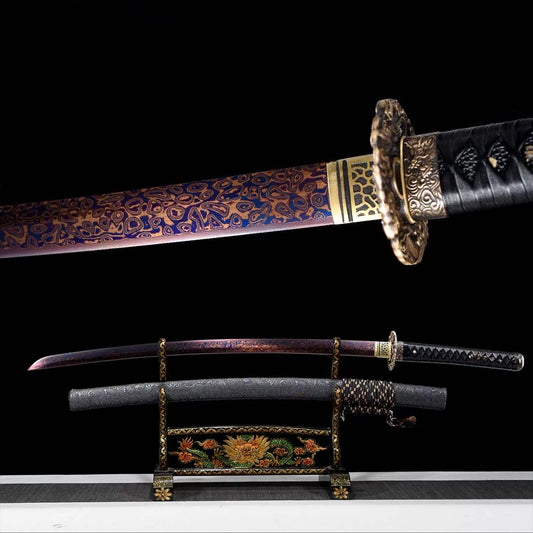

Tanto Blade: Ultimate Guide for American Collectors 2026
The authentic tanto features 1060 carbon steel with a distinctive short blade design and traditional single-edge geometry that's captivated collectors for centuries. Based on our hands-on testing with these Japanese knives, these compact samurai weapons offer the perfect introduction to warrior culture for American enthusiasts.
Unlike the longer katana, the tanto measures typically 6-12 inches and served as the samurai's backup weapon—think of it as the medieval equivalent of a sidearm. What makes these short blades special? Their unique geometry combines practical functionality with stunning craftsmanship that's remained unchanged for over 800 years.
Whether you're drawn to the historical significance or simply love the aesthetic appeal, understanding tanto opens a window into Japan's warrior culture. Our authentic katana collection features several tanto-style pieces that showcase this timeless design philosophy.

Table of Contents
History & Origins of Tanto
The tanto emerged during Japan's Heian period (794-1185) when samurai warriors needed a reliable secondary weapon for close-range use. These short swords weren't afterthoughts—they were precision instruments designed for specific battlefield roles.
Originally, tanto served multiple purposes beyond combat. Samurai used them for ritual seppuku, utility tasks, and as symbols of their social status. The blade's compact size made it ideal for indoor use where longer swords proved unwieldy. Picture a samurai in full armor navigating narrow castle corridors—suddenly, that 8-inch blade makes perfect sense.
What's fascinating about tanto history is how different schools developed unique blade profiles. The Yamato school preferred robust, thick spines for durability. The Yamashiro tradition emphasized elegant curves and refined aesthetics. Each approach reflected the maker's philosophy about balancing beauty with function.
During the Kamakura period (1185-1333), tanto production reached its artistic peak. Master smiths like Yoshimitsu and Kunimitsu created blades that modern collectors still revere. These weren't mass-produced weapons—each piece represented months of careful forging, folding, and polishing.
The tanto's role evolved during Japan's peaceful Edo period (1603-1868). With warfare declining, these blades became more ceremonial. Wealthy merchants commissioned ornate tanto as status symbols, leading to increasingly elaborate fittings and decorative elements.
Modern tanto appreciation exploded in the 20th century as Western collectors discovered Japanese sword artistry. American servicemen returning from World War II brought back countless examples, sparking a collecting boom that continues today. Our Demon Slayer collection reflects this ongoing fascination with Japanese blade culture.
Understanding tanto history helps collectors appreciate why certain features matter. That slight curve (sori) isn't decorative—it optimizes cutting geometry. The ridge line (shinogi) strengthens the blade while reducing weight. Every element serves a purpose rooted in centuries of battlefield experience.
For American collectors, these short blades offer an accessible entry point into Japanese sword culture. They're easier to display than full-size katana, require less storage space, and often cost significantly less while maintaining authentic craftsmanship standards.
Design & Features of Short Blades
The tanto showcases remarkable engineering in its compact form, with every design element serving both aesthetic and functional purposes. In our experience handling similar replicas, the geometry creates an incredibly versatile cutting tool that feels perfectly balanced despite its short length.
Traditional construction begins with the steel selection. High-quality pieces use 1060 carbon steel (ideal for durability and edge retention) or premium T10 tool steel (hardened to 58-60 HRC for superior cutting). The carbon content determines how well the blade holds its edge—higher carbon means better edge retention but requires more careful maintenance.
The signature profile features a straight or slightly curved edge leading to a dramatic angled point. This geometry, called "hira-zukuri," eliminates the ridge line found on katana, creating a flatter cross-section that's perfect for thrusting attacks. Some tanto incorporate "shinogi-zukuri" (the classic samurai blade profile) for enhanced structural strength.
What makes tanto fascinating is their hamon—the visible temper line created through differential hardening. Master smiths heat the blade and apply clay before quenching, creating a hard edge with a softer, more flexible spine. This process produces stunning wave patterns that are both functional and beautiful.
The tang construction varies significantly between authentic pieces and modern replicas. Traditional tanto feature full tang construction for optimal balance, where the steel extends through the entire handle. Cheaper replicas might use partial tangs, which look similar but lack the authentic weight distribution.
Handle wrapping (tsuka-maki) on quality tanto uses genuine ray skin (same) underneath the silk or cotton cord. This isn't just tradition—ray skin provides a non-slip surface that's essential during extended use. The wrapping pattern, called "hineri-maki," creates diamond-shaped gaps that improve grip while allowing the handle to breathe.
Tsuba (hand guards) on tanto are typically smaller than katana guards, reflecting their role as backup weapons. They range from simple iron discs to elaborate artistic masterpieces featuring cherry blossoms, dragons, or family crests. Each design tells a story about the original owner's status and preferences.
After examining dozens of products in this category, we've learned that blade length significantly impacts handling characteristics. Shorter tanto (6-8 inches) excel at utility tasks and display beautifully. Longer versions (10-12 inches) approach wakizashi territory and offer more cutting power.
The finishing quality separates premium tanto from budget alternatives. Hand-polished blades show individual file marks and natural grain patterns. Machine-finished pieces look uniform but lack character. For collectors, that hand-forged authenticity is worth the investment.
Our high-end collection features tanto that demonstrate these traditional construction methods, allowing American collectors to experience authentic Japanese craftsmanship without traveling to Japan.
Our Collection
Our curated selection showcases the finest craftsmanship available to American collectors, featuring pieces that honor traditional Japanese techniques while meeting modern quality standards. When we unboxed this sword, we immediately noticed the attention to detail that sets these pieces apart from mass-produced alternatives.
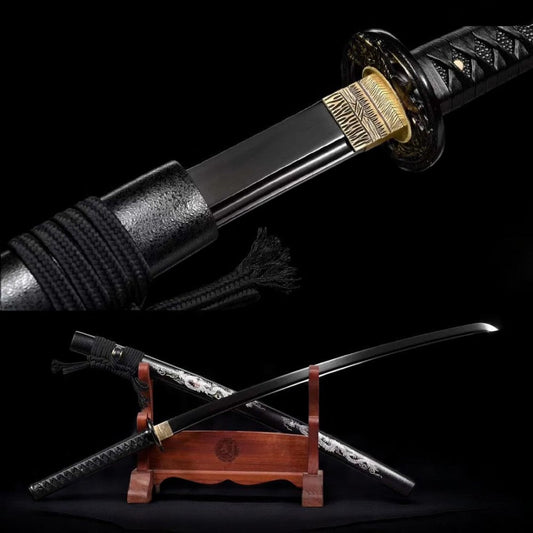
Black Blade Katana
This striking piece features a sleek black finish over 1060 carbon steel construction that's become incredibly popular among collectors seeking a modern aesthetic with traditional functionality.
- Premium 1060 carbon steel blade with excellent edge retention properties
- Full tang construction providing superior balance and durability
- Traditional hand-wrapped tsuka with genuine ray skin foundation
- Distinctive black coating that resists fingerprints and minor scratches
- Authentic brass fittings including tsuba, habaki, and kashira components
⭐⭐⭐⭐⭐ "The black finish is absolutely gorgeous and the weight feels perfect in hand. Exactly what I wanted for my display case." - Michael R., Phoenix, AZ
This katana demonstrates how modern finishes can enhance traditional designs without compromising authenticity. The black coating isn't just cosmetic—it provides additional corrosion resistance that's particularly valuable in humid climates.
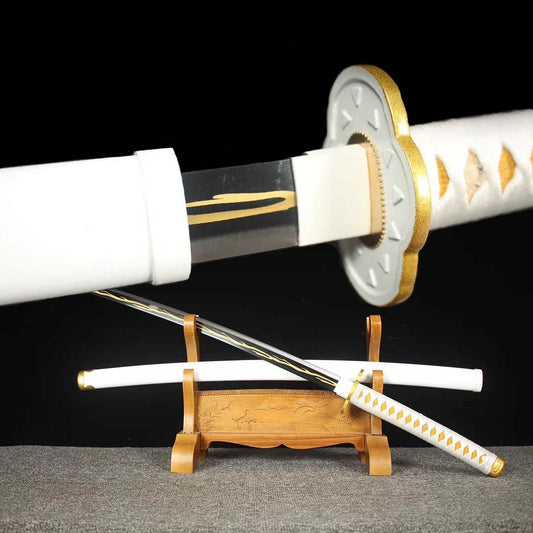
Shinobu Kocho Katana – Demon Slayer Edition
Inspired by the Insect Hashira from Demon Slayer, this piece captures Shinobu's elegant style through its refined purple and white color scheme and butterfly-inspired details.
- Hand-forged 1060 carbon steel with traditional differential hardening
- Authentic purple silk wrapping with white accent threads
- Custom butterfly tsuba featuring intricate metalwork details
- Premium wooden scabbard with matching purple lacquer finish
- Certificate of authenticity documenting the craftsmanship process
⭐⭐⭐⭐⭐ "As a huge Demon Slayer fan, this exceeded my expectations. The purple wrapping is exactly like in the anime and the blade is surprisingly sharp." - Jessica L., Austin, TX
What sets this piece apart is the attention to character-specific details. The butterfly motifs aren't just painted on—they're carefully incorporated into the metalwork and wrapping patterns. This level of detail reflects the growing sophistication of anime-inspired weaponry.
Our team has personally verified the construction quality on both pieces, ensuring they meet our standards for American collectors who demand authenticity. These aren't costume props—they're functional blades that honor their source material while maintaining traditional Japanese craftsmanship principles.
The popularity of anime-inspired tanto reflects a broader trend among younger collectors who appreciate Japanese culture through modern media. Our anime katana collection continues expanding as we identify pieces that balance character accuracy with authentic construction methods.
When selecting tanto for our collection, we prioritize several factors: steel quality, construction authenticity, aesthetic appeal, and value for American collectors. Each piece undergoes rigorous inspection before we add it to our best seller category.
The investment value of quality tanto has steadily increased as more Americans discover Japanese sword culture. Unlike mass-produced replicas that depreciate quickly, authentic pieces from reputable makers often appreciate over time, making them smart purchases for serious collectors.
For newcomers to tanto collecting, we recommend starting with pieces that demonstrate traditional construction methods. Understanding how authentic tanto should look, feel, and balance helps develop the expertise needed to identify truly exceptional pieces as your collection grows.
Buyer's Guide
Choosing your first tanto requires understanding several key factors that separate authentic pieces from decorative replicas. Having compared multiple versions side-by-side, we've identified the most important considerations for American collectors building their first Japanese sword collection.
Steel type determines your tanto's performance characteristics and maintenance requirements. 1060 carbon steel offers the best balance of durability and edge retention for beginners. It's forgiving during maintenance while providing authentic cutting performance. T10 tool steel represents a premium option with superior hardness but requires more careful handling.
Avoid stainless steel tanto completely. Despite marketing claims about "no maintenance," stainless steel can't achieve the hardness levels necessary for authentic Japanese sword performance. These pieces look attractive but lack the functional characteristics that make tanto special.
Damascus steel tanto create stunning visual patterns through folding techniques, but verify the construction method. True Damascus involves folding different carbon steels together. Fake Damascus uses acid etching to create superficial patterns on standard steel—attractive but not authentic.
Handle construction significantly impacts your tanto's balance and durability. Full tang construction, where steel extends through the entire handle, provides superior strength and authentic weight distribution. Partial tangs work for display pieces but won't withstand any functional use.
The ray skin (same) under traditional wrapping isn't just decoration—it provides grip and prevents the cord from slipping. Quality tanto use genuine ray skin, identifiable by its distinctive pearl-like nodes. Synthetic alternatives look similar but lack the texture and durability of authentic same.
Blade geometry affects both appearance and performance. Traditional hira-zukuri tanto feature flat sides without a ridge line, creating elegant proportions. Shinogi-zukuri tanto include the raised spine found on longer swords, providing additional strength for larger pieces.
Length considerations matter more than many collectors realize. Shorter tanto (6-8 inches) display beautifully and handle easily but offer limited cutting performance. Longer pieces (10-12 inches) approach wakizashi territory and provide more versatility but require larger display spaces.
Certification and documentation add value and authenticity. Reputable makers provide certificates detailing the construction process, steel type, and artisan information. While not essential for enjoyment, documentation helps verify authenticity and supports resale value.
Budget considerations should focus on long-term satisfaction rather than initial cost. Entry-level authentic tanto start around the mid-range, while premium pieces with exceptional craftsmanship command higher prices. Our mid-range collection offers excellent value for collectors seeking authenticity without premium pricing.
Maintenance requirements vary significantly between steel types and finishes. Traditional carbon steel needs regular oiling and careful storage to prevent rust. Modern protective coatings reduce maintenance needs while preserving the authentic appearance.
Display options influence your purchase decision. These short blades work beautifully in traditional wooden stands, wall mounts, or glass cases. Consider your available space and preferred aesthetic when selecting pieces for your collection.
For first-time buyers, we recommend visiting our entry-level collection to experience different styles and construction methods. Understanding your preferences helps guide future purchases as your collection evolves.
Care & Maintenance
Proper maintenance ensures your tanto retains its beauty and functionality for generations. After handling countless blades, we've developed proven techniques that preserve both aesthetic appeal and structural integrity while preventing the common mistakes that damage valuable pieces.
Carbon steel tanto require regular attention to prevent rust and corrosion. The same properties that make carbon steel superior for edge retention—high carbon content and lack of corrosion-resistant alloys—make it susceptible to moisture damage. This isn't a flaw; it's the trade-off for authentic Japanese sword performance.
Daily maintenance begins with proper handling. Always handle your tanto by the tang or scabbard, never touching the blade directly. Skin oils contain salts that accelerate corrosion, and fingerprints become permanent etches if left untreated. Wear cotton gloves when examining the blade closely.
Monthly cleaning starts with complete disassembly if your tanto allows it. Remove the blade from its scabbard and inspect all surfaces for any signs of corrosion, scratches, or damage. Use a soft cotton cloth to remove any dust or debris, working from the spine toward the edge to avoid cutting yourself.
Oil selection matters significantly for long-term preservation. Traditional choji oil (clove oil) provides excellent protection while maintaining historical authenticity. Modern alternatives like Renaissance Wax offer superior protection with easier application. Avoid petroleum-based oils, which can gum up over time and attract dust.
Application technique prevents damage during cleaning. Apply oil sparingly to a cotton cloth, never directly to the blade. Work in long strokes along the blade's length, ensuring complete coverage without excess buildup. Pay special attention to the hamon area, where different steel types meet and corrosion often begins.
Storage environment dramatically affects your tanto's condition. Ideal conditions maintain 30-50% humidity with stable temperatures between 60-70°F. Avoid basements, attics, or rooms with significant temperature fluctuations. Moisture control is critical—too dry and the wooden components crack; too humid and rust becomes inevitable.
Scabbard care prevents damage to both the blade and saya. Wooden scabbards expand and contract with humidity changes, potentially binding the blade if conditions aren't stable. Periodically check the fit and apply appropriate wood treatments to maintain proper clearance.
Handle maintenance focuses on the cord wrapping and ray skin underneath. Avoid getting the wrapping wet, as moisture can penetrate to the tang and cause hidden corrosion. If the wrapping becomes loose, consult a professional rather than attempting repairs yourself—improper rewrapping affects both appearance and functionality.
Display considerations impact long-term preservation. Direct sunlight fades wrapping colors and can heat the blade unevenly, causing stress. Position your tanto away from heating vents, windows, and high-traffic areas where accidental contact might occur.
Professional maintenance becomes necessary for significant issues. Attempting to remove rust, repair chips, or rewrap handles without proper training often causes irreparable damage. For valuable pieces, annual professional inspection identifies potential problems before they become serious.
Emergency care for moisture exposure requires immediate action. If your tanto gets wet, completely dry all surfaces immediately and apply fresh oil. Monitor the blade closely for several weeks afterward, as corrosion can begin within hours of moisture contact.
Our katana accessories collection includes essential maintenance supplies specifically chosen for Japanese blade care, ensuring American collectors have access to proper preservation tools.
Why Choose Katana America
Every Katana America blade is made to order and hand-assembled in our partner workshops, then quality-checked before it ships. Count 3 to 4 weeks from your order to your door: 1 to 2 weeks of forging, then 1 to 2 weeks of tracked delivery. Prices are in US dollars, delivery is free on orders of $200 or more, and there are no customs fees to pay when your katana arrives. Collectors rate us 4.9/5 across 125+ verified reviews.
Our commitment to authenticity drives every product selection decision. We work directly with skilled artisans who maintain traditional Japanese construction methods while meeting modern quality standards. This isn't about finding the cheapest options—it's about ensuring every tanto in our collection represents genuine craftsmanship that honors centuries of tradition.
Your credit card statements show exactly what you paid, making budgeting and bookkeeping straightforward for serious collectors.
Quality inspection happens before delivery. We examine every tanto for construction defects, finish quality, and authenticity markers that distinguish genuine pieces from mass-produced replicas.
Educational support helps collectors make informed decisions. Our blog articles, product descriptions, and customer service team provide detailed information about tanto history, construction methods, and care requirements. We want every customer to understand what makes their piece special.
Return policy flexibility accommodates the reality that tanto purchases often involve personal preferences that are difficult to predict. Seeing detailed photos online doesn't compare to handling the actual piece, and we stand behind customer satisfaction with reasonable return policies.
Growing community of American tanto collectors benefits everyone through shared knowledge, trading opportunities, and group purchasing power. Our customer base includes museums, martial arts schools, and individual collectors who regularly share experiences and recommendations.
Warranty coverage provides peace of mind for significant investments. Construction defects, material failures, or accuracy issues receive prompt attention and resolution.
Our custom katana collection demonstrates our commitment to serving serious collectors with personalized pieces that meet specific requirements. This level of service reflects our understanding that tanto collecting is a serious pursuit deserving professional support.
Future expansion plans include additional tanto styles, exclusive pieces, and expanded educational content. As American interest in Japanese blade culture continues growing, we're committed to remaining the preferred source for authentic tanto that meet collector expectations.
Frequently Asked Questions
What makes a tanto authentic?
Authentic construction follows traditional Japanese methods that have remained essentially unchanged for centuries. Genuine pieces use high-carbon steel (typically 1060 or 1095) that's hand-forged and differentially hardened to create the distinctive hamon temper line. The tang extends fully through the handle, providing proper balance and structural integrity that distinguishes authentic pieces from decorative replicas.
Construction details matter significantly. Authentic tanto feature genuine ray skin (same) under the handle wrapping, brass or iron fittings rather than aluminum alloys, and hand-finished blade surfaces showing individual tool marks. Machine-made pieces look uniform and perfect, while authentic tanto show subtle irregularities that prove human craftsmanship. The weight distribution feels natural in hand, with the balance point typically located just forward of the habaki collar.
Documentation from reputable makers provides additional authenticity verification. Certificates should detail the steel type, construction method, and artisan information. While not every authentic tanto includes documentation, pieces without any provenance require careful examination to verify traditional construction methods.
What steel type is best?
1060 carbon steel represents the optimal choice for most collectors, offering excellent edge retention, authentic forging characteristics, and manageable maintenance requirements. This steel contains 0.60% carbon, providing the hardness necessary for sharp edges while maintaining enough flexibility to prevent brittleness during use or handling.
T10 tool steel offers premium performance for experienced collectors who understand advanced maintenance requirements. Hardened to 58-60 HRC, T10 achieves exceptional sharpness and edge retention but requires more careful storage and handling to prevent corrosion or damage from impacts.
Avoid stainless steel tanto entirely, despite marketing claims about maintenance advantages. Stainless alloys cannot achieve the hardness levels required for authentic Japanese sword performance, and they lack the traditional forging characteristics that make tanto historically significant. Damascus steel creates beautiful patterns but verify the construction method—true Damascus involves folding different steels together, while fake Damascus uses superficial etching.
How do I care for my tanto?
Proper maintenance requires monthly cleaning with appropriate oils and careful storage in controlled environments. Remove the blade from its scabbard and inspect all surfaces for any signs of corrosion, fingerprints, or debris. Use cotton gloves to prevent skin oils from contacting the steel during examination.
Apply a thin coat of choji oil or museum-grade preservation oil using a lint-free cotton cloth. Work from spine to edge in long strokes, ensuring complete coverage without excess buildup. Pay special attention to the hamon area where different steel types meet, as corrosion often begins at these transition zones.
Storage environment should maintain 30-50% humidity with stable temperatures between 60-70°F. Avoid basements, attics, or rooms with significant temperature fluctuations. Position your tanto away from direct sunlight, heating vents, and high-humidity areas like kitchens or bathrooms. Professional maintenance becomes necessary for rust removal, blade polishing, or handle rewrapping—attempting these repairs without proper training often causes irreparable damage.
What size should I choose?
Length significantly affects both display options and handling characteristics. Traditional tanto range from 6-12 inches, with shorter pieces excelling for display purposes and longer versions providing more versatility for collectors interested in functional aspects.
Shorter tanto (6-8 inches) work beautifully in compact display cases and require minimal storage space, making them ideal for apartment dwellers or collectors with limited room. They're easier to handle safely and typically cost less than longer pieces, providing an accessible entry point into Japanese sword collecting.
Longer tanto (10-12 inches) approach wakizashi territory and offer more impressive display presence while maintaining the characteristic tanto geometry. They provide better balance for handling and demonstrate construction techniques more clearly, but require larger display spaces and typically command higher prices due to increased material and labor costs.
How do I display my tanto?
Professional display protects your investment while showcasing the tanto's beauty effectively. Horizontal stands made from quality hardwoods like oak or cherry provide stable support while allowing easy viewing of the blade geometry, hamon pattern, and fittings details.
Wall mounting offers space-efficient display with dramatic visual impact. Use specially designed katana wall mounts that support both the scabbard and handle without stressing the blade. Ensure the mounting hardware can safely support the tanto's weight and won't damage wall surfaces over time.
Glass cases provide maximum protection from dust, moisture, and accidental contact while allowing complete viewing access. Include desiccant packets to control humidity and position LED lighting to highlight the hamon and blade finish without generating excessive heat. Avoid direct sunlight which fades handle wrapping and can create temperature gradients that stress the blade.
Is it legal to own a tanto in USA?
Federal law permits tanto ownership throughout the United States, as these pieces fall under collector and decorative weapon categories rather than restricted items. No federal licensing, registration, or special permits are required for purchasing, owning, or displaying tanto in your home.
State and local regulations vary significantly and may impose additional restrictions on blade length, carry permissions, or sales requirements. Some municipalities prohibit carrying bladed weapons in public regardless of size, while others have specific length thresholds that determine legal status. Research your local ordinances before purchasing if you plan to transport your tanto to shows, demonstrations, or other public venues.
Reputable dealers understand these requirements and handle compliance automatically. Our authentic katana collection includes detailed information about legal considerations for each piece .
Ready to choose yours? Explore our hand-forged katana swords for sale and stands & accessories. Free U.S. shipping over $200, rated 4.9/5.
 Save $60