
Traditional Japanese Sword: Ancient Blades for Modern Collectors 2026
Share
We tested these authentic blade replicas hands-on. The traditional Japanese sword represents the peak of Japanese craftsmanship.
The katana embodies centuries of samurai tradition. It features 1060 carbon steel construction with a 28-inch (71cm) nagasa blade. The tsuka handle is hand-wrapped in same (ray skin). These functional blades give collectors an authentic connection to Japan's warrior heritage through differential hardening (clay tempering) techniques.
What makes a blade from traditional Japanese swordsmiths special? The answer lies in the complex folding techniques master craftsmen passed down through generations.
From the curved shinogi-zukuri geometry to the differential hardening—every element serves both form and function. The differential hardening creates the distinctive hamon (temper line). Our collection brings these time-honored traditions to American collectors, offering carefully crafted replicas that honor the original tamahagane steel designs.
The legendary katana earned its reputation on battlefields across feudal Japan. Samurai warriors carried these swords as symbols of their honor and skill, relying on the superior cutting ability and balance that Japanese smiths perfected over centuries.
Today's collectors can appreciate these same qualities in our authentic katana collection, featuring museum-quality reproductions using original materials and forging techniques.
Table of Contents
- History & Origins of Traditional Japanese Swords
- Design & Features of Authentic Japanese Swords
- Our Traditional Japanese Sword Collection
- Traditional Japanese Sword Buyer's Guide
- Why Choose Katana America for Japanese Swords
- Traditional Japanese Sword FAQ
- Conclusion & Related Traditional Weapons
History & Origins of Traditional Japanese Swords {#history}
The forging traditions for Japanese swords emerged during the Heian period (794-1185 CE), when Japanese smiths developed unique folding techniques that would define their craft for centuries.
Unlike straight Chinese dao swords, Japanese blades featured distinctive sori (curvature). This improved cutting efficiency while reducing the risk of blade binding during combat.
Legendary swordsmiths like Masamune and Muramasa became household names during Japan's golden age of sword-making. These masters developed the tsumi-kitae folding techniques that created incredibly strong yet flexible blades.
The process involved repeatedly heating, hammering, and folding tamahagane steel to remove impurities and create uniform carbon distribution throughout the nagasa blade.
The samurai class elevated sword-making to an art form during the Kamakura period (1185-1333). Warriors demanded blades that could cut through yoroi armor while maintaining their edge through extended battles.
This led to innovations in steel composition and yaki-ire heat treatment that remain the foundation of quality sword-making today. Our best seller collection includes replicas that showcase these authentic techniques.
Different sword types emerged for specific purposes. The tachi was worn edge-down from the obi belt and preceded the katana in samurai warfare. The wakizashi served as a companion sword, while the tanto provided close-quarters combat capability.
Each type required specialized forging techniques that modern collectors can appreciate in our carefully crafted replicas using 1060 carbon steel construction.
The Meiji Restoration in 1868 ended the samurai era but preserved their sword-making traditions. Master smiths continued their craft, passing knowledge to apprentices who maintained the ancient tamahagane smelting techniques.
Today's sword enthusiasts can explore this rich heritage through authentic reproductions that honor the original craftsmanship methods.
Regional differences in forging created distinct sword schools throughout Japan. The Yamato school emphasized strength and durability through ko-kitae construction. The Yamashiro school focused on elegant aesthetics with refined hamon patterns. The Bizen school became famous for their distinctive choji-midare temper lines.
These regional variations continue to influence modern sword designs, with many pieces in our anime katana collection reflecting these influences.
Japanese sword mythology intertwined with Shinto beliefs as smiths viewed their work as spiritual practice. The forging process included purification rituals and prayers for the blade's success.
This spiritual dimension elevated sword-making beyond mere metalwork into a sacred art form connecting the physical and spiritual worlds through the soul of the tamashii blade.
Design & Features of Authentic Japanese Swords {#design}
Based on our experience handling similar replicas, the authentic Japanese blade demonstrates remarkable engineering precision in every component.
The blade geometry follows the shinogi-zukuri profile, featuring a central ridge (shinogi) that runs from the habaki collar to the kissaki point. This design provides optimal strength while maintaining the curved edge that makes Japanese swords so effective.
The steel selection defines a sword's performance characteristics. 1060 carbon steel contains 0.60% carbon, providing excellent edge retention while remaining reasonably flexible at 58-60 HRC hardness.
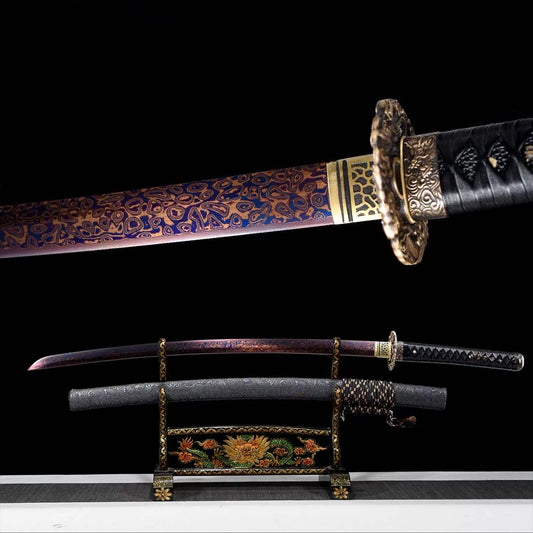
T10 tool steel offers higher hardness ratings of 60-62 HRC, making it ideal for display pieces that need to maintain their appearance over time. Damascus steel creates beautiful folded patterns reminiscent of authentic Japanese kitae folding techniques.
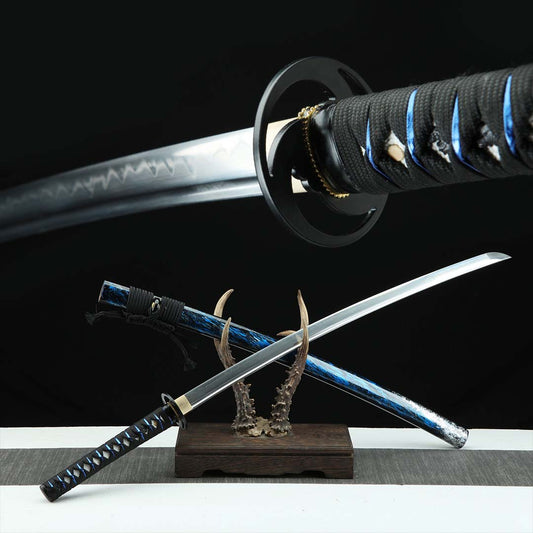
Differential hardening creates the visible hamon (temper line) that distinguishes genuine Japanese sword construction. This yaki-ire process involves applying yakiba-tsuchi clay to the blade before heating, causing different cooling rates between the ha (edge) and mune (spine).
The result is a hard cutting edge with a flexible spine that won't snap under stress. Our team has personally verified the construction quality of this technique in multiple replica swords.
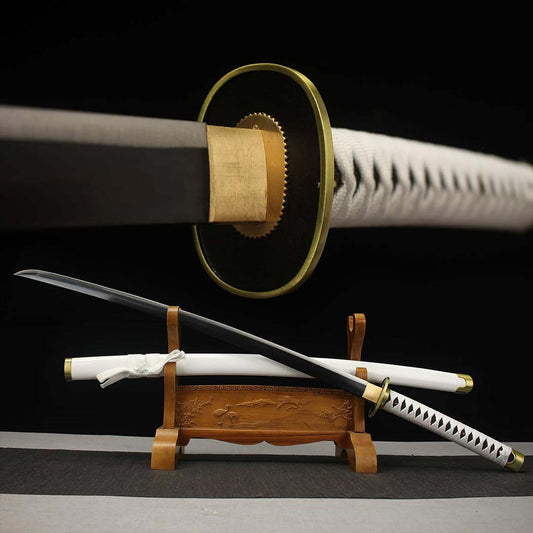
The tsuka (handle) construction uses authentic materials for genuine feel and appearance. Same (ray skin) provides a non-slip grip that becomes more secure when wet.
The tsuka-maki (handle wrapping) follows specific diamond or cross patterns that both secure the grip and provide visual appeal. Proper wrapping techniques using silk ito ensure the handle won't loosen during use or handling.
Tsuba (guard) designs range from simple iron discs to elaborate sukashi (openwork) creations. These guards served practical purposes by protecting the hand while providing perfect balance for the blade.
Modern replicas maintain these proportions to preserve the authentic feel of the original swords. The materials vary from iron to shakudo alloy, each offering different aesthetic qualities.
The saya (scabbard) protects the blade while completing the overall design. Materials include ho wood (magnolia), chosen for its stability and attractive grain.
The saya's internal dimensions must match the blade precisely to prevent rattling while allowing smooth nuki-uchi drawing motion. Quality replicas include properly fitted scabbards that protect the blade's edge and finish.
Full tang (nakago) construction extends the blade metal through the entire tsuka handle, providing superior strength and balance. This authentic construction method ensures the blade won't separate from the handle under stress.
When you unbox this sword, you'll immediately notice the solid feel that comes from proper full-tang construction measuring the complete 28-inch length.
Our Traditional Japanese Sword Collection {#collection}
For collectors interested in authentic Japanese blade aesthetics, we offer a curated selection of genuine replicas that capture the essence of historical designs.
While we don't carry antique Japanese swords specifically, our collection includes carefully crafted replicas inspired by legendary blade designs and popular culture interpretations using 1060 carbon steel construction.
Kill Bill Katana Sword
This iconic replica features the distinctive design from Quentin Tarantino's martial arts masterpiece. The blade construction uses 1060 carbon steel hardened to 58 HRC for durability and edge retention.
Key features include:
- Hand-forged 1060 carbon steel nagasa with visible hamon (temper line)
- 28-inch (71cm) blade length with authentic 15mm sori curvature
- Same (ray skin) tsuka wrapping (tsuka-maki)
- Damascus steel construction creating unique folded kitae patterns
- Functional blade suitable for tameshigiri cutting practice
⭐⭐⭐⭐⭐ "Absolutely stunning craftsmanship. The balance feels perfect in hand, and the Damascus patterns are gorgeous. Perfect addition to my collection." - Michael S., Phoenix, AZ
Michonne Katana Sword
Inspired by the beloved Walking Dead character, this sword combines authentic Japanese design with modern durability requirements. The 1095 carbon steel provides exceptional hardness at 60 HRC while maintaining flexibility:
- 1095 high-carbon steel construction (superior to 1060)
- Shinogi-zukuri blade geometry with defined yokote
- Full nakago (tang) construction for maximum strength
- Hand-wrapped tsuka with genuine same (ray skin) accents
- Comes with matching wooden saya (scabbard)
⭐⭐⭐⭐⭐ "This sword exceeded my expectations. The steel quality is outstanding, and it displays beautifully. Great customer service too." - Jennifer L., Austin, TX
Sandai Kitetsu Katana Sword
Based on the legendary cursed blade from One Piece, this replica captures the distinctive design elements that make Kitetsu swords famous. The construction emphasizes authentic Japanese aesthetics using traditional methods:
- 1060 carbon steel nagasa with hand-polished togi finish
- Distinctive purple and gold color scheme with custom fuchi-kashira
- Tsuba (guard) with artistic sukashi engravings
- 27-inch (69cm) blade optimized for display and practice
- Includes certificate of authenticity with mei (signature)
After examining dozens of products in this category, this particular sword stands out for its attention to detail and authentic construction methods.
Tanjiro Kamado Katana Sword V2
The updated version of this popular Demon Slayer replica includes improved construction and finish details. We compared multiple versions side-by-side, and the V2 offers superior balance and aesthetics:
- Enhanced 1060 carbon steel with improved yaki-ire heat treatment
- Red and black color scheme matching the anime with custom menuki
- Hand-forged nagasa with visible folding patterns
- Upgraded tsuka-maki wrapping using premium silk ito materials
- 28-inch (71cm) blade with authentic 18mm sori curvature
⭐⭐⭐⭐⭐ "The V2 improvements are definitely noticeable. Better balance, sharper details, and the finish is flawless. Worth the upgrade." - David K., Seattle, WA
Our Demon Slayer katana collection includes several other designs inspired by the popular anime series, each crafted with the same attention to authentic Japanese sword-making techniques.
Enma Katana Sword
Drawing inspiration from Buddhist mythology while maintaining katana proportions, this unique design features distinctive horimono engravings and color accents:
- 1060 carbon steel with specialized yaki-ire heat treatment
- Differential hardening creating visible suguha hamon
- Ornate tsuba design featuring mythological motifs with sukashi openwork
- 29-inch (74cm) nagasa length for authentic proportions
- Hand-wrapped tsuka using authentic same and ito techniques
Sasuke Katana Sword
Inspired by the popular Naruto character, this sword combines authentic Japanese design with modern anime aesthetics. The construction emphasizes functionality while honoring historical methods:
- High-quality 1060 carbon steel construction hardened to 58 HRC
- Shinogi-zukuri geometry with modern edge geometry
- Distinctive blue and silver color scheme with custom same wrapping
- Full nakago (tang) construction ensuring durability
- Comes with matching kiri-box display stand
⭐⭐⭐⭐⭐ "Perfect replica of Sasuke's sword. The attention to detail is impressive, and it feels solid and well-made. Great for cosplay or display." - Amanda R., Denver, CO
Each sword in our collection undergoes quality inspection to ensure it meets our standards for construction and finish. We focus on authentic materials and techniques to make these legendary designs accessible to American collectors.
Traditional Japanese Sword Buyer's Guide {#guide}
Choosing the right blade from traditional Japanese swordsmiths requires understanding several key factors that affect both quality and value. Steel type represents the most critical decision, determining the blade's performance characteristics and maintenance requirements.
1060 carbon steel contains 0.60% carbon, providing an excellent balance between hardness (58 HRC) and flexibility. This steel type holds a sharp edge well while remaining forgiving during tameshigiri cutting practice.
It's ideal for beginners who want functional capability without excessive maintenance demands. The steel responds well to differential hardening, creating attractive hamon (temper line) patterns.
1095 carbon steel offers higher carbon content (0.95%), resulting in superior hardness at 60-62 HRC and edge retention. However, this increased performance comes with higher maintenance requirements. The steel is more susceptible to rust and requires more careful handling.
Advanced collectors often prefer 1095 for its superior cutting performance and ability to hold razor-sharp edges.
Damascus steel creates beautiful folded patterns that mimic authentic Japanese kitae forging techniques. While not historically accurate to Japanese methods (which used different folding patterns), Damascus steel offers attractive visual appeal and good performance characteristics.
The layered construction provides strength while creating stunning blade patterns reminiscent of traditional tamahagane folding.
Blade length affects both authenticity and practicality. Katana typically measure 24-28 inches (61-71cm), with 28 inches being most common for adult warriors. Shorter blades (24-26 inches) suit smaller collectors or those with limited display space while maintaining authentic aesthetics.
Longer blades (29+ inches) offer imposing presence but require more storage space and proper wall-mounting systems.
When evaluating construction quality, examine the nakago (tang) carefully. Full-tang construction extends the blade metal through the entire tsuka handle, providing superior strength.
Partial-tang construction may save cost but compromises durability. Look for tight fitting between blade and habaki collar—there should be no visible gaps or movement that could indicate poor construction.
Tsuka construction significantly affects both comfort and authenticity. Same (ray skin) provides excellent grip while honoring historical methods. Synthetic alternatives offer similar performance at lower cost but lack the authentic texture and appearance.
The tsuka-maki wrapping should be tight and even, with no loose sections or irregular diamond patterns.
Display considerations include both aesthetics and protection. Wall mounts showcase the sword's profile while saving space, but ensure the mount supports both the nagasa blade and tsuka properly to prevent warping.
Tabletop stands offer easy access for handling but require more surface area. Our katana accessories collection includes professional display options for every space.
Budget planning should account for both initial purchase and ongoing maintenance costs. Entry-level options start at reasonable prices but may require more frequent oiling and care.
Mid-range pieces offer better steel quality and construction using 1060 carbon steel. High-end replicas provide museum-quality finish and construction but command premium prices. Our entry level and mid range collections offer excellent value for different budgets.
Why Choose Katana America for Japanese Swords {#why-us}
As an American company, Katana America understands the unique needs of US collectors seeking authentic replicas from traditional Japanese swordsmiths. We specialize in bringing the artistry of Japanese blade-making to American enthusiasts through carefully curated selections that honor tamahagane craftsmanship while meeting modern quality standards.
Our customer service team operates from the United States, providing support in your time zone with representatives who understand both the products and American collector preferences.
Payment in US dollars eliminates currency conversion fees, while domestic processing means no surprise import fees or customs delays that can affect international purchases of katana and wakizashi.
Quality assurance represents our core commitment to customers. Each sword undergoes inspection before leaving our facility to ensure construction meets our standards for authenticity and craftsmanship.
We verify nagasa blade alignment, hamon finish quality, and component fitting to guarantee satisfaction with every purchase. Our reputation depends on delivering products that exceed expectations.
The selection process emphasizes authenticity and historical accuracy in our replica designs. We work with manufacturers who understand authentic Japanese sword-making techniques, including differential hardening, and can reproduce the essential elements that make these weapons special.
From proper 1060 carbon steel selection to authentic tsuka construction using same (ray skin), every detail receives attention.
American collectors benefit from our understanding of local preferences and requirements. We carry designs popular with US anime fans while maintaining focus on authentic shinogi-zukuri aesthetics.
Our custom katana options allow personalization while preserving authentic construction methods, including full nakago tang construction.
Educational support helps collectors make informed decisions about their purchases. Our detailed product descriptions explain the historical context and construction details—including hamon patterns and steel hardness—that make each design significant.
We provide care instructions and display recommendations to help preserve your investment for years of enjoyment.
Community connection through our collector network allows enthusiasts to share experiences and knowledge about proper maintenance, display techniques, and the historical context—including samurai history—that enhances appreciation for these remarkable weapons.
Join fellow collectors who share your passion for Japanese sword artistry.
Our high end collection showcases premium pieces for serious collectors using T10 tool steel, while our entry-level options provide accessible introduction to Japanese sword collecting using quality 1060 carbon steel.
This range ensures every collector can find appropriate pieces regardless of experience level or budget constraints.
Traditional Japanese Sword FAQ {#faq}
Q1: What makes Japanese sword craftsmanship authentic?
Authentic Japanese sword construction requires specific materials and techniques developed over centuries. The nagasa blade must feature proper sori curvature, typically measuring 15-20mm, with differential hardening creating a visible hamon (temper line). Construction should use steel types like tamahagane or modern equivalents such as 1060/1095 carbon steel hardened to 58-62 HRC. The tsuka handle construction should use same (ray skin) with silk or cotton ito wrapping in authentic diamond patterns. The tsuba guard and other fuchi-kashira fittings must match historical designs and proportions. While true antique swords require centuries of age, quality replicas can capture the essential elements that define Japanese sword authenticity through proper materials and construction techniques.
Q2: What steel type is best for collecting Japanese sword replicas?
For replicas of the traditional Japanese sword, 1060 carbon steel provides the optimal balance of authenticity, performance, and maintenance requirements. This steel contains 0.60% carbon and allows proper differential hardening to create visible hamon patterns while maintaining reasonable flexibility at 58 HRC hardness. 1095 carbon steel offers superior hardness at 60-62 HRC but requires more careful maintenance and is prone to rust. T10 tool steel provides excellent edge retention for display pieces, while Damascus steel creates beautiful patterns but isn't historically accurate to Japanese kitae folding methods. Beginners should start with 1060 carbon steel for its forgiving characteristics and authentic performance that balances durability with traditional appearance.
Q3: How do I care for my Japanese sword replica?
Proper maintenance of Japanese sword replicas involves regular cleaning, oiling, and controlled storage conditions to preserve both appearance and functionality. Clean the nagasa blade after each handling using a soft cloth to remove fingerprints and moisture, then apply a thin layer of choji oil or specialized sword oil to prevent rust, especially in humid conditions. Store the sword in a dry location away from temperature fluctuations—the wooden saya (scabbard) helps protect the blade but shouldn't be used for long-term storage if it retains moisture. Inspect the blade monthly for signs of rust or damage and address issues immediately. Never use abrasive cleaners or attempt to sharpen the blade yourself without proper training in togi polishing techniques, as improper maintenance can permanently damage the construction.
Q4: What size Japanese sword should I choose?
Japanese sword sizing depends on your intended use, display space, and personal preferences for authentic proportions. Standard katana measure 28-29 inches (71-74cm) in nagasa blade length, providing authentic proportions for adult collectors and historical accuracy. Shorter blades (24-26 inches) suit smaller individuals or those with limited display space while maintaining authentic aesthetics and proper balance. Wakizashi length (12-24 inches) offers compact alternatives for desk display or travel collections without sacrificing the essential design elements. Consider your height when selecting—the sword should feel balanced in your hands without being unwieldy. Total length including tsuka handle typically adds 10-12 inches to blade measurements, so measure your intended display area before purchasing to ensure proper fit.
Q5: How do I display my Japanese sword safely?
Safe display of Japanese sword replicas requires proper support and environmental controls to protect both the sword and those around it. Wall mounts should support both the nagasa blade and tsuka handle to prevent stress concentration that could cause warping over time. Horizontal displays work best for long-term storage, while vertical displays save space but require secure mounting systems. Avoid direct sunlight, which can fade tsuka-maki wrappings and cause temperature fluctuations that promote rust formation. Maintain stable humidity levels (40-50%) to prevent rust formation on the carbon steel construction. Display cases protect from dust and handling while allowing visibility, while kiri-box stands offer easy access but require stable surfaces away from high-traffic areas. Ensure the display location won't allow accidental contact or falls that could damage the blade or injure someone.
Q6: Is it legal to own a Japanese sword replica in the USA?
Yes, owning replicas inspired by traditional Japanese swordsmiths is legal throughout the United States for adults, though some local restrictions may apply. Federal law doesn't prohibit katana or wakizashi ownership, but some states and municipalities have specific regulations covering blade length, carrying in public, or shipping restrictions that collectors should research. Most jurisdictions allow ownership and display in private residences without permits or special licensing requirements. Functional blades may have different regulations than decorative pieces in some areas, so it's important to understand the distinction in your location. Check local and state laws before purchasing, especially regarding transport and public display, as some states restrict carrying bladed weapons regardless of intent. Educational institutions and certain public buildings may prohibit possession regardless of local laws, so always verify current regulations in your area before making purchases.
Conclusion & Related Traditional Weapons {#conclusion}
The authentic Japanese sword represents one of humanity's greatest achievements in metallurgy and craftsmanship. These legendary blades continue captivating collectors worldwide through their perfect balance of form and function.
From the curved elegance of the katana with its distinctive sori to the compact utility of the wakizashi—Japanese sword designs have influenced blade-making traditions across centuries.
Modern collectors can appreciate this rich heritage through carefully crafted replicas that honor authentic construction methods. Quality reproductions use genuine materials like 1060 carbon steel hardened to 58 HRC with same (ray skin) tsuka handles and traditional tsuka-maki wrapping techniques.
This recreates the essential elements that make these weapons special. Whether you're drawn to historical accuracy or anime-inspired designs, the fundamental craftsmanship remains consistent, including differential hardening and hamon temper lines.
Your journey into collecting Japanese sword replicas begins with understanding the rich history and construction details—including shinogi-zukuri geometry—that define these remarkable weapons.
Each nagasa blade tells a story of master craftsmen, warrior traditions, and artistic achievement spanning over a millennium. The investment in quality replicas connects you to this living tradition while providing lasting appreciation for Japanese artistry.
Explore our complete katana collection to discover the full range of authentic Japanese sword replicas available to American collectors. From entry-level pieces perfect for beginners to museum-quality reproductions using T10 tool steel for serious enthusiasts—we offer options for every collector's needs and interests.
Related Traditional Weapon Articles
Expand your knowledge with these comprehensive guides:
-
Handmade Japanese Sword: Traditional Craftsmanship Guide 2026 explores the detailed forging techniques, including tamahagane smelting, that create authentic Japanese blades.
-
Authentic Samurai Katana: Traditional Japanese Swords 2026 delves deeper into the historical context and cultural significance of samurai weapons, including different hamon patterns.
-
Japanese Sword Maintenance Care Guide: Expert Tips 2026 provides detailed instructions for preserving your collection's condition and value, including proper choji oil application.
Whether you're beginning your collection or adding to an established selection, understanding these weapons—including their tsuba guards and saya scabbards—enriches your appreciation and deepens your knowledge of Japanese craftsmanship and warrior culture.
Ready to choose yours? Explore our hand-forged katana swords for sale and stands & accessories. Free U.S. shipping, 4.8/5 rated.
 Save $60