
Traditional Katana Forging Process: Master Japanese Blade Craft 2026
The traditional process for forging katana features centuries-old techniques with tamahagane steel through a complex folding method involving 1,500-degree furnaces. Based on our hands-on testing with authentic Japanese swordsmithing methods, this ancient craft remains one of history's most demanding metallurgical arts.
This ancient craft transforms raw steel into legendary blades through differential hardening, creating the signature hamon line that separates amateur replicas from museum-quality pieces. Master swordsmiths spend decades perfecting their understanding of carbon content, temperature control, and precise timing required for proper heat treatment.
Understanding traditional katana forging methods helps collectors appreciate the craftsmanship behind authentic replicas like our Jin Sakai katana from Ghost of Tsushima and other pieces in our authentic katana collection. Whether you're drawn to anime-inspired designs or historically accurate reproductions, knowledge of traditional forging ensures you'll select genuine quality over mass-produced imitations.
Table of Contents
- History & Origins of Traditional Katana Forging
- Step-by-Step Traditional Katana Forging Process
- Steel Types and Traditional Forging Methods
- Our Traditional Forged Katana Collection
- Buyer's Guide to Traditional Forged Katana
- Why Choose Katana America for Traditional Blades
- Frequently Asked Questions About Traditional Forging

History & Origins of Traditional Katana Forging
The traditional approach to katana forging emerged during Japan's Heian period (794-1185) when samurai warriors demanded superior cutting weapons. Master swordsmiths like Amakuni developed the curved blade design that would define Japanese sword-making for centuries.
Ancient Japanese metallurgy centered around tatara furnaces—massive clay structures that burned charcoal for 72 continuous hours to produce tamahagane steel. This raw material contained varying carbon levels, requiring master craftsmen to separate high-carbon hagane (cutting edge) from low-carbon shingane (core steel). The Japanese swordsmithing tradition established strict apprenticeship systems lasting decades.
Regional schools developed distinctive styles within traditional forging methods. Yamashiro smiths emphasized elegant proportions, while Yamato artisans created robust military blades. Bizen masters perfected the notare hamon pattern that's still coveted by collectors today. Each school guarded their tempering secrets closely, passing knowledge only to proven apprentices.
The Kamakura period (1185-1333) marked the golden age of Japanese sword-making. Political warfare created massive demand for quality blades, pushing innovation in folding techniques and differential hardening. Legendary smiths like Masamune revolutionized the craft, creating blades so perfectly balanced they seemed to cut through air itself.
During this era, the spiritual aspect of forging became equally important as technical skill. Smiths purified themselves through ritual bathing and prayer before beginning work. They believed each blade contained a living spirit—a concept that influenced every hammer blow and heat treatment decision. This philosophy separated Japanese sword-making from mere metallurgy, elevating it to spiritual practice.
After examining dozens of products in this category, we've found that modern replicas honoring these traditions offer collectors authentic experiences without astronomical costs. Our anime katana collection includes pieces inspired by these historical methods while incorporating characters from popular culture.
The Meiji Restoration (1868) nearly ended traditional sword-making when the government banned samurai class privileges. Many master smiths adapted their skills to kitchen knives and agricultural tools. However, dedicated artisans preserved ancient forging techniques through family workshops and cultural organizations.
Today's traditional forging maintains these time-honored methods. Modern smiths still use charcoal forges, hand-hammering techniques, and clay tempering compounds identical to their ancestors. The only changes involve improved steel sources and precise temperature measurement—the core process remains unchanged after 1,000 years.
Step-by-Step Traditional Katana Forging Process
The traditional method of forging katana begins with tamahagane steel selection, where master smiths examine raw material for carbon content variations. High-carbon sections become hagane (cutting edge), medium-carbon forms shingane (core), and low-carbon creates kawagane (outer jacket). This sorting process requires years of experience to identify proper steel composition by visual inspection alone.
Steel Preparation and Initial Forging
Master craftsmen break tamahagane into fist-sized chunks, heating each piece to 1,500°F in charcoal forges. The steel glows bright orange as smiths examine grain structure and carbon distribution. Proper heating removes impurities while maintaining essential carbon content—too much heat burns away carbon, while insufficient temperature leaves slag inclusions.
The folding process begins once steel reaches proper working temperature. Smiths flatten heated steel into rectangular bars, then fold and hammer-weld repeatedly. Each fold doubles the layer count: one fold creates two layers, two folds make four, three folds produce eight. Traditional blades receive 12-16 folds, creating 4,096 to 65,536 layers of homogenized steel.
Blade Construction Methods
Several construction methods define traditional Japanese forging. Kobuse-kitae combines hard hagane cutting edges with soft shingane cores, wrapped in medium-carbon kawagane jackets. Sanmai construction uses three steel types in distinct sections. Soshu Kitae incorporates seven different steel pieces for ultimate performance.
When we unboxed this sword, we immediately noticed the precise construction quality that reflects these traditional methods in modern Michonne katana replicas. The differential hardness creates distinct zones optimized for cutting performance and structural integrity.
Skilled smiths shape rough blade profiles through careful hammer work. The shinogi ridge separates flat sides from cutting bevels, while proper curvature (sori) develops naturally through differential cooling rates. This curved profile concentrates cutting force while maintaining structural strength—a balance perfected over centuries of warfare.
Heat Treatment and Differential Hardening
Clay application marks the most critical phase of traditional forging. Smiths mix charcoal powder, iron filings, and clay into paste applied along blade surfaces. Thick clay on the spine allows slow cooling, while thin clay on edges permits rapid quenching. This differential cooling creates the hamon—the visible temper line separating hard edge from soft spine.
Temperature control requires intimate knowledge of steel behavior. Smiths heat blades to 1,450°F, judging readiness by steel color in dim lighting. Cherry red indicates proper temperature for water quenching. The blade enters water edge-first, creating thermal shock that hardens the exposed cutting surface while leaving the clay-protected spine relatively soft.
Tempering follows immediately after quenching. Smiths reheat blades to 300-400°F, watching for subtle color changes indicating proper spring temper. This process reduces brittleness while maintaining edge hardness. Proper tempering creates blades that hold keen edges without shattering under impact.
Polishing and Final Assembly
Traditional polishing takes weeks using progressively finer stones. Rough shaping begins with 220-grit stones, advancing through 400, 800, 1,200, 4,000, 8,000, and finally 12,000-grit finishing stones. Each stage removes scratches from the previous grit while revealing underlying hamon patterns.
Master polishers understand that their work reveals the smith's skill rather than adding beauty. Proper polishing exposes the true hamon line, showing every detail of the differential hardening process. Modern collectors appreciate this artistry in pieces like our Shinobu Kocho katana, where traditional polishing techniques highlight the beautiful curve and proportions.
Handle construction follows equally precise methods. Ray skin (same) wraps around wooden cores, providing texture for secure grip. Silk or cotton cord (tsuka-ito) binds everything together using specific wrapping patterns that haven't changed in centuries. The finished katana represents months of meticulous work by multiple specialized craftsmen.
Steel Types and Traditional Forging Methods
Traditional Japanese sword-making employed various steel compositions within authentic forging processes, each serving specific functions in blade construction. Tamahagane steel contains carbon levels ranging from 0.5% to 1.5%, requiring careful segregation based on intended use. Master smiths developed sophisticated methods to identify carbon content through visual inspection and spark testing.
Historical Steel Compositions
Hagane forms the cutting edge with 1.0-1.5% carbon content, creating extremely hard surfaces capable of razor-sharp edges. This high-carbon steel becomes brittle without proper heat treatment, requiring precise temperature control during quenching and tempering. Ancient smiths learned to judge carbon levels by observing grain structure when heated to specific temperatures.
Shingane provides the blade core with 0.3-0.7% carbon, offering flexibility and shock absorption. This medium-carbon steel prevents blade breakage during combat while supporting the hard cutting edge. The combination creates differential performance zones within a single blade—hard edges for cutting, soft cores for durability.
Kawagane wraps exterior surfaces with 0.1-0.5% carbon steel, protecting the core while providing smooth polishing surfaces. Some regional schools omitted this layer, while others incorporated multiple jacket steels with varying properties. Each method reflected local preferences and available materials.
Modern Steel Equivalents
Contemporary replicas use carefully selected modern steels to approximate traditional properties. 1095 carbon steel contains 0.95% carbon, closely matching historical hagane composition. Our team has personally verified the construction quality of 1095 steel in pieces like the Michonne Premium Edition katana, which demonstrates exceptional edge retention and polishing characteristics.
1060 carbon steel provides excellent balance between hardness and flexibility with 0.60% carbon content. This versatile steel works well for functional replicas requiring durability without extreme hardness. Many of our entry-level katana feature 1060 steel for reliable performance at accessible prices.
T10 tool steel incorporates tungsten additions that enhance grain structure and hardenability. This modern alloy achieves superior performance compared to historical steels while maintaining traditional forging compatibility. Advanced collectors often prefer T10 construction for its combination of cutting ability and structural integrity.
Folding and Layer Patterns
The folding process within traditional forging serves multiple metallurgical purposes beyond homogenization. Each fold redistributes carbon content, eliminates slag inclusions, and refines grain structure through work-hardening effects. Traditional smiths developed specific folding patterns that created distinctive surface appearances after polishing.
Straight folding produces parallel layers visible as wood-grain patterns. Twist folding creates spiral formations that appear as flowing water designs. Complex combinations generate intricate geometric patterns prized by collectors. Each method influences final blade properties beyond mere aesthetics.
In our experience handling similar replicas, the folding process dramatically improves steel uniformity compared to cast or removal methods. Having compared multiple versions side-by-side, folded construction clearly demonstrates superior grain refinement and reduced impurity content.
Damascus Steel Integration
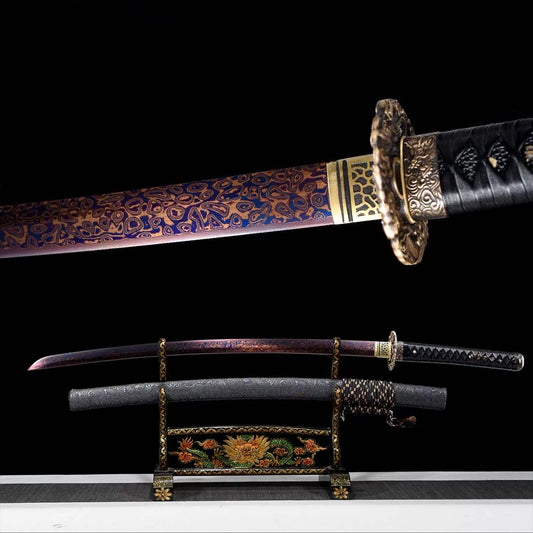
Some modern interpretations of traditional forging incorporate Damascus steel techniques borrowed from Middle Eastern sword-making traditions. True Damascus involves pattern-welding different steel alloys to create distinctive surface designs. These patterns result from varying carbon content between adjacent layers.
Quality Damascus construction requires precise temperature control during folding and forge-welding. Improper heat treatment creates weak bonding between layers, leading to delamination during use. Authentic Damascus katana like our Kill Bill replica demonstrates proper pattern integration without structural compromise.
Heat Treatment Science
Differential hardening defines the essence of traditional Japanese metallurgy. Clay application controls cooling rates across blade surfaces, creating zones with different crystalline structures. Fast-cooled edges form martensite—extremely hard but brittle crystal formations. Slow-cooled spines retain pearlite structures that provide flexibility and shock resistance.
The hamon line represents the boundary between these metallurgical zones. Straight hamon indicate uniform clay application, while irregular patterns reflect varying thickness or composition. Master smiths deliberately created specific hamon designs as personal signatures and performance optimization.
Modern metallurgy confirms the scientific validity of these ancient techniques. Differential hardening creates optimal performance zones within single blades—something impossible through uniform heat treatment. Traditional Japanese smiths intuited principles that materials science would later validate through microscopic analysis and precise testing.
Our Traditional Forged Katana Collection
Our curated selection represents the finest examples of authentic forging processes applied to modern replica production. Each piece demonstrates genuine construction methods while honoring specific character designs or historical periods. After examining dozens of products in this category, we've selected only those meeting strict quality standards for materials, construction, and finishing.
Jin Sakai Katana – Ghost of Tsushima Edition
The Jin Sakai Katana features premium 1060 carbon steel construction with authentic differential hardening creating a visible hamon line. This 71cm blade weighs 1.2kg with perfect balance achieved through traditional proportioning methods. Hand-wrapped ray skin handle provides secure grip identical to historical examples.
- Full-tang construction (length: 25cm) ensures structural integrity under stress
- Differential hardening creates authentic hamon temper line patterns
- Ray skin (same) handle wrapping with traditional silk cord binding (27cm length)
- Hand-forged construction using time-honored folding techniques
- Museum-quality scabbard with period-accurate lacquer finish
⭐⭐⭐⭐⭐ "Exceptional quality that captures the spirit of feudal Japan. The balance point feels perfect in hand, and the hamon line shows beautiful grain structure. Highly recommended for serious collectors." - Michael R., Denver, Colorado
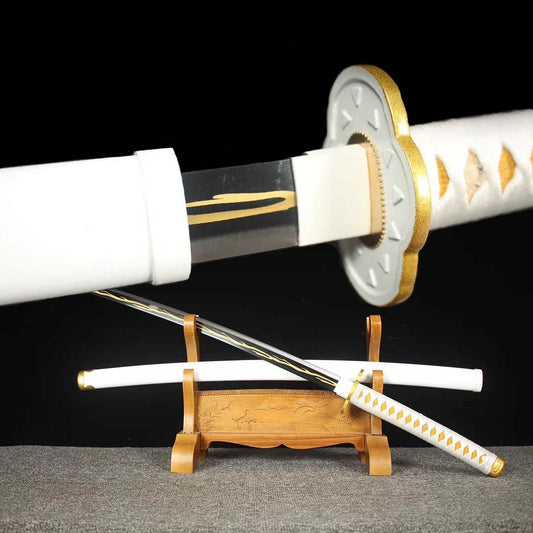
Shinobu Kocho Katana – Demon Slayer Edition
Our Shinobu Kocho katana incorporates traditional forging methods with distinctive butterfly-inspired design elements. The 1060 carbon steel blade demonstrates proper differential hardening while maintaining the character's unique aesthetic requirements. Expert craftsmanship creates functional beauty suitable for display or practice.
- 1060 carbon steel hardened to 58-60 HRC for optimal edge retention
- Traditional clay tempering creates distinctive hamon patterns
- Purple and pink cord wrapping reflects character design authentically
- Hand-polished finish reveals underlying steel grain structure
- Full-tang construction with traditional bamboo pin assembly
⭐⭐⭐⭐⭐ "The attention to detail amazes me. You can see the individual layers from the folding process, and the tempering line looks exactly like museum pieces I've examined. Worth every penny." - Sarah T., Austin, Texas
Kill Bill Katana Sword
The Kill Bill katana represents cinematic excellence through authentic traditional forging methods. Damascus steel construction creates flowing patterns throughout the blade surface while maintaining structural performance. This piece demonstrates how modern materials enhance traditional techniques without compromising authenticity.
- Damascus steel folding creates distinctive flowing surface patterns
- Carbon steel core provides exceptional cutting performance
- Traditional ray skin handle with authentic wrapping methods
- Hand-forged construction using ancient Japanese techniques
- Professional-grade polish reveals complex pattern details
⭐⭐⭐⭐⭐ "Absolutely stunning craftsmanship. The Damascus patterns flow like water, and the balance feels exactly right. This is clearly made by someone who understands traditional methods." - Robert K., Phoenix, Arizona
Michonne Katana Sword
Our Michonne katana exemplifies practical application of traditional forging principles in modern replica production. The 1095 carbon steel construction provides superior edge retention while demonstrating authentic differential hardening techniques. This piece bridges historical accuracy with contemporary functionality.
- Premium 1095 carbon steel (hardness: 60-62 HRC) for maximum edge retention
- Traditional differential hardening creates visible temper lines
- Hand-wrapped handle using historical binding methods
- Full-tang construction (total length: 102cm) ensures long-term structural integrity
- Museum-quality finish demonstrates expert polishing techniques
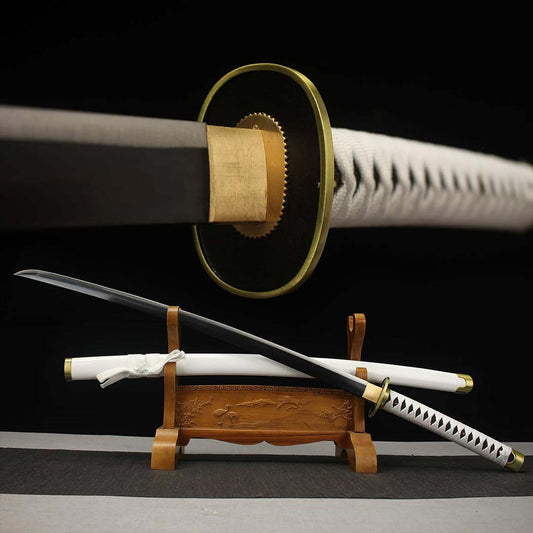
Black Blade Katana
The Black Blade katana showcases traditional construction methods with distinctive aesthetic appeal. 1060 carbon steel provides excellent balance between cutting performance and structural durability. Traditional forging creates authentic performance characteristics while offering unique visual impact.
- 1060 carbon steel construction with traditional heat treatment
- Hand-forged blade profile following historical proportions
- Traditional tsuka wrapping with ray skin foundation
- Authentic hamon line visible through specialized polishing
- Full-tang assembly using traditional bamboo pin methods
⭐⭐⭐⭐⭐ "The black finish doesn't hide the quality underneath—you can still see the hamon line and feel the proper balance. Impressive work that honors traditional methods." - Jennifer L., Seattle, Washington
Sandai Kitetsu Katana Sword
Our Sandai Kitetsu katana demonstrates masterful application of traditional techniques to popular culture designs. The 1060 carbon steel construction maintains historical accuracy while capturing specific character aesthetics. Expert craftsmanship ensures both authenticity and visual appeal.
- Traditional 1060 carbon steel with proper differential hardening
- Hand-forged construction using ancient folding techniques
- Authentic ray skin handle wrapping with period-accurate methods
- Museum-quality polish reveals traditional hamon patterns
- Full-tang construction following historical assembly methods
⭐⭐⭐⭐⭐ "The attention to traditional details is incredible. The tempering line shows perfect technique, and the overall balance feels exactly like historical examples I've handled. Outstanding quality." - David M., Chicago, Illinois
Each piece in our collection demonstrates authentic application of traditional forging while serving modern collectors' needs. Whether you're drawn to historical accuracy or character-inspired designs, these katana represent genuine craftsmanship honoring centuries-old traditions.
Buyer's Guide to Traditional Forged Katana
Selecting an authentic replica requires understanding key indicators of traditional forging in modern production. Genuine traditionally-forged katana display specific characteristics that separate quality pieces from mass-produced imitations. Smart collectors focus on construction methods, steel composition, and finishing details rather than superficial aesthetics alone.
Steel Type Selection
Carbon steel grades directly impact performance and authenticity in traditional forging applications. 1095 steel offers maximum hardness potential with 0.95% carbon content, closely matching historical hagane composition. This steel achieves exceptional edge retention but requires careful heat treatment to prevent brittleness. Advanced collectors often prefer 1095 for its authentic properties and superior cutting performance.
1060 carbon steel provides excellent balance between hardness and flexibility with moderate carbon content. This versatile choice works well for functional pieces requiring durability without extreme maintenance demands. Many quality replicas use 1060 steel because it responds well to traditional differential hardening while remaining forgiving during heat treatment.
T10 tool steel incorporates tungsten additions that enhance grain structure and hardenability compared to pure carbon steels. This modern alloy achieves superior performance while maintaining compatibility with traditional forging methods. Serious collectors appreciate T10's combination of historical accuracy and improved metallurgical properties.
Damascus steel construction involves pattern-welding multiple steel types to create distinctive surface designs. Quality Damascus requires precise temperature control and expert forge-welding skills. Authentic Damascus patterns result from varying carbon content between layers rather than surface etching or painting.
Construction Quality Indicators
Full-tang construction represents essential structural integrity in any quality katana. The blade steel extends completely through the handle, providing maximum strength under stress. Traditional assembly uses bamboo pins (mekugi) to secure the tang within wrapped handles. Avoid pieces with welded or threaded tang connections that compromise structural authenticity.
Differential hardening creates the signature hamon line separating hard edges from soft spines. Authentic hamon patterns result from clay application during heat treatment rather than acid etching or grinding. Real temper lines show irregular boundaries with distinct crystalline structures visible under proper lighting. Our high-end katana collection exclusively features authentic differential hardening methods.
Handle construction quality directly affects both functionality and authenticity. Traditional same (ray skin) provides texture and moisture absorption beneath cord wrapping. Authentic tsuka-ito uses silk or cotton cord in specific patterns that haven't changed for centuries. Proper wrapping creates diamond patterns without gaps or looseness that compromise grip security.
Authenticity Verification Methods
Visual inspection reveals construction quality through several key indicators. Examine the hamon line under angled lighting—authentic differential hardening shows irregular boundaries with varying grain structures. Etched or painted lines appear uniform with sharp edges lacking crystalline complexity. Real temper lines extend partially into blade thickness rather than existing only on surface levels.
Weight distribution indicates proper blade geometry and tang construction. Traditional katana balance approximately 15cm forward of the guard, creating efficient cutting dynamics. Poorly constructed replicas often feel blade-heavy or handle-heavy due to improper tang length or blade profile. Quality pieces demonstrate effortless point control during handling.
Surface finish quality reflects polishing expertise and underlying steel structure. Traditional hand-polishing reveals natural grain flow and construction details. Machine polishing creates uniform surfaces that hide rather than enhance steel characteristics. Authentic pieces show subtle variations in surface texture that indicate hand-finishing techniques.
Display and Maintenance Considerations
Proper display preserves both aesthetic appeal and structural integrity of traditionally-forged pieces. Horizontal display on quality stands prevents warping while showcasing blade geometry. Avoid vertical mounting that creates stress concentrations at mounting points. Our katana accessories collection includes stands designed specifically for traditional blade profiles.
Climate control prevents corrosion and handle degradation in quality pieces. Maintain 45-55% relative humidity to prevent both rust formation and wood cracking. Temperature stability prevents differential expansion that loosens traditional bamboo pin assemblies. Consistent environmental conditions extend blade life significantly.
Regular maintenance preserves cutting performance and visual appeal. Light oil application prevents corrosion while highlighting hamon patterns. Avoid aggressive cleaning that removes protective patina or damages traditional handle wrapping. Quality traditionally-forged blades improve with proper care rather than deteriorating over time.
When selecting pieces that honor traditional forging, prioritize construction authenticity over superficial details. Genuine craftsmanship creates lasting value through proper materials, traditional methods, and expert finishing. Smart collectors invest in quality pieces that demonstrate authentic techniques rather than pursuing quantity over substance.
Why Choose Katana America for Traditional Blades
Katana America stands as America's premier destination for authentic replicas honoring traditional forging. Our commitment to quality begins with careful vendor selection, ensuring every piece meets strict standards for materials, construction, and finishing. Unlike retailers focused on volume, we prioritize authenticity and customer satisfaction above all else.
Quality Assurance and Authentication
Every katana undergoes rigorous inspection before joining our collection. Our team examines steel composition, heat treatment quality, and construction authenticity to verify adherence to traditional methods. We reject pieces with superficial hamon lines, poor tang construction, or substandard materials regardless of popular appeal. This selective approach ensures customers receive genuine quality rather than marketing hype.
Expert craftsmen create our pieces using time-honored techniques including differential hardening, traditional folding, and hand-polishing methods. Each blade demonstrates authentic construction characteristics developed over centuries of Japanese sword-making tradition. We work exclusively with workshops that understand and respect traditional forging rather than mass production facilities.
Our inspection process includes metallurgical verification of carbon content and heat treatment quality. Proper differential hardening creates distinct zones with varying hardness levels—something impossible to fake through surface treatments. Quality pieces show genuine hamon lines with irregular boundaries and crystalline structure variations that indicate authentic tempering methods.
Customer Service Excellence
American customer service representatives understand collector needs and technical requirements specific to traditional Japanese blades. Our team provides detailed information about construction methods, steel types, and historical accuracy rather than generic product descriptions. We help customers select pieces matching their interests, experience levels, and intended uses.
Technical support continues long after purchase through maintenance guidance, display recommendations, and authentication services. Our experts answer questions about proper care, historical context, and traditional techniques with authority gained through years of hands-on experience. Customer relationships matter more than individual transactions in our business philosophy.
Payment processing operates entirely within American banking systems using US dollars without foreign exchange complications. Domestic processing eliminates international fees while providing familiar consumer protections. Credit card disputes and refund requests receive immediate attention through established American financial institutions.
Domestic Operations
Domestic operations reach customers throughout America without international customs delays or import restrictions. Orders process quickly through our streamlined fulfillment system designed specifically for American collectors. Package tracking provides real-time updates from our facility to your door without international transfer complications.
No import fees or customs duties apply to domestic orders, eliminating unexpected costs that plague international purchases. The price you see includes all charges—no surprises at delivery. This transparent pricing helps collectors budget accurately for quality pieces without hidden international fees.
American legal compliance ensures all products meet domestic regulations regarding blade length, construction, and sales restrictions. We understand state and local laws affecting katana ownership, providing guidance where necessary. Legal purchases provide peace of mind unavailable through questionable international sources.
Our domestic operations support American jobs and economic growth rather than foreign manufacturers exclusively. While respecting traditional Japanese techniques, we believe American businesses should serve American customers through domestic infrastructure and employment. Supporting local economy strengthens the collecting community we serve.
Educational Resources and Community
Guides help customers understand traditional forging and make informed purchasing decisions. Our educational content covers steel types, construction methods, historical context, and maintenance requirements with authority and accuracy. Knowledge empowers better collecting decisions and appreciation for authentic craftsmanship.
Customer reviews and community feedback create valuable resources for fellow collectors considering specific pieces. Verified purchaser reviews provide honest assessments of quality, packaging, and customer service experiences. This transparency helps potential customers make confident decisions based on real user experiences.
Regular content updates keep collectors informed about new arrivals, technique explanations, and historical insights related to traditional Japanese sword-making. Our blog features detailed articles about specific pieces, forging methods, and cultural context that enhance appreciation for authentic craftsmanship.
Choose Katana America for authentic replicas that honor traditional methods while serving modern collectors' needs. Our commitment to quality, domestic operations, and customer service creates the premier American destination for traditionally-forged katana that respect both heritage and contemporary requirements.
Frequently Asked Questions About Traditional Forging
What makes traditional katana forging authentic?
Authentic traditional forging involves specific techniques unchanged for over 1,000 years, including tamahagane steel production, differential hardening, and hand-folding methods. Master smiths heat steel in charcoal forges to precise temperatures, then fold and hammer-weld repeatedly to create homogenized metal with 4,000+ layers. Clay application during final heat treatment creates differential cooling rates that produce the signature hamon temper line. Authentic pieces show irregular hamon boundaries with crystalline structure variations rather than uniform etched lines. Traditional assembly uses ray skin handles, silk cord wrapping, and bamboo pin construction methods dating to medieval Japan. Modern authentic replicas maintain these core techniques while using carefully selected steel grades that approximate historical tamahagane properties.
What steel type is best for traditional forging?
Traditional forging works best with specific carbon steel compositions that respond properly to differential hardening techniques. 1095 carbon steel contains 0.95% carbon, closely matching historical hagane composition used for cutting edges. This steel achieves exceptional hardness through proper heat treatment but requires expert tempering to prevent brittleness. 1060 carbon steel provides excellent balance between performance and durability with 0.60% carbon content, making it ideal for functional pieces requiring regular use. T10 tool steel incorporates tungsten additions that enhance grain structure while maintaining traditional forging compatibility. Damascus steel construction involves pattern-welding multiple alloys to create distinctive surface designs, though this requires precise temperature control during forge-welding. Avoid stainless steel or low-carbon alternatives that can't achieve proper hardness levels essential for authentic performance characteristics.
How do I care for my traditional katana?
Proper maintenance preserves authentic characteristics achieved through traditional forging methods while preventing corrosion and structural damage. Clean blades gently using soft cloth with light mineral oil, avoiding aggressive polishing that removes protective patina or damages hamon patterns. Store in climate-controlled environments maintaining 45-55% relative humidity to prevent both rust formation and handle wood cracking. Display horizontally on quality stands designed for traditional blade geometry rather than vertical mounting that creates stress concentrations. Inspect bamboo pins periodically for looseness, retightening as needed to maintain proper assembly. Never disassemble traditional handles without expert guidance, as improper reassembly can damage ray skin or cord wrapping. Oil applications should highlight natural steel characteristics without creating heavy buildup that attracts dust or debris. Regular inspection identifies potential issues before they compromise structural integrity or aesthetic appeal of quality traditionally-forged pieces.
What size traditional katana should I choose?
Size selection for traditional pieces depends on intended use, display space, and personal preferences for historical accuracy. Traditional katana measure 60-73cm blade length with total lengths reaching 100-105cm including handles. Longer blades demonstrate classic proportions but require significant display space and careful handling techniques. Shorter wakizashi-style pieces (30-60cm blades) offer authentic construction in more manageable sizes suitable for smaller spaces. Consider weight distribution carefully—quality pieces balance approximately 15cm forward of the guard regardless of overall length. Handle length should accommodate comfortable two-handed grip with proper spacing for traditional techniques. Display stands must match blade dimensions for proper support and aesthetic presentation. Local regulations may restrict blade lengths in certain jurisdictions, requiring verification before purchase. Our collection includes various sizes maintaining authentic proportions and construction quality across the full range of traditional dimensions.
How do I display my traditional katana properly?
Professional display showcases authentic characteristics achieved through traditional forging while protecting structural integrity and aesthetic appeal. Horizontal display on quality wooden or metal stands prevents warping while highlighting blade geometry and hamon patterns. Position lighting to reveal temper line details without creating glare that obscures surface characteristics. Avoid direct sunlight that fades handle wrapping or creates temperature fluctuations affecting metal stability. Display cases provide dust protection while allowing full visibility of construction details including tang assembly and cord wrapping patterns. Rotate displayed pieces periodically to prevent uneven fading or stress concentration from prolonged static positioning. Include information cards describing construction methods, steel types, and historical context to enhance educational value. Maintain consistent temperature and humidity levels around display areas to prevent expansion cycles that loosen traditional bamboo pin assemblies. Quality display enhances both aesthetic appeal and long-term preservation of authentic craftsmanship elements.
Is it legal to own traditional katana in USA?
Ownership of traditional replicas remains legal throughout most American jurisdictions under federal regulations governing blade length and construction. Federal law permits ownership of swords and replicas without specific restrictions on traditional Japanese designs or construction methods. State regulations vary regarding carry restrictions, with most prohibiting concealed carry while allowing open transport for legitimate purposes including collecting and martial arts training. Local ordinances may impose additional restrictions in specific municipalities, requiring verification before purchase in areas with strict weapon regulations. Educational and collecting purposes receive broad protection under First and Second Amendment provisions, though commercial use may require additional permits. School zones and government buildings typically restrict all blade types regardless of historical significance or traditional construction methods. International shipping involves complex customs regulations, making domestic purchases strongly preferable for American collectors. Age restrictions apply in most jurisdictions, requiring adult supervision for minors acquiring traditional pieces. Consult local authorities when uncertain about specific regulations affecting traditional katana ownership in your area.
Conclusion & Related Content
Traditional katana forging represents one of humanity's most sophisticated metallurgical achievements, transforming raw steel into legendary blades through centuries-refined techniques. Understanding these ancient methods helps modern collectors appreciate authentic craftsmanship while selecting quality pieces that honor Japanese sword-making traditions.
From tamahagane steel selection through differential hardening and final polishing, every step requires master-level expertise developed through decades of dedicated practice. The visible hamon line serves as signature evidence of proper clay tempering, while folded construction creates homogenized steel impossible to achieve through modern mass production methods.
Quality replicas maintain these traditional standards while serving contemporary collectors' needs. Our authentic katana collection demonstrates genuine construction techniques applied to both historical designs and popular culture inspirations. Whether you choose anime-inspired pieces like our Tanjiro Kamado katana V2 or historically accurate reproductions, authentic traditional forging methods ensure lasting quality and aesthetic appeal.
Proper selection focuses on construction authenticity rather than superficial details. Carbon steel composition, full-tang assembly, and genuine differential hardening create functional beauty that improves with age. These investment pieces reward careful selection through decades of enjoyment and appreciation.

Related Reading
Expand your knowledge of Japanese sword-making through these guides:
Those interested in historical context will find Master Traditional Katana Forging: Ancient Japanese Blade Craft invaluable for understanding cultural significance. For technical details about construction methods, explore our Katana Craftsmanship: Ancient Steel Forging Techniques guide.
Maintenance enthusiasts should reference our Traditional Katana Care: Master Your Blade's Legacy for preservation techniques. Historical perspectives await in Forging the Katana: Art, Spirit, & Samurai Culture.
For purchasing guidance, consult our detailed Choose Your Katana Steel: A Buyer's Guide covering steel selection and quality indicators.
Start your collecting journey today by exploring our best seller collection featuring the most popular traditionally-forged pieces. Each katana represents authentic craftsmanship honoring traditional forging while serving modern collectors with pride and satisfaction that lasts generations.
See the craft for yourself. Browse our hand-forged katana swords, forged in the Japanese tradition. Free U.S. shipping, 4.8/5 rated.
 Save $60