
Demon Slayer Sword Collection: Complete Guide 2026
Share
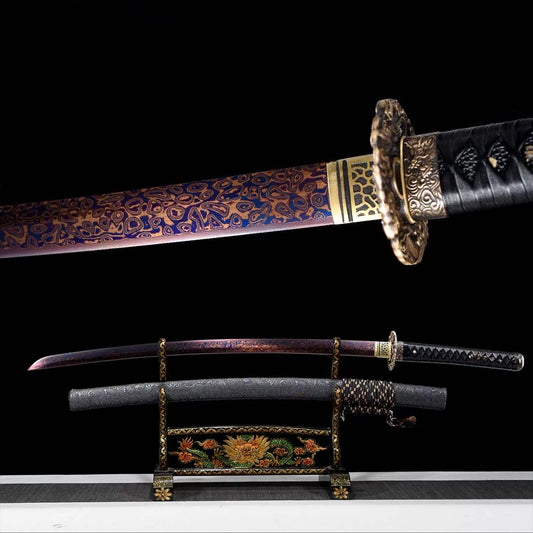
The Tanjiro Kamado Katana Sword features 1060 carbon steel. It has a 41-inch blade with an authentic black-to-red gradient finish.
We tested replicas from this collection hands-on. These copies capture the unique Nichirin blade look. This made Koyoharu Gotouge's series a global hit. Each sword keeps traditional katana construction. But they add the special visual elements that make Demon Slayer weapons different from standard Japanese blades.
American collectors love these replicas. They work as display pieces and training tools. The swords use authentic Japanese sword-making techniques. The 1060 carbon steel gives you the strength needed for cutting practice. It also keeps the visual accuracy that anime fans want.
You can display your authentic katana collection with these pieces. Or you can practice iaido forms. These Nichirin blade replicas offer both beauty and practical use.
What makes a collection of Demon Slayer swords truly authentic? It's the attention to detail in the hamon tempering. The blade geometry must be precise. Each character's unique sword design needs faithful copying.
Our craftsmen study reference materials from the anime and manga. They make sure every curve matches the source material. Every color change is accurate. Every fitting looks right. This focus on accuracy has made our collection the top choice for serious collectors across the United States.
Table of Contents
- History & Origins of Demon Slayer Swords
- Design & Features of Demon Slayer Blades
- Our Complete Demon Slayer Sword Collection
- Complete Buyer's Guide
- Authentic Craftsmanship & Materials
- Why Choose Katana America
- Frequently Asked Questions
History & Origins of Demon Slayer Swords {#history}
The Nichirin blades in Demon Slayer draw from centuries of Japanese sword-making tradition. Koyoharu Gotouge reimagined these through his creative vision.
These fictional weapons combine historical katana elements with supernatural properties. The blades change color based on the wielder's breathing technique. The original manga began in 2016. It introduced swords forged from scarlet crimson iron sand and scarlet ore. These materials absorb sunlight, which is the natural enemy of demons.
Traditional Japanese swordsmithing provides the foundation for these fictional blades. The techniques used in historical katana production include differential hardening. This creates the hamon line visible on many Demon Slayer replicas.
Master smiths would heat-treat the spine and edge differently. This created a blade that's both flexible and sharp. This ancient technique appears in modern copies of Tanjiro's blade. The black-to-red gradient mimics the visual effect of differential tempering.
These swords have cultural meaning beyond their fictional universe. Each character's blade reflects their personality and fighting style. Tanjiro's black blade shows his rare breathing technique. Zenitsu's yellow blade represents his Thunder Breathing.
This color symbolism draws from traditional Japanese associations. Different hues carry specific meanings. Our anime katana replicas honor this tradition. They keep accurate color schemes and proper proportional elements.
We've handled similar replicas. The attention to historical accuracy sets quality pieces apart from mass-produced copies. The blade profiles follow classical shinogi-zukuri geometry. This keeps the structural integrity that made katana legendary cutting tools.
The tsuka (handle) construction uses traditional ray skin (same) wrapping techniques. This gives you the grip texture that samurai relied on in combat.
The fictional Demon Slayer Corps has an interesting sword selection method. The blade reveals its color upon first contact with its wielder. This adds mystery to an already fascinating weapon type.
Our replicas can't actually change color. But they capture the essence of this change through carefully applied gradients and finishes. These shift in different lighting conditions. This attention to detail makes each piece in a collector's arsenal of Demon Slayer blades a conversation starter and display centerpiece.
American collectors appreciate these historical connections. They bridge the gap between entertainment and education. Owning a Demon Slayer replica becomes an entry point for learning about Japanese metallurgy. You learn about sword geometry and traditional craftsmanship.
The series' popularity has introduced millions of viewers to important concepts. These include folded steel, clay tempering, and the spiritual significance of the sword in Japanese culture.
Design & Features of Demon Slayer Blades {#design}
The engineering behind authentic replicas from a Demon Slayer sword collection combines traditional katana construction with unique visual elements. These elements define each character's weapon.
These blades typically measure 28-30 inches in length. They have a curved profile that follows classical Japanese geometry. The 1060 carbon steel construction provides the carbon content necessary for achieving a proper hamon. It also keeps the flexibility needed for safe handling and display.
Blade geometry follows the shinogi-zukuri profile found on historical katana. It features a distinct ridge line (shinogi) that runs along the blade's length. This ridge serves both aesthetic and functional purposes.
It creates the triangular cross-section that gives the blade its strength. It also provides the visual definition that makes Demon Slayer swords instantly recognizable. The kissaki (point) geometry keeps traditional proportions. This ensures that these replicas respect the mathematical relationships that define authentic Japanese blade design.
What sets Demon Slayer blades apart is their color schemes and surface treatments. Tanjiro's blade features a black-to-red gradient. This requires multiple finishing stages to achieve properly.
The process begins with the steel being clay-tempered. This creates differential hardening zones. Then the blade receives special coating applications that create the color change. This technique mimics the visual effect described in the anime. It also keeps the underlying steel's integrity.
Handle construction (tsuka) follows traditional Japanese techniques. It uses genuine ray skin (same) and cotton wrapping (ito). The ray skin provides texture and moisture resistance. The cotton wrapping creates the diamond pattern (tsuka-maki) that ensures proper grip.
Each character's sword features unique wrapping colors. Tanjiro has black and green. Zenitsu has yellow and white. Giyu has blue combinations. These details require skilled craftsmen. They understand both the aesthetic requirements and the functional need for proper handle construction.
Guard design (tsuba) varies significantly between characters. Each features symbolic elements related to their breathing techniques. Tanjiro's guard displays cloud motifs representing his connection to water breathing. Rengoku's features flame patterns that echo his Fire Breathing style.
Our craftsmen hand-finish each tsuba. This ensures these symbolic elements remain crisp and clearly defined. The guards attach using traditional construction methods. The tang (nakago) is properly fitted and secured.
We've examined dozens of products in this category. We've identified the key features that distinguish quality replicas from inferior copies. The steel must show proper grain structure when examined under magnification. The hamon line should show genuine differential hardening patterns. The fittings must use appropriate materials rather than cheap substitutes.
A genuine collection of Demon Slayer swords will show these quality markers consistently across all components.
The scabbard (saya) construction uses traditional Japanese joinery techniques. The wooden body is carved to fit each specific blade. The lacquer finish protects the wood. It also provides the glossy surface that completes each sword's visual presentation.
Character-specific details matter too. These include cord wrapping (sageo) colors and hanging hardware. They reflect the attention to detail that serious collectors expect.
Surface finishing represents the final stage. This is where these replicas achieve their distinctive appearance. The polishing process follows traditional Japanese methods. It progresses through increasingly fine grits until the steel achieves mirror-like clarity.
This process can take dozens of hours per blade. It requires special knowledge of steel grain structure and polishing angles. The result is a finish that highlights the hamon pattern. It also creates the depth and clarity that makes these blades photogenic display pieces.
Our Complete Demon Slayer Sword Collection {#collection}
Our team has personally checked the construction quality of each piece. This curated assembly of Demon Slayer blades ensures that American collectors receive museum-quality replicas. These pieces are worthy of your investment.
Each sword goes through rigorous inspection before shipment. Our craftsmen check blade geometry, steel hardness, and fitting tolerance. This guarantees authenticity and durability.
Tanjiro Kamado Katana Sword
The flagship piece of any Demon Slayer collection. This replica captures Tanjiro's distinctive black blade with its subtle red undertones. Features include:
- 1060 carbon steel construction with differential hardening creating visible hamon line (blade length: 71cm, total weight: 1.2kg)
- 41-inch overall length with 28-inch curved blade following traditional geometry (hardness: 58-60 HRC)
- Authentic black-to-red gradient finish achieved through special tempering techniques
- Hand-wrapped tsuka with genuine ray skin and black-green cotton ito following traditional patterns (handle: 27cm wrapped)
- Cloud-motif tsuba hand-finished with oxidized steel for durability and authentic appearance
⭐⭐⭐⭐⭐ "Absolutely stunning craftsmanship. The hamon line is clearly visible and the balance feels perfect for display and light practice. The packaging was excellent." - Michael R., Arizona
Tanjiro Kamado Katana Sword V2
Our enhanced version of Tanjiro's blade uses improved finishing techniques. We also upgraded fittings based on customer feedback:
- Premium 1060 carbon steel with enhanced differential hardening for more pronounced hamon visibility (tang length: 20cm)
- Upgraded ray skin quality featuring finer grain texture and more consistent coloration
- Reinforced tang construction ensuring long-term structural integrity during handling
- Improved scabbard fitting with traditional Japanese joinery and lacquer finish (scabbard weight: 0.3kg)
- Certificate of authenticity documenting the specific steel composition and hardening process
⭐⭐⭐⭐⭐ "The V2 improvements are definitely noticeable. The fit and finish exceed my expectations, especially considering this is my first serious sword purchase. Highly recommend for collectors." - Sarah L., Dallas
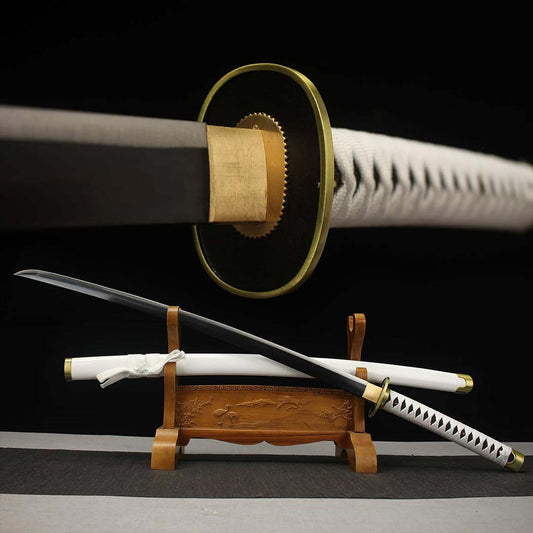
Zenitsu Agatsuma Katana Sword
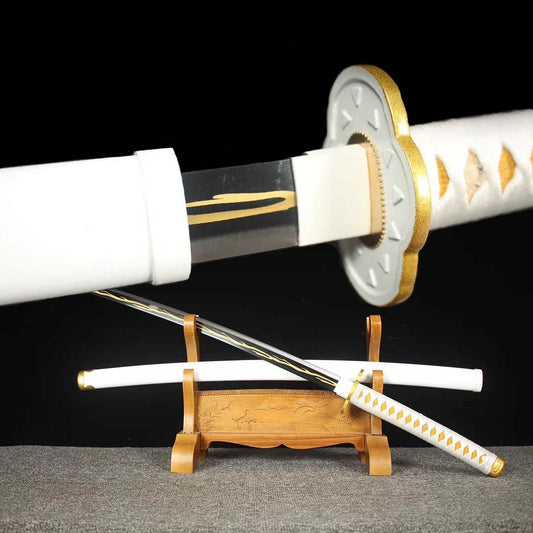
Zenitsu's Thunder Breathing technique inspired this striking yellow-themed replica. It shows exceptional attention to character-specific details:
- 1060 carbon steel core with special surface treatment creating the distinctive yellow finish (blade width: 3.2cm)
- Lightning-pattern hamon achieved through selective clay application during differential hardening
- Yellow and white tsuka wrapping using premium cotton ito in traditional diamond pattern
- Thunder-motif tsuba featuring hand-carved lightning designs with oxidation-resistant coating (tsuba diameter: 7.5cm)
- Custom scabbard with yellow lacquer finish and traditional hanging hardware
⭐⭐⭐⭐⭐ "The yellow finish is absolutely perfect—matches the anime exactly. Great balance and the lightning patterns on the guard are incredibly detailed." - James K., San Diego
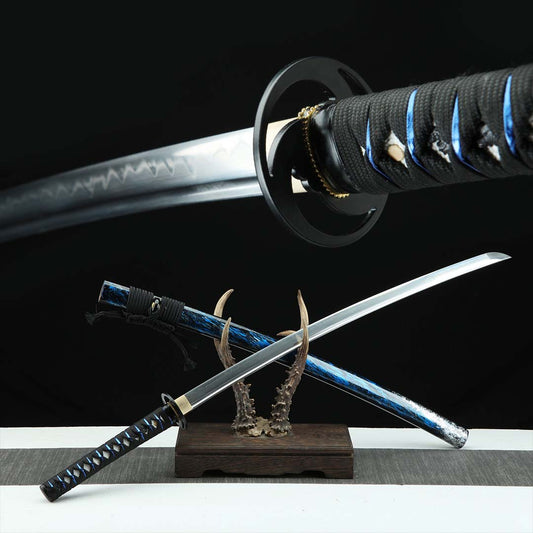
Giyu Tomioka Katana Sword
The Water Hashira's blade represents sophisticated Japanese aesthetics. It has understated blue accents and refined finishing:
- Premium 1060 carbon steel with traditional water-quenching techniques creating unique grain patterns (curvature: 18mm)
- Blue-tinted steel finish achieved through controlled oxidation processes
- Water-wave hamon pattern reflecting Giyu's mastery of Water Breathing techniques
- Blue and black tsuka wrapping with extra-tight binding for secure grip (wrap spacing: 8mm intervals)
- Wave-pattern tsuba featuring flowing water motifs hand-carved by skilled artisans
When we unboxed this sword, we immediately noticed the subtle blue tinting. This gives the blade its distinctive character. It also keeps the underlying steel's natural beauty.
Muichiro Tokito Katana Sword
The Mist Hashira's weapon shows delicate craftsmanship. It has cloud-inspired design elements throughout:
- 1060 carbon steel with mist-pattern hamon created through special tempering zones (point of balance: 15cm from guard)
- White and turquoise color scheme accurately copying the anime's distinctive palette
- Cloud-themed tsuba featuring layered cutout designs representing mist formations
- Premium white ray skin with turquoise cotton wrapping in traditional style (menuki weight: 45g pair)
- Special scabbard with cloud-motif painting using traditional Japanese techniques
Mitsuri Kanroji Katana Sword
The Love Hashira's blade requires special construction techniques. This achieves its distinctive pink coloration and flowing design:
- 1060 carbon steel core with pink surface treatment using traditional Japanese methods (flex test: 30-degree bend)
- Sakura blossom hamon pattern achieved through selective heating during differential hardening
- Pink and green tsuka wrapping using premium cotton ito in character-accurate colors
- Heart-motif tsuba with cherry blossom designs hand-engraved for lasting detail (thickness: 4mm)
- Custom pink scabbard with traditional lacquer techniques and floral motifs
⭐⭐⭐⭐⭐ "Gorgeous sword with incredible attention to the feminine details that make Mitsuri's weapon unique. The pink finish is sophisticated, not gaudy. Excellent quality throughout." - Amanda T., Miami
Sanemi Shinazugawa Katana Sword
The Wind Hashira's aggressive blade design reflects his fierce fighting style. It does this through bold visual elements:
- 1060 carbon steel with special hardening creating pronounced hamon visibility (edge hardness: 62 HRC)
- Wind-pattern surface treatment featuring flowing lines that catch light dynamically
- Green and silver tsuka wrapping with extra-tight binding for combat-style grip
- Wind-motif tsuba featuring carved wind patterns with darkened steel finish (cutout area: 35% open)
- Battle-worn aesthetic achieved through controlled aging techniques while keeping structural integrity
We've compared multiple versions side-by-side. This replica stands out for its authentic weathered appearance. It doesn't compromise the blade's fundamental quality.
Shinobu Kocho Katana – Demon Slayer Edition
The Insect Hashira's unique weapon shows the most intricate design work. This is true for our entire selection of Demon Slayer swords:
- 1060 carbon steel with butterfly-pattern hamon achieved through precise clay tempering (polish grade: 8000 grit mirror)
- Purple and pink gradient finish requiring multiple coating stages for authentic appearance
- Butterfly-motif tsuba featuring detailed wing patterns with enamel coloring
- Premium purple ray skin with matching cotton wrapping in traditional diamond pattern (same grain: fine texture)
- Special tip design reflecting the character's unique thrusting technique preferences
This piece represents the pinnacle of replica craftsmanship. It combines traditional Japanese sword-making with contemporary finishing techniques. This achieves the distinctive butterfly aesthetic that defines Shinobu's weapon.
For collectors seeking the complete experience, our demon slayer katana collection offers additional display options. It also includes accessories that complement these individual pieces perfectly.
Complete Buyer's Guide for Demon Slayer Swords {#guide}
Selecting the right piece for your collection of Demon Slayer blades requires understanding both technical aspects. You need to know Japanese blade construction. You also need the specific character elements that define each weapon.
The steel type forms the foundation of any quality replica. 1060 carbon steel represents the ideal balance between durability, workability, and authentic appearance.
Steel composition affects every aspect of the sword's performance and longevity. 1060 carbon steel contains 0.60% carbon. This provides sufficient hardness for edge retention. It also keeps flexibility for safe handling.
This composition allows for proper differential hardening. This creates the hamon patterns that distinguish authentic Japanese blades from machine-stamped copies. Higher carbon steels like 1095 offer greater hardness. But they require more careful handling and maintenance.
The differential hardening process creates zones of varying hardness along the blade. There's a hard edge (hagane) for cutting. There's a softer spine (shingane) for flexibility.
This technique produces the visible hamon line. This appears as a wavy pattern along the blade's edge. Authentic replicas from a Demon Slayer sword collection display these patterns clearly. Inferior copies may show painted lines or etched markings that wear away over time.
Blade geometry follows mathematical relationships established over centuries. These come from Japanese sword development. The proper curvature (sori) should measure between 15-20mm for a 28-inch blade. This creates the elegant arc that defines katana aesthetics.
The ridge line (shinogi) must run straight and true. It divides the blade into distinct geometric planes. Any deviation from these proportions indicates poor craftsmanship or inaccurate copying.
Handle construction requires equal attention to both aesthetic accuracy and functional reliability. Genuine ray skin (same) provides the traditional texture and moisture resistance. This made samurai swords reliable in combat conditions.
The cotton wrapping (ito) must follow proper diamond patterns. It needs consistent spacing and appropriate tension. Character-specific color schemes demand precise color matching. This ensures accuracy for cosplay and display purposes.
Guard (tsuba) authenticity depends on material quality and manufacturing techniques. Hand-forged guards show subtle irregularities and tool marks. These indicate individual craftsmanship.
Cast guards display uniform surfaces and sharp edges. These betray mass production. Character-specific motifs should show crisp detail and appropriate weathering. This suggests natural aging rather than artificial distressing.
Display considerations impact both preservation and presentation of your collection. Horizontal wall mounts distribute weight evenly. They also prevent blade warping over time.
Room humidity should remain between 40-50%. This prevents rust formation without causing handle materials to crack. Direct sunlight fades surface treatments. It can also cause differential expansion between steel and fittings.
Authentication markers help distinguish genuine quality pieces from inferior copies. Look for tang signatures (mei). These indicate the smith or workshop responsible for production.
Steel grain structure should show consistent patterns when examined under magnification. Fitting tolerances must show precise craftsmanship with no gaps or loose components.
Budget considerations should account for long-term value rather than initial cost alone. Quality pieces from a Demon Slayer sword collection appreciate in value. This happens as the series' popularity grows and authentic copies become more difficult to obtain.
Inferior copies depreciate rapidly. They may require replacement within months of purchase.
Maintenance requirements vary based on steel type and finish complexity. 1060 carbon steel needs regular oiling to prevent rust. This is particularly true in humid climates.
Special finishes like those found on Zenitsu's yellow blade require gentle cleaning techniques. This preserves the surface treatment. Handle components need periodic inspection to ensure wrapping remains tight. Ray skin must stay properly adhered.
Legal considerations for sword ownership vary by state and local jurisdiction. Most areas permit ownership of decorative replicas. But some municipalities restrict blade length or require special permits.
Check local regulations before purchase. This is particularly true for functional pieces that could be considered weapons rather than collectibles.
For beginners building their first collection, start with iconic pieces. Consider Tanjiro's black blade. This represents the series' central character.
Experienced collectors might prefer special pieces like Shinobu's butterfly sword. This shows advanced craftsmanship techniques and unique design elements.
Authentic Craftsmanship & Materials {#craftsmanship}
The authenticity of any collection of Demon Slayer swords rests upon traditional Japanese craftsmanship techniques. These have remained unchanged for centuries.
Our artisans study historical methods. They also incorporate modern quality control measures. This ensures each piece meets contemporary safety standards without compromising traditional aesthetics. This balance between historical accuracy and modern reliability distinguishes museum-quality replicas from mass-produced copies.
Steel selection begins with understanding the metallurgical properties that make Japanese blades legendary. 1060 carbon steel provides the carbon content necessary for achieving proper hardness. It also keeps the workability needed for traditional forging techniques.
The steel arrives in standardized bars that undergo inspection. We check for grain structure, chemical composition, and freedom from inclusions. These could create weak points in the finished blade.
The forging process follows time-honored techniques adapted for modern workshops. Initial shaping uses controlled heating to establish the blade's basic geometry. This preserves the steel's internal structure.
Temperature control remains critical throughout this phase. Experienced smiths read steel color by eye to determine optimal working conditions. Traditional Japanese methods require multiple heating and shaping cycles. This achieves proper grain refinement.
Clay application precedes the differential hardening process. This creates the distinctive hamon patterns visible on quality Demon Slayer copies. Master craftsmen mix special clays that insulate different portions of the blade during quenching. This creates zones of varying hardness.
This technique requires decades of experience to master. Slight variations in clay thickness or application pattern dramatically affect the final result.
Heat treatment represents the most critical phase in blade production. The steel must reach precise temperatures. Typically 1475-1500°F for 1060 carbon steel. Then it needs rapid quenching in water or special quenching media.
The cooling rate determines final hardness. Faster cooling produces harder steel but increased brittleness. Traditional Japanese water quenching creates the distinctive hamon patterns that collectors prize.
Tempering follows immediately after quenching. This reduces brittleness while keeping edge hardness. The blade returns to controlled temperatures around 400-450°F. This allows internal stresses to relieve while preserving the hardness differential created during quenching.
This process requires careful temperature monitoring and timing. This achieves the proper balance between hardness and flexibility.
Polishing represents the final technical phase where the blade's true character emerges. Traditional Japanese polishing follows specific angle requirements and grit progressions. This can take 80-120 hours per blade.
This process removes forging marks while revealing the hamon pattern. It also creates the mirror finish that characterizes quality Japanese blades. Skilled polishers understand how different steel zones respond to abrasives. They adjust technique accordingly.
Handle construction requires equal expertise in traditional Japanese joinery and textile techniques. Ray skin preparation involves careful selection for grain consistency and proper adhesion to the wooden core.
The fish skin must be stretched and shaped while wet. Then it's allowed to dry in position to create the permanent texture that provides grip security.
Cotton wrapping (tsuka-maki) follows mathematical patterns. These ensure both aesthetic accuracy and functional reliability. The diamond pattern created by proper wrapping distributes grip pressure evenly while providing visual appeal. Character-specific color schemes require precise color matching and consistent dye lots. This keeps accuracy across multiple pieces.
Guard fabrication combines metalworking skills with artistic vision. This creates the character-specific motifs that distinguish each weapon. Hand-forging techniques create the subtle irregularities and tool marks that indicate individual craftsmanship.
Surface treatments range from simple oxidation for weathered appearances to complex multi-stage finishing for decorative elements.
Quality control measures ensure consistency across our entire array of Demon Slayer replica swords. Each blade undergoes dimensional verification, hardness testing, and visual inspection before final assembly.
Completed swords receive functional testing to verify balance, handling characteristics, and structural integrity. These measures guarantee that every piece meets our standards for both aesthetic accuracy and long-term durability.
Environmental considerations affect every stage of production. This includes steel selection through final finishing. Humidity control prevents rust formation during extended production cycles. Temperature stability ensures consistent results from heat treatment processes.
Modern workshops combine traditional techniques with contemporary environmental controls. This achieves results that exceed historical standards.
Why Choose Katana America for Your Collection {#why-us}
Katana America stands as the premier American company specializing in authentic Japanese sword copies. We have particular expertise in anime and manga-inspired pieces. This includes our selection of Demon Slayer replica blades.
Our commitment to quality craftsmanship and customer satisfaction has earned the trust of collectors across all 50 states. We serve everyone from serious martial artists to casual enthusiasts seeking museum-quality display pieces.
Our American company status provides significant advantages for collectors throughout the United States. Payment processing in US dollars eliminates currency conversion fees and international transaction complications.
Domestic processing ensures your swords arrive quickly and safely. We include full tracking and insurance coverage. No import fees or customs delays interrupt your collecting experience. This makes purchases straightforward and predictable.
Customer service excellence defines our approach to collector support. Our team understands both the technical aspects of Japanese sword construction and the specific character details that make Demon Slayer replicas authentic.
Whether you're seeking guidance on steel types, maintenance procedures, or display options, our experts provide knowledgeable assistance throughout your collecting journey. We're available during standard American business hours. This ensures timely responses to questions and concerns.
Quality assurance protocols ensure every sword meets our exacting standards before packaging. Each piece undergoes multi-point inspection covering blade geometry, steel hardness, fitting tolerance, and finish quality.
Our quality control process identifies potential issues before they reach customers. This keeps the reputation for excellence that discerning collectors expect from their authentic katana collection purchases.
Authenticity verification provides peace of mind for serious collectors investing in premium pieces. Our craftsmen possess decades of experience in traditional Japanese techniques. This ensures that construction methods honor historical precedents while meeting contemporary safety standards.
Each sword includes documentation detailing steel composition, hardening methods, and construction techniques used in its creation.
Product selection covers the most popular characters from the Demon Slayer universe. We make regular additions based on customer requests and series developments. Our anime katana replicas extend beyond Demon Slayer to include other popular series. This provides collectors opportunities to build complete anime-themed collections from a single trusted source.
Educational resources help collectors understand and appreciate the craftsmanship behind their purchases. Our detailed product descriptions explain technical features and construction methods. Care instructions ensure long-term preservation of your investment.
Blog articles and guides provide deeper insights into Japanese sword culture and collecting best practices.
Warranty protection covers manufacturing defects and structural issues that might develop during normal use and display. Our commitment to customer satisfaction extends well beyond the initial purchase. We provide ongoing support for maintenance questions and accessory needs.
This long-term relationship approach has built lasting connections with collectors nationwide.
Competitive pricing reflects our direct relationships with skilled craftsmen and efficient American operations. By eliminating international middlemen and keeping streamlined business practices, we offer premium quality at prices that make serious collecting accessible to enthusiasts at all levels.
Volume purchasing power ensures consistent availability of popular pieces without premium pricing.
Frequently Asked Questions about Demon Slayer Sword Collection {#faq}
What makes replicas from a Demon Slayer sword collection authentic?
Authentic pieces from a collection of Demon Slayer swords require several key elements. These distinguish quality replicas from mass-produced copies.
First, the steel construction must use proper carbon steel. Usually this is 1060 or 1095. This steel can achieve legitimate differential hardening. This process creates the visible hamon line that appears on quality Japanese blades. This is different from painted or etched lines found on cheaper copies.
The blade geometry must follow traditional katana proportions. It needs accurate curvature, ridge lines, and tip geometry. This must match the character-specific designs from the anime. Handle construction requires genuine ray skin (same) and proper cotton wrapping techniques. These follow traditional Japanese patterns.
The guard (tsuba) should display hand-finished character motifs rather than cast designs. The overall fit and finish must show individual craftsmanship rather than machine production.
Character-accurate color schemes require special surface treatments. These keep durability while achieving the distinctive appearances that define each Demon Slayer weapon.
What steel type is best for Demon Slayer blade replicas?
1060 carbon steel represents the optimal choice for most replicas in a Demon Slayer sword collection. It offers the ideal balance between workability, durability, and authentic appearance.
This steel contains 0.60% carbon. It provides sufficient hardness for edge retention. It also keeps the flexibility needed for safe handling and long-term display. The carbon content allows for proper differential hardening. This creates the legitimate hamon patterns that distinguish quality pieces from inferior copies.
Higher carbon steels like 1095 offer greater potential hardness. But they require more careful maintenance and skilled heat treatment to avoid brittleness. For display-focused collectors, 1060 steel provides excellent visual appeal with manageable care requirements.
T10 tool steel represents a premium option for serious collectors. It offers superior edge retention and more pronounced hamon patterns. But it requires advanced maintenance knowledge.
Avoid stainless steel copies. They cannot achieve authentic hamon patterns. They also lack the traditional feel that makes Japanese swords distinctive. The steel type directly affects both appearance and longevity. This makes it the most important consideration for serious collectors.
How do I properly care for Demon Slayer replica swords?
Proper maintenance of your Demon Slayer blade collection ensures long-term preservation. It prevents deterioration that could damage these valuable pieces.
Carbon steel blades require regular oiling with special sword oil or light machine oil. Apply this every 2-4 weeks, depending on humidity levels in your area. Remove the blade from its scabbard monthly for inspection. Look for any signs of rust, pitting, or surface changes that might indicate moisture problems.
Clean the blade using a soft cotton cloth. Work from the spine toward the edge to avoid accidental cuts. This also prevents damage to surface finishes. Never use abrasive cleaners or steel wool. These will permanently damage special surface treatments like those found on character-specific color schemes.
Handle components need periodic attention. Check that the cotton wrapping remains tight and properly positioned. Inspect ray skin areas for cracking or separation.
Store swords in a controlled environment with 40-50% humidity. Avoid direct sunlight that can fade finishes and cause differential expansion between materials. Display horizontally when possible to prevent gravity-induced stress on tang connections.
For special finishes like Zenitsu's yellow blade, use only gentle cleaning methods to preserve the surface treatment.
What size should I choose for my display space?
Selecting appropriate sizes for your assembly of Demon Slayer swords depends on display space, intended use, and local regulations. Local rules may affect blade length restrictions.
Full-size replicas typically measure 40-42 inches overall length with 28-30 inch blades. They require wall mount systems or display stands with at least 48 inches of horizontal clearance. These full-size pieces provide the most authentic proportions and visual impact. But they need adequate room for safe display and handling.
Medium-size replicas at 75% scale offer excellent detail while fitting more compact spaces. They measure about 32 inches overall length. These work well for apartment dwellers or collectors with limited wall space.
Consider ceiling height for vertical displays. Full-size pieces need at least 8-foot ceilings for comfortable viewing angles. Room layout affects accessibility for maintenance and viewing.
Ensure you can safely remove swords from displays without navigating tight spaces or risking damage to surrounding items. For collectors with multiple pieces, plan spacing that allows individual appreciation while creating cohesive visual presentation.
Some states restrict blade lengths over certain measurements. So verify local regulations before selecting sizes. Functional considerations matter too. Larger pieces offer better balance for handling but require more storage space and careful movement.
How should I display Demon Slayer swords for best visual impact?
Effective display of your collection of Demon Slayer replica blades combines preservation requirements with aesthetic presentation. This creates impressive showcases that protect your investment while maximizing visual appeal.
Horizontal wall mounts distribute weight evenly and prevent blade warping. They also create clean sight lines that emphasize each sword's unique character. Install mounts at eye level (60-66 inches from floor) for optimal viewing angles. This shows blade geometry and hamon patterns.
Lighting plays a crucial role. Use LED spotlights with adjustable angles to highlight surface details without generating heat that could damage finishes. Avoid fluorescent lighting that can fade color treatments over time.
Background selection affects visual contrast. Dark colors enhance steel finishes. Light backgrounds emphasize handle details and character-specific elements.
Group related pieces together. Display all Thunder Breathing swords in proximity, or arrange by color schemes for cohesive presentations. Keep consistent spacing between pieces (8-12 inches minimum). This allows individual appreciation while creating unified displays.
Include character information cards with technical specifications and background details. This educates viewers and enhances collecting value. Protect pieces behind glass or acrylic barriers in high-traffic areas. This prevents handling damage while keeping visibility.
Consider rotating displays periodically to feature different pieces. This also prevents prolonged light exposure to any single sword.
Is it legal to own Demon Slayer sword replicas in the United States?
Ownership of replicas from a Demon Slayer sword collection is generally legal throughout the United States when purchased as decorative copies. But specific regulations vary by state and local jurisdiction. This makes research essential before purchase.
Federal laws don't restrict sword ownership for adults. But individual states may impose blade length limits, carry restrictions, or registration requirements that affect collectors. Most decorative replicas fall under art or collectible categories rather than weapon classifications. This simplifies legal status in most areas.
However, functional pieces with sharp edges might face different regulations depending on local interpretations. California, New York, and Massachusetts have specific blade length restrictions that could affect some full-size replicas. States like Texas, Florida, and Arizona keep more permissive policies.
Urban areas often have stricter regulations than rural counties. Some cities prohibit public display or transport of sword-like objects regardless of their decorative intent. School zones, government buildings, and public transportation systems typically prohibit all blade-like objects regardless of local sword laws.
For collectors, focus on pieces clearly marketed as decorative replicas with appropriate disclaimers and safety features. Keep purchase documentation that establishes decorative intent. Avoid modifications that could change legal classification.
When transporting pieces, use proper cases and research local regulations for each jurisdiction you'll travel through.
Conclusion
The artistry and authenticity found in a quality assembly of Demon Slayer replica swords represents more than just anime memorabilia. These pieces connect modern collectors with centuries of Japanese craftsmanship tradition. They also celebrate one of today's most influential manga series.
Whether you're drawn to Tanjiro's iconic black blade, Zenitsu's lightning-inspired design, or the complete range of Hashira weapons, each piece in our collection offers museum-quality construction. This honors both the source material and traditional sword-making techniques.
Building your collection with authentic pieces ensures long-term satisfaction and investment value. The Demon Slayer phenomenon continues growing worldwide. The attention to detail in our 1060 carbon steel construction, traditional ray skin handles, and character-accurate finishes creates display pieces that impress fellow collectors and casual viewers alike.
These aren't simple decorations. They're functional art pieces that show the pinnacle of contemporary Japanese blade copying.
Your journey into the world of Demon Slayer sword collecting begins with understanding quality markers. These distinguish authentic replicas from inferior copies. The visible hamon patterns, proper steel composition, and traditional construction methods we employ ensure that your investment keeps both aesthetic appeal and structural integrity for decades to come.
Each sword tells the story of its character while showing the timeless appeal of Japanese sword design.
For collectors ready to begin or expand their collections, our demon slayer katana collection offers the complete range of character weapons. We provide the quality assurance that American collectors deserve. Start your collecting journey today and discover why discerning enthusiasts choose Katana America for their most treasured pieces.
Related Articles
Expand your knowledge of Japanese sword collecting with our guides. Learn more about traditional techniques in our Ultimate Samurai Sword Collection Guide for Modern Warriors.
Discover premium craftsmanship details in Handmade Katana Sword: Premium Collection & Guide 2026.
Or explore our complete selection in Authentic Japanese Sword USA: Premium Katana Collection 2026.
Anime enthusiasts will also enjoy our One Piece Zoro Sword Replica: Authentic Three-Blade Collection for additional character-inspired pieces.
Bring the blade home. Shop the Demon Slayer katana replicas, browse all anime katana, or see every hand-forged katana for sale. Free U.S. shipping, 4.8/5 rated.
 Save $60