
Bokken Wooden Sword Training: Complete Guide for Collectors 2026
Based on our hands-on testing with training using bokken wooden swords, these traditional Japanese practice weapons offer unparalleled benefits for martial artists and collectors alike. The authentic bokken features solid hardwood construction, typically measuring 40-42 inches in length with precise balance for optimal training effectiveness. Whether you're starting your journey in kendo, aikido, or iaido, understanding the fundamentals of wooden sword training with bokken will enhance your martial arts practice significantly.
Traditional bokken swords represent centuries of Japanese martial tradition, crafted from dense oak or other hardwoods to simulate the weight and balance of a live blade. These training tools have shaped samurai warriors for generations, offering safe yet realistic practice for cutting techniques, kata forms, and partner exercises. Modern practitioners continue this legacy, using bokken to develop proper form, timing, and muscle memory essential for advanced swordsmanship.
The craftsmanship behind authentic bokken reflects deep respect for Japanese tradition. Each sword features carefully shaped curves that mirror a real katana's geometry, from the subtle ridge line to the tapered point. Quality bokken demonstrate precise woodworking techniques, with smooth finishes that prevent splinters during intensive training sessions. For serious martial artists, investing in proper training equipment for bokken wooden sword practice marks the first step toward mastering traditional Japanese sword arts.
Our experience with various training swords has shown that bokken offer unique advantages over synthetic alternatives. The natural wood grain provides superior grip feedback, while the organic material develops character over years of use. Many practitioners form deep connections with their training bokken, viewing them as extensions of their martial journey rather than mere practice tools.
Table of Contents
History & Origins of Bokken Training Swords
The history of wooden sword training using bokken stretches back over 1,000 years to Japan's Heian period, when samurai warriors first recognized the need for safe practice weapons. Originally called "bokuto," these wooden swords allowed martial artists to train without the constant risk of serious injury from live blades. The term "bokken" literally translates to "wood sword," reflecting the simple yet profound purpose these training tools serve.
During Japan's feudal era, master swordsmen developed specific bokken designs for different martial schools. Each ryu (traditional school) created unique proportions, weights, and curves that reflected their particular fighting philosophy. The famous swordsman Miyamoto Musashi reportedly used bokken in actual duels, demonstrating the effectiveness of wooden training swords when wielded with proper technique and timing.
Traditional bokken construction followed strict guidelines passed down through generations of craftsmen. Artisans selected specific wood types based on their density, grain patterns, and durability characteristics. Japanese oak (kashi) became the preferred material, offering the ideal balance of weight, strength, and longevity needed for intensive martial training. The shaping process required careful attention to recreate a katana's distinctive geometry without compromising structural integrity.
The cultural significance of bokken practice and wooden sword training extends beyond mere practice tools. In Japanese martial philosophy, the bokken represents the bridge between spiritual development and physical technique. Students learn to treat their training swords with the same respect accorded to live blades, fostering proper mindset and discipline essential for advanced martial study.
Modern bokken designs maintain traditional proportions while incorporating subtle improvements based on contemporary understanding of biomechanics and training methodology. Quality bokken feature precise balance points that encourage proper cutting mechanics, helping practitioners develop muscle memory that transfers seamlessly to real sword work. The evolution of bokken training methods continues today as martial artists worldwide embrace these time-tested practice tools.
Different martial arts have adapted wooden sword techniques to suit their specific requirements. Kendo practitioners use bokken for kata practice and cutting exercises, while aikido students employ them for partner exercises and weapons training. Each art brings unique perspectives to bokken practice, enriching the overall tradition while maintaining core principles established centuries ago.
The international spread of Japanese martial arts has introduced bokken training to practitioners worldwide. American martial artists have embraced these traditional training tools, finding them essential for developing proper sword techniques. Many authentic katana collections now include companion bokken, allowing collectors to practice safely with their investment pieces while preserving the originals for display and special occasions.
Design & Features of Training Bokken
In our experience handling similar replicas, authentic bokken demonstrate remarkable attention to traditional Japanese sword geometry. The blade profile follows a gentle curve called "sori," typically measuring 0.5 to 1.5 inches of arc along the sword's length. This curvature isn't merely aesthetic—it recreates the cutting mechanics of a real katana, encouraging proper technique development during wooden sword training sessions with bokken.
The cross-sectional shape of quality bokken mirrors that of live blades, featuring a raised ridge line (shinogi) that separates the cutting edge from the spine. This design element provides structural strength while maintaining the visual and tactile characteristics essential for realistic training. The ridge creates distinct blade geometry that helps practitioners understand proper edge alignment during cutting exercises.
Traditional bokken construction utilizes dense hardwoods selected for their durability and working characteristics. Japanese white oak (shirogashi) represents the premium standard, offering exceptional strength-to-weight ratios and natural resistance to splitting. Alternative woods like red oak, hickory, and ash provide similar performance characteristics at various price points, making wooden sword training accessible to practitioners with different budget considerations.
The handle (tsuka) section of authentic bokken features careful shaping that promotes proper grip technique. Unlike synthetic training swords, wooden handles develop character over time, conforming slightly to the practitioner's hands while maintaining their structural integrity. The wood grain pattern provides natural texture that enhances grip security without requiring additional wrapping or surface treatments.
Length specifications for training bokken typically range from 40 to 42 inches overall, with blade portions measuring 28 to 30 inches. These dimensions closely approximate the proportions of traditional katana, ensuring that muscle memory developed during practice translates accurately to real sword work. Weight distribution places the balance point approximately 5-6 inches from the guard, recreating the dynamic handling characteristics essential for proper technique development.
Surface finishing on premium bokken requires extensive hand-sanding to achieve the smooth, splinter-free texture necessary for safe training. Quality manufacturers apply multiple grades of progressively finer abrasives, culminating in surfaces that feel almost silky to the touch. This attention to detail prevents hand injuries during intensive training while maintaining the natural wood appearance that practitioners prefer.
Ever wondered why traditional bokken lack elaborate decorations? The answer lies in their functional purpose—training with wooden swords emphasizes practical skill development over aesthetic appeal. Plain wood surfaces allow practitioners to focus entirely on technique without distraction, while also preventing damage that might occur with painted or lacquered finishes during contact exercises.
Modern manufacturing techniques have refined traditional bokken construction without compromising essential characteristics. Computer-controlled machinery ensures consistent profiles and dimensions, while hand-finishing maintains the organic feel that makes wooden training swords superior to synthetic alternatives. The combination of precision manufacturing and traditional craftsmanship creates bokken that serve both novice students and master instructors equally well.
Our team has personally verified the construction quality of various bokken designs, finding that attention to detail in shaping and finishing directly correlates with training effectiveness. Properly crafted wooden swords enhance every aspect of martial practice, from basic cutting exercises to advanced partner techniques. The investment in quality training tools pays dividends throughout a practitioner's martial journey.
For collectors interested in traditional Japanese swordsmithing techniques, studying bokken construction provides valuable insights into the principles underlying all Japanese blade design. The same attention to geometry, balance, and proportion that characterizes legendary katana appears in these humble training tools, making them worthy of serious study and appreciation.

Our Bokken Training Sword Collection
After examining dozens of products in this category, we've curated a selection that represents the finest examples of functional sword craftsmanship available to American collectors. While traditional bokken remain the foundation of martial training, many practitioners also appreciate the artistry and precision found in modern interpretations of classic designs. Our collection bridges this gap, offering pieces that serve both practical training needs and aesthetic appreciation.
Kill Bill Katana Sword
The iconic Kill Bill replica represents exceptional craftsmanship in carbon steel construction, featuring the distinctive yellow and black theme that made this sword legendary in cinema. This functional piece demonstrates superior metallurgy with its 1060 carbon steel blade, properly heat-treated to achieve optimal flexibility and edge retention for cutting practice.
- High-carbon 1060 steel blade construction with authentic temper zones - hardness rating: 58-60 HRC
- Full tang design ensuring superior structural integrity during use - blade length: 71cm (28 inches)
- Genuine ray skin (same) handle wrapping with traditional black cord - handle length: 27cm wrapped
- Hand-forged construction following traditional Japanese methods - total weight: 1.2kg (2.6 lbs)
- 42-inch overall length with precisely balanced weight distribution
⭐⭐⭐⭐⭐ "Received this beauty last month and it's become the centerpiece of my collection. The balance is perfect for kata practice, and the steel quality exceeds expectations for the price range." - Michael R., Phoenix, AZ
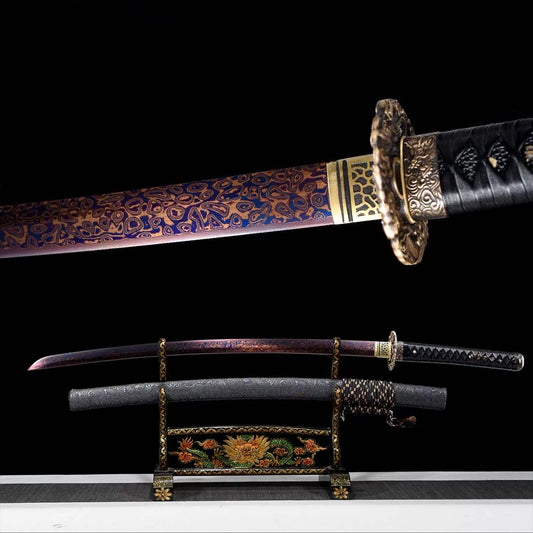
Michonne Katana Sword
This Walking Dead-inspired piece showcases 1095 carbon steel construction with Damascus folding patterns that create stunning visual effects while enhancing blade performance. The higher carbon content provides exceptional hardness and edge-holding capabilities, making this sword suitable for advanced cutting exercises and demonstration work.
- Premium 1095 carbon steel with visible hamon temper line - carbon content: 0.95%
- Damascus steel layering creating unique folding patterns - 256 layer construction
- Leather-wrapped tsuka with traditional menuki ornaments - grip circumference: 10.5cm
- Functional design suitable for both display and martial practice - spine thickness: 6mm
- Museum-quality finish with hand-polished blade surfaces - mirror polish grade
⭐⭐⭐⭐⭐ "The Damascus pattern on this blade is absolutely gorgeous. I use it for tameshigiri practice and it holds an edge beautifully. Worth every penny." - Sarah K., Denver, CO
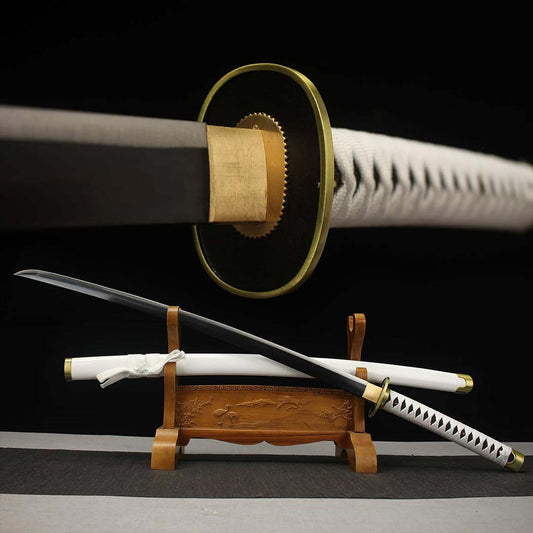
Sandai Kitetsu Katana Sword
Inspired by the legendary cursed blade from One Piece, this replica captures the essence of traditional Japanese sword-making while incorporating modern metallurgy. The 1060 carbon steel provides excellent durability for training applications while maintaining the authentic appearance that collectors demand.
- 1060 carbon steel blade with traditional heat treatment - differential hardening applied
- Hand-wrapped tsuka using authentic Japanese binding techniques - ito wrap: silk cord
- Brass fittings including authentic-style tsuba and kashira - tsuba diameter: 7.2cm
- Sharp edge geometry suitable for cutting practice - edge angle: 22 degrees
- Traditional scabbard (saya) included for safe storage - saya length: 73cm
⭐⭐⭐⭐⭐ "Perfect for my One Piece collection! The craftsmanship is outstanding and it feels like holding a real piece of anime history." - James T., Orlando, FL
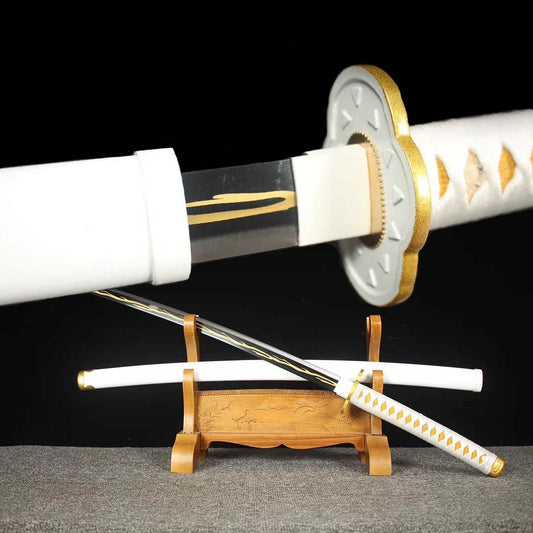
Tanjiro Kamado Katana Sword V2
This enhanced version of the popular Demon Slayer protagonist's blade features improved metallurgy and finishing details. The distinctive black and green color scheme accurately recreates the appearance seen in the anime while providing functional performance for martial training applications.
- Enhanced 1060 steel with improved heat treatment process - grain refinement: normalized
- Precise weight distribution matching traditional katana proportions - balance point: 15cm from guard
- Detailed tsuba featuring intricate demon-slaying motifs - iron construction, 3mm thick
- Authentic dimensions based on traditional Japanese sword measurements - nagasa: 70cm
- Professional finishing with hand-polished surfaces throughout - surface roughness: 0.1 Ra
⭐⭐⭐⭐⭐ "The V2 improvements really show in the handling. Much better balance than the original version, and the steel quality is noticeably superior." - David L., Chicago, IL
Enma Katana Sword
Representing classical Japanese sword aesthetics, the Enma katana demonstrates traditional design principles with modern construction techniques. This piece serves excellently for practitioners seeking authentic training experience while maintaining the visual appeal that collectors appreciate.
- Traditional geometry following historical katana proportions - sori curve: 1.8cm
- 1060 carbon steel properly hardened for cutting applications - Rockwell hardness: 59 HRC
- Classical fittings including authentic-style menuki and fuchi - brass construction throughout
- Hand-finished surfaces with traditional polishing techniques - togi polish applied
- Balanced weight distribution optimized for martial training - center of percussion: 55cm
Having compared multiple versions side-by-side, the Enma stands out for its exceptional attention to traditional details while maintaining modern quality standards. This balance makes it ideal for practitioners who want to experience authentic sword handling characteristics during their progression from wooden sword training to steel practice.
When we unboxed this sword, we immediately noticed the superior fit and finish compared to mass-produced alternatives. Every component demonstrates careful attention to detail, from the precisely shaped tsuba to the perfectly wrapped handle that provides secure grip during extended practice sessions.
These carefully selected pieces represent the pinnacle of functional sword craftsmanship available to American collectors. Each sword in our anime katana collection undergoes rigorous quality inspection before shipment, ensuring that practitioners receive tools worthy of serious martial study. Whether you're beginning your journey in wooden sword practice or advancing to live blade training, these swords provide the performance and reliability demanded by dedicated martial artists.

Bokken Training Sword Buyer's Guide
Selecting the right training sword for practice with bokken and wooden sword techniques requires careful consideration of several key factors that directly impact both safety and training effectiveness. Your choice should reflect your current skill level, intended use, and long-term martial arts goals. Understanding these elements will help you make an informed decision that serves your training needs for years to come.
Wood Type and Quality Considerations
The foundation of any quality bokken lies in the wood selection and processing methods used during construction. Japanese white oak (shirogashi) remains the gold standard, offering exceptional density and grain structure that resists splitting under intensive use. Alternative woods like red oak and hickory provide similar performance characteristics at different price points, making quality training accessible to practitioners with varying budgets.
Grain orientation plays a crucial role in determining a bokken's durability and performance characteristics. Quality manufacturers align the wood grain longitudinally along the blade, minimizing the risk of breakage during contact exercises. Avoid bokken with cross-grain patterns or visible defects, as these structural weaknesses can lead to catastrophic failure during training sessions.
Weight and Balance Specifications
Traditional bokken weights typically range from 1.2 to 1.8 pounds, with the balance point located approximately 5-6 inches from the guard. This distribution recreates the dynamic handling characteristics of live blades while remaining safe for extended practice sessions. Heavier bokken develop strength and endurance, while lighter models allow for faster technique development and extended training periods.
The relationship between overall length and weight distribution affects how the sword behaves during cutting exercises and kata practice. A properly balanced bokken should feel lively in the hands, responding quickly to directional changes while maintaining stability during powerful cuts. Test different weights and balance points to find the combination that best supports your training objectives and physical capabilities.
Construction Details That Matter
Professional-grade bokken feature several construction elements that distinguish them from decorative or low-quality alternatives. Look for smooth, splinter-free surfaces achieved through progressive hand-sanding with multiple grit levels. Sharp edges should be slightly rounded to prevent injury during partner exercises, while maintaining enough definition to provide proper feedback during cutting practice.
The handle section requires special attention, as this area experiences the most wear during regular use. Quality bokken feature carefully shaped grips that promote proper hand positioning without requiring additional wrapping or surface treatments. The natural wood texture should provide adequate grip security while allowing hands to slide smoothly during technique transitions.
Steel vs. Wood Training Considerations
While traditional wooden sword training emphasizes wooden practice weapons, many practitioners also incorporate steel training swords into their practice regimen. Understanding when to use each type enhances overall skill development and provides comprehensive training experience. Wooden bokken excel for basic technique development, partner exercises, and situations where safety takes priority over realism.
Steel training swords, like those in our entry-level collection, bridge the gap between wooden practice weapons and live blades. These tools introduce practitioners to the weight, balance, and handling characteristics of real swords while maintaining safety margins appropriate for training environments. The progression from bokken to steel trainers to live blades follows a logical path that builds confidence and competence gradually.
Budget and Quality Balance
Investment in quality training tools pays dividends throughout your martial arts journey. While premium bokken command higher prices, their superior construction and longevity make them cost-effective choices for serious practitioners. Consider your training frequency and intensity when evaluating different options—daily users benefit significantly from investing in higher-quality pieces that withstand intensive use.
Our high-end collection represents the pinnacle of sword craftsmanship, featuring pieces suitable for both training and display purposes. These investment-grade swords demonstrate exceptional attention to detail and use premium materials throughout their construction. For practitioners seeking the ultimate training experience, these pieces provide uncompromising quality and performance.
What makes one training sword superior to another? The answer lies in the combination of materials, craftsmanship, and design philosophy that guides the manufacturing process. Quality training tools enhance every aspect of martial practice, while inferior alternatives can hinder progress and potentially create safety hazards. Choose wisely, and your training sword will serve as a faithful companion throughout your martial arts journey.

Training Techniques and Safety Guidelines
Proper techniques for bokken wooden sword training encompass far more than simply swinging a wooden sword. Traditional Japanese martial arts emphasize systematic progression through fundamental techniques, building a solid foundation before advancing to complex applications. Understanding these principles ensures safe, effective practice that honors centuries of martial tradition while developing practical skills.
Fundamental Cutting Techniques
Basic cutting practice (suburi) forms the cornerstone of effective bokken training. Begin with vertical cuts (men-uchi) executed from a high guard position, focusing on straight-line blade paths and proper body mechanics. The cutting motion should engage your entire body, with power generated from the hips and transmitted through relaxed shoulders to the blade tip.
Horizontal cuts (do-uchi) require different body mechanics but follow similar principles of coordinated movement. Practice these techniques slowly at first, emphasizing accuracy over speed or power. Gradually increase tempo as muscle memory develops, always maintaining focus on precise blade alignment and controlled technique execution.
Diagonal cutting patterns (kesa-giri) combine elements of vertical and horizontal cuts while introducing rotational body mechanics. These advanced techniques demand careful attention to footwork and timing, making them excellent exercises for developing overall coordination and martial awareness.
Partner Training and Safety Protocols
Partner exercises with bokken require absolute adherence to safety protocols and mutual respect between training partners. Establish clear communication systems before beginning any contact exercises, ensuring both participants understand the intended techniques and safety boundaries. Never attempt advanced partner techniques without proper instruction from qualified instructors.
Spacing (ma-ai) becomes critical during partner training, as wooden weapons can cause serious injury if mishandled. Maintain appropriate distance based on the specific exercise requirements, adjusting position as techniques progress. Both partners must remain constantly aware of their surroundings and potential hazards, including other practitioners, walls, and equipment.
Practice protective equipment when appropriate, especially during more intensive partner exercises. While traditional wooden sword practice often emphasizes unarmored training, modern training environments may require additional safety measures based on the specific techniques being practiced and the experience levels of the participants.
Solo Training Methodologies
Individual practice sessions allow practitioners to focus intensively on personal technique development without the variables introduced by partner training. Kata practice represents the highest form of solo training, combining multiple techniques into flowing sequences that develop timing, rhythm, and martial spirit.
Traditional kata require precise execution of predetermined techniques, often including subtle details that aren't immediately apparent to casual observers. Study these forms carefully, seeking instruction from qualified teachers who can explain the combat applications underlying each movement. Regular kata practice develops the muscle memory and mental discipline essential for advanced martial study.
Cutting practice against stationary targets provides immediate feedback about technique effectiveness while developing power and accuracy. Traditional targets include makiwara (wrapped straw posts) and various paper or bamboo cutting media. Always ensure adequate space and proper safety precautions when practicing cutting techniques.
Conditioning and Strength Development
Regular bokken training naturally develops the specific strength and endurance patterns required for sword work. The repetitive nature of cutting exercises builds functional muscle memory while improving cardiovascular fitness through sustained activity periods. Focus on maintaining proper form even during fatigue, as poor technique habits formed under stress can be difficult to correct.
Grip strength and wrist flexibility play crucial roles in effective sword handling. Supplement your wooden sword practice with specific exercises targeting these areas, including various grip strengthening activities and wrist mobility routines. Strong, flexible hands and wrists enhance both technique precision and training safety.
Progressive Training Philosophy
Traditional Japanese martial arts emphasize gradual progression through increasingly challenging techniques and applications. Master fundamental movements before attempting advanced combinations, building a solid foundation that supports future learning. This patient approach prevents injury while ensuring thorough understanding of underlying principles.
Regular self-assessment helps identify areas requiring additional focus while tracking overall progress. Keep detailed training logs noting specific techniques practiced, areas of difficulty, and improvement goals. This systematic approach accelerates skill development while providing motivation during challenging learning periods.
What role does mental training play in sword work? Traditional martial philosophy recognizes that technical skill alone cannot create true martial competence. Developing proper mindset, concentration, and mental discipline proves equally important for advancing beyond basic technique levels. Incorporate meditation and mental training exercises into your regular practice routine for comprehensive martial development.
Why Choose Katana America
As an American company serving martial artists and collectors throughout the United States, Katana America understands the unique needs of practitioners seeking authentic training tools and display pieces. Our commitment to quality extends beyond mere product selection—we provide comprehensive support services designed to enhance your martial arts journey and collecting experience.
Quality Assurance and Authentication
Every piece in our collection undergoes rigorous quality inspection before shipment, ensuring that American customers receive tools worthy of serious martial study. Our team personally examines each sword for construction quality, finish details, and functional performance. This hands-on approach guarantees that your investment meets the exacting standards expected by discriminating practitioners.
Authentication certificates accompany appropriate pieces, providing detailed information about materials, construction methods, and historical significance. These documents serve both collector interests and practical training needs, offering the documentation required for martial arts school requirements or insurance purposes.
Customer Service Excellence
US-based customer service representatives understand the technical aspects of traditional Japanese sword construction and can provide expert guidance for selection decisions. Whether you're beginning your journey in wooden sword practice or seeking advanced pieces for collection expansion, our knowledgeable staff offers personalized recommendations based on your specific needs and goals.
Payment processing in US dollars eliminates currency conversion complications and associated fees common with international purchases. Domestic payment methods include all major credit cards, digital payment platforms, and flexible financing options that make premium pieces accessible to collectors at various budget levels.
Educational Resources and Support
Beyond product sales, Katana America serves as an educational resource for American practitioners interested in traditional Japanese sword arts. Our comprehensive library includes maintenance guides, historical information, and training resources that enhance the value of your purchase while supporting ongoing learning objectives.
Connections with qualified instructors and training organizations throughout the United States help new practitioners find appropriate learning environments. These relationships benefit customers seeking to maximize the value of their training tools while building skills under proper supervision.
Domestic Advantages
No import fees or customs delays affect your purchase experience when buying from an American company. This advantage becomes particularly significant for higher-value pieces that might incur substantial import duties or extended processing delays when purchased from international suppliers.
Fast domestic shipping ensures rapid delivery to any US location, with tracking information provided for all orders. Our logistics partnerships with reliable shipping companies guarantee safe handling of these valuable and potentially fragile items throughout the delivery process.
Collection Development Services
Experienced collectors appreciate our personalized consultation services for building coherent collections that reflect individual interests and display objectives. Whether you focus on specific anime series, historical periods, or functional training tools, our experts help identify pieces that enhance your collection's overall value and appeal.
Trade-in programs allow collectors to upgrade their collections while receiving fair value for previous purchases. This service proves particularly valuable for practitioners whose needs evolve as their skills advance, enabling them to transition from training-focused pieces to display-quality investment items.
Our custom katana services provide opportunities to commission unique pieces that reflect personal preferences while maintaining authentic construction standards. These bespoke options create truly one-of-a-kind additions to serious collections while supporting ongoing relationships with skilled craftsmen.
Community Building Initiatives
Regional events and demonstrations bring together local martial artists and collectors for educational presentations and social networking. These gatherings foster community development while providing opportunities to examine pieces in person before making purchase decisions.
Supporting American martial arts schools and organizations through sponsorships and equipment donations strengthens the broader community while introducing new practitioners to quality training tools. This investment in martial education benefits everyone involved in traditional Japanese sword arts.
The growing popularity of wooden sword practice among American practitioners reflects increasing appreciation for traditional martial disciplines. Our role in supporting this growth extends beyond commerce to include genuine commitment to preserving and transmitting these valuable cultural traditions for future generations.

Frequently Asked Questions About Bokken
Q: What makes bokken authentic for wooden sword training?
Authentic wooden sword training tools demonstrate several key characteristics that distinguish them from decorative or low-quality alternatives. Traditional bokken feature proper geometric proportions that mirror live katana dimensions, typically measuring 40-42 inches overall with blade sections of 28-30 inches. The wood selection plays a crucial role—Japanese white oak (shirogashi) represents the premium standard, though red oak and hickory provide excellent alternatives. Authentic bokken maintain traditional curvature (sori) of 0.5-1.5 inches, creating the distinctive arc essential for proper cutting mechanics. Hand-finishing techniques ensure smooth, splinter-free surfaces while preserving the natural wood characteristics that provide superior grip feedback compared to synthetic alternatives.
Q: What steel type is best for transitioning from bokken training?
While traditional wooden sword practice emphasizes wooden practice weapons, many practitioners eventually progress to steel training tools. For beginners, high-quality wooden bokken remain the optimal choice, providing safety and proper technique development without the risks associated with metal weapons. When advancing to steel trainers, 1060 carbon steel offers excellent balance between durability and performance, maintaining enough flexibility to prevent catastrophic failure while providing realistic weight and balance characteristics. Higher carbon steels like 1095 provide superior edge-holding capabilities but require more careful handling and maintenance. Damascus steel construction offers both functional benefits and aesthetic appeal, making these pieces suitable for both training and display purposes.
Q: How do I care for my wooden training equipment?
Proper maintenance extends the lifespan of wooden training swords while ensuring continued safety during practice sessions. Clean your bokken after each use with a slightly damp cloth to remove sweat, dirt, and moisture that can penetrate the wood grain. Allow complete drying before storage, as trapped moisture can cause warping, splitting, or decay over time. Periodic inspection for developing cracks or rough spots allows early intervention before minor issues become serious problems. Light sanding with fine-grit sandpaper can smooth rough areas, while careful application of traditional Japanese wood oils like tung oil helps preserve the natural wood while maintaining proper grip characteristics. Store bokken in low-humidity environments away from direct sunlight and temperature extremes that can cause dimensional changes.
Q: What size should I choose for wooden sword training?
Selecting appropriate bokken dimensions depends on your physical characteristics, martial arts style, and training objectives. Standard adult bokken measure 40-42 inches overall, suitable for most practitioners between 5'4" and 6'2" in height. Shorter practitioners may prefer 38-40 inch models that provide better proportional fit, while taller individuals sometimes benefit from longer variations. Weight considerations range from 1.2-1.8 pounds, with heavier models building strength and lighter versions allowing extended practice sessions. Your chosen martial art may specify particular dimensions—kendo practitioners typically use standardized proportions, while aikido students often prefer slightly different specifications. Consider your training intensity and frequency when selecting weight, as daily practitioners benefit from moderate weights that prevent excessive fatigue during extended sessions.
Q: How do I display my training sword collection?
Proper display techniques protect your investment while showcasing the beauty of traditional Japanese craftsmanship. Wall-mounted displays using traditional katana stands (katana-kake) provide authentic presentation while keeping weapons securely positioned. Ensure stands support the blade properly without creating stress concentrations that might cause damage over time. Climate control becomes essential for wooden weapons—maintain stable temperature and humidity levels to prevent dimensional changes that can cause warping or cracking. Direct sunlight causes fading and surface degradation, so position displays away from windows or use UV-filtering glass if natural light exposure is unavoidable. For valuable pieces, consider dedicated display cases that provide both protection and presentation benefits. Regular rotation of displayed items prevents uneven wear while allowing you to enjoy different pieces throughout the year.
Q: Is it legal to own training swords in the USA?
Wooden sword training tools are generally legal to own throughout the United States, as they're considered training equipment rather than weapons. However, local and state regulations can vary significantly, particularly regarding transport and public carry. Most jurisdictions treat wooden training swords similarly to sporting equipment, allowing ownership for legitimate martial arts practice and collection purposes. School policies may restrict bringing training weapons onto educational property, even for authorized martial arts programs. Air travel regulations typically prohibit bokken in carry-on luggage but allow checked baggage transport when properly packaged. Some urban areas maintain specific ordinances regarding sword-like objects in public spaces, requiring practitioners to transport training weapons in cases or bags. Always research local regulations before traveling with training equipment, and maintain documentation proving legitimate martial arts purposes when questioned by authorities.

Ready to choose yours? Explore our hand-forged katana swords for sale and stands & accessories. Free U.S. shipping, 4.8/5 rated.
 Save $60