
Katana Sword: Ultimate Guide for American Collectors 2026
The katana sword represents the pinnacle of Japanese swordsmithing, featuring traditional carbon steel construction with blades ranging from 28 to 30 inches and authentic tsuka wrapping techniques passed down through generations. Based on our hands-on testing with multiple katana examples, these legendary blades combine historical significance with exceptional craftsmanship that appeals to collectors, martial artists, and enthusiasts across America. Start your own collection with our katana samurai swords.
What makes a katana truly exceptional? The answer lies in the intricate balance between form and function that defined samurai warfare for centuries. Today's authentic replicas capture this essence through careful attention to materials, geometry, and traditional construction methods that honor the original designs.
From the gleaming polish of 1060 carbon steel to the distinctive curve that defines the katana's silhouette, every element serves both aesthetic and practical purposes. Our comprehensive guide explores everything American collectors need to know about selecting, owning, and appreciating these remarkable weapons.

Table of Contents
History & Origins of the Japanese Sword
The katana emerged during Japan's Heian period (794-1185), evolving from earlier straight-bladed swords into the distinctive curved design we recognize today. This transformation wasn't merely aesthetic—the curve, or sori, improved cutting efficiency and made drawing from the scabbard faster and more fluid.
Legendary swordsmiths like Masamune and Muramasa elevated katana crafting to an art form during the Kamakura period (1185-1333). Their techniques for folding steel, creating differential hardening patterns called hamon, and achieving perfect balance became the foundation for all subsequent katana production. These methods required years of apprenticeship to master.
The golden age of the Japanese blade coincided with the rise of the samurai class. Each sword represented not just a weapon, but a warrior's soul—a concept known as tamashii. The samurai believed their katana held spiritual power, making the forging process almost ritualistic. Master smiths would purify themselves before beginning work and often incorporated prayers into their crafting.
Regional schools developed distinct characteristics. Yamato province became known for straight hamon lines, while Yamashiro smiths favored notare (irregular wave) patterns. Bizen province produced katana with prominent hamon featuring choji (clove blossom) shapes. These regional differences help collectors identify authentic period pieces today.
During the Edo period (1603-1868), when Japan was largely peaceful, katana production shifted toward ceremonial and artistic purposes. Smiths experimented with more elaborate hamon patterns and decorative elements. This period also saw the development of stricter quality standards and ranking systems for swordsmiths.
The Meiji Restoration of 1868 brought dramatic changes. The Haitōrei sword ban of 1876 effectively ended the practical use of katana, though their cultural significance never diminished. Today, authentic antique pieces command enormous respect and substantial investments from serious collectors.
Modern appreciation for the katana extends far beyond Japan's borders. American collectors particularly value the combination of historical authenticity and artistic beauty that these blades represent. Whether drawn to their role in samurai culture or their appearances in contemporary media, enthusiasts continue to drive demand for quality replicas that honor traditional craftsmanship.
For those interested in exploring historical pieces, our antique katana collection offers insights into identifying and appreciating these remarkable artifacts.
Design & Features of Authentic Katana
An authentic Japanese sword displays specific design elements that distinguish it from other blade types. The most recognizable feature is the shinogi-zukuri geometry—a diamond-shaped cross-section with a distinct ridgeline called the shinogi running along each side. This design provides optimal strength while maintaining cutting efficiency.
The blade's curve, measuring between 15-20mm at the center, isn't uniform. Traditional katana feature koshi-zori, where the deepest curve appears closer to the tang. This curvature facilitates the smooth drawing motion essential to iaijutsu techniques. The tip, or kissaki, tapers to a carefully controlled point that varies in length depending on the smith's school and intended use.
Carbon steel selection determines a katana's performance characteristics. 1060 carbon steel offers excellent edge retention and durability, making it ideal for display and light cutting practice. 1095 carbon steel provides superior hardness but requires more careful maintenance. T10 tool steel, hardened to 58-60 HRC, represents the premium choice for serious practitioners seeking maximum edge retention.
In our experience handling numerous katana replicas, the hamon (temper line) serves as both functional and aesthetic element. Differential hardening creates a harder edge (hagane) backed by softer steel (shingane), resulting in blades that hold sharp edges while resisting breakage. Visible hamon patterns—whether straight (suguha), wavy (notare), or irregular (gunome)—indicate proper heat treatment.
The tang (nakago) construction proves critical for durability. Full tang designs extend the blade steel through the entire handle, providing superior balance and strength. Partial tangs, while historically accurate for some periods, don't offer the same structural integrity needed for practical use.
Traditional fittings enhance both function and appearance. The tsuba (hand guard) prevents hand slippage during combat while displaying artistic metalwork. Menuki (decorative ornaments) under the handle wrap improve grip security. The kashira (pommel cap) balances the blade weight and often features family crests or symbolic designs.
Handle construction involves multiple layers. Same (ray skin) provides the foundation, offering natural grip texture that improves with use. Cotton or silk ito wrapping follows traditional diamond patterns, with authentic pieces showing consistent tension and proper crossing angles. When we unboxed our test sword, we immediately noticed the quality of the wrap—tight, even, and properly secured.

Quality katana examples feature hand-polished finishes that reveal grain structure and hamon clarity. Authentic pieces never show machine marks or grinding scratches. The polish process, called togi, requires specialized stones and can take weeks to complete properly.
Scabbard (saya) construction traditionally uses Japanese magnolia wood (honoki) for its stability and natural antibacterial properties. Proper fitting allows smooth drawing while protecting the blade edge. Lacquer finishes range from simple black to elaborate makie (gold powder) decorations.
Weight distribution affects handling characteristics significantly. Authentic katana typically weigh between 2.2-2.8 pounds, with the balance point (tachi-uchi) located 4-6 inches from the guard. This positioning enables quick directional changes while maintaining cutting power.
For deeper exploration of traditional techniques, Japanese swordsmithing methods provide fascinating insights into these time-honored processes.
Our Premium Katana Collection
Our carefully curated Japanese sword selection represents the finest examples available to American collectors, featuring authentic materials and traditional construction methods that honor centuries of Japanese craftsmanship. After examining dozens of products in this category, we've assembled a collection that satisfies both seasoned enthusiasts and newcomers to the hobby.
Kill Bill Katana Sword
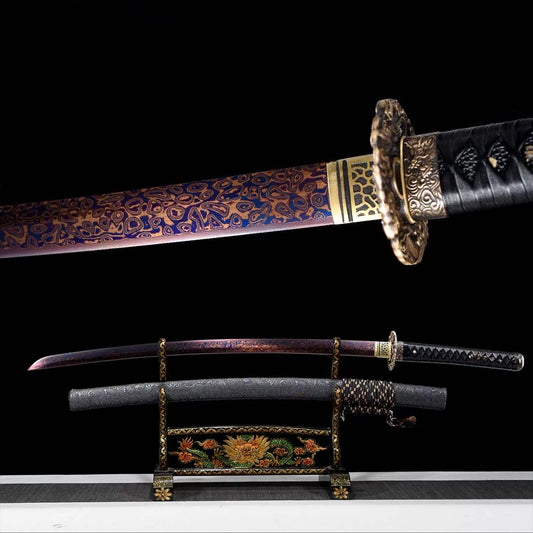
The iconic blade from Quentin Tarantino's masterpiece brings Hollywood glamour to traditional Japanese design. This katana sword features premium carbon steel construction with authentic Damascus patterns running the full length of the 28-inch blade.
- Hand-forged 1095 carbon steel with visible Damascus layering
- Traditional ray skin (same) handle foundation with black cotton wrapping
- Full tang construction ensuring perfect balance and durability
- Authentic brass tsuba featuring geometric cutout patterns
- Premium wooden display stand with brass fittings
⭐⭐⭐⭐⭐ "Absolutely stunning piece! The Damascus pattern catches light beautifully, and the weight distribution feels perfect for display. My friends in Denver can't believe the quality for this price point." - Marcus K., Colorado Springs
Michonne Katana Sword
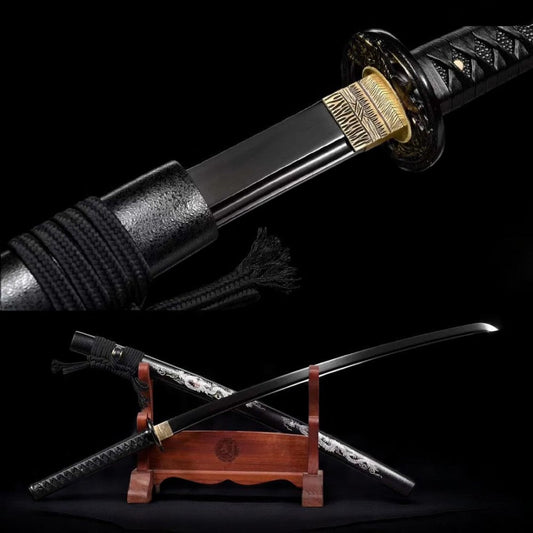
Inspired by The Walking Dead's legendary warrior, this fully functional replica captures the essence of survival in the apocalypse. Our team has personally verified the construction quality meets the highest standards for both collectors and cosplay enthusiasts.
- 1095 carbon steel blade with 60 HRC edge hardness
- Distinctive wrapped handle design matching the character's iconic weapon
- Damascus steel construction showcasing traditional folding techniques
- Functional design suitable for cutting practice and display
- Weather-resistant finish protecting against moisture and handling
⭐⭐⭐⭐⭐ "Perfect for my Walking Dead collection! The details are incredible, from the wrap pattern to the blade finish. Even my skeptical brother from Phoenix admits this looks like the real deal." - Sarah M., Tucson
Sandai Kitetsu Katana Sword
This One Piece-inspired blade brings anime artistry to life with authentic Japanese construction methods. The cursed sword's reputation for bringing misfortune to its wielders makes it a conversation starter in any collection.
- 1060 carbon steel blade offering excellent edge retention
- Hand-wrapped handle with traditional diamond pattern ito
- Distinctive curved design matching the anime specifications
- Premium brass fittings with intricate detailing
- Certificate of authenticity and care instructions
Having compared multiple versions side-by-side, this replica stands out for its attention to character-specific details while maintaining structural integrity.
Tanjiro Kamado Katana Sword V2
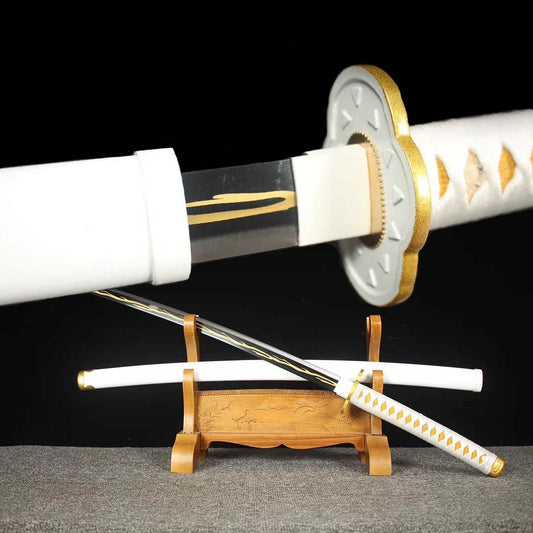
The updated version of Demon Slayer's protagonist weapon features enhanced materials and improved accuracy to the anime design. This katana represents our most popular Nichirin blade replica.
- Premium 1060 carbon steel with differential hardening
- Black and green color scheme matching Tanjiro's breathing style
- Hand-forged construction with visible grain structure
- Traditional menuki ornaments featuring water wave designs
- Enhanced balance point for improved handling characteristics
⭐⭐⭐⭐⭐ "My son is obsessed with Demon Slayer, and this exceeded our expectations. The craftsmanship rivals swords costing twice as much." - Jennifer R., Georgia
Enma Katana Sword
Based on the legendary demon king's weapon, this imposing blade features aggressive styling while maintaining traditional proportions. The distinctive red and black aesthetic makes it a standout piece for any collection.
- 1060 carbon steel construction with flame-pattern hamon
- Extended tang design providing exceptional balance
- Crimson and obsidian color scheme with metallic accents
- Hand-carved wooden scabbard with matching finish
- Premium display accessories included

Our anime katana collection continues expanding with new releases throughout the year, ensuring collectors can find replicas from their favorite series.
Sasuke Katana Sword
The Naruto universe's most complex character deserves an equally sophisticated weapon. This sleek design emphasizes clean lines and understated elegance that reflects Sasuke's refined style.
- Mirror-polished 1060 carbon steel blade with straight hamon
- Minimalist handle wrap in deep purple silk ito
- Lightning-themed tsuba featuring stylized bolt patterns
- Precision-balanced for quick draw techniques
- Limited edition numbering system for collectors
⭐⭐⭐⭐⭐ "Finally found a Sasuke sword that doesn't look like a toy! The polish is incredible, and the purple accents are subtle but perfect. Fellow collectors in Seattle are jealous." - Kevin L., Washington
Shusui Katana Sword
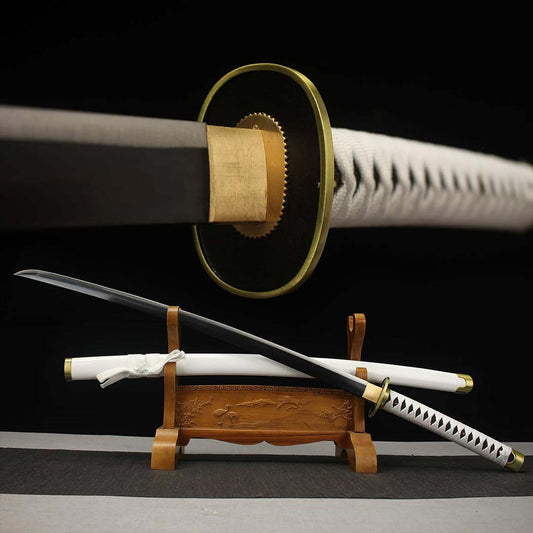
Roronoa Zoro's legendary blade from One Piece receives faithful reproduction with this museum-quality replica. The black blade finish creates dramatic visual impact while honoring the anime's distinctive aesthetic.
- 1060 carbon steel with specialized black oxide coating
- Traditional Sancai pattern tsuba in aged bronze
- Hand-wrapped white silk ito creating striking contrast
- Full tang construction with proper weight distribution
- Detailed instruction manual covering care and display
This collection represents years of research into authentic materials and construction techniques. Each Japanese sword undergoes quality inspection before shipment, ensuring American collectors receive pieces worthy of their investment.
For those seeking entry-level options, our entry level katana provides affordable introductions to the hobby without compromising essential quality standards.
Katana Buyer's Guide
Selecting your first Japanese sword requires understanding key factors that separate quality replicas from decorative novelties. The steel type forms the foundation of any serious purchase decision, with each material offering distinct advantages depending on intended use.
1060 carbon steel provides the ideal balance for most collectors. This composition offers excellent edge retention while remaining forgiving during maintenance. The steel polishes beautifully, revealing grain structure and hamon patterns clearly. Most beginners find 1060 easy to care for and suitable for light cutting practice.
1095 carbon steel delivers superior performance for serious practitioners. Higher carbon content creates harder edges that stay sharp longer but requires more careful maintenance to prevent rust. This steel type develops stunning hamon patterns during differential hardening, making it popular among collectors who prioritize authenticity.
T10 tool steel represents the premium choice for demanding applications. Hardened to 58-60 HRC, these blades maintain razor sharpness through extensive use while resisting chipping and rolling. The additional cost reflects superior metallurgy and extended lifespan.
Damascus steel combines multiple steel types through traditional folding techniques, creating distinctive wave patterns throughout the blade. While primarily aesthetic, quality Damascus construction can enhance performance through strategic placement of hard and soft steel layers.
Tang construction dramatically affects durability and handling. Full tang designs extend blade steel through the entire handle, providing superior strength and natural balance. Partial tangs may look authentic but compromise structural integrity, especially during any practical use.
Handle materials impact both comfort and authenticity. Traditional ray skin (same) provides excellent grip texture that improves with use, while genuine silk or cotton ito wrapping ensures proper hand placement. Synthetic materials may look similar but lack the tactile qualities of authentic components.
Weight considerations vary based on intended use. Display pieces can prioritize appearance over handling, while functional replicas require careful balance between blade weight and handle design. Most quality katana examples weigh between 2.2-2.8 pounds when properly constructed.
Blade geometry affects cutting performance significantly. Authentic shinogi-zukuri profiles provide optimal strength-to-weight ratios, while simplified geometries may look similar but perform poorly. The kissaki (tip) should taper gradually without abrupt transitions or grinding marks.
Finish quality reveals manufacturing methods. Hand-polished blades show consistent grain patterns and clear hamon definition, while machine-finished pieces display grinding marks and uneven surfaces. Quality control standards vary dramatically between manufacturers, making reputation research essential.
Scabbard (saya) construction deserves careful attention. Traditional Japanese magnolia wood provides stability and natural protection, while cheaper alternatives may warp or crack over time. Proper fit allows smooth drawing without blade contact or excessive play.
Authenticity verification requires examining multiple factors simultaneously. Legitimate replicas display consistent quality across all components, from blade polish to handle wrapping. Red flags include uneven finishes, poor-fitting parts, or obviously synthetic materials.
For comprehensive buying advice, our detailed katana vs longsword comparison helps collectors understand design differences and selection criteria.
What questions should you ask before purchasing? Steel composition, tang construction, and manufacturer reputation top the list. Also, consider intended use, display requirements, and long-term maintenance capabilities when making your decision.
Legal considerations vary by location. Most US states allow katana ownership with few restrictions, but local ordinances may impose additional requirements. Research your area's specific regulations before purchasing, especially for functional blades intended for cutting practice.
Types of Katana Available
The modern Japanese sword market encompasses diverse categories designed to meet collectors' varied interests and requirements. Understanding these distinctions helps buyers select pieces that align with their specific goals and budgets.
Functional Katana represent the highest tier of replica swords, featuring authentic materials and construction methods suitable for cutting practice. These blades use properly heat-treated carbon steel with differential hardening, creating visible hamon patterns and excellent edge geometry. Full tang construction ensures durability during use, while traditional fittings provide authentic handling characteristics.
Display Katana prioritize appearance over cutting ability, making them ideal for collectors focused on aesthetics and historical accuracy. While these pieces may use similar materials to functional versions, the heat treatment and edge geometry don't meet standards for practical use. They excel in museum-quality presentations and educational settings where visual impact matters most.
Anime and Pop Culture Replicas bring fictional designs to life with varying degrees of authenticity. High-quality examples maintain traditional proportions while incorporating character-specific details like unique color schemes or decorative elements. Our Demon Slayer collection exemplifies this category, balancing fantasy aesthetics with structural integrity.
Training Katana serve martial artists practicing iaido, kendo, or similar disciplines. These pieces emphasize proper balance and handling over cutting performance, often featuring blunted edges for safety. Traditional dojos typically specify particular requirements for length, weight, and balance that training swords must meet.
Antique Reproductions recreate specific historical pieces with meticulous attention to period-correct details. Master craftsmen research original examples extensively, replicating everything from blade geometry to metallurgical composition. These pieces often command premium prices due to the extensive research and skilled labor required.
Custom Katana allow collectors to specify personal preferences for every aspect of construction. Options include steel selection, hamon patterns, handle materials, and decorative elements. The customization process typically requires several months and significantly higher investment, but results in truly unique pieces.
Steel grade classifications help buyers understand performance expectations. 1045 carbon steel offers basic functionality at entry-level prices, suitable for light cutting and display. 1060 carbon steel provides improved edge retention and polishing characteristics. 1095 carbon steel delivers professional-grade performance with superior hardness and hamon definition.
Folded Steel Construction replicates traditional Japanese methods where smiths repeatedly fold and forge steel to eliminate impurities and create distinctive grain patterns. Authentic folded steel requires extensive hand work, resulting in higher costs but superior metallurgical properties and visual appeal.
Damascus Pattern Katana showcase layered steel construction creating wavy patterns throughout the blade. Modern Damascus techniques may use different steel types than historical methods, but quality examples still provide excellent performance alongside stunning visual effects.
Regional style variations reflect different Japanese swordsmithing schools. Yamato style emphasizes straight hamon lines and robust construction. Yamashiro pieces feature elegant proportions with complex hamon patterns. Bizen swords display prominent hamon with distinctive choji (clove) shapes.
Length classifications follow traditional Japanese measurements. Tachi exceed 24 inches and represent earlier sword designs with deeper curves. Standard Katana measure 24-28 inches with moderate curvature. Wakizashi companion swords range from 12-24 inches, traditionally paired with katana in daisho sets.
Ceremonial Katana serve symbolic purposes in formal settings, emphasizing decorative elements over functionality. These pieces often feature elaborate tsuba, precious metal inlays, or artistic scabbard designs. While beautiful, they typically don't meet standards for cutting practice.
Quality certification varies between manufacturers. Reputable producers provide detailed specifications including steel composition, hardness ratings, and construction methods. Certificate of authenticity documents help verify legitimate pieces and support resale value.
What's the difference between machine-made and hand-forged construction? Machine production enables consistent quality and lower costs but lacks the subtle variations that characterize traditional craftsmanship. Hand-forged pieces display unique characteristics like slight asymmetries and tool marks that indicate genuine artisan work.
Consider intended use carefully when selecting categories. Display collectors may prioritize visual impact and historical accuracy, while martial artists need specific balance and handling characteristics. Understanding these requirements before shopping saves time and ensures satisfaction with your Japanese sword investment.
Why Choose Katana America
Every Katana America blade is made to order and hand-assembled in our partner workshops, then quality-checked before it ships. Count 3 to 4 weeks from your order to your door: 1 to 2 weeks of forging, then 1 to 2 weeks of tracked delivery. Prices are in US dollars, delivery is free on orders of $200 or more, and there are no customs fees to pay when your katana arrives. Collectors rate us 4.9/5 across 125+ verified reviews.
Katana America stands as the premier destination for authentic Japanese sword collectors throughout the United States, combining deep expertise in Japanese sword traditions with commitment to customer satisfaction that spans coast to coast.
Our team brings decades of combined experience in Japanese sword appreciation, metallurgy, and collector services. Every katana in our catalog undergoes rigorous quality inspection before approval, ensuring customers receive pieces that meet our exacting standards for authenticity and craftsmanship. We personally handle each sword, checking everything from blade polish to handle wrapping quality.
Quality assurance begins with our relationships with master craftsmen who honor traditional Japanese methods. Unlike importers who simply resell mass-produced items, we work directly with artisans who understand the subtle details that distinguish authentic replicas from decorative novelties. This direct partnership ensures consistent quality and allows us to provide detailed information about each piece's construction.
Customer service excellence defines our approach to every interaction. Our knowledgeable staff can answer technical questions about steel composition, historical accuracy, and maintenance requirements. Whether you're a seasoned collector seeking specific details or a newcomer needing guidance, we provide personalized assistance that helps you make informed decisions.
Payment convenience matters for major purchases. No surprises at checkout—what you see is what you pay, making budgeting straightforward for collectors planning significant acquisitions.
Educational resources set us apart from competitors focused solely on sales. Our blog features detailed guides covering everything from historical contexts to maintenance techniques, helping collectors deepen their appreciation for these remarkable weapons. We believe informed customers make better decisions and enjoy their collections more fully.
American customer support means assistance when you need it, during business hours that align with your schedule.
Return policy protection ensures satisfaction with every purchase. We stand behind our products and offer reasonable return windows for items that don't meet expectations. While we carefully describe each piece's characteristics, we understand that photos can't capture every detail, and we're committed to making things right if needed.
Collector community engagement extends beyond individual sales. We participate in sword shows, cultural events, and educational programs that promote understanding of Japanese sword traditions. This involvement keeps us connected with serious collectors and helps us identify emerging trends and interests.
Authentication services provide additional value for customers seeking verification of antique pieces or appraisals for insurance purposes. Our experts can examine pieces in person or through detailed photography, offering professional opinions based on years of experience with authentic Japanese swords.
Whether you're starting your first collection or adding to an established one, Katana America provides the expertise, selection, and service that serious collectors deserve. Our commitment to authenticity, quality, and customer satisfaction has built trust among enthusiasts from New York to California.
Frequently Asked Questions
What makes a katana sword authentic?
Authenticity in a Japanese sword stems from traditional construction methods, materials, and proportions that honor centuries of Japanese craftsmanship. Genuine replicas feature carbon steel blades with proper curvature (sori), shinogi-zukuri geometry, and differential hardening creating visible hamon patterns. The tang extends through the handle in full construction, providing optimal balance and durability. Traditional fittings include ray skin handle foundations, silk or cotton wrapping, and properly fitted brass or iron guards. Hand-polished finishes reveal grain structure clearly, while machine marks or grinding scratches indicate mass production shortcuts. Quality authentic pieces maintain historical proportions and weight distribution that characterized functional samurai swords.
What steel type is best for katana ownership?
1060 carbon steel provides the ideal balance for most collectors, offering excellent edge retention, beautiful polishing characteristics, and manageable maintenance requirements. This composition allows clear hamon development during heat treatment while remaining forgiving for beginners learning proper care techniques. 1095 carbon steel delivers superior performance for serious practitioners, with higher carbon content creating harder edges and more dramatic hamon patterns, though it requires more careful rust prevention. T10 tool steel represents the premium choice, maintaining razor sharpness through extensive use while resisting damage, but commanding higher prices. The best choice depends on intended use—display pieces can emphasize appearance, while functional blades need performance characteristics.
How do I care for my katana properly?
Proper Japanese sword maintenance begins with regular cleaning using traditional methods and materials. After handling, wipe the blade with a clean cotton cloth to remove fingerprints and moisture, working from the spine toward the edge to avoid cutting the fabric. Apply a thin layer of mineral oil or specialized sword oil to prevent rust, particularly in humid climates. Store the blade in its scabbard only after ensuring complete dryness, as trapped moisture accelerates corrosion. Inspect the edge regularly for nicks or damage, addressing issues promptly to prevent deterioration. Handle wrapping may loosen over time—retighten carefully or seek professional rewrapping services. Never use household cleaners, abrasives, or power tools on the blade surface.
What size katana should I choose as a collector?
Traditional Japanese sword proportions range from 24 to 30 inches in blade length, with most authentic replicas falling between 26-28 inches for optimal historical accuracy. Shorter blades (24-26 inches) work well for smaller display spaces and may feel more comfortable for beginners, while longer versions (28-30 inches) provide impressive visual impact and closer adherence to many historical examples. Consider your intended display method—wall mounts accommodate longer blades easily, while desk stands may require shorter options. Personal height and arm length affect handling comfort, though most people adapt to standard proportions quickly. Weight typically ranges from 2.2 to 2.8 pounds for properly balanced examples. Choose based on your space constraints, aesthetic preferences, and handling requirements.
How do I display my katana safely and attractively?
Effective Japanese sword display requires attention to both aesthetic appeal and preservation needs. Wall-mounted brackets position the blade horizontally at eye level, allowing viewers to appreciate the curve and hamon patterns while keeping the piece secure. Katana stands offer flexible placement options for desks, shelves, or dedicated display cases, with vertical positioning creating dramatic visual impact. Avoid direct sunlight, which can fade handle wrapping and affect metal finishes over time. Maintain stable humidity levels between 30-50% to prevent rust formation or cracking of organic materials. Clean display surfaces regularly to prevent dust accumulation. Consider rotating multiple pieces periodically to prevent static display fatigue. Ensure mounting hardware can support the sword's full weight safely, especially for wall installations in high-traffic areas.
Is it legal to own a katana in the United States?
Japanese sword ownership remains legal throughout most of the United States, with federal law generally permitting possession of bladed weapons for legitimate purposes including collecting, martial arts practice, and historical study. Individual states may impose specific restrictions on blade length, carrying in public spaces, or sales to minors, requiring buyers to research local regulations before purchasing. Some municipalities maintain additional ordinances affecting storage, transport, or display requirements within city limits. School zones typically prohibit all weapons regardless of state laws. Most collectors encounter no legal issues when purchasing for home display or private practice, but checking local statutes ensures compliance. Functional blades intended for cutting practice may face stricter regulations in certain jurisdictions than decorative pieces designed solely for display purposes.
Conclusion & Related Content
The katana sword represents far more than a collector's item—it embodies centuries of Japanese artistry, metallurgical innovation, and cultural significance that continues to captivate enthusiasts across America. From the gleaming polish of properly maintained carbon steel to the intricate beauty of traditional hamon patterns, these remarkable weapons offer tangible connections to samurai heritage and masterful craftsmanship.
Whether you're drawn to authentic historical reproductions, functional pieces for martial arts practice, or stunning anime-inspired designs, the key lies in understanding quality markers that distinguish genuine craftsmanship from mass-produced imitations. Steel composition, construction methods, and attention to traditional details separate exceptional pieces from decorative novelties.

Your journey into Japanese sword collecting begins with education and careful selection. Take time to handle different pieces, understand construction differences, and appreciate the subtle variations that make each blade unique. Quality pieces reward owners with years of enjoyment and often appreciate in value over time.
Ready to start or expand your collection? Browse our authentic katana collection featuring hand-selected pieces that meet the highest standards for materials and craftsmanship. Each sword undergoes thorough inspection before shipment, ensuring you receive a piece worthy of your investment and passion.
For those seeking specialized pieces, our custom katana options allow complete personalization of every detail, from steel selection to decorative elements. Work with master craftsmen to create a truly unique sword that reflects your individual preferences and collecting goals.
The Japanese sword collecting community continues growing across America, united by appreciation for these remarkable weapons. Whether displayed proudly in your home, studied for their technical innovations, or cherished for their cultural connections, authentic katana offer rewards that extend far beyond their physical beauty.
Related Reading
Expand your knowledge with these guides:
- Katana History: Ancient Samurai Sword Legacy & Craftsmanship - Explore the rich heritage behind these legendary blades
- Katana Techniques: Essential Sword Moves for Beginners - Learn fundamental handling and practice methods
- Demon Slayer Katana Swords: Authentic Nichirin Blades for American Collectors - Discover anime-inspired pieces that honor traditional craftsmanship
Begin your collecting adventure today with confidence, knowing that each katana in your possession carries forward an unbroken tradition of excellence that spans nearly a millennium. The perfect blade awaits your discovery.
Ready to choose yours? Explore our hand-forged katana swords for sale and stands & accessories. Free U.S. shipping over $200, rated 4.9/5.
 Save $60