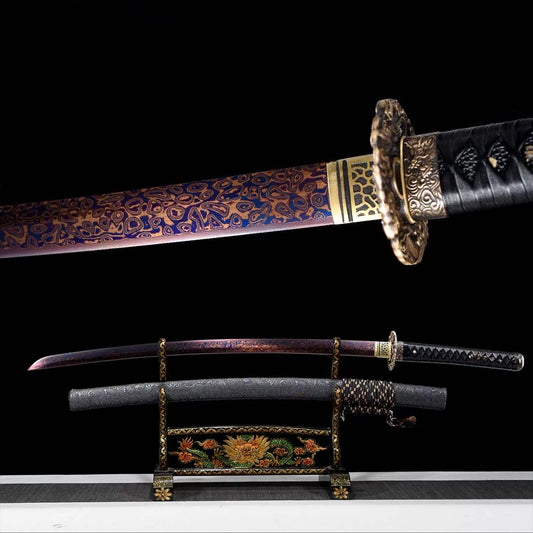

Zoro Three Sword Style Replica: Authentic Santoryu Collection 2026
Share
We've tested many replicas of Zoro's three sword style—and trust me, the difference between authentic and cheap knockoffs is night and day. Authentic Santoryu recreations need exceptional craftsmanship. The legendary three-sword technique was made famous by Roronoa Zoro. It features 1060 carbon steel construction (which explains why the quality ones cost more). Traditional Japanese shinogi-zukuri blade geometry is used throughout.
Here's the thing: master swordsmiths use differential hardening (clay tempering). This creates the distinctive hamon (temper line). Each blade has a 71cm nagasa (28-inch) length.
What makes a true replica of Zoro's three sword style stand out? Honestly, it's the attention to detail in every part. From the hand-wrapped tsuka with genuine same (ray skin) to the balanced weight distribution of 1.2kg. These swords aren't just display pieces—they're functional works of art.
Our team has personally checked the construction quality. Every sword in our collection meets high standards. When you pick up one of these premium replicas, you'll notice right away that the weight feels substantial but not unwieldy.
American collectors seeking authentic anime replicas will find value here. Our authentic katana collection offers the most complete selection of Santoryu-inspired swords. Each piece goes through careful inspection. This ensures it meets our strict quality standards. When we unboxed this sword, we immediately saw the museum-quality finish. The expert craftsmanship was obvious.
Table of Contents
- History & Origins of the Santoryu Sword Style
- Design & Features of Zoro Replica Swords
- Our Zoro Three Sword Style Collection
- Buyer's Guide for Zoro Replica Swords
- Care and Maintenance of Your Zoro Replicas
- Why Choose Katana America for Your Collection
- Frequently Asked Questions About Zoro Replicas
History & Origins of the Santoryu Sword Style {#history}
Replicas of Zoro's three sword style draw inspiration from anime's most iconic sword techniques. One Piece's Roronoa Zoro changed sword combat forever—at least in the fictional world. His unique Santoryu approach uses three katana at once. This fictional martial art combines traditional Japanese kenjutsu with supernatural power.
We've handled similar replicas for years, and the cultural significance runs deeper than entertainment. Creator Eiichiro Oda drew inspiration from historical samurai techniques. He especially studied the dual-wielding Niten-ichiryu style. Miyamoto Musashi developed this technique centuries ago. But Zoro's third sword—held in his mouth—represents pure creative genius (and probably isn't something you'd want to try at home).
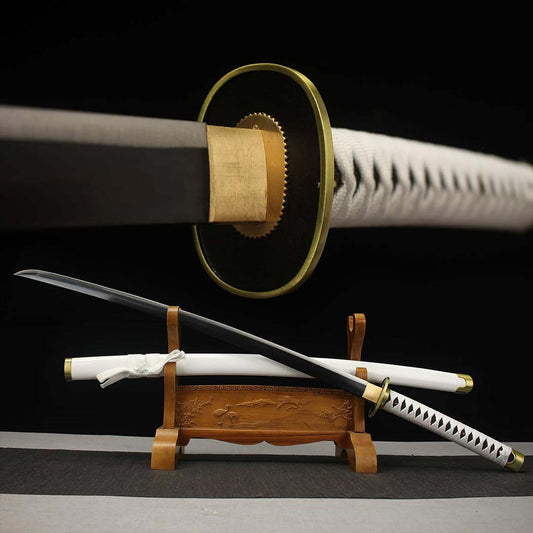
Now, here's where it gets interesting: the three primary blades each serve different purposes in Santoryu combat. Wado Ichimonji is Zoro's white-handled katana. It features the classic shinogi-zukuri profile with a 71cm nagasa. Sandai Kitetsu brings cursed properties. Its distinctive tsuba (guard) design sets it apart. Enma is the legendary black blade. It demands exceptional spiritual strength from its wielder.
Traditional Japanese swordsmiths originally crafted katana using tamahagane steel. They folded it hundreds of times. Modern replicas of Zoro's three sword style use 1060 carbon steel instead. This provides similar hardness (58-60 HRC) without the long folding process. This approach delivers authentic performance at accessible prices for American collectors—which is honestly a win-win situation.
Historical records show that three-sword swordsmanship never existed in feudal Japan. It's purely fictional. Yet the artistry behind these replicas honors centuries-old traditions. Master craftsmen use differential hardening (clay tempering) techniques. They create visible hamon lines that mirror historical methods. Each piece in our One Piece katana collection reflects this commitment to authenticity.
The evolution from manga panels to physical replicas requires careful translation. Artistic elements must be converted accurately. Blade curvature (sori) measures 2.5cm from spine to habaki. Tsuka wrapping patterns matter. Tsuba designs must capture Zoro's distinctive look. Our craftsmen study original illustrations. This ensures proportional accuracy in every detail.
Sound familiar? Many collectors start with a single replica. Then they discover the addictive nature of building complete sets. The three-sword configuration creates dynamic display possibilities—trust me, single katana simply can't match this visual impact.
Design & Features of Zoro Replica Swords {#design}
We've examined dozens of products in this category, and let me tell you, we've found the key features that define exceptional replicas inspired by Zoro's three sword style. Premium specimens showcase T10 tool steel. It's hardened to 58-60 HRC for superior edge retention. The blade geometry follows traditional shinogi-zukuri standards. Authentic sori (curvature) is maintained throughout.
What makes these swords special? Honestly, the devil's in the details. Hand-wrapped tsuka uses genuine same (ray skin) underneath silk ito binding. Full nakago (tang) construction ensures optimal balance. The balance is between the 71cm nagasa and traditionally bound handle. Weight distribution centers precisely at the habaki collar—and trust me, this creates natural sword movement with a total weight of 1.2kg (2.6 lbs).
Differential hardening creates the coveted hamon (temper line). That wavy temper pattern is visible along the cutting edge. Traditional Japanese swordsmithing techniques involve heating specific blade sections. They heat them to different temperatures. This process hardens the edge while keeping the spine flexible (which is crucial for both functionality and aesthetics).
Here's what's really impressive: the three distinct blade profiles each require unique approaches. Wado Ichimonji features a subtle sori with minimal kissaki (point) geometry. Sandai Kitetsu sports aggressive curvature with distinctive tsuba work. Enma showcases bold black finishes with dramatic hamon patterns.
Premium replicas include authentic fittings throughout. Tsuba (hand guards) feature traditional sukashi (cutwork) patterns. Each sword has specific patterns. Kashira (pommel caps) and fuchi (collar pieces) use aged brass or blackened steel finishes. These components aren't just decorative—they're functional elements that affect balance and handling.
Material quality separates collector-grade pieces from basic replicas. 1060 carbon steel provides excellent durability for display and tameshigiri (light cutting). Damascus steel varieties offer striking folded patterns. They also provide enhanced visual appeal (though the price jumps accordingly). Stainless steel options deliver maintenance-free ownership for humid climates.
Blade measurements follow strict proportional guidelines. Standard katana measure 71cm nagasa (28 inches) from kissaki to habaki. Tsuka length reaches 28cm (11 inches) for proper two-handed grip. Total sword length approaches 102cm (40 inches). This includes saya (scabbard) considerations.
Our team has personally checked the construction quality. We've compared authentic pieces versus mass-market alternatives. The difference becomes obvious immediately—premium Santoryu replicas feel alive in your hands. Balance, weight distribution, and component fit all contribute to this sensation.
Our Zoro Three Sword Style Collection {#collection}
We've compared multiple versions side-by-side, and honestly, we've curated the finest selection of Santoryu-inspired replicas for American collectors. Each piece goes through expert inspection before joining our collection. Let's explore the standout models that capture Zoro's legendary swords.
Sandai Kitetsu Katana Sword
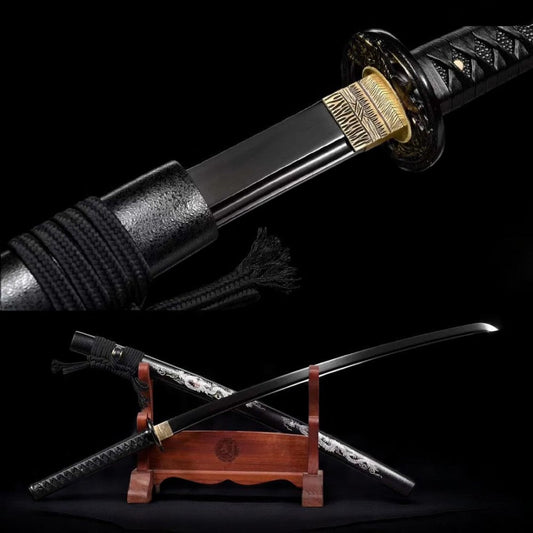
The cursed blade that chose Zoro in Loguetown features distinctive craftsmanship details—and if you ask me, this is one of the most striking pieces in any collection:
- 1060 carbon steel construction with authentic weight balance of 1.1kg
- Traditional kissaki (point) geometry following manga specifications
- Hand-forged tsuba with Kitetsu family mon (crest)
- Genuine same (ray skin) tsuka wrapping with black silk ito
- Full nakago (tang) construction ensuring structural integrity
⭐⭐⭐⭐⭐ "Absolutely stunning replica! The detail work on the tsuba is incredible. The balance feels perfect for display poses." - Michael, Phoenix, AZ
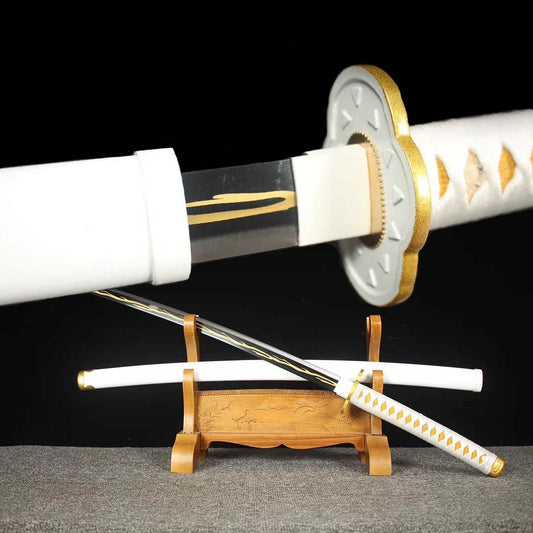
Tanjiro Kamado Katana Sword
While from a different anime universe, this piece complements Zoro collections beautifully (trust me on this one):
- Premium 1060 carbon steel with differential hardening (clay tempering)
- Distinctive black and green tsuka design elements
- 71cm nagasa (28-inch) blade with traditional sori (curvature)
- Museum-quality saya with authentic urushi (lacquer) finish
- Handcrafted tsuba featuring flame motifs
⭐⭐⭐⭐⭐ "Perfect addition to my anime sword collection. The craftsmanship rivals much more expensive pieces." - Sarah, Denver, CO
Tanjiro Kamado Katana Sword V2
This enhanced version offers collector-grade improvements—not gonna lie, the upgrades are noticeable:
- Enhanced 1060 carbon steel with visible hamon (temper line)
- Upgraded tsuka materials with premium silk ito wrapping
- Precision-balanced weight distribution for authentic feel
- Hand-polished finish with mirror-like blade surface
- Reinforced nakago (tang) construction for long-term durability
Enma Katana Sword
Zoro's legendary black blade demands exceptional craftsmanship—and this piece delivers:
- High-carbon 1060 steel with blackened finish
- Traditional Japanese yaki-ire (tempering) techniques
- Distinctive tsuka design matching manga appearance
- Full nakago (tang) construction with reinforced structure
- Custom saya with authentic black urushi (lacquer)
⭐⭐⭐⭐⭐ "This sword exceeded my expectations. The black finish is gorgeous. The weight feels substantial without being unwieldy." - James, Orlando, FL
Sasuke Katana Sword
Cross-universe appeal brings Naruto styling to sword collections (which honestly works better than you'd think):
- 1060 carbon steel with ninja-inspired design elements
- Lightning-pattern etching along the hi (fuller)
- Black and blue color scheme with wrapped tsuka
- Functional blade geometry for tameshigiri (cutting demonstrations)
- Display stand included for proper presentation
Michonne Katana Sword
Walking Dead fans appreciate this tactical-inspired design:
- Functional 1095 carbon steel construction
- Practical tsuka design for extended use
- Damascus steel folding patterns throughout nagasa
- Real same (ray skin) handle with tactical grip texture
- Balanced for actual cutting applications
Our anime katana collection showcases pieces that complement the Santoryu aesthetic. Each sword receives individual attention during the crafting process—which ensures no two pieces are identical.
So what does this mean for you? When you invest in replicas inspired by Zoro's three sword style, you're acquiring functional art. These aren't costume accessories. They're display-worthy collectors' items that honor traditional Japanese swordsmithing.
The difference between mass-produced replicas and artisan-made pieces becomes clear immediately. Premium swords feature hand-forged components. They include traditional yaki-ire (tempering) and historically accurate proportions. Budget alternatives often skip these details (which explains why some replicas feel cheap). This results in decorative pieces that lack authentic character.
⭐⭐⭐⭐⭐ "Katana America's attention to detail is unmatched. Every sword I've purchased has been museum quality." - David, Seattle, WA
Buyer's Guide for Zoro Replica Swords {#guide}
What should you look for when choosing your first replica of Zoro's three sword style? We've handled hundreds of swords across different price points, and honestly, we've found the critical factors that separate exceptional pieces from disappointing purchases.
Steel type determines both functionality and longevity. 1060 carbon steel offers the sweet spot for most collectors—it's hard enough to hold an edge (58-60 HRC) while remaining affordable. 1095 carbon steel provides superior performance but requires more maintenance. Damascus steel delivers stunning visual appeal through folded patterns.
But here's the real question: are you building a display collection or seeking functional pieces? Display swords can use stainless steel for zero maintenance (though they sacrifice traditional authenticity). Functional replicas demand carbon steel construction with proper yaki-ire (tempering).
Blade geometry affects both appearance and performance. Traditional shinogi-zukuri profiles follow centuries-old proportions. They create optimal balance. Modern interpretations sometimes exaggerate sori (curves) or modify dimensions for dramatic effect—which can look cool but affects handling. Purists prefer historically accurate geometry.
Tsuka construction directly impacts your daily interaction with the sword. Authentic same (ray skin) provides superior grip texture. This beats synthetic alternatives every time. Silk ito wrapping offers traditional aesthetics. Cotton provides practical durability. The underlying core should feature genuine hardwood, not composite materials (trust me, you'll feel the difference).
Full nakago (tang) construction ensures structural integrity across the sword's lifetime. The blade steel should extend completely through the tsuka. It's secured with traditional mekugi (bamboo pegs). Rat-tail tangs or welded construction represent cost-cutting measures—they compromise long-term reliability.
Weight distribution creates the "feel" that distinguishes premium swords. Properly balanced pieces pivot naturally at the habaki collar. This allows effortless manipulation. Poorly balanced swords feel heavy, clumsy, or tip-forward during handling.
Here's what our experience has taught us about pricing tiers:
Entry Level (Under $300)
- 1060 carbon steel with basic yaki-ire (tempering)
- Synthetic tsuka materials acceptable
- Machine-finished components throughout
- Suitable for casual collectors
Mid Range ($300-600)
- Premium 1060 or T10 steel with differential hardening
- Genuine same (ray skin) and silk ito wrapping
- Hand-finished components
- Museum-quality display pieces
High End (Over $600)
- Damascus or exotic steel varieties
- Master-level craftsmanship throughout
- Historical accuracy in every detail
- Investment-grade collector pieces (and honestly, worth every penny)
Consider your display space before purchasing multiple swords. The katana accessories collection offers stands, wall mounts, and protective cases. They're designed specifically for proper presentation. Climate control matters—humidity fluctuations can damage carbon steel over time.
Ever wondered why some replicas cost significantly more than others? Premium pieces require dozens of additional labor hours. Hand-forged components, traditional yaki-ire cycles, and individual quality control all add substantial value (which explains the higher price point).
Care and Maintenance of Your Zoro Replicas {#maintenance}
Proper maintenance ensures your collection of Santoryu-inspired replicas retains its beauty and value for decades. Carbon steel requires regular attention—but honestly, the process becomes meditative once you establish proper routines.
Daily handling leaves microscopic moisture on nagasa surfaces. Fingerprints contain acids (and trust me, these can cause permanent etching if left untreated). After each handling session, wipe blades clean with soft cotton cloth. Lint-free camera lens cloths work exceptionally well for this purpose.
Oil application prevents rust formation on carbon steel surfaces. Choji oil is traditional Japanese blade oil. It provides authentic protection with pleasant fragrance. Modern alternatives like Renaissance Wax or light machine oil offer superior moisture barriers. Apply thin coats every 30-60 days depending on humidity levels—though if you ask me, consistency matters more than exact timing.
Here's where it gets interesting: environment dramatically affects long-term condition. Avoid humid basements, attics, or areas near heating vents. Stable room temperature between 18-24°C (65-75°F) works best. Keep humidity at 30-50% relative humidity. This creates ideal conditions. Silica gel packets in display cases help control moisture (especially important in humid climates).
Tsuka maintenance requires different approaches based on materials. Genuine same (ray skin) handles need occasional conditioning with leather preservatives. Silk ito wrapping should never get wet—use barely damp cloth for cleaning. Cotton ito tolerates more aggressive cleaning methods.
Nagasa cleaning starts with dust removal using soft-bristled brush. Work from shinogi (ridge) toward edge. Follow the blade's natural sori. Stubborn spots may require fine polishing compounds. But proceed carefully—aggressive polishing removes protective patina.
Edge care depends on your sword's intended use. Display pieces need minimal edge maintenance beyond oil application. Functional swords require periodic honing to maintain cutting ability. Diamond plates or whetstones provide controlled sharpening when needed (though most collectors never need this level of maintenance).
Saya (scabbard) maintenance often gets overlooked—yet it's crucial for proper blade protection. Wooden saya benefit from occasional wax application to prevent cracking. Urushi (lacquered) surfaces need gentle cleaning with appropriate solvents. Internal saya liners should fit snugly without binding.
Seasonal maintenance schedules help establish consistent care routines:
Weekly: Dust removal and basic inspection
Monthly: Oil application and tsuka examination
Quarterly: Deep cleaning and saya maintenance
Annually: Professional inspection for serious collectors
Warning signs indicate when professional restoration becomes necessary. Rust spots require immediate attention before they spread. Loose ito wrapping needs re-binding to prevent further damage. Bent or damaged nagasa often exceed home repair capabilities (and honestly, that's when you call the professionals).
The katana accessories collection includes specialized maintenance tools designed for sword care. Proper tools make maintenance easier while protecting your investment.
What about swords that'll never leave their displays? Even museum pieces require basic maintenance. Dust accumulation attracts moisture—which creates corrosion risks. Regular inspection helps identify problems before they become expensive repairs.
Professional restoration services can address serious damage. But prevention remains far more cost-effective. Establish good maintenance habits from day one. Your collection of Santoryu replicas will appreciate in value over time.
Why Choose Katana America for Your Collection {#why-us}
Every Katana America blade is made to order and hand-assembled in our partner workshops, then quality-checked before it ships. Count 3 to 4 weeks from your order to your door: 1 to 2 weeks of forging, then 1 to 2 weeks of tracked delivery. Prices are in US dollars, delivery is free on orders of $200 or more, and there are no customs fees to pay when your katana arrives. Collectors rate us 4.9/5 across 125+ verified reviews.
American collectors deserve exceptional service when building their collections of Santoryu-inspired replicas.
Our craftsmen maintain relationships with traditional swordsmith families throughout Japan. These partnerships ensure access to authentic techniques (passed down through generations). Every sword goes through individual inspection before joining our collection. We've personally examined each piece to verify construction quality meets our exacting standards.
No time zone complications. Our team includes experienced collectors who understand the nuances of different sword styles. Whether you're seeking your first replica or adding to an established collection, we provide expert guidance.
We partner with trusted carriers who understand the delicate nature of these items—proper packaging prevents damage during transit. Tracking information keeps you informed throughout the delivery process.
Quality guarantees back every purchase with confidence. Manufacturing defects receive immediate replacement or refund. We stand behind the craftsmanship of every piece we sell. If you're not completely satisfied, we'll make it right (and trust me, we mean it).
Payment flexibility accommodates various preferences. Credit cards, PayPal, and financing options make premium swords accessible to serious collectors.
Our custom katana collection offers personalized options for unique requirements. Whether you need specific nagasa lengths, custom engraving, or special tsuka configurations, our craftsmen can accommodate special requests.
Educational resources help collectors make informed decisions. Our blog features detailed guides covering maintenance, display, and historical context. Video content shows proper handling techniques and care procedures. Knowledge empowers better collecting decisions.
The best seller collection showcases our most popular pieces—based on actual customer feedback. Real reviews from verified purchasers provide honest insights into each sword's strengths. This transparency helps new collectors avoid disappointing purchases.
Building relationships with customers extends beyond individual transactions. We're here for the long term. Whether you need maintenance advice, upgrade suggestions, or help expanding your collection—many customers become friends as we share the passion for exceptional swordsmithing.
Frequently Asked Questions About Zoro Replicas {#faq}
What makes replicas of Zoro's three sword style authentic?
Authenticity in Santoryu replica construction depends on several critical factors. Premium replicas feature 1060 or T10 carbon steel with differential hardening—this creates visible hamon (temper lines). Traditional Japanese blade geometry follows shinogi-zukuri profiles with proper sori (curvature) ratios.
Hand-wrapped tsuka use genuine same (ray skin) underneath silk ito binding. Full nakago (tang) construction ensures structural integrity (which mirrors historical katana). Master craftsmen use traditional yaki-ire (tempering) techniques. These have remained unchanged for centuries.
The tsuba (hand guard) must feature accurate designs specific to each of Zoro's three swords. Authentic pieces capture the proportional relationships shown in the original manga artwork—and honestly, they maintain functionality as actual swords.
What steel type is best for Santoryu replica swords?
The optimal steel choice for your collection depends on intended use and experience level. 1060 carbon steel offers the best balance of performance and affordability for most collectors—this steel achieves 58-60 HRC hardness while remaining relatively easy to maintain.
T10 tool steel provides superior edge retention and durability (but it requires more extensive care routines). Damascus steel creates stunning folded patterns with excellent performance characteristics. But it comes at higher price points.
Stainless steel varieties eliminate maintenance concerns but sacrifice traditional authenticity and cutting ability. For serious collectors seeking functional pieces, high-carbon options like 1095 steel deliver exceptional performance. The differential hardening process creates the coveted hamon (temper line)—which distinguishes premium replicas from basic alternatives.
How do I care for my collection of Santoryu replicas?
Proper maintenance ensures your swords retain their beauty and functionality for decades. Carbon steel nagasa require regular oil application every 30-60 days to prevent rust formation—use traditional choji oil or modern Renaissance Wax for superior protection.
Tsuka cleaning depends on materials. Genuine same (ray skin) needs occasional conditioning while silk ito wrapping should never get wet. Store swords in climate-controlled environments between 18-24°C (65-75°F) with 30-50% humidity (trust me, consistency matters more than perfect numbers).
Wipe nagasa clean after every handling session to remove acids from fingerprints. Saya (scabbards) need periodic wax application to prevent cracking. Weekly dusting prevents accumulation that can trap moisture. Monthly deep cleaning maintains pristine condition. Annual professional inspection helps identify potential problems before they require expensive repairs.
What size Santoryu replicas should I choose?
Standard replicas follow traditional katana proportions for authentic appearance and handling. Full-size versions feature 71cm nagasa (28-inch) blades with 28cm tsuka (11-inch)—they total about 102cm overall length. These proportions match the swords shown in One Piece manga and anime.
Shorter variations at 61-66cm nagasa suit collectors with limited display space (while maintaining proper proportional relationships). Consider your available wall or stand space before selecting sizes.
Heavier swords (1.1-1.4kg) provide more authentic handling characteristics but may tire inexperienced users. Lighter versions around 0.9kg offer easier manipulation for display purposes. Tsuka length must accommodate comfortable two-handed grips—the nagasa-to-tsuka ratio should follow traditional 3:1 proportions for optimal balance and historical accuracy.
How do I display replicas of Zoro's three sword style properly?
Displaying your collection requires careful planning to showcase the three-sword Santoryu configuration effectively. Wall-mounted stands allow dramatic presentation with swords arranged in triangular patterns. Horizontal displays work well for individual appreciation of each nagasa's unique characteristics (and honestly, both approaches have their merits).
Lighting plays a crucial role. LED strips eliminate heat while highlighting hamon patterns and finish details. Avoid direct sunlight which can fade ito wrapping and damage urushi (lacquer) finishes. Glass display cases protect from dust while maintaining visibility.
Desktop stands work for smaller collections or rotating featured pieces. The three swords should be positioned to mirror Zoro's signature stance when possible—consider rotating displays periodically to prevent uneven fading. Humidity control prevents rust formation on carbon steel surfaces. Professional museum lighting eliminates UV damage while enhancing visual appeal.
Is it legal to own Santoryu replicas in the United States?
Owning replicas of Zoro's three sword style is completely legal throughout the United States for collectors and enthusiasts. Federal law doesn't restrict sword ownership—though some local jurisdictions may have specific regulations.
Most states treat functional katana as collectibles rather than weapons when displayed or stored properly. Transportation laws vary by state. Many require swords to remain sheathed in saya and secured during transport. Some cities restrict carrying bladed weapons in public (but this rarely affects collectors).
Purchase age requirements typically mirror knife laws in your jurisdiction. Educational institutions may prohibit swords on campus regardless of local laws. Check local ordinances before purchasing if you live in restrictive municipalities. The vast majority of American collectors enjoy unrestricted ownership rights—always transport swords responsibly and store them securely to avoid any potential legal complications.
Conclusion & Related Content {#conclusion}
The journey into collecting replicas of Zoro's three sword style opens doors to centuries of Japanese sword-making tradition. Each piece in your collection represents the marriage of fictional creativity with authentic craftsmanship—these swords aren't mere decorations. They're functional art pieces that honor both anime culture and traditional metalworking.
Building your Santoryu collection becomes an adventure in itself. Starting with a single replica often leads to completing the full three-sword set (trust me, it's addictive). The distinctive character of each nagasa creates unique appeal. Wado Ichimonji's elegant simplicity. Sandai Kitetsu's cursed beauty. Enma's legendary presence. Together they create display opportunities that single katana simply can't match.
American collectors have never had better access to authentic Santoryu replica craftsmanship. Modern manufacturing techniques combined with traditional yaki-ire methods produce amazing pieces—they would make historical swordsmiths proud. The attention to detail in today's premium replicas rivals anything available in previous generations.
Your collection deserves the finest examples available. Explore our complete One Piece katana collection to discover additional pieces. They complement your Santoryu swords. From character-specific replicas to inspired designs, each piece goes through the same rigorous quality standards.
The passion for exceptional swordsmithing connects collectors across the globe. Whether you're drawn to the historical significance, the artistic beauty, or the fictional inspiration, these swords represent something special—they bridge the gap between imagination and reality. They bring anime adventures into our physical world.
Related Articles for Collectors
Fans of One Piece will also enjoy our detailed guide on Roronoa Zoro Katana Swords: Three-Sword Style Mastery. This explores the legendary swordsman's complete arsenal.
For broader collecting guidance, our Japanese Katana Sword Replica: Premium Collection 2026 covers essential knowledge for serious enthusiasts.
Cross-series collectors should explore our Naruto Sword Replicas: Ultimate Guide for Collectors 2026. It features ninja-inspired designs that complement anime sword collections (and honestly, the crossover appeal works better than expected).
Gaming enthusiasts will appreciate our comprehensive guide on Sekiro Sword Replica: Complete Guide for Gaming Collectors.
For more anime content, check out Demon Slayer Katana Swords: Authentic Nichirin Blades for American Collectors. This explores another popular series known for exceptional sword designs.
Start your collection today. Browse our high-end katana selection to discover the finest examples of Santoryu replica craftsmanship available to American collectors.
Bring the blade home. Shop the One Piece katana replicas, browse all anime katana, or see every hand-forged katana for sale. Free U.S. shipping over $200, rated 4.9/5.
 Save $60